Berlin Olympiastadion guide — the 1936 Olympic Stadium and its history
Berlin: Olympic Stadium Guided Tour
Can you visit the Berlin Olympiastadion without an event?
Yes. The stadium offers self-guided entry (€10 adult) and English-language guided tours (€14) Tuesday through Sunday. Guided tours run at 11 am and 2 pm daily from April to October. The stadium complex including the bell tower and swimming stadium is open to independent visitors outside event days.
Quick answer: Self-guided entry is €10; guided tours run daily at 11 am and 2 pm (April–October) for €14. The underground player areas and press tribune are only accessible on guided tours. Allow 2–3 hours including the bell tower.
| Where | Charlottenburg-Wilmersdorf, west Berlin |
| Cost | €10 self-guided, €14 guided tour |
| Time needed | 2–3 hours including the bell tower |
| Getting there | U5 to Olympia-Stadion, ~30 min from Alexanderplatz |
| Best time | Weekday mornings; check match/event calendar first |
Understanding what you are visiting
The Berlin Olympiastadion is one of the most historically charged sports venues in the world, and understanding why requires brief context before you arrive.
The stadium was built between 1934 and 1936 under instructions from Adolf Hitler, who saw the Berlin Olympics as an opportunity to demonstrate Nazi Germany’s capabilities and racial ideology to the international community. The original design proposed a more functional structure, but Hitler personally intervened to demand a grander neoclassical monument in stone — the building you see today. The architect Werner March executed the design; Albert Speer supervised the broader Olympic complex.
The 1936 games proved politically complex for the Nazi regime in ways they had not anticipated. Jesse Owens, the Black American sprinter and long jumper, won four gold medals and set world records in front of a crowd that included Hitler in the VIP tribune. His victories — in events the regime had publicly predicted would showcase Aryan athletic superiority — became an immediate international story about the failure of Nazi ideology. Owens was subsequently invited to meet FDR, though the American president never publicly acknowledged him. He received a hero’s welcome from 100,000 New Yorkers.
The stadium survived World War II because it was useful to the British military who occupied the area. It was subsequently renovated for the 2006 FIFA World Cup, with a new roof installed and the capacity adjusted to 74,475. It is now home to Hertha BSC and serves as a concert venue (capacity 75,000; U2, Taylor Swift, and Rammstein have all performed here).
Visiting the Olympiastadion is not purely a sports tourism activity — it is one of the most important surviving pieces of Nazi-era architecture in Germany, and the site of one of the most significant political moments in Olympic history.
Self-guided entry versus guided tour
Self-guided entry (€10) gives access to the stadium bowl, the main entrance plaza, and the historic Marathon Gate. You can walk the lower concourse and take photographs from the field-level viewing areas. Audio guides (extra charge, approximately €3) cover the key rooms and history.
Guided tour (€14) is significantly more comprehensive and worth the extra €4 for most visitors. The tour includes:
- Underground player tunnels and dressing rooms used by athletes in 1936 and today
- The VIP and press tribune area with historical briefing on how the 1936 ceremony was organised
- Access to the field level (not available on self-guided visits except through specific access points)
- Detailed commentary on Jesse Owens, Leni Riefenstahl’s film of the games, and the political context
Tours run at 11 am and 2 pm daily from April to October, in English and German. Off-season tours (November–March) run on weekends only.
Book a guided tour of the Berlin Olympiastadion including the underground player areas and press tribuneThe stadium architecture
The Olympiastadion is built predominantly from natural stone — Jura limestone and granite — in a neoclassical style that references ancient Greek and Roman structures. This was a deliberate choice by Hitler and Speer: concrete and steel were the materials of modernism, which the regime associated with cosmopolitan and Jewish cultural influence. Stone meant permanence, tradition, and racial lineage.
The result is architecturally impressive in a heavy, deliberately intimidating way. The stadium sinks partially below ground level, which lowers its apparent bulk while allowing the massive stone colonnades to frame the sky theatrically. The Marathon Gate (Marathontor) at the east end aligns with the long axis of the Maifeld (the parade ground to the west) and the Glockenturm beyond — a 700-metre sight line designed to be photographed from the bell tower.
Inside the bowl, the seating capacity is distributed around a nearly complete oval with a gap at the eastern Marathon Gate end. This allows the sight lines toward the field to be nearly unobstructed from all positions. The renovated 2006 roof covers most of the seating without significantly changing the exterior silhouette.
The original Nazi iconography — eagles, swastikas, and Wehrmacht symbols — was largely removed in the post-war period, though some symbolic elements survive in abstract form in the stonework. The 1936 Olympic bell, which bore an inscription and the Olympic rings above a swastika, is displayed (cracked, it was dropped during removal) at the base of the bell tower.
The bell tower (Glockenturm)
The Glockenturm stands on the hill immediately west of the stadium, connected by the Maifeld (a 110,000-person capacity parade ground). The tower is 77 metres high and was designed to be seen from the stadium finish line during marathon events.
The observation platform at the top is reached by elevator (included in a €6 surcharge, or included in combined ticket). The view is genuinely excellent: the full horseshoe stadium layout is visible to the east, the Grunewald forest stretches south, and the Spree valley is visible to the north. On clear days, Berlin’s TV Tower is visible on the horizon.
At the base of the bell tower, the cracked original Olympic bell sits in an open shelter. The inscription reads “Ich rufe die Jugend der Welt” (I call the youth of the world) — the standard Olympic bell motto — above which the original bronze casting showed a Nazi eagle. The bell cracked when it was lowered from the tower in the 1960s and has been displayed at ground level since.
The Jesse Owens story at the Olympiastadion
The 1936 Olympics opened on August 1. Jesse Owens arrived as part of a US team that the regime had not expected to dominate. He set a world record in the long jump (8.06 metres), won the 100m in 10.3 seconds, the 200m in 20.7 seconds, and anchored the 4x100m relay team to another gold. Four gold medals, four world-best performances, in the stadium built to showcase Aryan supremacy.
The story of Hitler “snubbing” Owens by refusing to shake his hand is more complex than the popular version. Hitler had shaken hands with German gold medallists on day one; the IOC then told him he must either acknowledge all winners publicly or none. He chose none. Owens later stated that Hitler had stood and waved to him from the tribune on the day of his 100m victory. “Hitler didn’t snub me — it was FDR who snubbed me,” Owens told reporters after returning to the US, noting that the American president had never sent a congratulatory telegram.
A commemorative plaque to Owens is at the main stadium entrance. A section of the original track surface from the 1936 games is preserved in the Stade Museum (included in guided tour access). For the fuller political and historical arc of the 1936 Games, the 1936 Olympics history guide covers the broader story beyond the stadium building itself.
Book Olympiastadion self-guided entrance ticket to skip the on-site queueEvents at the Olympiastadion
Hertha BSC matches: Hertha plays home Bundesliga and cup games throughout the season (approximately August to May). The atmosphere in the 74,000-seat venue for major matches is worth experiencing — the standing section (Südkurve) is particularly vocal. Tickets from the Hertha website, typically €15–55 depending on the match and seat category.
Concerts: The stadium hosts approximately 5–8 major concerts per year. The acoustics are not ideal for music but the capacity makes it the default venue for stadium tours. Check the official schedule at olympiastadion.de.
ISTAF Athletic Meeting: Berlin’s annual international athletics meeting (usually September) returns the stadium to its original intended purpose and is one of the better Diamond League events to attend. Tickets from €25.
DFB Cup Final: Periodically hosted at the Olympiastadion, though this rotates between venues.
Combining with other sites
The Olympiastadion is in west Berlin, near the Charlottenburg district. A logical day combination:
- Morning: Charlottenburg Palace (10 am–1 pm)
- Afternoon: Olympiastadion guided tour (2 pm) and bell tower
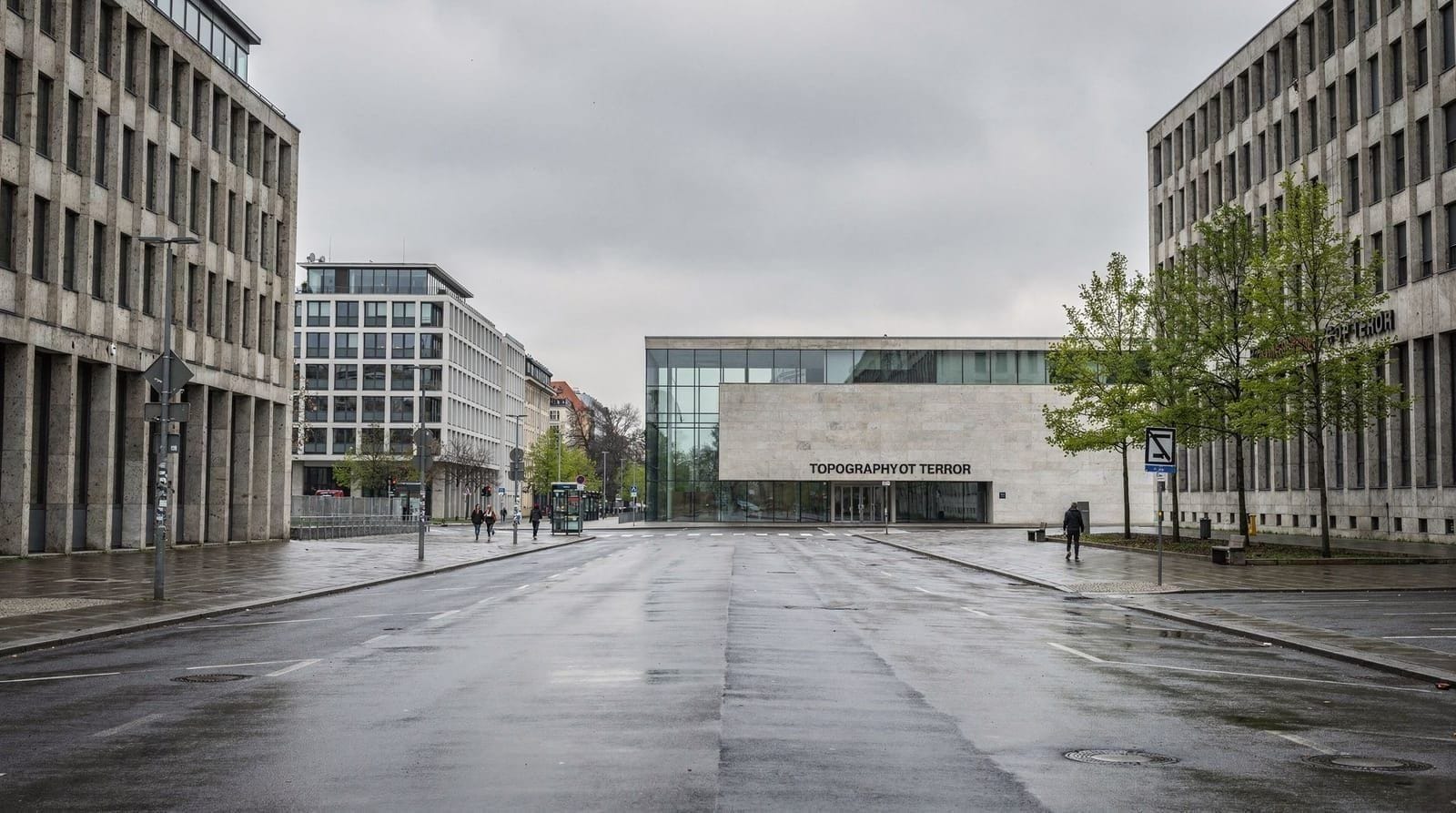
Or, for those following the Third Reich history trail, the Olympiastadion pairs with the Topography of Terror (U1 from Kurfürstendamm) and the Berlin Story Bunker.
The stadium is 15 minutes by U5 from Museum Island and Alexanderplatz, making it straightforward to add to a day that begins in Mitte.
A visit here also slots naturally into a longer stay — the 4-day Berlin itinerary places it alongside Charlottenburg as a west-Berlin day, and families following the Berlin with kids guide will find the underground tunnels and bell tower genuinely engaging for children old enough to handle the historical framing.
Is it worth visiting if you’re not a football or history buff?
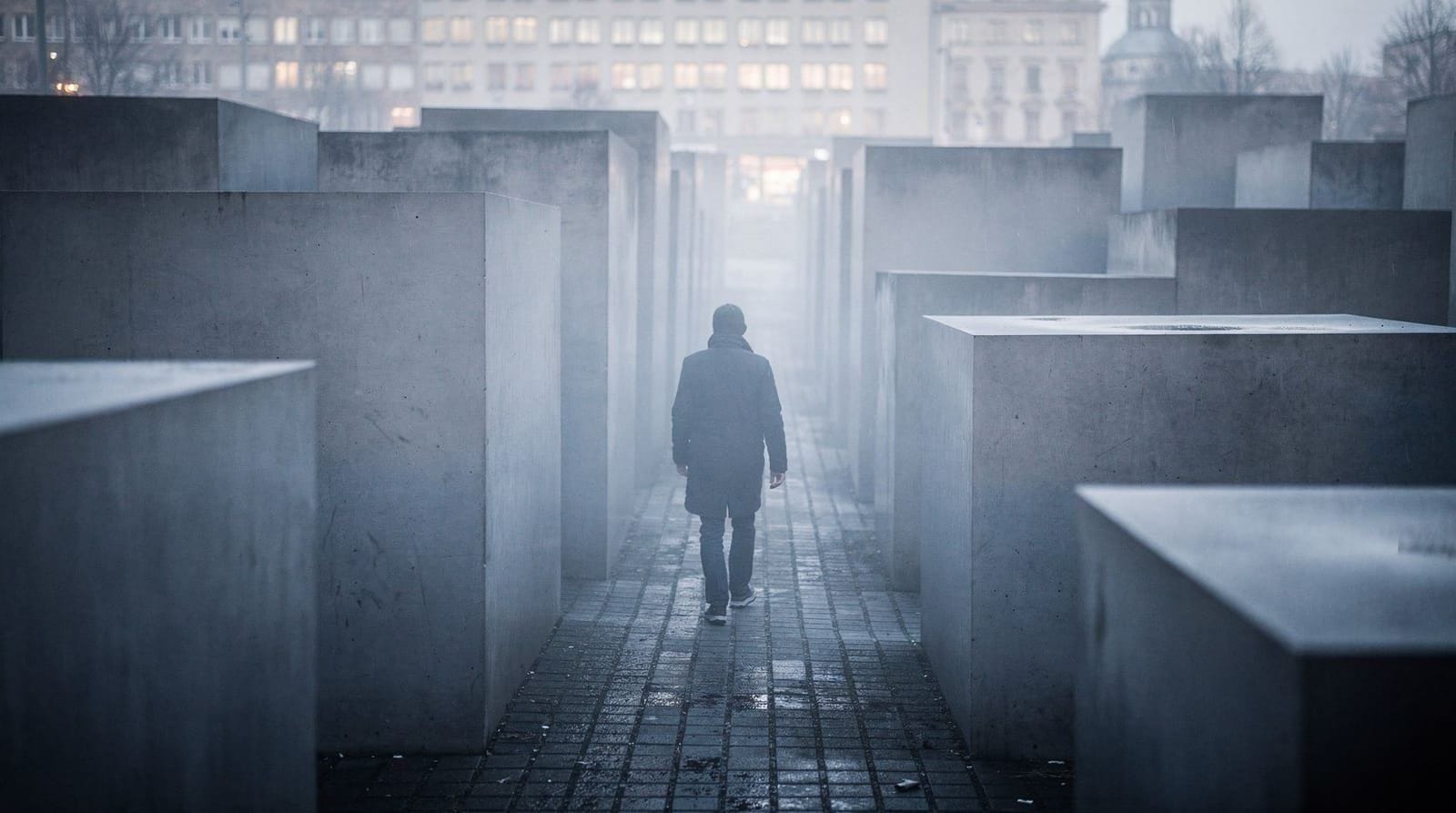
Even for visitors with no particular interest in either sport or the 1936 Olympics, the stadium is worth a stop for the architecture alone — it is one of the few intact large-scale examples of Nazi-era monumental building open to the public, and the deliberate stone-and-scale design is worth seeing in person regardless of your reason for visiting Berlin. The Marathon Gate sightline to the bell tower is a genuinely striking piece of urban design. That said, if your time in Berlin is limited to two or three days, this sits below Museum Island, the Brandenburg Gate area, and the Memorial to the Murdered Jews on most first-time itineraries — save it for a longer stay or a specific interest in the period.
Frequently asked questions about Berlin Olympiastadion guide
How much does it cost to visit the Olympiastadion?
Self-guided entry to the stadium is €10 adult, €7.50 concession. A guided tour costs €14 adult, €11 concession. The guided tour includes access to the press tribune, VIP areas, and underground player tunnels not accessible on self-guided visits. A GYG-booked guided tour (€14–18) typically includes a more flexible time slot than the on-site schedule.Who built the 1936 Olympic Stadium and why does it still stand?
The stadium was designed by Albert Speer and Werner March and completed in 1936 for the Berlin Olympic Games under Hitler's instruction. The Nazi regime used the games as an international propaganda showcase. The stadium survived World War II relatively intact (it was used as a command post by the British Army after 1945), which is why it still stands while most comparable Nazi-era structures were demolished.What is the Jesse Owens connection to the Berlin Olympiastadion?
Jesse Owens, the Black American athlete, won four gold medals at the 1936 Berlin Olympics — 100m, 200m, long jump, and 4x100m relay. His victories directly contradicted Nazi racial ideology, which Hitler had intended the games to showcase. The stadium contains a commemorative plaque at the main entrance honouring Owens. His victories remain among the most politically significant performances in Olympic history.Does Hertha BSC still play at the Olympiastadion?
Yes. Hertha BSC Berlin uses the Olympiastadion as their home ground for Bundesliga matches. Attending a Hertha match is a popular way to experience the stadium in use. Match tickets are sold on the Hertha website and are usually available until shortly before the game. The atmosphere in the 74,000-seat bowl is excellent for football.What is the bell tower at the Olympiastadion?
The Glockenturm (bell tower) is a separate structure within the Olympic park, about 500 metres west of the stadium. It stands 77 metres tall and offers panoramic views over the Spree valley and the Grunewald forest. The observation platform (elevator, €6 extra) gives the best aerial perspective on the stadium's horseshoe layout. The original 1936 Olympic bell, cracked and inscribed with Nazi symbolism, is displayed at the base.How long does a visit to the Olympiastadion take?
Self-guided entry alone takes 45–75 minutes to cover the bowl, the Marathon Gate, and the main plaza. A guided tour runs 90 minutes and includes underground areas. Adding the bell tower takes another 45 minutes. Budget 2.5–3 hours for a comprehensive visit including the surrounding Olympic park.Is the Olympiastadion far from central Berlin?
The stadium is in the western suburb of Charlottenburg-Wilmersdorf, about 11 km from Mitte. By U-Bahn, take the U5 to Olympia-Stadion station — approximately 30 minutes from Alexanderplatz. The S-Bahn S75 also stops at the stadium. By car, parking is available on site. The journey from Charlottenburg Palace takes about 15 minutes by public transport.Is the Olympiastadion appropriate for children?
Yes, with context. The stadium is architecturally impressive and the Jesse Owens story resonates with children. The underground tunnels are popular with kids. For younger children, the history of the Nazi regime requires some parental framing. The bell tower lift is accessible for all ages. Children under 6 are free.Should first-time Berlin visitors prioritise the Olympiastadion?
Not usually on a two- or three-day trip. Museum Island, the Brandenburg Gate area, and the Memorial to the Murdered Jews of Europe deliver more historical density per hour for a first visit. The Olympiastadion is best suited to visitors with four or more days, a specific interest in the 1936 Games or Nazi-era architecture, or football fans wanting to see a Hertha BSC match.
Top experiences
Bookable activities with verified prices and instant confirmation on GetYourGuide.