Berlin in winter — what's actually worth doing from November to February
| Temperature | -2°C to 4°C, colder with wind |
| Best for | Museums, indoor culture, budget travel |
| Skip in winter | Outdoor bars, canal-side hangouts |
| Hotel prices | Often €80-100/night less than August |
| Peak crowds | Christmas market weekends, New Year’s Eve |
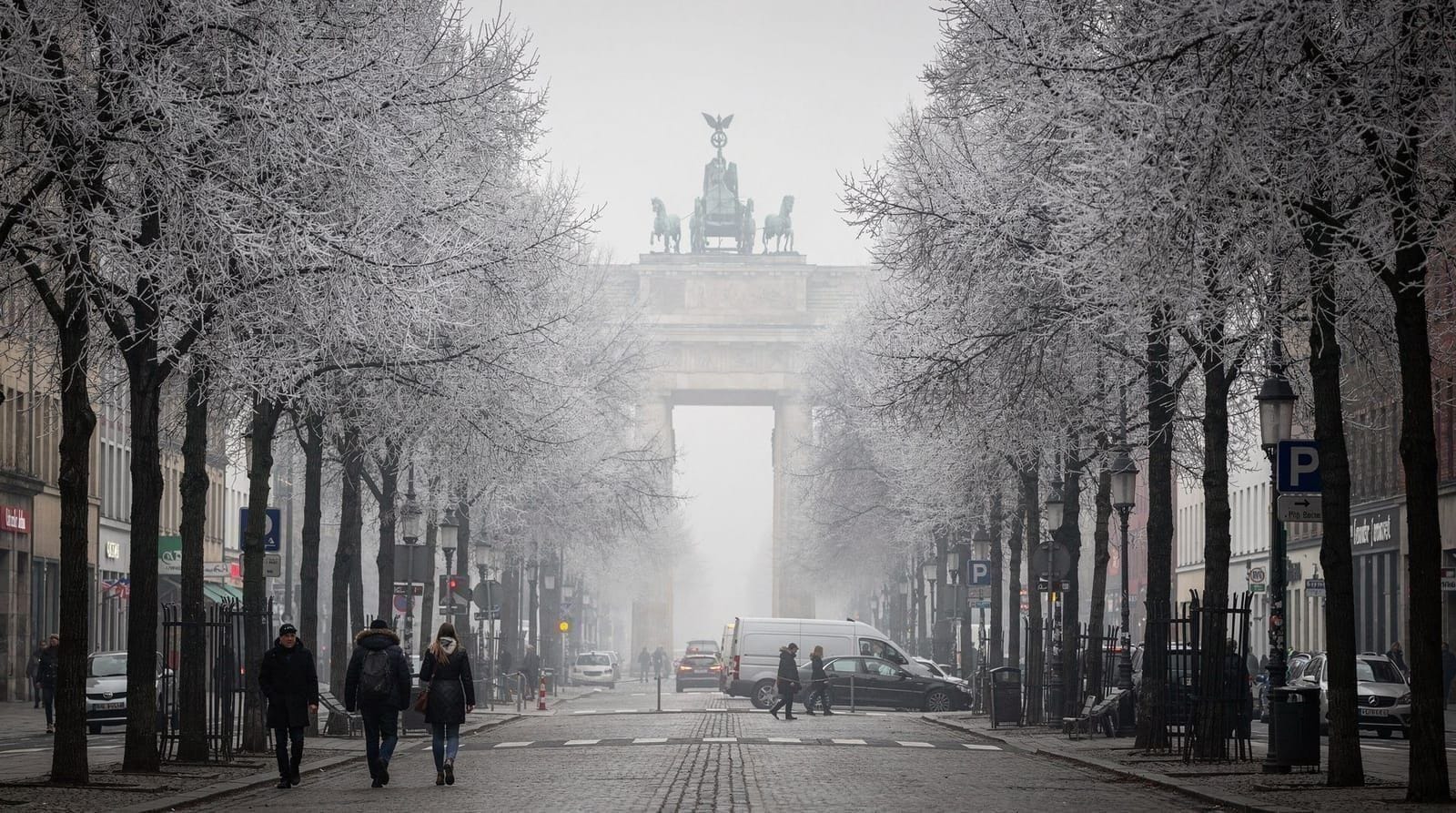
Berlin in winter gets undersold. Everyone talks about the city in summer — the open-air culture, the park parties, the long evenings — and winter ends up looking like an afterthought. It isn’t. From November to February, Berlin switches into a different mode entirely: darker, quieter in tourist terms, more internal, and in many ways more itself.
The short version: if you don’t mind cold and limited daylight, winter is one of the best times to visit.
The honest case for visiting Berlin in winter
First, the practical argument: fewer visitors. Berlin draws around 14 million overnight stays in a typical year, and a significant chunk of that is concentrated in the warmer months. In January and February, hotel prices drop noticeably, the major museums are walkable without queues, and you can get into restaurants on a Tuesday night without a reservation.
Second, the cold forces the indoor cultural life to the foreground. Berlin has world-class concert venues (the Philharmonie, Konzerthaus, Volksbühne), an exceptional opera scene (Deutsche Oper, Staatsoper, Komische Oper), and gallery programmes that run year-round regardless of weather. In summer you might skip the Philharmonie because there’s a free outdoor concert in Tempelhof. In January, you go to the Philharmonie.
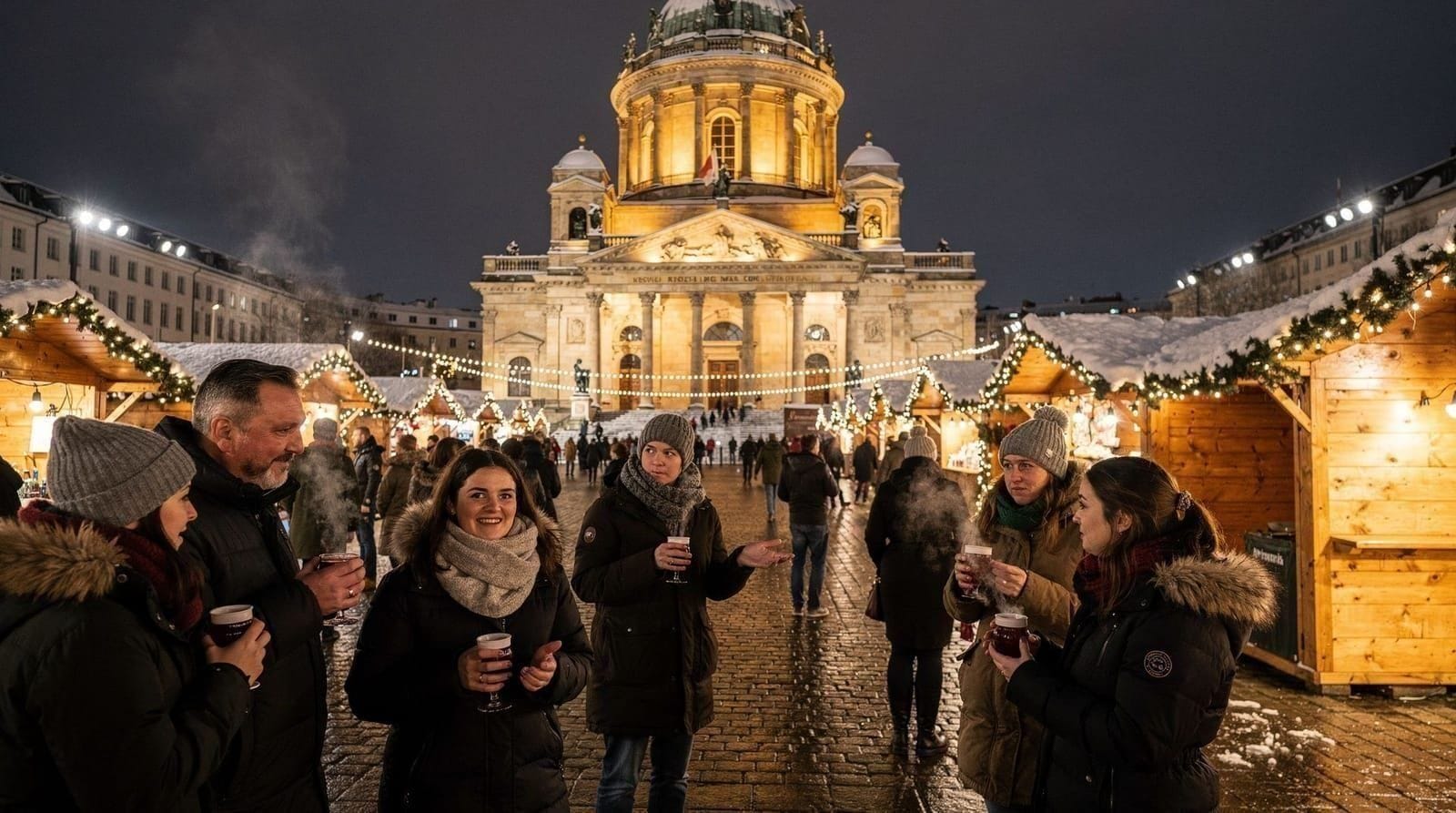
Third — and this is the advantage people don’t talk about enough — the atmosphere in the Christmas market season is genuinely pleasant if you pick the right markets. More on that below.
The Berlin in winter guide has the full seasonal breakdown. This post goes deeper on specific choices. And if you’re still deciding between months, the Berlin in summer guide makes the counterargument — it’s worth reading both before you book.
November — the underrated month
November gets a bad reputation. It’s grey, it rains, and it’s not quite cold enough to feel festive. But it’s also the month before the Christmas market crowds arrive, and the museum season is in full swing.
The Alte Nationalgalerie is excellent in November. No queues, proper time to look at Caspar David Friedrich’s winter landscapes in a building that is itself a masterwork. The irony of looking at romantic depictions of cold and darkness while it’s cold and dark outside is not lost on anyone.
The Topographie des Terrors — the outdoor documentation centre on the site of the former SS and Gestapo headquarters — is free and worth an hour at any time of year, but November has a particular weight to it, coinciding as it does with the anniversary of Kristallnacht on November 9th and the fall of the Berlin Wall on the same date in 1989. The Wall anniversary events are some of the most thought-provoking things Berlin does.
The Berlin Festival of Lights runs in October and spills into early November — buildings across the city are illuminated with projection mapping, which makes evening walks in Mitte genuinely spectacular. It’s a useful bridge between autumn and the Christmas season. If you’re arriving in October rather than November, the Berlin autumn guide covers the full picture of what’s on and what the city looks like at that time of year.
Christmas markets — the good, the bad, and the tourist trap
Berlin has over 60 Christmas markets running between late November and late December. Most of them are not worth your time. Some of them are excellent. Knowing which is which matters.
Skip: The main market at Breitscheidplatz (around the Kaiser Wilhelm Memorial Church). It’s large, it’s central, and it’s almost entirely stalls selling mulled wine and imported goods that could have come from any European city. The setting is dramatic but the market itself is generic. Prices for Glühwein are typically €4-6 for a basic cup, €7-9 for a ceramic souvenir mug.
Skip unless you have children: The market at Alexanderplatz. Rides, lights, standard market food. Not offensive, just not distinctive.
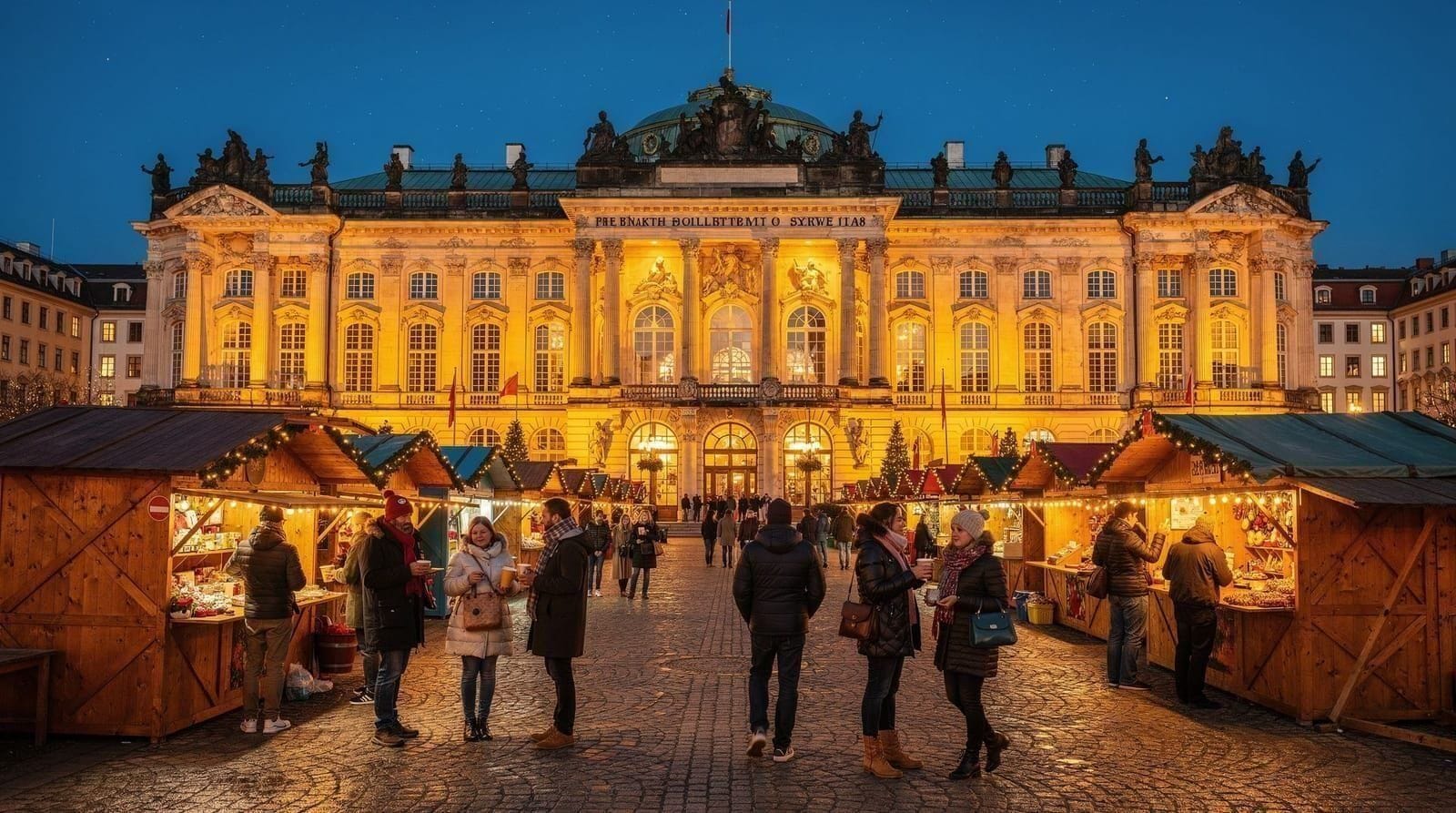
Worth going: The Gendarmenmarkt Christmas Market charges an entry fee (around €1) and is noticeably better for it — the crowds are thinner and the quality of the stalls higher. Classical music concerts in the Konzerthaus are a nice evening addition. This is the market that actually looks like the postcard.
Worth going: The Lucia Weihnachtsmarkt in Kulturbrauerei, Prenzlauer Berg. The former brewery courtyard setting is excellent, and the Scandinavian-themed market is smaller and more curated than the central ones. Local craft stalls, better-than-average food options, less aggressive souvenir pushing.
Worth going: The market at Schloss Charlottenburg — in front of the baroque palace, with the illuminated building as a backdrop. Touristy, yes, but the setting earns it. Go on a weekday evening if possible.
Worth going: The WeihnachtsZauber Potsdamer Platz market has a decent selection and doesn’t get as brutally crowded as the Breitscheidplatz one.
For a full overview with dates and logistics, the Berlin Christmas markets guide and the Berlin Christmas markets overview cover the complete landscape.
One practical note: Glühwein prices are roughly standardised across the tourist markets. If you want to pay less and drink better, buy a bottle of mulled wine from a Turkish supermarket on Oranienstrasse and drink it in a heated beer garden.
New Year’s Eve at Brandenburg Gate — should you go?
The Brandenburg Gate New Year’s Eve party is one of the largest public celebrations in Europe. Up to a million people, free entry, fireworks at midnight, a concert programme running through the evening.
Here’s the honest take: it is spectacular and it is chaotic, and you need to decide which of those matters more to you.
The good: The scale is genuinely impressive. Standing in the crowd as fireworks go off directly over the Quadriga is a singular experience. Entry is free. The atmosphere before midnight is festive and good-natured.
The less good: The crowd is enormous. Getting in is easy; getting out is not. Pickpocketing is a documented problem — keep your phone in a front pocket and leave excess cash at the hotel. Bag checks slow entry. Portable toilets are finite. And the fireworks are not just official ones — in Berlin, private fireworks are legal and people launch them from the middle of the crowd, which is either thrilling or alarming depending on your perspective.
Transport is a nightmare immediately after midnight. Plan to wait it out — walk to a bar, find a warm spot, and let the crowds thin for 90 minutes before attempting the U-Bahn.
Alternatives: Smaller New Year’s parties exist across the city. Friedrichshain and Kreuzberg have their own neighbourhood atmospheres. Some people prefer watching the official fireworks from a distance — the top of a parking structure in Mitte, for example — and spending midnight somewhere warm with a drink in hand rather than packed into a crowd.
Museum marathons in January and February
This is where winter Berlin really delivers. After the Christmas and New Year period ends, the museums hit what I’d call their sweet spot: full programming, minimal tourist volume, no summer queues.
Museum Island in January is a different experience from August. Walk into the Neues Museum on a Tuesday morning and you might have the room with the Nefertiti bust to yourself for a few minutes. That doesn’t happen in July. The Museum Island guide walks through all four open museums — remember that the Pergamon main building remains closed until at least June 2027, but the Panorama Asisi is worth adding to your itinerary.
The Hamburger Bahnhof — the contemporary art museum in a former railway station — gets properly good programming in winter. This is one of the best venues for large-scale installation art in Europe and almost no travel content about Berlin mentions it.
The Gemäldegalerie at the Kulturforum holds one of the great collections of European old masters (Caravaggio, Rembrandt, Vermeer, Bruegel) in a building that’s deliberately under-visited because of its location. In winter, under-visited becomes genuinely empty. Remarkable paintings, no crowds, free coffee machine in the entrance.
The Dokumentationszentrum Berliner Mauer (Berlin Wall Memorial on Bernauer Strasse) is best in winter when the outdoor sections feel appropriately austere and the interpretive indoor sections aren’t overwhelmed with school groups.
The café culture argument
Berlin has excellent café culture that doesn’t get enough credit because summer gets all the attention. In January, when sitting outside is not a realistic option, the interior life of the city opens up.
Spend a morning in a café in Prenzlauer Berg — something like Anna Blume on Kollwitzplatz, or any of the smaller places on Kastanienallee — and you’ll understand why Berliners don’t seem particularly bothered by the cold. They’ve built indoor life to compensate.
The coffee in Berlin is genuinely good now in a way it wasn’t a decade ago. There’s a serious specialty coffee scene centred on places like Five Elephant (Kreuzberg), The Barn (multiple locations), and Bonanza Coffee (Prenzlauer Berg). These are not tourist spots; they’re where people work and talk and exist in winter.
What to wear and how to stay comfortable
Berlin in January has average temperatures between -2°C and 4°C. It’s cold but not extreme. The more relevant factor is wind — the city is flat and the wind off the Baltic in a cold front can make a 3°C day feel much harder than the number suggests.
Practical kit: a proper coat (not just a light jacket), waterproof shoes or boots with some insulation, and layers you can remove indoors. Museums and restaurants are heated to the point of being warm, so wearing thermals you can’t remove quickly is uncomfortable.
The Berlin public transport guide is useful year-round but especially in winter, when walking longer distances in bad weather becomes less appealing and knowing the U-Bahn and S-Bahn efficiently matters more.
Winter accommodation — the price advantage
Hotel prices in Berlin in January are among the lowest of any major European capital at that time of year. A decent mid-range hotel in Mitte that costs €180 a night in August might be €100 in January. This is a real advantage if your schedule is flexible.
The same applies to flights. The low-season fare difference between Berlin in winter and Berlin in July can be €100-200 per person each way from most European cities.
Combined with the shorter museum queues, the available restaurant seats, and the more authentic feel of the city when it isn’t managing masses of visitors, the budget case for winter is strong. The Berlin budget guide covers this in more detail.
The things that don’t work in winter
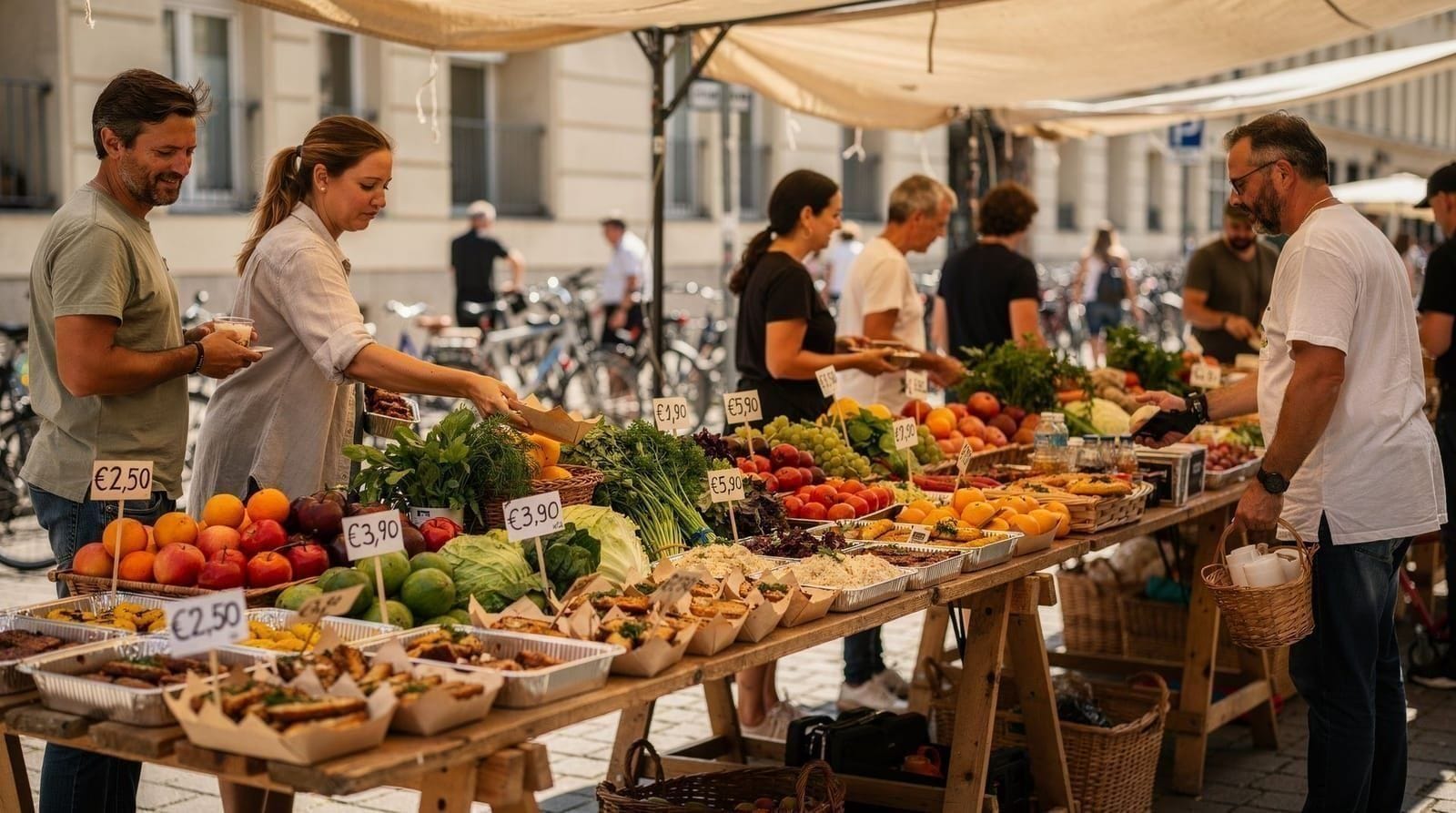
Some of what makes Berlin famous doesn’t translate well to the colder months. The outdoor bar scene — the Strandbar Mitte, Sisyphos’s terrace, the canal-side spots in Kreuzberg — closes or reduces significantly from October. The flea markets at Mauerpark and Boxhagener Platz run year-round but are more pleasant when you’re not standing in drizzle.
The Berlin in summer guide exists as a counterpoint if you’re weighing your timing. Both are valid — Berlin is worth visiting year-round, and the question is what kind of trip you want.
One more consideration: transport in winter is unchanged from summer. The U-Bahn, S-Bahn, and tram network runs on normal schedules all year, and Berlin’s public transport is reliable enough that not having a car is not a disadvantage. The Berlin public transport guide walks through the zone system, the WelcomeCard, and how to get between neighborhoods efficiently. Speaking of which, the is the Berlin WelcomeCard worth it guide is worth reading if you’re planning multiple museum days — the card includes transport and museum discounts, which in winter especially can add up quickly.
For getting oriented without spending money on guided tours first, the Berlin free walking tours guide covers the tip-based and genuinely free options. Running year-round, these are a particularly good deal in winter when the operators aren’t overwhelmed with summer crowds.
But for indoor culture, value, authentic atmosphere, and the particular pleasure of seeing a city that’s not performing for tourists — winter Berlin is worth the cold.
Winter month by month
| Month | Weather | Crowds | Highlight |
|---|---|---|---|
| November | Grey, wet, 4-9°C | Low, pre-market | Museums, Wall anniversary events |
| December | Cold, occasional snow, -1-5°C | High around markets and NYE | Christmas markets, festive atmosphere |
| January | Coldest, -2-4°C | Lowest of the year | Museum Island, empty galleries |
| February | Still cold, gradually lengthening days | Low, rising toward end of month | Café culture, last of the quiet season |
Day trips that still work in winter
Not every day trip is a good winter idea, but a few hold up well. Potsdam and Sanssouci Palace are genuinely pleasant in winter light with far fewer visitors than summer, though the palace gardens lose some of their appeal without blooms. Sachsenhausen is appropriately sombre in cold, grey weather — many visitors find the winter atmosphere fits the site better than a bright summer day would. Save canal or lake-focused trips like Spreewald for warmer months, since the main appeal there is outdoor and water-based.
FAQ
Is Berlin too cold to enjoy in January? Not if you dress properly. Average temperatures of -2°C to 4°C are manageable with a proper coat, layers, and waterproof shoes — the wind is the bigger factor than the raw temperature. Museums, cafés, and restaurants are all warm indoors, so the cold is really only a factor during transit between them.
What’s the single best reason to visit Berlin in winter rather than summer? Museum Island without queues. Walking into the Neues Museum on a January weekday morning and having room after room to yourself is an experience simply not available in July, when the same rooms are packed by 10am.
Do I still need a Berlin WelcomeCard in winter? The transport savings work the same year-round, but the museum discount side of the card becomes more attractive in winter, when you’re likely to spend more days indoors at paid attractions. Run the numbers using the WelcomeCard worth it guide against your specific winter itinerary before buying.