Berlin on a budget — how to do it properly in 2026
Berlin has a reputation as one of Europe’s most affordable capitals. That reputation is aging. Rents have risen sharply since 2018, restaurant prices have followed, and the tourist infrastructure is increasingly priced for international visitors with international incomes. A coffee in Mitte costs €4.50. A mid-range hotel in July can hit €200/night.
But compared to Paris, London, Amsterdam, or Stockholm, Berlin is still genuinely affordable if you understand where the money goes and how to redirect it. This is the 2026 reality check — not the optimistic pitch, but the actual system for doing Berlin on a limited budget. For the complete breakdown with accommodation rankings and a sample daily budget, see the Berlin budget guide and the budget Berlin itinerary.
| Cheapest base | Neukölln or Friedrichshain hostels, around €25–40/night |
| Best value ticket | 7-day BVG Wochenticket, around €36 |
| Free flagship sights | Holocaust Memorial, East Side Gallery, Tempelhof Field |
| Biggest trap | Tourist-zone restaurants near Checkpoint Charlie |
| Realistic tight-budget day | Around €57–75, all-in |
The free cultural offer is genuinely exceptional
Berlin’s free cultural offer is not a “walk around the neighbourhood” type of free. It includes world-class historical sites and memorials that in other cities would charge €15–25 entry.
Free all the time, without reservation:
- Holocaust Memorial (Memorial to the Murdered Jews of Europe) — outdoor field of 2,711 concrete stelae, always accessible. The underground information centre is free and essential.
- Topography of Terror — the documentation centre plus outdoor excavations at the former Gestapo and SS headquarters. Free permanent entry.
- East Side Gallery — 1.3 km of Berlin Wall murals, always open, no charge.
- Soviet War Memorial, Treptower Park — extraordinary Soviet-era monument, park setting, free.
- Neue Wache (Central Memorial, Unter den Linden) — free, small, Käthe Kollwitz sculpture inside.
- Bebelplatz book burning memorial — the underground glass panel in the pavement, always accessible.
- Tempelhof Field — former airport runway now public park, 386 hectares of flat Berlin sky, free trails year-round.
- Mauerpark — Sunday flea market plus amphitheatre karaoke, no admission.
- Grunewald forest — 32 km² of urban forest with trails, lakes, and the Teufelsberg radar station (tour fees if you enter the buildings, forest itself free).
Free with timing:
- State museum free Sundays: many Staatliche Museen zu Berlin institutions offer free entry on the first Sunday of the month. Check current policy at smb.museum — this has changed in recent years and varies by institution.
- Neue Nationalgalerie: verify current free admission days.
The Berlin budget guide has the current list of free museum days for 2026.
Food: where the tourist pricing trap is
Berlin’s tourist food economy and Berlin’s actual food economy operate at dramatically different prices for comparable quality. The gap is wider here than in most European cities.
Döner kebab: the iconic Berlin fast food. A proper döner at a serious shop in Kreuzberg or Neukölln costs €4.50–6. The identical item near Checkpoint Charlie or at a tourist-area imbiß charges €8–12 for worse product. The best döner guide maps the right shops by neighbourhood.
Currywurst: Curry 36 at Mehringdamm 36 (Kreuzberg) runs €3.50–4.50. Konnopke’s Imbiß under the Schönhauser Allee elevated tracks (Prenzlauer Berg) is the historical East Berlin original at similar prices. Both are the real thing; neither is in a tourist zone.
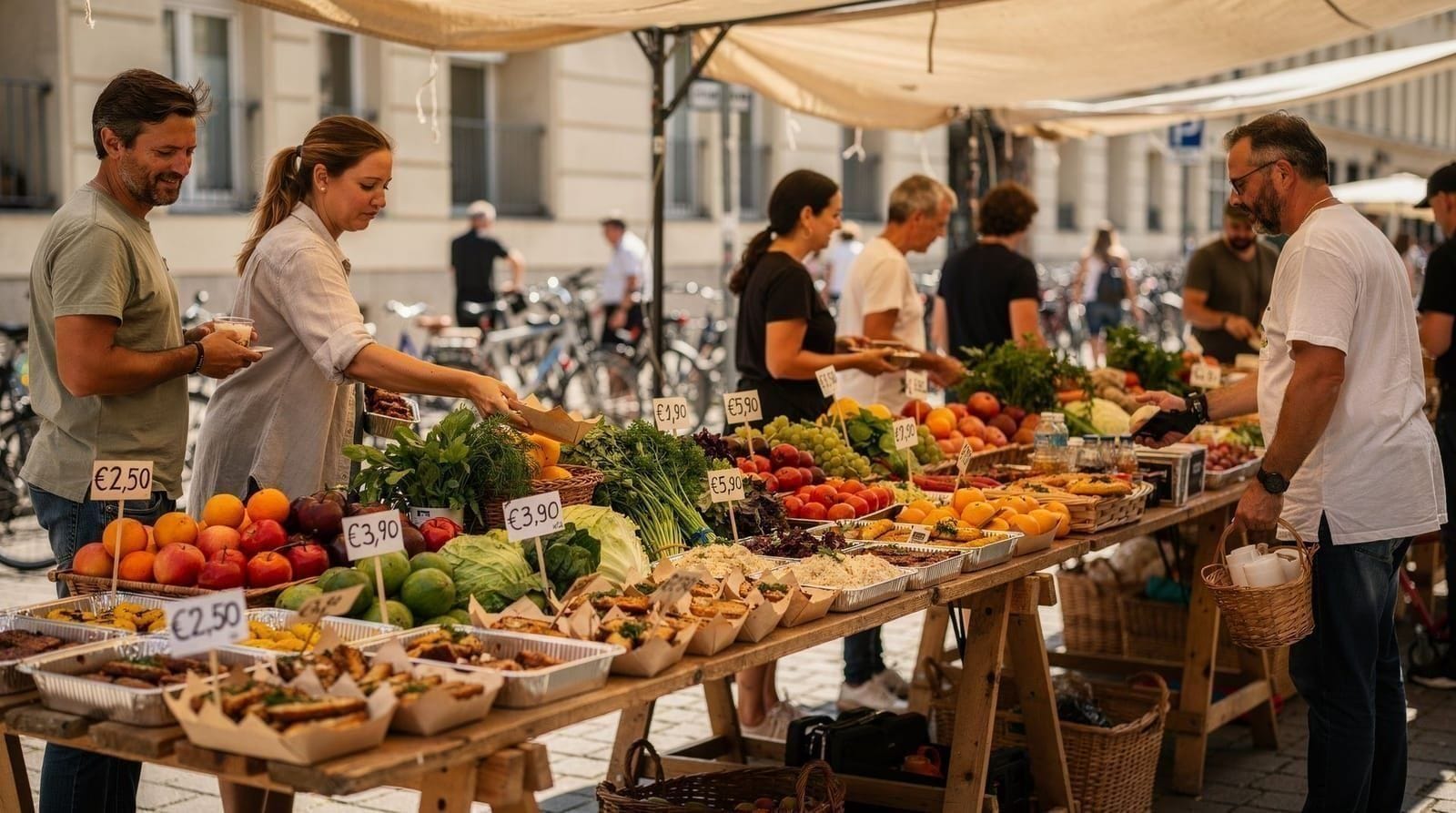
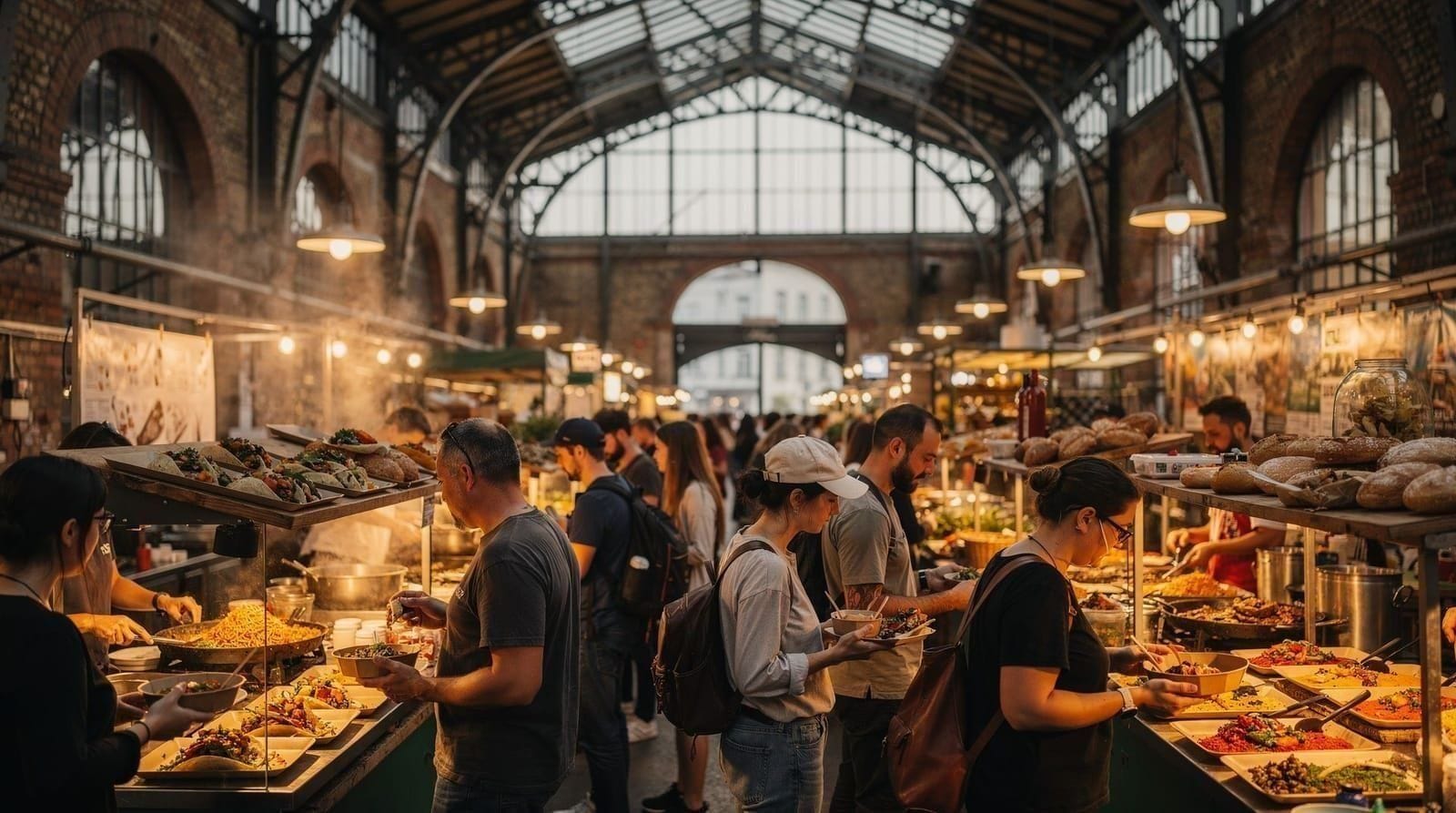
Markthalle Neun (Kreuzberg, Eisenbahnstr. 42–43): open Tuesday, Friday, and Sunday, the best food hall in Berlin for eating real food at real Berlin prices. Vendors from various cuisines at €6–12 a plate. The Thursday Street Food Thursday events are popular and slightly more crowded.
Turkish market at Maybachufer (Neukölln/Kreuzberg border): every Tuesday and Friday along the Landwehrkanal, a 600-metre outdoor market with fresh produce, bread, olives, cheeses, and ready-to-eat food at genuine local prices. Not curated for tourists. Arrive before 13:00.
Vietnamese food: A legacy of the GDR’s programme of Vietnamese workers who stayed after reunification. Concentrations in Mitte (around Hackescher Markt), Prenzlauer Berg, and Lichtenberg. A full Vietnamese meal with drinks at a neighbourhood restaurant runs €10–15 per person.
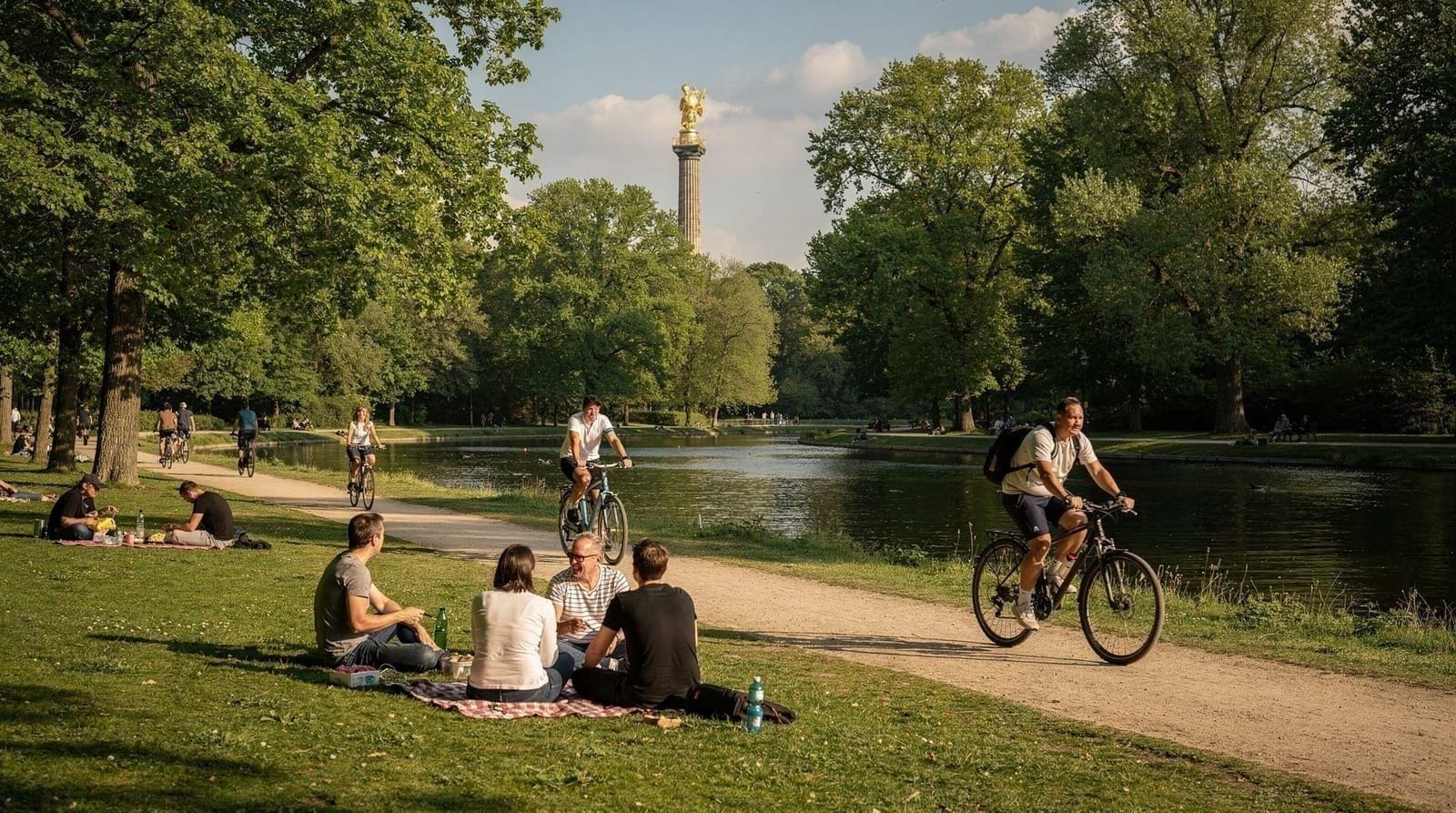
Supermarkets: Lidl, Aldi, Rewe, Edeka — all present throughout the city. A substantial picnic lunch costs €4–6. The Tiergarten is the natural setting.
Transport: buying the right ticket
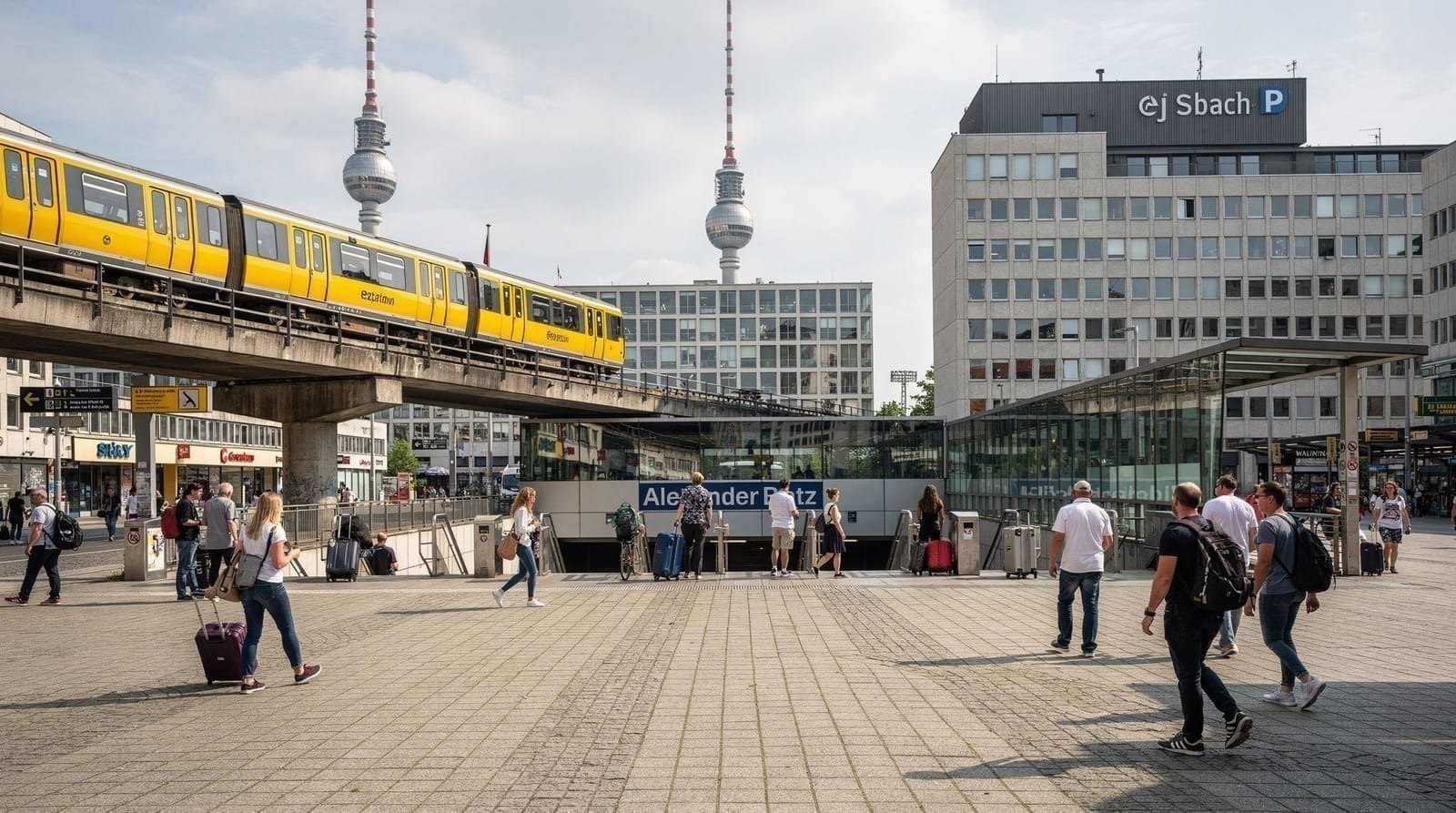
A single-trip AB zone ticket costs €3.50. An AB day ticket is €9.50. A 3-day BVG ticket is €29.50. A 7-day Wochenticket (weekly ticket) is €36 — outstanding value for stays of four or more days.
The WelcomeCard adds museum discounts on top of transport. Worth calculating specifically for your itinerary before buying — the maths doesn’t always favour the WelcomeCard over a standard BVG pass.
Walking is viable in central Berlin. Museum Island to the East Side Gallery is 3.5 km — a 45-minute walk that passes Checkpoint Charlie. Brandenburg Gate to the Holocaust Memorial is 5 minutes on foot. Getting between Mitte sites on foot is genuinely faster than waiting for and taking the U-Bahn.
The Berlin public transport guide covers the night bus network (essential after midnight when the U/S-Bahn reduces frequency), the short-trip Kurzstreckenticket (€2.40 for up to three stops, useful for quick hops), and how the BVG app makes ticket purchase easier than machines.
BER airport connection: Note that BER airport requires an ABC zone ticket (€4.40 single), not the AB ticket that covers the city. Factor this into your ticket planning on arrival and departure days.
Accommodation: the geography premium
Accommodation in Berlin shows a strong neighbourhood-based price gradient. A budget hotel in Friedrichshain costs 20–30% less than the equivalent in Mitte. Neukölln is 20–30% cheaper than Friedrichshain.
2026 price ranges (summer season):
- Hostel dorm, central Berlin: €25–40/night
- Private hostel room: €60–85/night
- Budget hotel, Friedrichshain or Prenzlauer Berg: €70–110/night
- Budget hotel, Mitte or Tiergarten: €120–180/night
- Mid-range hotel, Mitte (July peak): €180–260/night
The transport connections from Friedrichshain and Neukölln to central attractions are fast — 15–20 minutes by U-Bahn to Museum Island. The where to stay guide maps the neighbourhood trade-offs in detail.
Airbnb and apartment rentals are more regulated in Berlin than in many cities — verify that listings are legally operating (owners must have a permit) before booking. The regulatory environment is complex and some listings are not compliant.
Free walking tours — the honest model
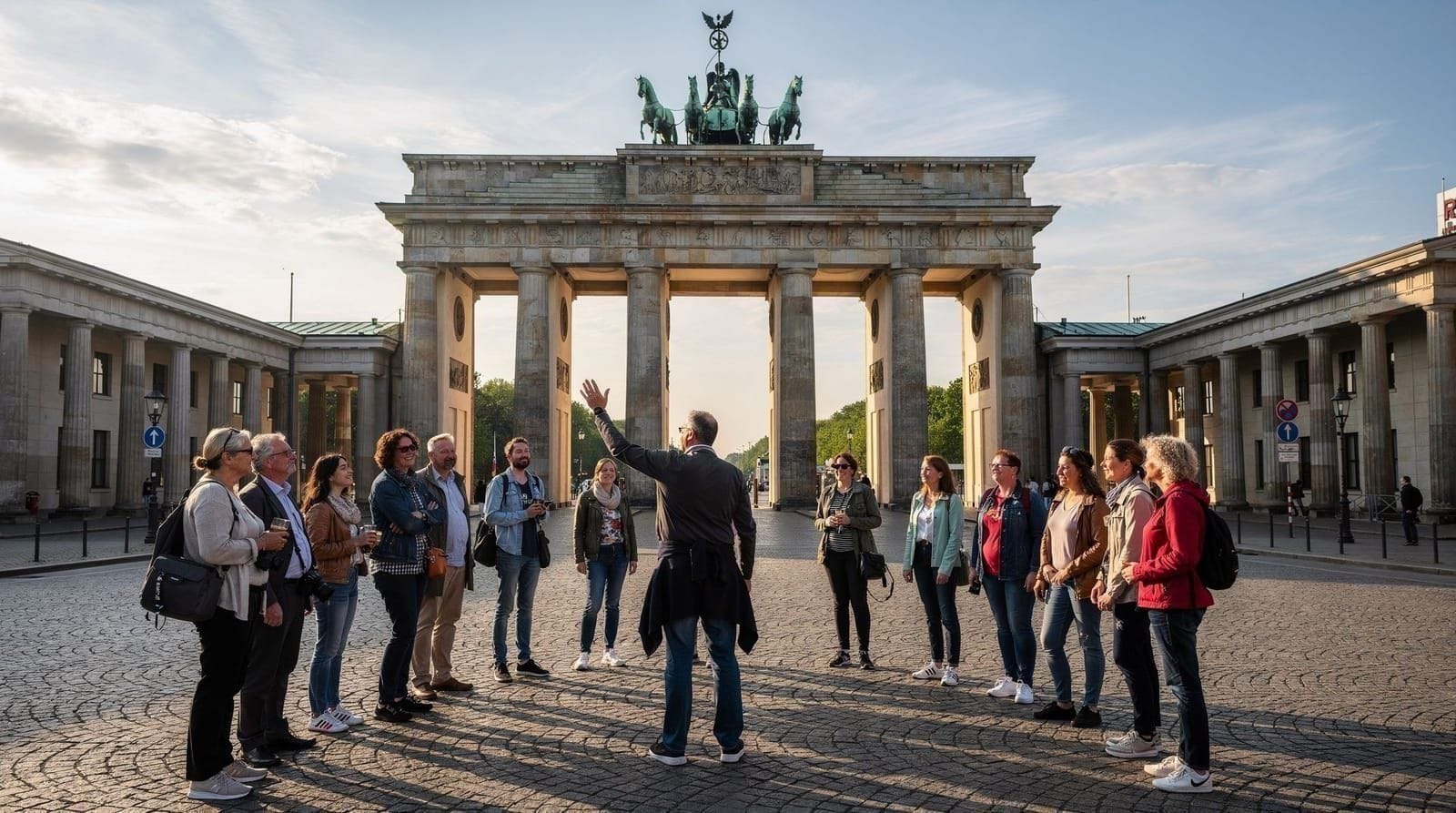
Berlin’s free walking tours (meeting points at Brandenburger Tor daily, Alexanderplatz at various times) operate on tips. The model attracts motivated, knowledgeable guides because their income directly depends on group satisfaction. Budget €10–15 per person as a tip if the guide is good — treating it genuinely as free exploits the model and undermines the guides.
The main operators: New Europe Berlin, Sandemans, Free Berlin Tour. All run daily. The free walking tours guide covers routes, languages available, and which operators consistently get positive feedback.
Museums: the strategic approach
If museums are part of your Berlin itinerary, there are three main approaches:
Free days: First Sunday of the month at most Staatliche Museen zu Berlin (verify current 2026 policy). This works well for a single visit to one institution but not for visiting multiple museums across several days.
Museum Island combination ticket: €29 for 3-day access to all five Museum Island museums. Works out to less than €6 per museum if you visit all five. The most efficient value for Museum Island focus.
WelcomeCard All-Inclusive: €56 for 72h with free entry to 30+ venues. Worthwhile if your programme extends across multiple venues beyond Museum Island.
Individual entry: €12 per museum at Museum Island, €15 Jewish Museum, €12.50 DDR Museum. For a selective two-museum visit, individual entry without a pass is sometimes cheaper than a combination ticket.
Free museums of significance:
- Topography of Terror: free
- Holocaust Memorial documentation centre: free
- Stasi Museum (Lichtenberg): €6 — among the best-value museums in Berlin and genuinely disturbing
- Neue Wache: free
- All outdoor Wall memorial sections: free
The Stasi Museum guide in particular is underattended relative to how good it is. The museum is in Lichtenberg (U5 to Magdalenenstrasse), farther from the tourist centre, but the building is the actual Stasi headquarters and the artefacts are authentic.
The honest daily budget breakdown for 2026
Tight budget traveller (hostel dorm, street food, free sites):
- Accommodation: €30 (dorm)
- Transport: €9.50 (day ticket) or included in 7-day pass
- Food: €18–24 (currywurst or döner for lunch, supermarket for dinner, coffee)
- Entry: €0–12 (free sites only, or one paid museum)
- Total: €57–75/day
Mid-range traveller (budget hotel, mix of restaurants and street food):
- Accommodation: €85
- Transport: €9.50
- Food: €40–55
- Entry: €15–25 (one or two paid museums)
- Total: €150–175/day
Comfortable traveller (mid-range hotel, restaurants for dinner):
- Accommodation: €140
- Transport: €9.50
- Food: €65–85
- Entry: €25–35
- Total: €240–270/day
The budget Berlin itinerary translates the budget philosophy into a day-by-day plan with specific sites, transport routes, and food stops. It’s sequenced to minimise backtracking and maximise free site coverage alongside selective paid museum visits.
Where budget travellers waste money in Berlin
Tour buses and hop-on hop-off: In a city this well-served by BVG public transport, these are extremely poor value at €25–35. The U-Bahn goes where you need to go.
Tourist restaurant areas: Any restaurant with a menu in six languages within 300 metres of Brandenburg Gate, Checkpoint Charlie, or Alexanderplatz charges 40–80% more for worse food.
“Official” Checkpoint Charlie Museum: Private, expensive, widely considered poor value by historians and regular visitors.
Bottled water: Berlin tap water is safe and free. Fill a reusable bottle.
Pre-packaged walking tour audio guides: The free walking tours cover the same ground with live interaction for a tip. Apps like izi.travel have free Berlin audio tours for solo walkers.
Berlin alternative neighbourhood walking tour — covers Kreuzberg and Friedrichshain history for visitors who want guided context on the less-covered parts of the cityApps and habits that actually move the needle
A handful of small habits save real money across a week in Berlin, beyond the obvious “eat street food” advice. Too Good To Go lists surplus food from bakeries, cafes and supermarkets across the city at a fraction of the price — bags typically run €3.50–6.50 for what would otherwise be thrown out, and Mitte and Friedrichshain both have dense coverage. Refill culture is normal here: Berlin tap water is safe, and cafes rarely object to a bottle top-up. For nightlife on a budget, Kreuzberg and Neukölln bars pour beers at €3–4.50, roughly half of what a Mitte cocktail bar charges for the same evening out, and neither neighbourhood feels like a compromise — see the Berlin budget guide for a fuller neighbourhood-by-neighbourhood price comparison.
What I’d actually do differently on a second trip
Having done Berlin both flush and broke, the single biggest lesson is that the free sites are not a consolation prize — several of them (Holocaust Memorial, Topography of Terror, East Side Gallery) are genuinely among the best things to do in the city regardless of budget. The mistake I made on my first visit was treating the paid museums as the “real” Berlin and the free sites as filler between them. It’s the other way round for anyone interested in 20th-century history. The Berlin trip planning guide is worth reading before you build an itinerary around ticketed attractions alone.
Berlin rewards frugal visitors better than most European capitals because the infrastructure for spending almost nothing on culture while still having a rich experience is genuinely there. The key is knowing which side of the tourist-local price divide you’re on for each spending category.
FAQ
Is Berlin still cheaper than Paris or London in 2026? Yes, generally — accommodation and food both run noticeably lower than Paris or London for comparable quality, though the gap has narrowed since 2018. Transport is also cheaper: a 7-day BVG ticket at €36 undercuts most equivalent passes in western Europe.
What’s the single best money-saving move for a first-time visitor? Base yourself in Friedrichshain or Neukölln rather than Mitte. The accommodation saving is 20–30%, the neighbourhoods are genuinely interesting rather than just cheaper, and the U-Bahn puts central sights 15–20 minutes away.