Berlin neighbourhoods to stay in — which area suits your trip
Berlin WelcomeCard: Discounts & Transport Berlin Zones (AB)
Which neighbourhood in Berlin should I stay in?
Mitte suits first-timers who want walkability to the main sights. Kreuzberg is best for food, street art, and alternative character. Prenzlauer Berg works for families and those wanting residential calm. Charlottenburg suits western Berlin explorers and luxury stays. Friedrichshain is cheapest for the East Side Gallery and club scene. No area is "wrong" — Berlin's public transport connects them all in 15–30 minutes.
Which Berlin neighbourhood should you stay in? The answer depends almost entirely on what you’re coming for. Berlin is large enough that the wrong neighbourhood costs you 20–30 minutes each day of unnecessary transit; the right one puts you walking distance from the things that matter to your trip. This guide compares the main options honestly, by trip type rather than by hype.
| First-timers | Mitte, for walkability to the main sights |
| Budget | Friedrichshain or Kreuzberg |
| Families | Prenzlauer Berg |
| Nightlife | Friedrichshain (clubs), Kreuzberg (bars) |
| Transit | Every area is 15-30 min from the centre by U-/S-Bahn |
First: how important is neighbourhood choice in Berlin?
Less than people worry about, more than they assume. Berlin’s public transport (U-Bahn, S-Bahn, tram) is comprehensive and fast — Kreuzberg to Museum Island is 25 minutes, Prenzlauer Berg to Charlottenburg is 30 minutes. No neighbourhood is genuinely inconvenient by western European standards.
That said, staying somewhere with character relevant to your interests makes the mornings and evenings — the time not spent in museums or on guided tours — much better. A mediocre Mitte business hotel within walking distance of the Brandenburg Gate is a different trip from a Kreuzberg apartment two blocks from the Turkish Market.
For specific hotel, hostel, and apartment recommendations by neighbourhood and budget, see the where to stay in Berlin guide.
Mitte — the historic and government centre
Best for: First-time visitors, those who prioritise walkability to the main sights, business travellers
Location: Centred on Unter den Linden and Alexanderplatz, spanning the Brandenburg Gate to Museum Island
Character: Formal, monumental, increasingly gentrified. The tourist-facing core around the Brandenburg Gate and Hackescher Markt is heavily commercialised, with souvenir shops and tourist restaurant markups. Fifty metres off the main circuits, the character improves. The Hackescher Markt courtyard complex has a more authentic mix of shops and cafés.
Walking distance from:
- Brandenburg Gate: 5–15 minutes (depending on exact hotel location)
- Museum Island: 10–20 minutes
- Holocaust Memorial: 5–10 minutes
- East Side Gallery: 40 minutes on foot, or U1/S to Ostbahnhof (15 min)
Price: Consistently the most expensive accommodation zone. Budget private rooms from €80/night, mid-range hotels from €110, business hotels from €140. Peaks significantly in summer.
Drawbacks: Lacks the residential texture that makes Berlin distinctive. The most tourist-saturated neighbourhood, which makes evenings feel less local. Limited good independent restaurants in the immediate tourist zone.
Kreuzberg — the alternative heart
Best for: Repeat visitors, food-focused travellers, those wanting the “alternative Berlin” alongside history, night-out oriented trips
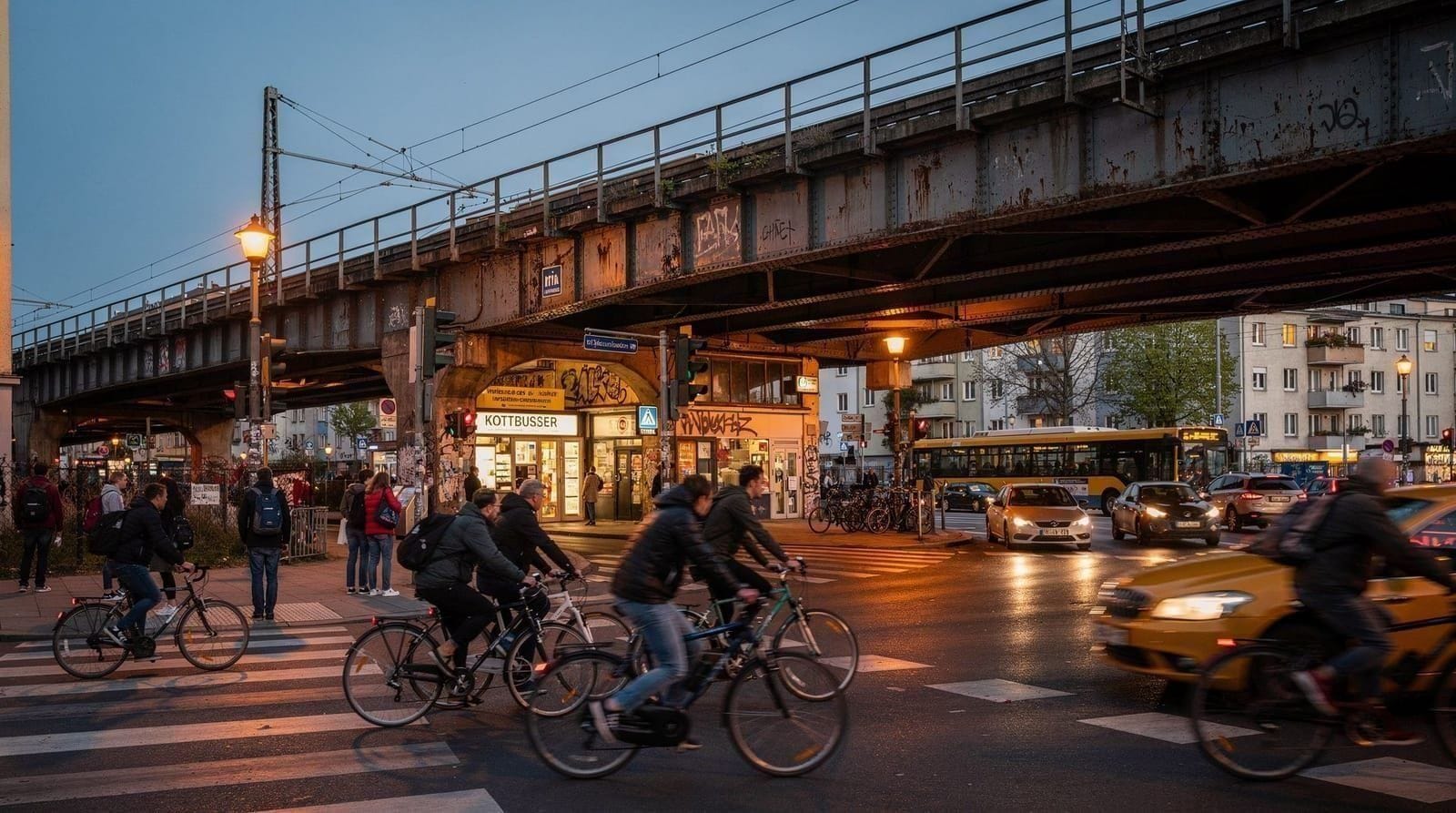
Location: South of the Landwehrkanal, either side of Kottbusser Tor (Kotti) and stretching toward Görlitzer Park (SO36 area) and Graefekiez (western Kreuzberg)
Character: Multicultural, street-art-dense, politically engaged. Kreuzberg has a large Turkish-German community (the Türkenmarkt on the canal is among Berlin’s best markets), an established alternative/squatter history (the Tacheles-era spirit lives on in attenuated form), and excellent casual food at all hours. Streets like Oranienstrasse and Wrangelstrasse have genuine neighbourhood character.
Walking distance from:
- Türkenmarkt (Tuesday/Friday): 5 minutes from many hotels
- Markthalle Neun (Thursday/weekend): 10 minutes
- East Side Gallery: 30 minutes on foot, or 15 min by U1
- Topography of Terror: 20 minutes
Price: Notably cheaper than Mitte. Hostel dorms from €20/night, private rooms from €60, boutique hotels from €90.
Drawbacks: Museum Island and the government quarter are a 25–30 minute transit ride. If museum-heavy first-timer itineraries are the plan, Kreuzberg requires more daily transit. The Görlitzer Park area (specifically around the park itself) has visible drug activity at night — not dangerous, but worth knowing.
Prenzlauer Berg — the residential choice
Best for: Families, coffee-culture aficionados, couples wanting quieter residential texture, longer stays
Location: Northeast of the city centre, north of Friedrichshain, east of Mitte
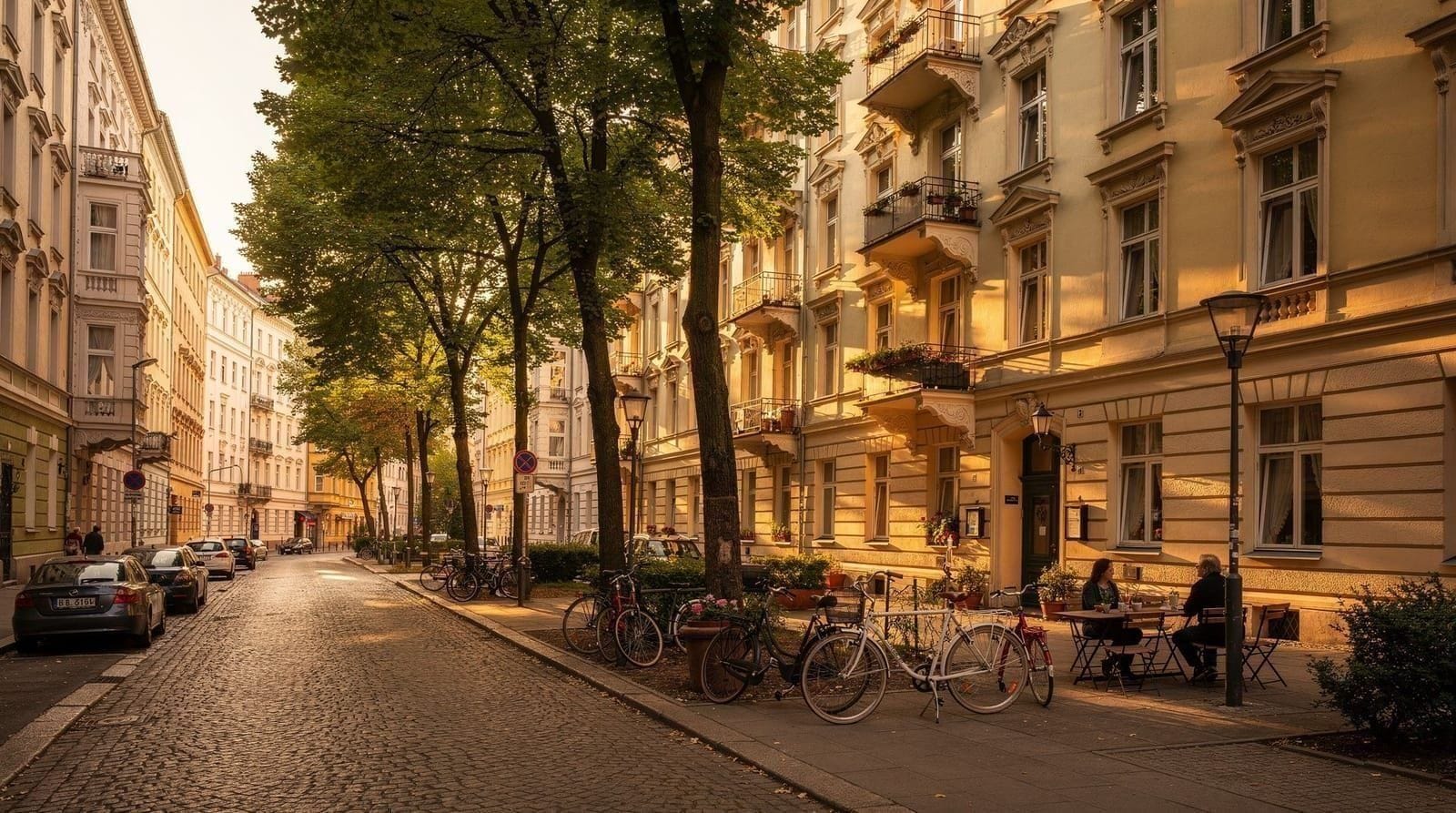
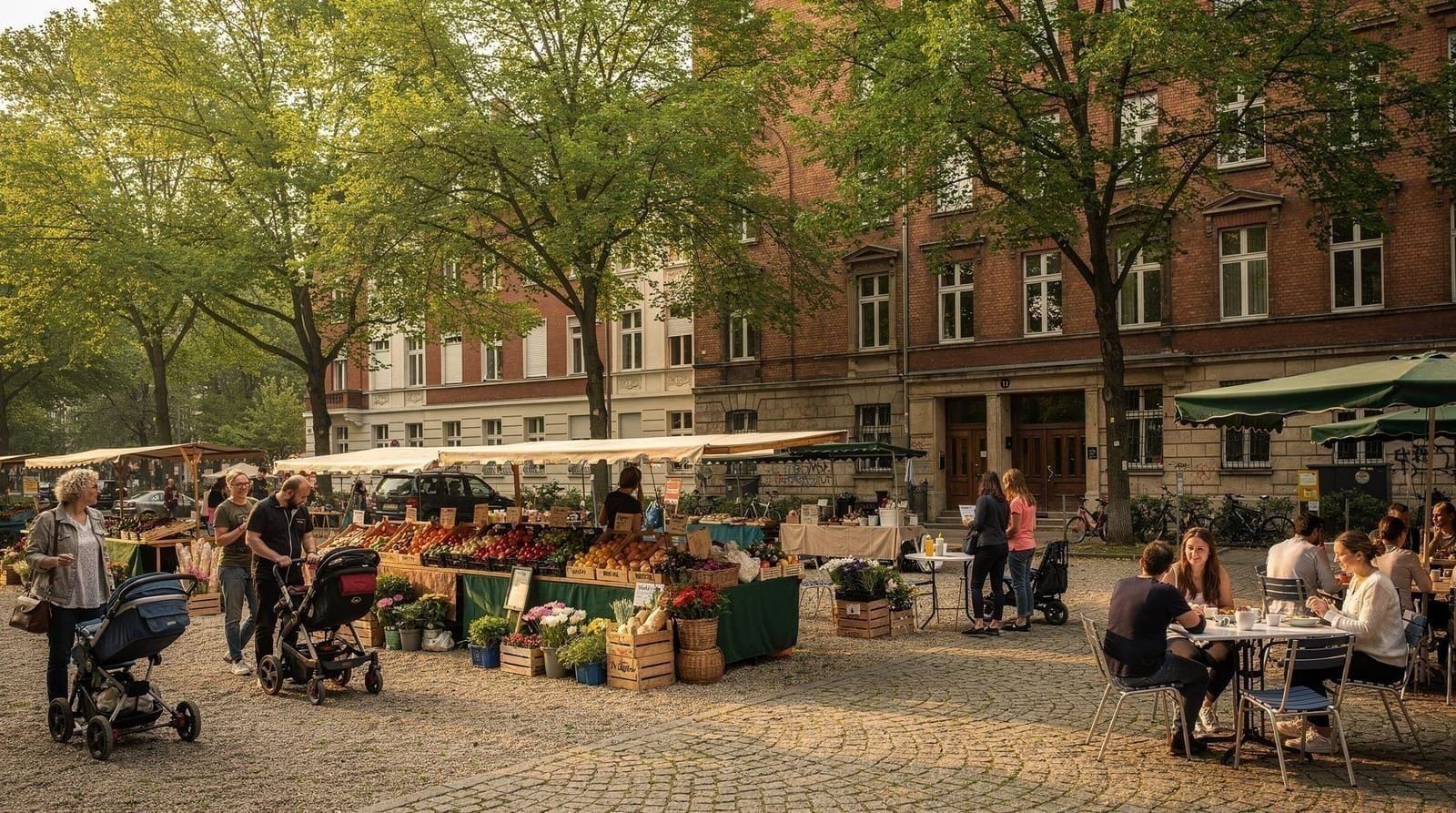
Character: Gentrified, green, comfortable. Prenzlauer Berg was working-class East Berlin before reunification and was rapidly gentrified from the mid-1990s onward. The result is a neighbourhood with beautiful 19th-century Altbau buildings, a dense café culture, and high concentrations of families with young children. The Kollwitzplatz Saturday market is one of Berlin’s most pleasant.
Walking distance from:
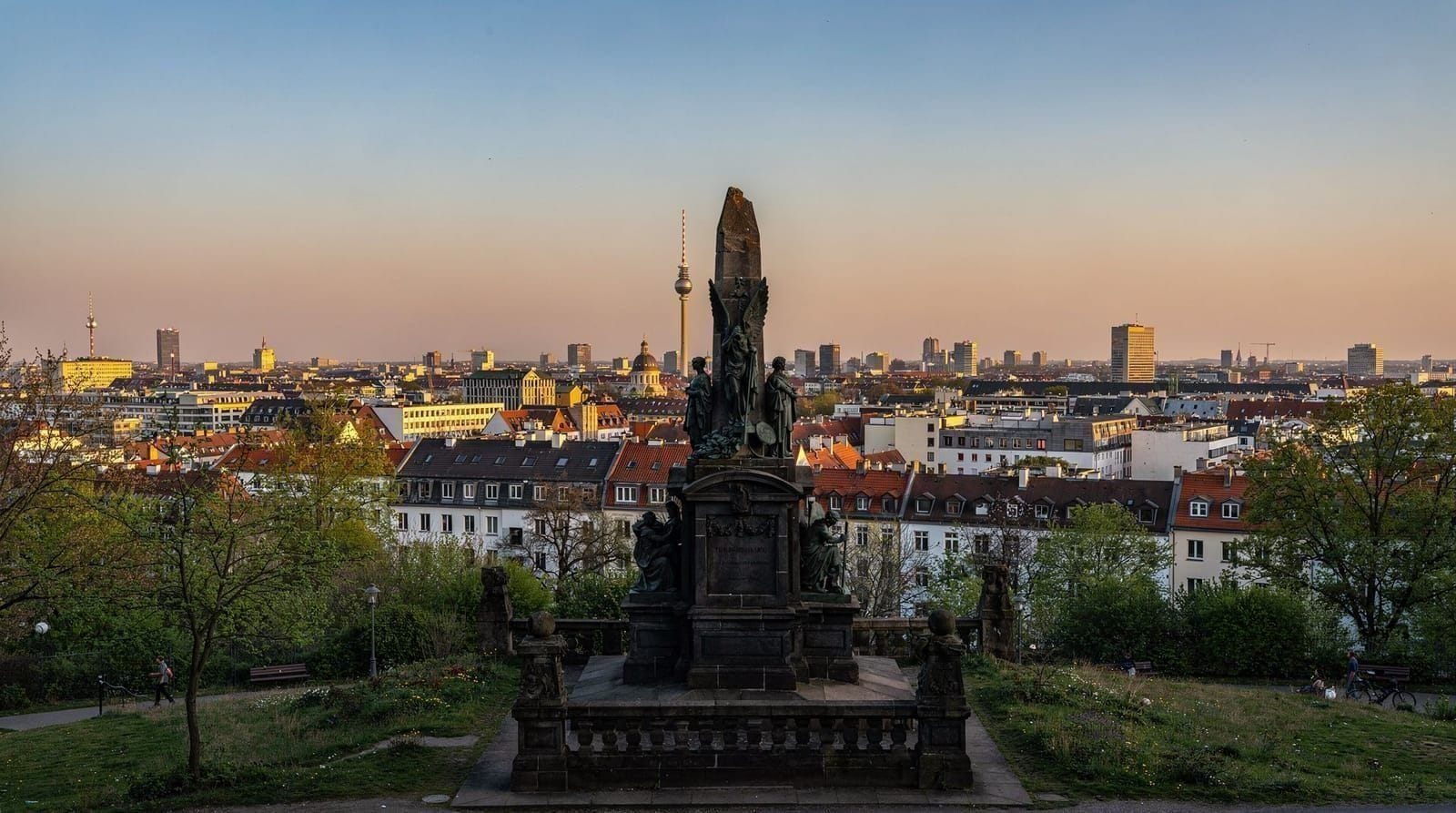
- Mauerpark (Sundays): 10–15 minutes
- Kulturbrauerei arts complex: 10 minutes
- Bernauer Strasse Wall Memorial: 20 minutes on foot
Transit to Mitte: U2 to Senefelderplatz or Schönhauser Allee, then U2 west (20 minutes to Alexanderplatz)
Price: Moderate. Boutique hotels and apartments from €75–120/night.
Drawbacks: Quiet by Berlin standards — good if you want that, limiting if you want the gritty Berlin energy. The well-heeled residential character can feel somewhat sanitised compared to Kreuzberg or Neukölln.
Friedrichshain — the budget and club base
Best for: Budget travellers, clubbing-focused visits, East Side Gallery proximity
Location: East of Mitte, south of Prenzlauer Berg, north of Kreuzberg across the Spree
Character: Young, slightly rough, energetic. Friedrichshain has the highest concentration of students and the cheapest bars. The Karl-Marx-Allee (the GDR’s showcase Stalinist boulevard) gives the area an unusual architectural character — enormously wide, lined with GDR-era buildings now housing supermarkets, cinemas, and cafés. The club district (Berghain, Tresor, Watergate, About Blank) is concentrated around the Warschauer Strasse/Ostbahnhof area.
Walking distance from:
- East Side Gallery: 5–15 minutes from many hotels
- Berghain area: 10–20 minutes
- Volkspark Friedrichshain: 10 minutes
Transit to Museum Island: S-Bahn from Ostbahnhof (10 minutes to Hackescher Markt)
Price: Cheapest inner-city area. Hostels from €18/dorm, private rooms from €55, budget hotels from €65.
Drawbacks: The surrounding area around Warschauer Strasse can be noisy at night. Less charming aesthetically than Prenzlauer Berg or Kreuzberg. Street-level commercial character around Frankfurter Allee is functional rather than interesting.
Charlottenburg — the western quarter
Best for: Upscale stays, shoppers, those preferring a quieter and more conventional neighbourhood feel, those visiting Charlottenburg Palace
Location: West central Berlin, centred on Kurfürstendamm (Ku’damm) and stretching toward the Schloss
Character: West Berlin’s commercial and cultural hub during the Cold War division, Charlottenburg has retained a prosperous, orderly character. The Kurfürstendamm is Berlin’s answer to the Champs-Elysées — wide, elegant, lined with luxury brands and KaDeWe (the largest department store in continental Europe). It feels more Munich than Berlin in some respects.
Walking distance from:
- KaDeWe: 5–10 minutes
- Charlottenburg Palace: 20–30 minutes on foot, or U7 to Richard-Wagner-Platz
Transit to East Berlin: 30–40 minutes by U-Bahn to Museum Island or Checkpoint Charlie
Price: Premium in the Kurfürstendamm hotel district. 4-star hotels from €150–250/night. Better value along the quieter residential streets west of the Schloss.
Drawbacks: Furthest from the Cold War and history sites that define Berlin’s identity. The area feels less “Berlin” than the eastern districts in terms of contemporary character. If your itinerary is East-focused, Charlottenburg requires significant daily transit.
Schöneberg — the LGBTQ+ quarter and local neighbourhood
Best for: LGBTQ+ travellers, those wanting a local residential feel with good transport, mid-range accommodation seekers
Location: South of Tiergarten, west of Kreuzberg
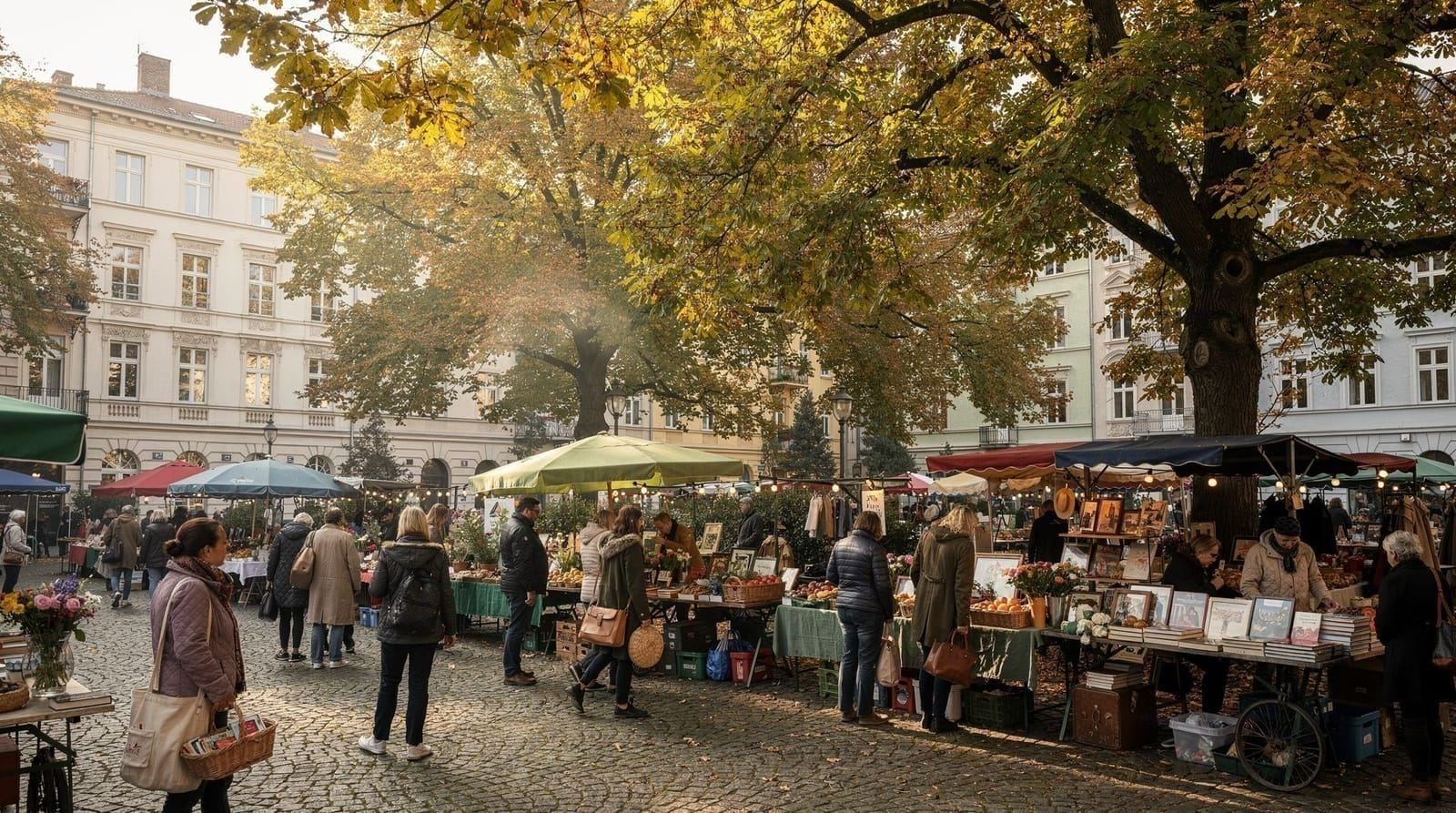
Character: Schöneberg’s Nollendorfplatz area is the traditional centre of Berlin’s gay community, with a dense cluster of bars, cafés, and community spaces. The wider Schöneberg neighbourhood is quiet, residential, and dotted with excellent independent businesses. The Winterfeldtmarkt (Wednesday and Saturday) is one of Berlin’s best neighbourhood markets.
Transit to Mitte: U4 to Nollendorfplatz, then U2 east (25 minutes total to Alexanderplatz)
Price: Moderate, slightly below Prenzlauer Berg. Private rooms and boutique hotels from €70–110.
Drawbacks: Not central for the main tourist circuit. Less discussed than hipper areas like Neukölln or Friedrichshain, which means less hostel-style accommodation for budget travellers.
Neukölln — the emerging local favourite
Best for: Travellers who’ve done the main circuit and want the most contemporary Berlin neighbourhood experience, nightlife-focused visits with a local feel
Location: South of Kreuzberg, stretching east from Schöneberg
Character: Neukölln (particularly the northern part, sometimes called Reuterkiez or Kreuzkölln) is the neighbourhood that replaced Kreuzberg as the address of choice for Berlin’s creative and alternative community. Arabic and Turkish communities are strong; the food options are excellent and cheap. Weserstrasse and Reuterstrasse have the most active bar scene. It’s also home to a large Vietnamese community around Sonnenallee.
Transit to Mitte: U8 north to Hermannplatz, then U8 continues to Alexanderplatz (20 minutes)
Price: Cheapest of the desirable areas. Airbnbs and short-term rentals dominate; hotel options are limited.
Drawbacks: Furthest from the main tourist sites. The U8 to Hermannplatz runs through some of Berlin’s least-attractive underground stations. Less relevant for a first visit focused on history and museums.
Practical comparison: which neighbourhood for which trip
| Trip type | Best neighbourhood | Second choice |
|---|---|---|
| First-timer, museum-focused | Mitte | Prenzlauer Berg |
| Budget, any trip type | Friedrichshain | Kreuzberg |
| Food and markets | Kreuzberg | Neukölln |
| Nightlife and clubs | Friedrichshain | Kreuzberg |
| Families with young children | Prenzlauer Berg | Charlottenburg |
| LGBTQ+ community focus | Schöneberg | Kreuzberg |
| Luxury stays | Charlottenburg | Mitte |
| Longer stay (1+ week) | Kreuzberg or Neukölln | Prenzlauer Berg |
| Cold War history focus | Friedrichshain | Mitte |
Staying in two neighbourhoods on a longer trip
For visits of five days or more, splitting your stay between two neighbourhoods is a reasonable strategy that many independent travellers overlook, assuming a single base is simpler. A common and effective split: 2-3 nights in Mitte to front-load the museum and monument circuit while jet lag is fresh and walking distance matters most, followed by 3-4 nights in Kreuzberg or Neukölln for the food, bars, and neighbourhood texture once you’re oriented and want a more local rhythm.
The transit cost of switching hotels mid-trip is real — repacking, checking in twice — but for a week or longer, it’s often worth it for the change of pace it forces. A single week entirely in one neighbourhood, however characterful, can start to feel repetitive; alternating between the monumental centre and a livelier residential district keeps the trip varied.
If you’re relying heavily on public transport to move between your base and the day’s plans, a 7-day AB zone ticket is the most efficient way to cover it, and it works identically regardless of which neighbourhood you’ve chosen — see the Berlin public transport guide for the full fare breakdown.
Check current Berlin WelcomeCard AB-zone pricing if you’re combining transport with attraction discountsA note on booking timing by neighbourhood
Accommodation availability tightens at different times depending on the area. Mitte and Charlottenburg hotels fill first for major events — Berlinale in February, trade fairs throughout the year — because they cater most directly to business and conference travel. Kreuzberg, Neukölln, and Friedrichshain, dominated more by short-term rentals and independent hotels, tend to have more last-minute availability outside of CSD Pride weekend in late June, when the entire city tightens up regardless of neighbourhood. If your dates are flexible and you’re booking less than two weeks out, checking Kreuzberg or Friedrichshain first often turns up better availability than the Mitte hotel district.
Frequently asked questions about Berlin neighbourhoods to stay in
Is Mitte a good place to stay in Berlin?
Mitte is the most central option and best for first-timers who want walkability to the Brandenburg Gate, Museum Island, and the government quarter. It is also the most expensive neighbourhood and most tourist-dense. The streets immediately around Checkpoint Charlie and Hackescher Markt are heavily commercialised. A few blocks off the main circuit, character improves considerably.Is Kreuzberg safe to stay in?
Yes. Kreuzberg has a long-standing reputation for alternative culture and immigrant communities that newcomers sometimes misread as dangerous. The neighbourhood is safe, vibrant, and full of excellent food and bars. The area around Görlitzer Park (known locally as Görli) has some drug dealing activity at night around the park itself, but this rarely impacts visitors staying in the wider Kreuzberg area.Is Prenzlauer Berg good for families?
Very — Prenzlauer Berg is one of Berlin's most family-oriented neighbourhoods, with high concentrations of playgrounds, café strollers, organic bakeries, and low-key parks. The Kollwitzplatz Saturday farmers market is a genuine neighbourhood institution. The neighbourhood is clean, quiet by Berlin standards, and has good U-Bahn connections to Museum Island and the government quarter.What is Friedrichshain like to stay in?
Friedrichshain is the cheapest inner-city option with good character. It's close to the East Side Gallery (5-minute walk from some hotels) and the main club district (Berghain, Tresor, About Blank). It's young, slightly rough around the edges, excellent for bars and budget food. It is not the most convenient base for Museum Island or Charlottenburg.Is Charlottenburg worth staying in?
Charlottenburg is West Berlin's main commercial and upscale quarter — the Kurfürstendamm shopping strip, KaDeWe department store, and Charlottenburg Palace are here. It feels more conservative and orderly than East Berlin districts. Good for luxury hotels, convenient for Tegel (former airport, now a development area), and less convenient for the Cold War and history sites in the east.Are there any areas to avoid in Berlin?
No absolute no-go zones for tourists. The areas around Hellersdorf and Marzahn (far eastern suburbs) are remote and have little to offer visitors, but are not unsafe — just inconvenient. The Görlitzer Park area in Kreuzberg has visible drug use but is not dangerous for passing visitors. Avoid leaving valuables visible in rental cars parked overnight anywhere in the city.Which neighbourhood is best for nightlife?
Friedrichshain (near Warschauer Strasse) is the best base for Berlin's club scene — Berghain, Tresor, Watergate, and About Blank are all within 15 minutes of the Frankfurter Allee/Warschauer Strasse area. Kreuzberg has excellent bars that run late. Neuköllner bars around Weserstrasse are the most local-feeling and currently the most-discussed area for the underground bar scene.