Where to stay in Berlin — neighborhood guide by traveler profile and budget
Berlin: Discover Berlin Half-Day Walking Tour
Which neighborhood in Berlin is best to stay in?
For first-timers focused on museums and sightseeing, Mitte or Prenzlauer Berg. For families wanting comfort and a quieter base, Charlottenburg or Prenzlauer Berg. For nightlife and alternative culture, Friedrichshain or Kreuzberg. For the best value with good food and transport, Neukölln or Kreuzberg. There is no single best neighborhood — it depends entirely on what you want from the stay.
Which Berlin neighborhood should you book? Berlin is a city of neighborhoods with radically different characters, and the one you choose as a base shapes your experience significantly. This guide compares the six main areas where visitors stay — Mitte, Charlottenburg, Prenzlauer Berg, Kreuzberg, Friedrichshain, and Neukölln — across price, character, transport access, and traveler profile fit. No neighborhood is universally best.
| Where | Six main areas: Mitte, Charlottenburg, Prenzlauer Berg, Kreuzberg, Friedrichshain, Neukölln |
| Cost | Around EUR 45–180/night depending on neighborhood and season |
| Time needed | Decide before booking; each area suits a different trip length |
| Getting there | All connected by U-Bahn, S-Bahn or tram within 5–25 minutes |
| Best time to book | Well ahead for June–August and the Christmas market season |
Before you choose: how Berlin’s geography works
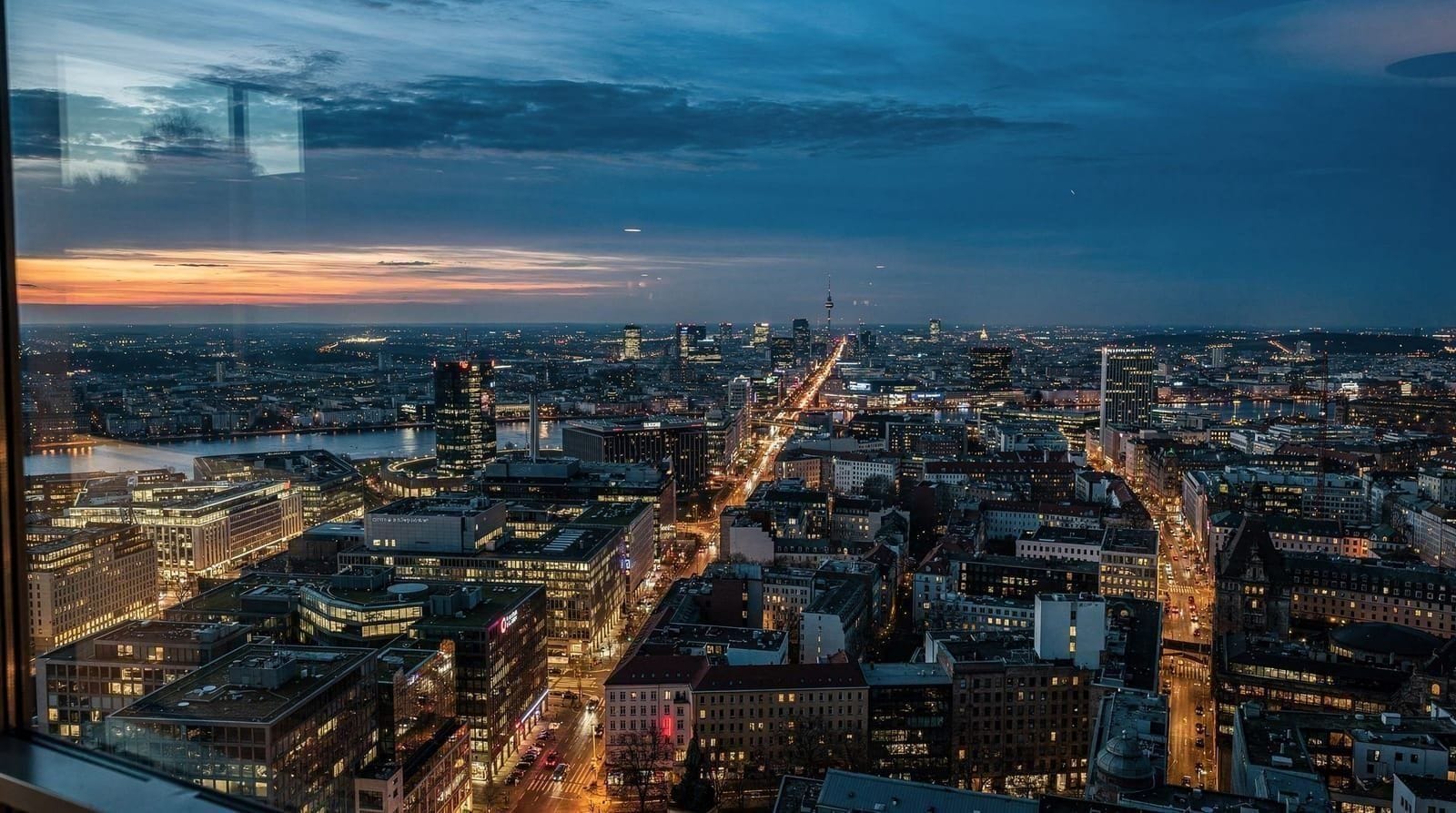
Berlin covers 892 km² — roughly nine times the area of Paris within the périphérique. The historical city center (Mitte) is not geographically central; the river Spree runs through it at a bend. The Cold War division created parallel infrastructure on both sides: two airports, two city centers, two transit networks that were only reunified after 1990. The result is a polycentric city where each major neighborhood has its own commercial street, its own feel, and its own reason for existing.
The main visitor neighborhoods cluster in two geographic zones:
Western zone (former West Berlin): Charlottenburg, Schöneberg, Wilmersdorf, Tiergarten Central-eastern zone (former East Berlin and the divided center): Mitte, Prenzlauer Berg, Friedrichshain, Kreuzberg, Neukölln
Transport between these zones is reliable but adds journey time. Plan around what you want to prioritize.
Mitte — best for: first-timers prioritizing walkable sightseeing
Character: Historic center, government district, Museum Island, Brandenburg Gate. Maximum tourist infrastructure, minimum authentic neighborhood character.
Price: EUR 90-180 per night for mid-range hotels. The most expensive Berlin neighborhood for accommodation.
Transport: Excellent. U2, U6, S-Bahn multiple lines, trams to Prenzlauer Berg. Walk to Museum Island, the Reichstag, and Checkpoint Charlie.
Best for: First-time visitors who want to walk to major sights without navigating transport. Short stays (2-3 nights) where coverage of the main landmarks is the priority. Business travelers.
Not ideal for: Anyone who wants to eat outside tourist-pricing zones, experience actual Berlin neighborhood life, or get value for money on accommodation.
The honest trade-off: You pay a premium and sacrifice character for convenience. On a 3-day trip focused on Museum Island and Wall history, this is a reasonable trade. On a 7-day stay, the premium is harder to justify.
Full detail: Berlin Mitte guide.
Charlottenburg — best for: comfort, shopping, and families
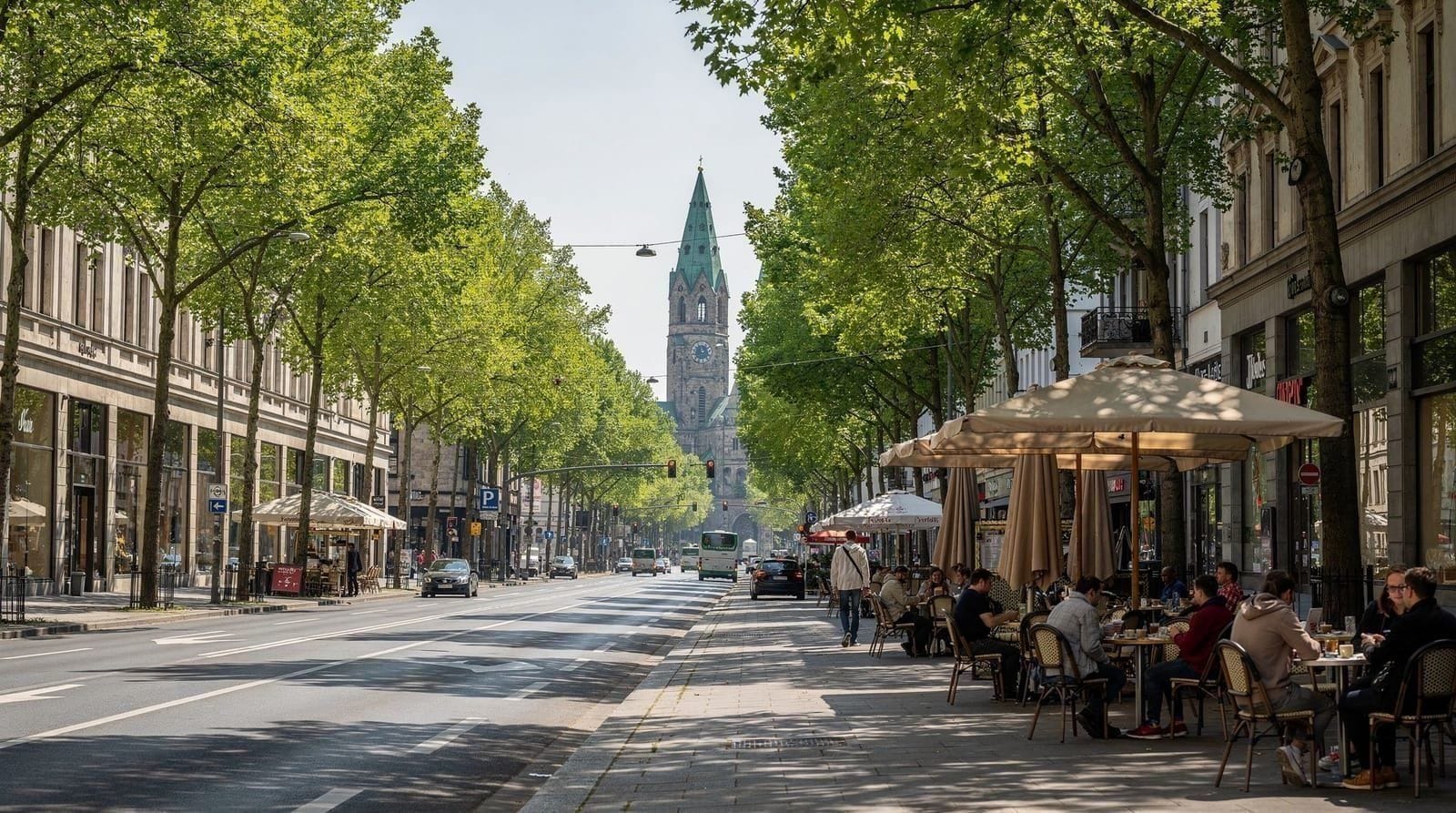
Character: West Berlin’s main district — polished, commercial, well-provisioned. Kurfürstendamm, KaDeWe, the Zoo, and Charlottenburg Palace. Higher hotel quality-to-price ratio than Mitte.
Price: EUR 80-160 per night for mid-range hotels. Wide range from budget near Zoo station to luxury on Ku’damm.
Transport: Very good. Zoologischer Garten is a major S-Bahn hub (S5/S7/S9 to Mitte in 15 minutes). U2 and U9 for north-south connections.
Best for: Families with children (Zoo, Aquarium nearby), shoppers (KaDeWe, Ku’damm), visitors who prioritize hotel quality and street-level safety. Travelers arriving from/departing to Hamburg or Hanover by IC train (stop at Zoo).
Not ideal for: Visitors focused on East Berlin history (Mitte, Wall, East Side Gallery are 25-30 minutes away), nightlife seekers, anyone who finds gentrified west European shopping streets depressing.
Full detail: Charlottenburg guide.
Prenzlauer Berg — best for: families, comfort, and character
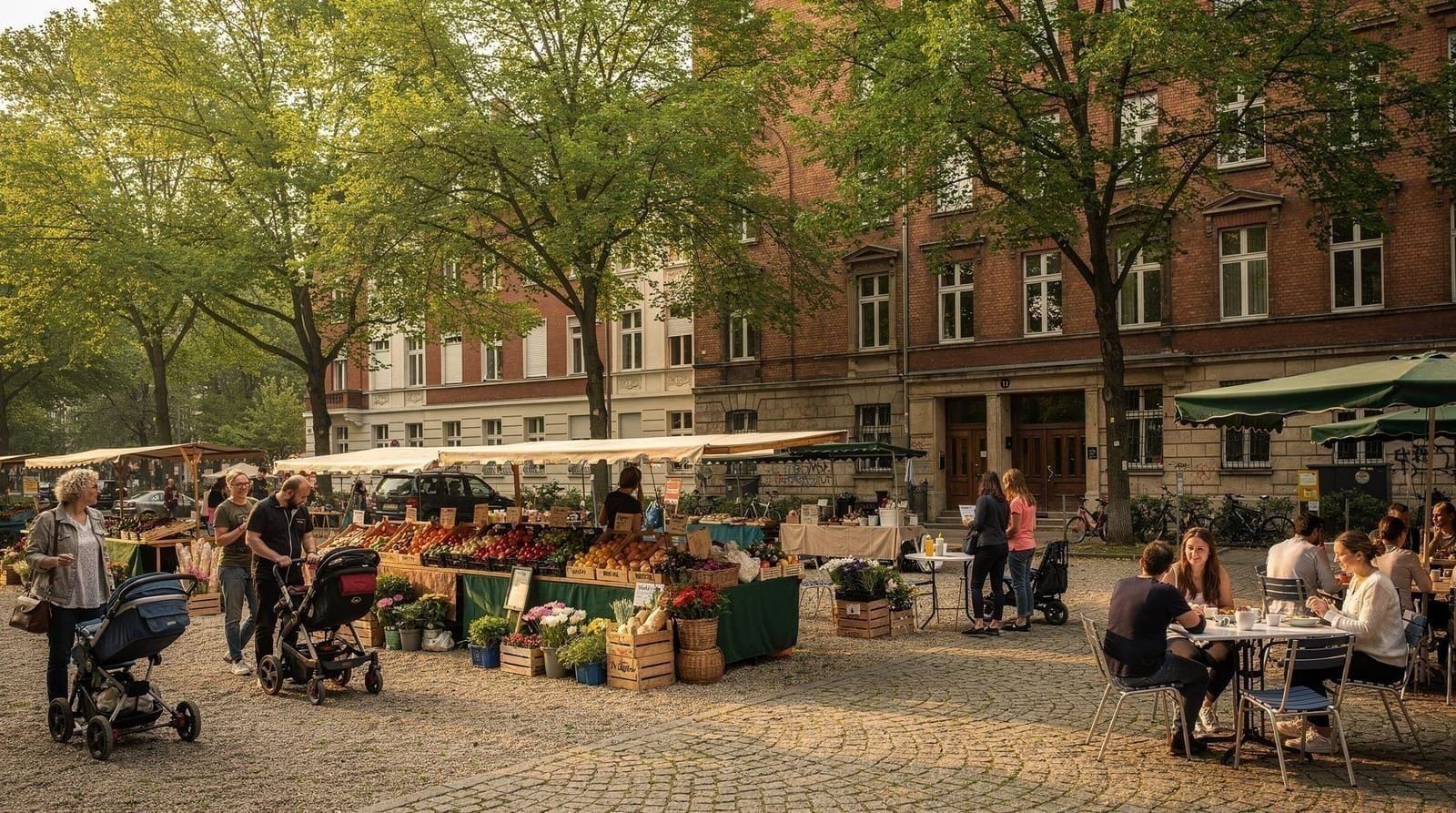
Character: The most successfully gentrified neighborhood in former East Berlin. Leafy streets, organic markets, excellent cafes, quiet evenings, strong transport connections. Higher proportion of families with children than almost any other Berlin neighborhood.
Price: EUR 80-130 per night for mid-range hotels. Slightly cheaper than Mitte, slightly more expensive than Kreuzberg.
Transport: Excellent for the center. Tram M1/M2 to Hackescher Markt (Mitte) in 8-10 minutes. U2 to Alexanderplatz in 6 minutes. The neighborhood is walkable internally.
Best for: Families, travelers who want a quiet residential base with genuine neighborhood character, visitors who want fast tram access to Mitte without paying Mitte prices. Good brunch culture.
Not ideal for: Nightlife-focused visitors (Prenzlauer Berg gets quiet by midnight), those seeking the edgiest version of Berlin culture, budget travelers (organic markets and neighborhood cafes are not cheap).
Full detail: Prenzlauer Berg guide.
Kreuzberg — best for: food, culture, and authentic Berlin
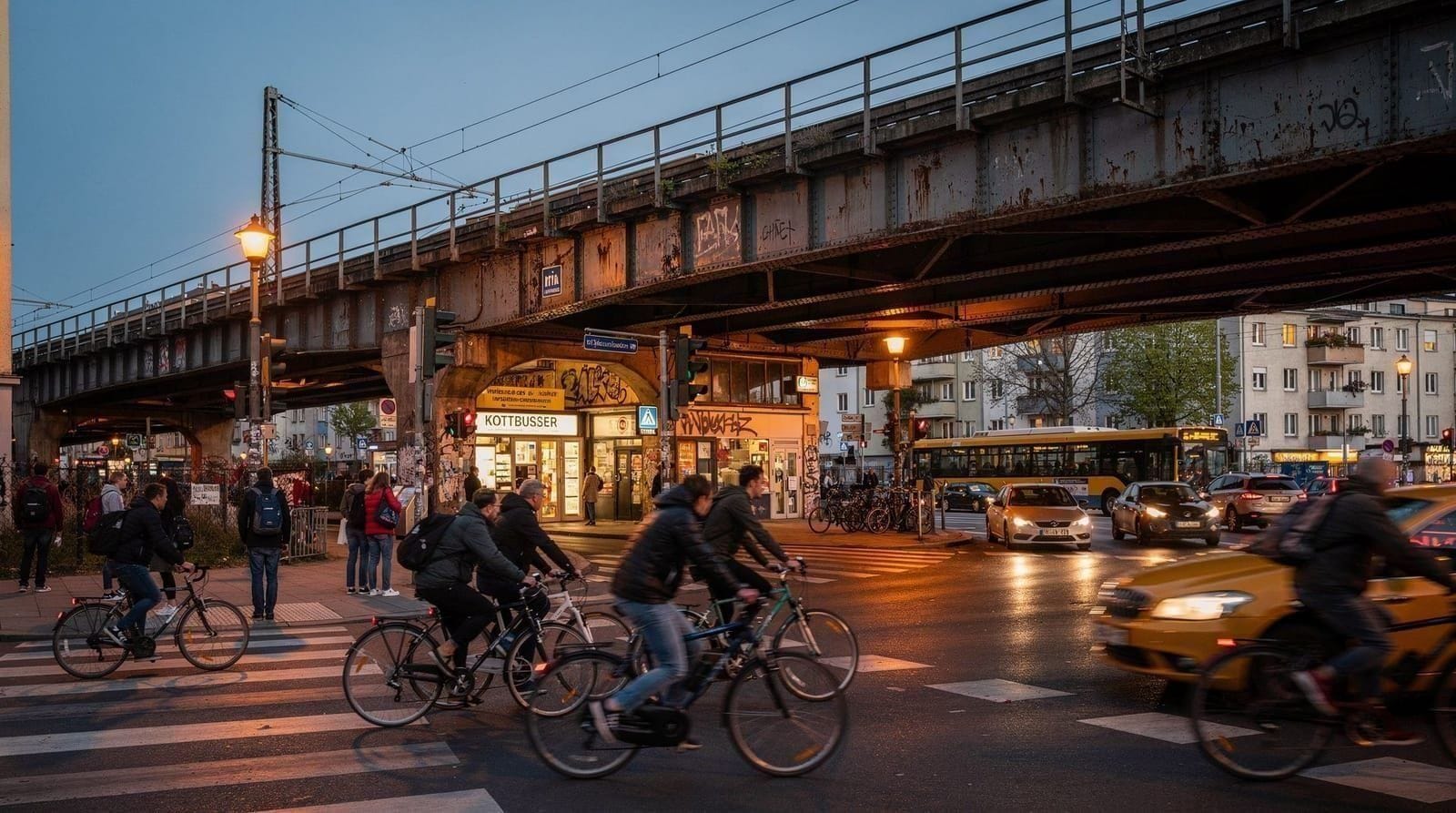
Character: Two neighborhoods in one: gentrified Bergmannkiez (west) and the Turkish-German SO36 (east). The city’s best food scene, genuine cultural diversity, solid nightlife, and the Topography of Terror close by.
Price: EUR 60-100 per night for mid-range hotels. Budget options from EUR 40. Hostels widely available.
Transport: Good but not seamless. U6 for Bergmannkiez, U1/U8 for SO36. Not as naturally connected to Mitte as Prenzlauer Berg.
Best for: Visitors who want to prioritize food, street culture, and neighborhood life. Travelers interested in the city’s alternative and immigrant communities. Anyone who finds tourist infrastructure alienating.
Not ideal for: Families who want a quiet base, visitors focused primarily on museum-hopping in Mitte (Kreuzberg is 15-20 minutes from Museum Island), those who need a clear tourist-service infrastructure.
Full detail: Kreuzberg neighborhood guide.
Friedrichshain — best for: nightlife and the East Side Gallery
Character: Industrial, energetic, the city’s primary nightlife district. East Side Gallery along the Spree, Berghain and the club scene, Karl-Marx-Allee GDR monumental architecture, Boxhagener Platz as a real neighborhood square.
Price: EUR 60-95 per night for mid-range hotels. Hostels from EUR 18-25.
Transport: Very good. S-Bahn at Warschauer Strasse and Ostbahnhof (S3/S5/S7/S9 to Alexanderplatz in 2 stops). U1 to Kreuzberg over the Oberbaum Bridge.
Best for: Nightlife-focused travelers (Berghain, RAW-Gelände, Watergate), visitors who want proximity to the East Side Gallery, travelers who want a younger, more energetic neighborhood atmosphere.
Not ideal for: Light sleepers (the area around Warschauer Strasse is loud until early morning on weekends), families, visitors focused on western Berlin or Charlottenburg (20+ minutes away).
Full detail: Friedrichshain guide.
Neukölln — best for: budget travelers and food diversity
Character: Berlin’s most multicultural district — Arab, Turkish, Vietnamese, and German communities sharing dense urban streets. Weserstrasse bar scene, Tempelhofer Feld, Sonnenallee, Rixdorf. The best value for money in inner Berlin.
Price: EUR 45-80 per night for budget to mid-range hotels. The cheapest inner-city option.
Transport: U7 and U8 give reasonable access to the center (Hermannplatz is 15 minutes from Kreuzberg, 25 minutes from Mitte by U-Bahn).
Best for: Budget-conscious travelers, anyone interested in genuine multicultural urban life, food lovers who want diversity at non-tourist prices.
Not ideal for: Visitors focused on Mitte sights (the commute adds up), those who want a polished hotel experience, first-timers who want tourist-facing infrastructure.
Full detail: Neukölln guide.
Quick comparison by traveler profile
First-time visitor, 3-4 days: Mitte or Prenzlauer Berg. Trade extra cost in Mitte for convenience; take Prenzlauer Berg if you want to feel a real neighborhood while staying 8 minutes from Hackescher Markt.
First-time visitor, 7+ days: Prenzlauer Berg or Kreuzberg (Bergmannkiez). Long enough to explore the city from a comfortable base without needing to be at the Brandenburg Gate doorstep.
Family with children (under 12): Charlottenburg (Zoo, Aquarium, palace day trip) or Prenzlauer Berg (parks, quiet streets, family restaurants).
Nightlife / 20s traveler: Friedrichshain (Berghain, RAW-Gelände, East Side Gallery) or Kreuzberg SO36 (Watergate, Oranienstrasse bar scene).
Food-focused traveler: Kreuzberg or Neukölln — both have the city’s best food diversity at realistic prices.
Budget traveler: Neukölln or Friedrichshain. Both have hostels from EUR 18-25 and restaurants at EUR 5-12 for a meal.
History and Cold War focus: Mitte (walking distance to Checkpoint Charlie, Holocaust Memorial, Reichstag) or Prenzlauer Berg (10 minutes from Bernauer Strasse Wall Memorial, tram to East Side Gallery).
Shopping and comfort: Charlottenburg. No contest.
Practical tips for booking
Book early for summer (June-August) and Christmas market season (November-December). These are Berlin’s peak periods and prices increase 20-40% above shoulder-season rates. The Christmas markets (late November through December) create a specific demand surge for Mitte hotels near Gendarmenmarkt and Breitscheidplatz.
Hostels in Berlin are genuinely good. The hostel infrastructure is well-developed across all neighborhoods — Circus Hostel (Mitte), Wombats (Mitte), Generator (Prenzlauer Berg), A&O (multiple locations). Budget EUR 20-30 per dorm bed for a well-run hostel.
Noise is a real consideration. Warschauer Strasse in Friedrichshain, the SO36 area in Kreuzberg, and the main Ku’damm in Charlottenburg are all significantly louder on weekend nights than the residential streets a few blocks away. Check specific hotel reviews for soundproofing rather than relying on neighborhood reputation.
Avoid the immediate vicinity of Alexanderplatz for quality accommodation — the area has some of the worst value-for-price hotels in the city (Park Inn excepted for its rooftop bar) and is not as convenient as it appears on the map.
Berlin hop-on hop-off 24h bus — useful for orientation when you first arrive in the cityGetting around: the BVG network basics
All six neighborhoods described above are well-served by the BVG public transport network (U-Bahn, S-Bahn, trams, and buses). The Berlin ABC ticket zone covers all inner-city travel; you only need the ABC zone extension for Potsdam, Sachsenhausen, or the Schönefeld terminal area.
Key prices (2026):
- Single AB journey: EUR 3.50 (valid for 2 hours, any direction, no re-entry)
- Day ticket AB: EUR 10.00 (valid from first validation until 3am next day)
- 7-day ticket: EUR 40.60
- WelcomeCard (tourist pass with museum discounts): EUR 25 for 48h, EUR 33 for 72h — see the is the Berlin WelcomeCard worth it guide for honest analysis
The tram is underrated. Most first-time visitors default to U-Bahn but trams (particularly M1, M2, M10) provide better connectivity in the Prenzlauer Berg and Mitte-east areas and often have shorter journey times than the equivalent U-Bahn route.
For detailed transport planning, see the Berlin public transport guide.
All six neighborhoods side by side
| Neighborhood | Price (mid-range) | Best for | Transport to Mitte |
|---|---|---|---|
| Mitte | EUR 90–180 | First-timers, short stays, walkable sightseeing | Already central |
| Charlottenburg | EUR 80–160 | Families, shopping, comfort | 15 min (S-Bahn) |
| Prenzlauer Berg | EUR 80–130 | Families wanting neighborhood character | 5–8 min (tram) |
| Kreuzberg | EUR 60–100 | Food, culture, authentic Berlin | 10–20 min (U-Bahn) |
| Friedrichshain | EUR 60–95 | Nightlife, East Side Gallery | 5–10 min (S-Bahn) |
| Neukölln | EUR 45–80 | Budget travelers, food diversity | 15–25 min (U-Bahn) |
Hotels vs Airbnb vs hostels
Berlin’s accommodation market has three genuinely competitive tiers rather than one dominant option. Hotels offer the most predictable experience and are heavily concentrated in Mitte and Charlottenburg. Airbnb and similar short-term rentals are well-represented across all six neighborhoods, especially Prenzlauer Berg, Friedrichshain, and Neukölln, and since the 2023 regulatory changes tightened registration requirements, remaining listings tend to be more reliably legal and better-reviewed than in earlier years — though prices are no longer the bargain they once were relative to hotels. Hostels are a genuine option even for travelers past their twenties: Berlin’s hostel scene is unusually well-run, with private rooms available at several properties for close to budget-hotel prices. For a short 3-4 night stay focused on sightseeing, a hotel in Mitte or Prenzlauer Berg simplifies logistics; for a week or more, an apartment rental in Kreuzberg or Neukölln often works out cheaper per night and gives you a kitchen, which matters if you’re visiting the Türkenmarkt or other food markets and want to cook.
First trip orientation
If it’s your first visit and the geography above still feels abstract once you land, a hop-on hop-off style overview or a guided walking tour in the first day or two helps the neighborhood distinctions click faster than reading about them in advance:
Berlin guided walking tour, English — a good first-day orientation before you settle into a neighborhood rhythmFrequently asked questions about Where to stay in Berlin
What is the most central neighborhood to stay in Berlin?
Mitte is the most geographically central and has the highest concentration of tourist sights within walking distance. However, "most central" in Berlin is less meaningful than in Paris or London because the city is large and the sights are spread across multiple neighborhoods. Prenzlauer Berg and Friedrichshain both offer fast U-Bahn or tram connections to Mitte while being cheaper and more characterful bases.Where should families with children stay in Berlin?
Charlottenburg (near the Zoo) or Prenzlauer Berg are the best family bases. Charlottenburg has the Zoo, the Aquarium, and well-maintained parks nearby. Prenzlauer Berg has excellent parks, quieter streets, and is well-connected to the Natural History Museum, Mauerpark, and Mitte by tram. Both neighborhoods are safer and quieter after dark than Kreuzberg or Friedrichshain.Which area is cheapest to stay in Berlin?
Neukölln and Wedding offer the lowest accommodation prices in inner Berlin — EUR 40-70 per night for budget hotels and EUR 60-90 for mid-range. Friedrichshain is slightly more expensive than Neukölln but cheaper than Mitte. Charlottenburg and Mitte are the most expensive, with mid-range hotels typically EUR 100-160 per night in peak season.Is it better to stay in West Berlin or East Berlin?
The East-West distinction matters less than neighborhood character. The historical division is real (and worth understanding) but the city has been reunified for 35 years. "West Berlin" neighborhoods like Charlottenburg and Schöneberg have a more polished infrastructure and commercial character. "East Berlin" neighborhoods like Prenzlauer Berg, Friedrichshain, and Kreuzberg have more diverse food and nightlife. The main practical difference is transport time to specific sights.How long does it take to travel between Berlin neighborhoods?
The S-Bahn from Zoologischer Garten (Charlottenburg) to Alexanderplatz (Mitte) takes 15 minutes. From Prenzlauer Berg (Schönhauser Allee) to Mitte (Hackescher Markt) takes 5-8 minutes by tram. From Kreuzberg (Kottbusser Tor) to Mitte (Stadtmitte) takes about 10 minutes by U6. Berlin is a large city but the BVG network is comprehensive and frequent.Are Berlin hotels expensive?
By European capital standards, Berlin is mid-range. A decent 3-star hotel in a good location runs EUR 80-120 per night, compared to EUR 150-200+ in London, Paris, or Amsterdam. Budget hostels start from EUR 15-25 per dorm bed. Airbnb is well-represented but increasingly competitive with hotels on price since 2023 regulatory changes. Peak season (June-September, Christmas markets in December) adds 20-40% to prices.What is the hotel situation near the airport BER?
Berlin Brandenburg Airport (BER) in Schönefeld has several adjacent airport hotels (Hilton, Sheraton, etc.) at EUR 100-170 per night. These are only useful for very early departures or arrivals. The airport is connected to Alexanderplatz by S-Bahn (S9, 45 minutes) and to Charlottenburg via the FEX express (28 minutes from Hauptbahnhof). Staying at the airport is rarely worth it for visitors spending more than one night in the city.
Top experiences
Bookable activities with verified prices and instant confirmation on GetYourGuide.