Neukölln guide — Berlin's most multicultural neighborhood, Weserstrasse, and Tempelhofer Feld
Berlin: Alternative Berlin Walking Tour
What is Neukölln in Berlin and is it worth visiting or staying in?
Neukölln is Berlin's most culturally diverse neighborhood — a large district with distinct zones ranging from the hip bar scene around Weserstrasse (now significantly gentrified) to the more working-class northern sections, the historic village of Rixdorf, and the enormous Tempelhofer Feld park on a former airport runway. It is a good base for travelers who want lower accommodation costs than Mitte or Charlottenburg, good food diversity, and proximity to Kreuzberg.
What is Neukölln in 2026? Neukölln is Berlin’s largest district by population and its most ethnically diverse — with residents from over 160 countries and one of the highest proportions of residents with a migration background of any European urban district. It also encompasses everything from some of Berlin’s cheapest housing to the gentrified bar scene of Weserstrasse, from the enormous Tempelhof airport park to the 18th-century Bohemian village of Rixdorf. Understanding Neukölln means holding these different realities simultaneously.
| Where | South of Kreuzberg, U7/U8/S41-42 |
| Cost | Budget €50–80/night; food from €5–10 per person |
| Time needed | Half a day for Weserstrasse, a full day with Tempelhofer Feld and Rixdorf |
| Getting there | U7/U8 to Hermannplatz or Karl-Marx-Strasse |
| Best for | Nightlife, cheap eats, budget stays, an afternoon in the park |
The parts of Neukölln that matter to visitors
Neukölln is too large to treat as a single neighborhood. Four areas have distinct visitor relevance:
Reuterkiez / Weserstrasse — the gentrified “Kreuzkölln” zone north of Herrfurtplatz, roughly bounded by Karl-Marx-Strasse to the east, the canal to the north, and Körtestrasse to the west. Bars, galleries, and restaurants. Lower prices than Kreuzberg proper, similar character.
Hermannplatz and Karl-Marx-Strasse — the commercial heart of working-class Neukölln. Busy, noisy, genuinely multicultural in the sense of multiple communities sharing the same streets. The Karstadt department store at Hermannplatz is a local institution.
Sonnenallee and northern Neukölln — the Arabic-language commercial strip, dense with Middle Eastern restaurants, grocery stores, and shisha cafes. One of the most concentrated Arab diaspora communities in Germany.
Tempelhofer Feld and southern Neukölln — the airport park and the quieter, more residential southern neighborhoods including Rixdorf.
Weserstrasse: the bar street and its context
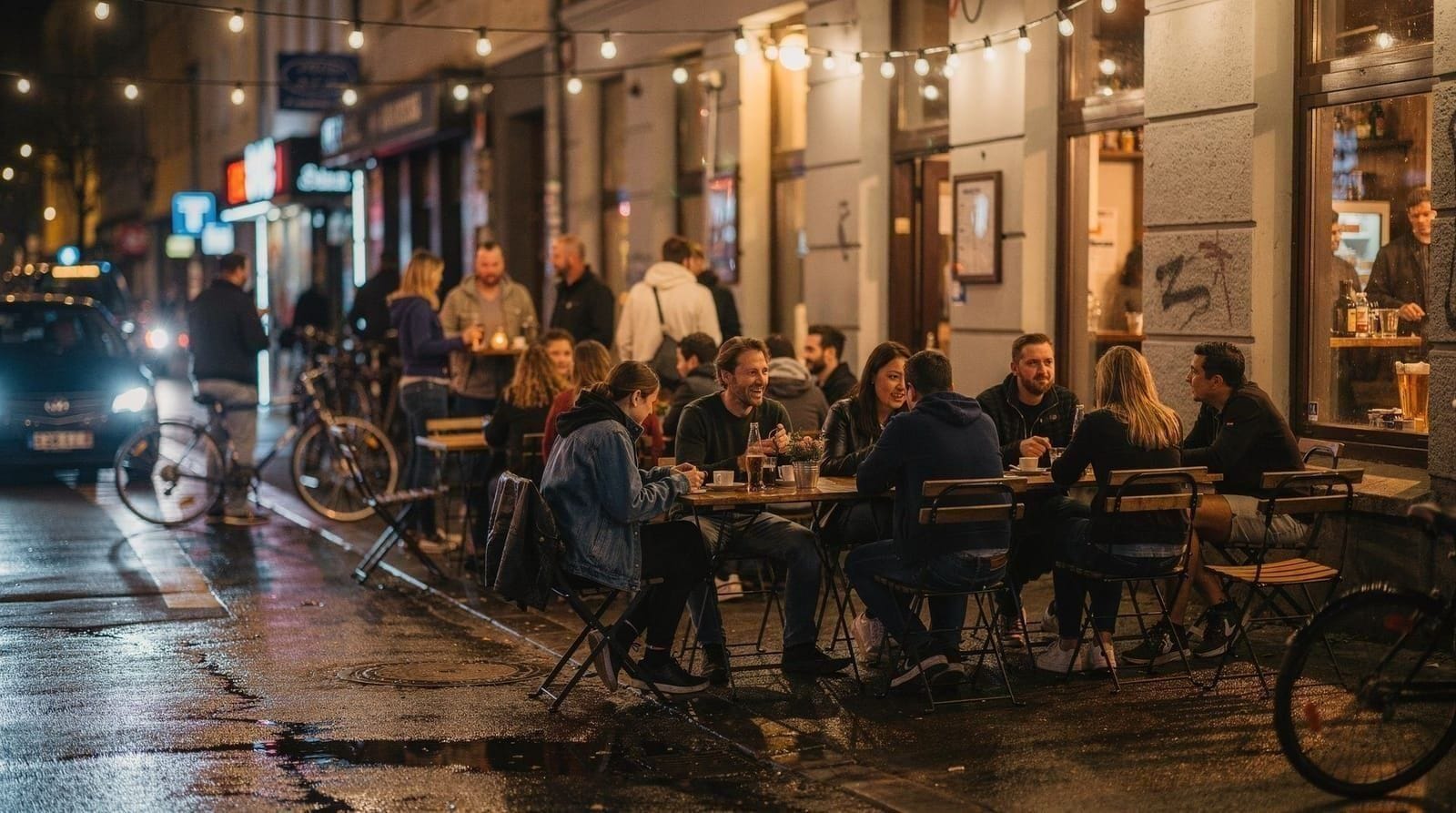
Weserstrasse became Berlin’s “it” street during the 2010s when rents in Kreuzberg pushed out the bars and artists who had defined that neighborhood. The pattern repeated: cheap spaces attracted creative businesses, those businesses attracted visitors, rents increased, and the original character transformed.
In 2026, Weserstrasse and its surrounding streets are solidly mid-gentrification. The bars that opened in empty storefronts now pay higher rents and charge prices closer to Prenzlauer Berg than to working-class Neukölln. The galleries have a more professional presentation. The restaurants have menu translations.
This is not a criticism — it is accurate calibration. What remains genuine: the bar density is real (20+ bars in 400 metres of Weserstrasse), the food variety is better than most comparable streets in Europe, and the crowd on weekend nights is more mixed in background than the Prenzlauer Berg equivalent.
Notable spots:
- Sameheads (Richard-Strauss-Strasse area) — underground music venue, irregular programming
- Tante Netti (Weserstrasse 48) — neighborhood bar with reasonable prices, regular crowd
- Café Rix (Karl-Marx-Strasse 141) — large, eclectic, operates in a former ballroom; open for coffee and meals
For the full nightlife context, see Berlin nightlife neighborhoods guide. Weserstrasse’s north side blurs directly into Kreuzberg across the canal — the two neighborhoods are best understood as a continuous zone rather than a hard border.
Alternative Berlin walking tour — covers Neukölln, Kreuzberg, and the city’s counterculture historyTempelhofer Feld: the airport park
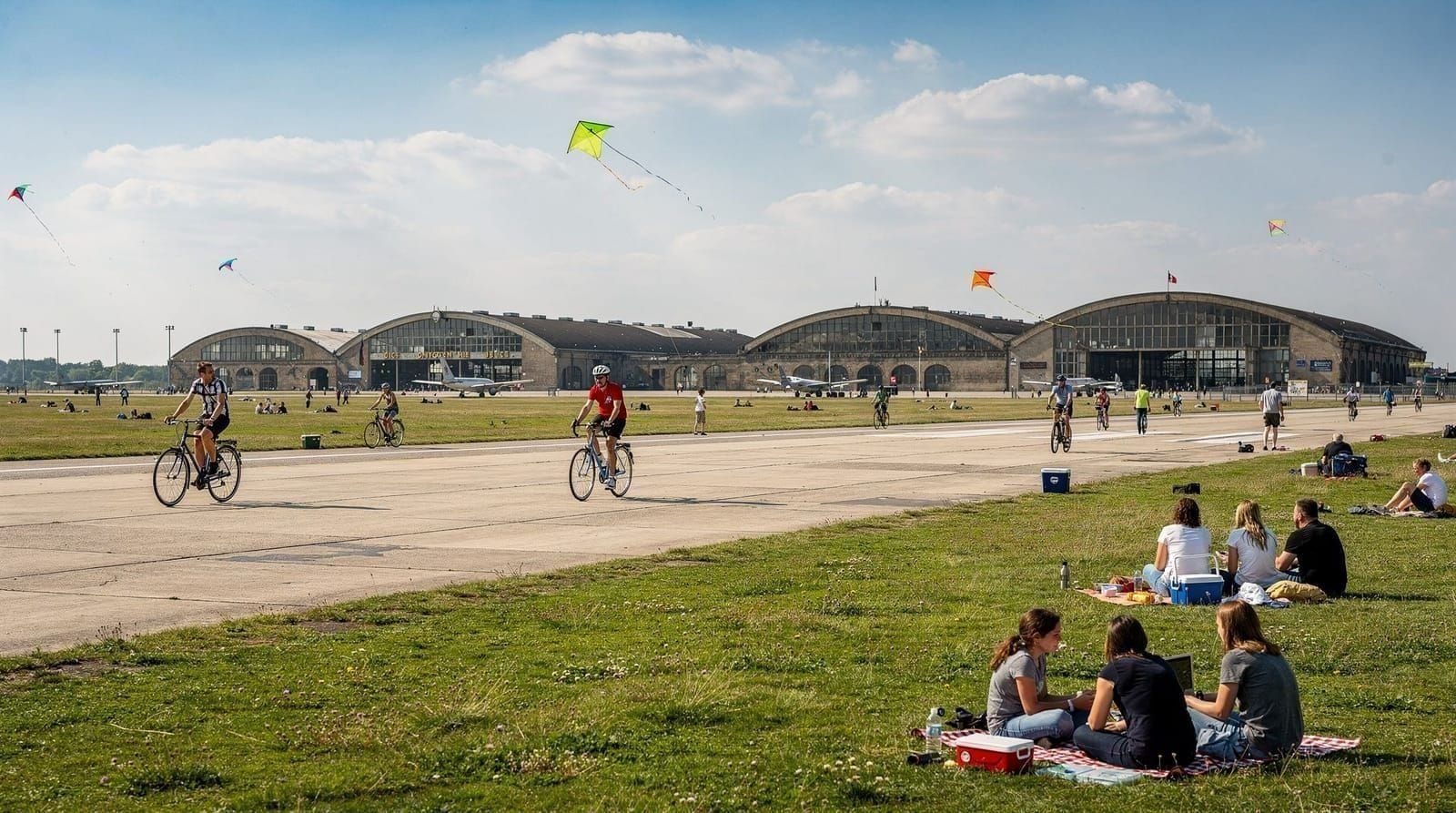
Tempelhofer Feld is one of the most unusual urban parks in Europe. The 355-hectare site (larger than Central Park in New York) was the Tempelhof Airport until 2008, when it closed despite significant political opposition. After a 2014 referendum blocked housing development on the site, it was formally designated a permanent park.
What you find there:
- Three original runways — still in excellent condition, used daily by cyclists, inline skaters, skateboarders, and kite flyers. The scale of the runways is genuinely disorienting at first — you can see for several kilometres in every direction with no obstruction.
- Urban gardens — a section of the park was allocated for community garden plots; several hundred plots are maintained by residents.
- The terminal building — designed by Ernst Sagebiel and completed in 1941, the Tempelhof terminal is one of the largest buildings in the world by footprint. Guided tours are available (EUR 14) and cover the building’s history from its pre-war construction through the Berlin Airlift (1948-49), when Tempelhof was the main receiving airport for Allied supply flights.
- The Berlin Airlift Memorial outside the terminal entrance commemorates the 13-month Allied operation to supply West Berlin by air when the Soviet Union blockaded land routes. The memorial design — three upward-reaching curves — is nicknamed “the hunger rake” (Hungerharke) by Berliners.
Entry to the park is free at all hours. Dogs are allowed in designated sections. The best time for the park is early morning or late afternoon on weekdays; weekend afternoons can be extremely busy.
See the Tempelhof Field guide for practical information on the gardens, terminal tours, and event schedule.
Sonnenallee: Arab Berlin
Sonnenallee runs diagonally through northern Neukölln, from Hermannplatz southeastward toward Britz. The stretch between Hermannplatz and Karl-Marx-Strasse is one of the most vibrant Arab commercial streets in Europe, with restaurant density comparable to neighborhoods in Beirut or Cairo rather than typical German streets.
Practical points:
- Most restaurants are BYOB or do not serve alcohol; the food quality ranges from good to excellent at prices 30-50% below comparable food in tourist zones
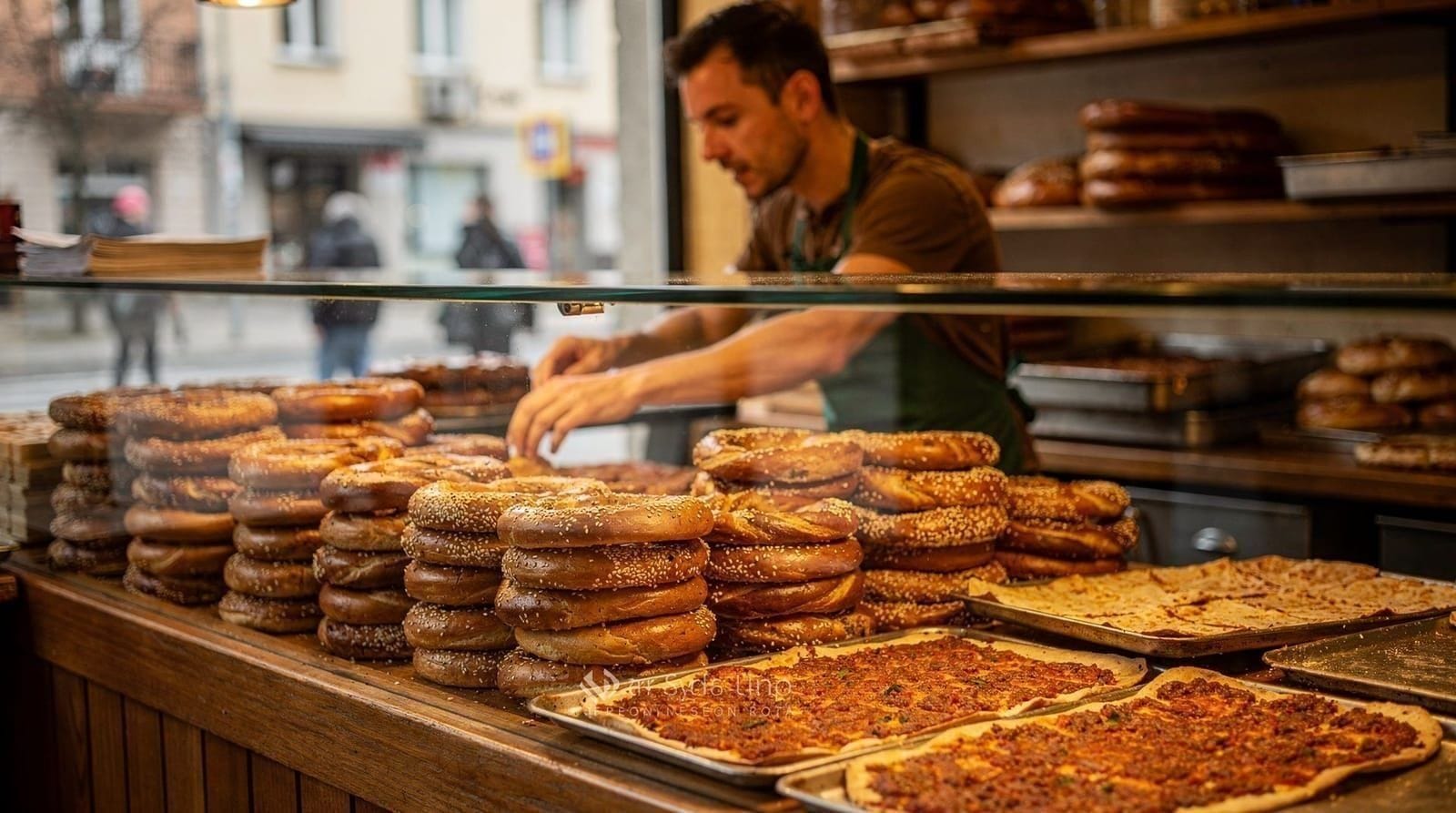
- The bakeries (particularly the Syrian and Lebanese bakeries) sell flatbreads, pastries, and sweets at very low prices
- The grocery shops stock products unavailable in standard Berlin supermarkets
- Shisha cafes are open late and do not require ordering food
The community here includes long-established Turkish and Arab families as well as more recent arrivals. The street has been reported in German media alternately as a problem area and as a model of urban integration — neither characterization is fully accurate. It is a working neighborhood street where multiple communities buy groceries and eat lunch.
Rixdorf — the Bohemian village
Rixdorf is the most historically unusual corner of Neukölln. In 1737, the Prussian King Friedrich Wilhelm I granted asylum to a group of Bohemian Protestant refugees who established a village on what was then farmland south of Berlin. The village layout they created — centered on Richardplatz with a church, a smithy, and residential buildings arranged around the square — survived Berlin’s expansion and can still be read in the urban fabric today.
Richardplatz now has several trees, the original Bethlehemskirche (1752), and the Dorfschmiede (village smithy, 1624 building on its current site) which still operates as a working blacksmith. The smithy is one of the oldest continuously operating craft workshops in Berlin. Occasional demonstrations are open to the public.
The rest of Rixdorf (streets around Böhmische Strasse) is a mix of old and new residential buildings without the architectural density that would make it a standard tourist destination, but the Richardplatz core is worth a specific visit for anyone interested in the city’s pre-industrial history.
Where to eat in Neukölln
The honest assessment: Neukölln is one of the best neighborhoods in Berlin for eating at non-tourist prices.
Cheap and reliable: Sonnenallee strip for Arab food (EUR 5-10 per person), the Vietnamese restaurants on Hermannstrasse (EUR 8-12), and the Turkish bakeries around Flughafenstrasse (breakfast for EUR 2-4).
More sit-down: The area around Reuterkiez has better-quality restaurants at mid-range prices. Lavanderia Vecchia (Boddinstrasse 3) in a former laundry is a well-regarded Italian restaurant that requires reservations. Café Morgenland on Skalitzer Strasse (the Kreuzberg side of the canal) is a reliable weekend brunch option.
Markets: The Türkenmarkt (Tuesday and Friday, Maybachufer) and the Rixdorf market (irregularly, Richardplatz) are the main market draws. See the Berlin Turkish food guide for the full market and restaurant map.
Where to stay in Neukölln
Neukölln is Berlin’s most affordable inner-city accommodation option. Budget EUR 50-80 per night for a basic double, with budget hotels and Airbnbs from EUR 40-60. The trade-off is distance from the major tourist sites: Museum Island and Mitte are 30-40 minutes by U-Bahn.
Best positions:
- Around Hermannplatz (U7/U8) for maximum transport connectivity
- On or near Reuterkiez/Weserstrasse for the bar and restaurant scene within walking distance
- Near the Landwehrkanal for the most pleasant immediate environment
The south of the district (around Tempelhof station) is too quiet and too far from anything to recommend as a visitor base unless you specifically want access to the airport park.
For the full comparison including other neighborhoods, see where to stay in Berlin. For how Neukölln fits into Berlin’s wider district map, the Berlin neighborhoods overview is the starting point, and Friedrichshain is the closest comparable neighborhood for visitors weighing which east-side district suits them best.
Neukölln versus Kreuzberg and Friedrichshain: which one fits you
Visitors often struggle to choose between Berlin’s three most talked-about “alternative” neighborhoods. Kreuzberg is the most established and central, with the highest visitor density and the most tourist-facing infrastructure — good if you want alternative culture without sacrificing convenience. Friedrichshain leans younger and more clubbing-focused, with Berghain and the RAW-Gelände as anchors — best for nightlife-first visitors. Neukölln is the least polished of the three and the most genuinely mixed, with cheaper accommodation and food but a longer commute to Mitte’s major sights. If budget and an unfiltered slice of everyday Berlin matter most, Neukölln wins; if convenience matters more, Kreuzberg is the safer choice.
Frequently asked questions about Neukölln guide
What is the Weserstrasse area in Neukölln?
Weserstrasse and the surrounding streets (Reuterstrasse, Maybachufer, Pannierstrasse, Hobrechtstrasse) form the "Kreuzkölln" zone — the area between Kreuzberg and Neukölln that became Berlin's second wave of hip neighborhood development in the 2010s. It is characterized by bars, small galleries, vintage shops, and restaurants serving a mix of local residents and visitors. The area is now well into the gentrification arc that Kreuzberg completed a decade earlier.What is Tempelhofer Feld?
Tempelhofer Feld is a 355-hectare public park occupying the former Tempelhof Airport, which closed in 2008. The runways are still in place and are used for cycling, inline skating, and urban gardening. The park is free, always open, and has become one of Berlin's most used green spaces. A 2014 referendum blocked plans to build housing on the site; it remains entirely open as a park. The historic terminal building (designed in 1939 for the Nazi-era expansion of the airport) can be toured.What is the Turkish Market in Neukölln?
The Türkenmarkt runs every Tuesday and Friday along Maybach Ufer (the north bank of the Landwehr Canal in Neukölln). It sells fresh produce, fish, olives, cheeses, fabric, and clothing. Despite the name it serves the broader Turkish and Arab community across both Neukölln and Kreuzberg. The canal setting is pleasant; arrive before noon for the best selection. This is the same market described in the Kreuzberg guide — it straddles the canal border.Is Neukölln safe?
Northern Neukölln (around Karl-Marx-Strasse north of Hermannplatz) has a higher crime rate than the rest of the district and a reputation for occasional street incidents — it is not particularly dangerous for tourists but can be uncomfortable. The Weserstrasse and Reuterstrasse areas are generally safe at all hours. Tempelhofer Feld is popular and safe until dark. Neukölln is overall a safe neighborhood with localized pockets of tension.What is Rixdorf in Neukölln?
Rixdorf is a historic village (Bohemian Colony) in southern Neukölln that was incorporated into greater Berlin in 1920. It retains a distinct character from the surrounding 19th-century grid: a village square (Richardplatz) with a blacksmith's workshop, an old church, and the original Bohemian village layout. The Bohemian community (Protestant refugees from Bohemia) settled here in 1737; the smithy on Richardplatz has operated continuously since the 18th century.What U-Bahn and S-Bahn lines serve Neukölln?
The U8 runs through Hermannplatz and Karl-Marx-Strasse (northern Neukölln) and is the main connection to Mitte and Friedrichshain. The U7 runs through Neukölln (Neukölln station, Karl-Marx-Strasse, Rathaus Neukölln) and connects to Kreuzberg (Hermannplatz, Mehringdamm) and Charlottenburg. The S-Bahn (S41/S42 ring) serves Neukölln station for connections to the ring. The Ringbahn is useful for cross-city journeys without going through the center.What food is Neukölln known for?
Neukölln has one of the most diverse restaurant scenes in Berlin — Arab, Turkish, Vietnamese, West African, and Korean food are all well-represented and mostly at genuine neighborhood prices rather than tourist pricing. The Sonnenallee strip (nicknamed "Arab Street" informally) runs through northern Neukölln with Middle Eastern restaurants, bakeries, and shisha cafes. Sonnenallee between Hermannplatz and Britzer Damm is the densest stretch.Should I choose Neukölln or Kreuzberg as a base?
Choose Kreuzberg for convenience — it is more central, better connected, and has more tourist-facing infrastructure while still offering an alternative, non-corporate feel. Choose Neukölln if budget matters more than proximity, or if you want a less filtered, more genuinely local experience with cheaper food and accommodation. Many visitors base themselves in Kreuzberg and simply cross into Neukölln for an evening on Weserstrasse, since the two neighborhoods border each other directly.
Top experiences
Bookable activities with verified prices and instant confirmation on GetYourGuide.