Berlin food bucket list — 12 things you must eat before you leave
| Budget per dish | €1.20 (Pfannkuchen) to €26 (schnitzel sit-down) |
| Best districts | Kreuzberg, Prenzlauer Berg, Mitte, Charlottenburg |
| Cash needed | Yes, several places are cash-only |
| Best time | Lunch for pho, afternoon for döner and Pfannkuchen |
| Book ahead | Zur Letzten Instanz on weekends |
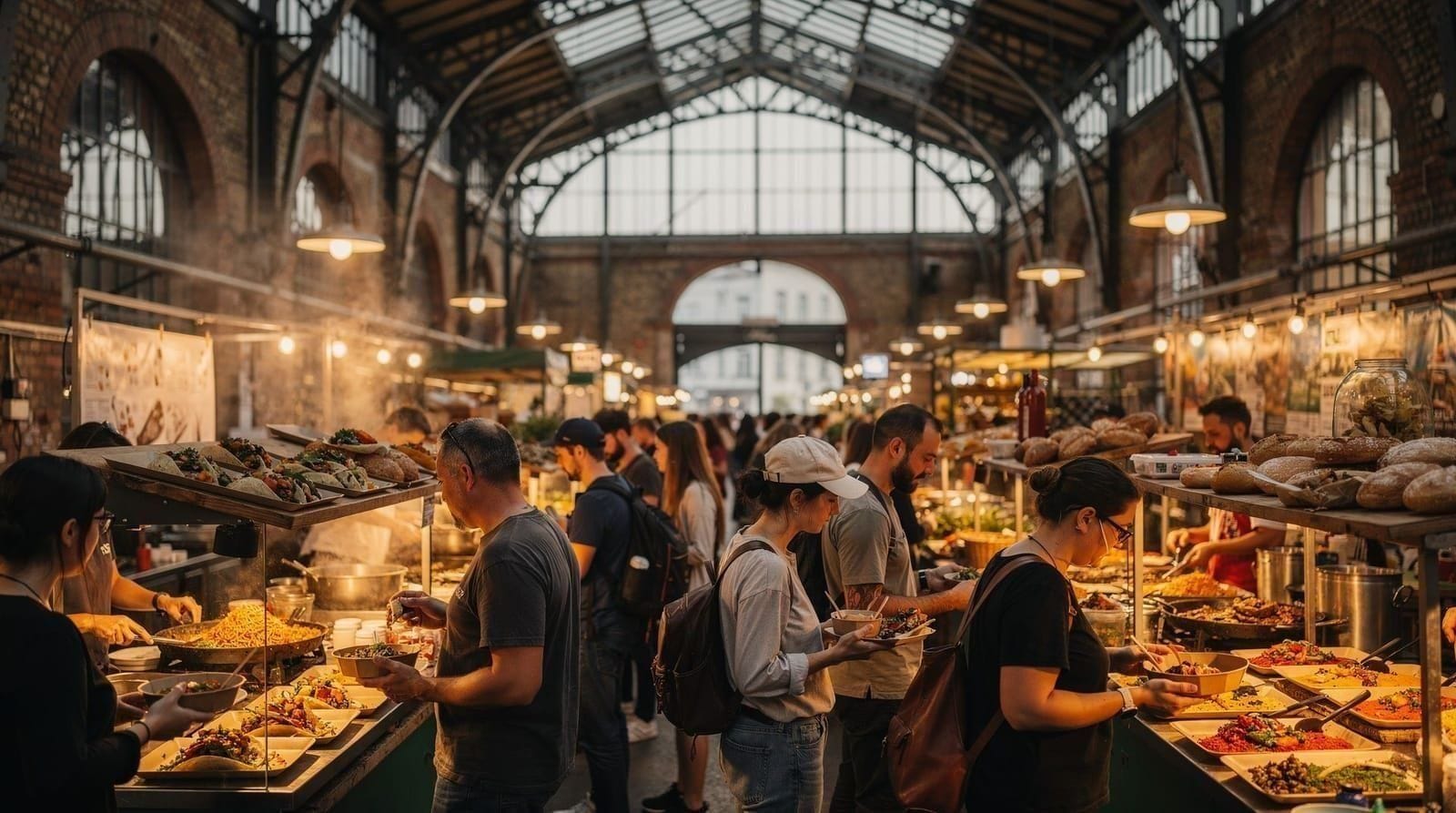
Berlin is not a fine-dining capital. It doesn’t try to be. What it does instead is absorb fifty years of immigration, invention, and economic pressure into something genuinely its own — a food culture that’s gritty, multicultural, cheap when it needs to be, and occasionally brilliant. This is a city where a €3.50 currywurst eaten standing at a kiosk will stay in your memory longer than a €40 main course at a trying-too-hard restaurant.
These are the 12 things you need to eat or drink before you leave. No restaurants that exist to photograph well. No “hidden gems” that are secretly all over Google. Just real places, real prices, and the honest case for each one. For the broader map of where to eat what, the Berlin street food scene guide gives you the neighbourhood breakdown.
1. Currywurst — and yes, the debate matters
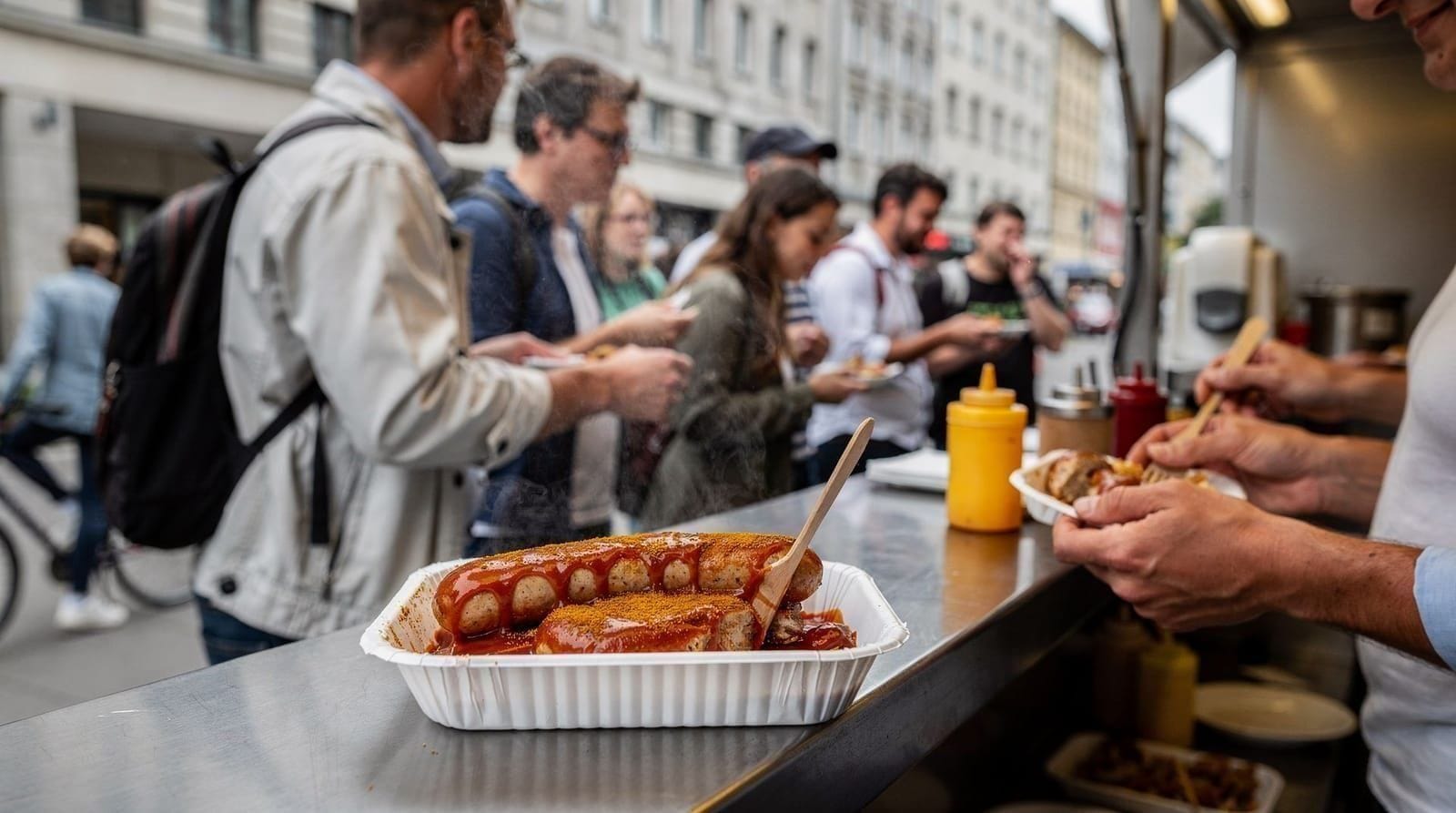
You have to eat currywurst. That part is non-negotiable. What is negotiable is where you eat it, and the answer shapes the experience entirely.
The two names you’ll hear: Curry 36 and Konnopke’s Imbiss. They are not interchangeable.
Curry 36 (Mehringdamm 36, Kreuzberg) is the famous one. It opens late, it’s near a busy U-Bahn junction, and it attracts tourists and locals in roughly equal measure. The sauce is bright red, vinegary, moderately spiced, and the sausage is pork with casing. Queue moves fast. Price: around €3.50–€4 for a portion with a bread roll.
Konnopke’s (Schönhauser Allee 44a, Prenzlauer Berg, under the elevated U2 tracks) has been there since 1930. The sausage is skinless — softer, smoother — and the sauce is a slightly different formula, more tomato-forward and less vinegary. It’s the East Berlin version and it has its own loyalists. Same price range.
My take: start with Curry 36 if you’re staying in Kreuzberg, Konnopke’s if you’re in Prenzlauer Berg. Don’t agonise over the “correct” answer. Both are good. The experience of eating currywurst standing up outside in cold air is the point. The full backstory and sauce-ranking breakdown lives in the currywurst guide.
2. Döner — the Mustafa’s question
Every Berlin food list mentions Mustafa’s Gemüse Kebab (Mehringdamm 32, Kreuzberg). Every Berlin food list then says the queue is 45 minutes. Both things are true, and the question is whether it’s worth it.
The short version: yes, once. Mustafa’s is not a regular döner. The bread is toasted on the grill, the vegetables are grilled not raw, and there’s a squeeze of lemon juice at the end that changes the whole thing. The line moves faster than it looks. Around €5.50–€6 with extras.
The longer version: Rüyam Gemüse Kebab (Belziger Str. 59, also Schöneberg) is the counterpoint, opened by a former Mustafa’s employee, with a near-identical approach and rarely a wait. Many people who’ve tried both say Rüyam is better. I lean toward Rüyam for repeat visits purely because of the friction reduction.
Either way, get the Gemüse Döner (with grilled vegetables), not the plain meat version. And get it for lunch — afternoon, when the bread and sauce are fresh.
3. Berliner Pfannkuchen
This one causes genuine confusion: outside Berlin, “Berliner” refers to a jam-filled doughnut. Inside Berlin, locals just call it Pfannkuchen. It’s the same thing. Deep-fried dough, filled with plum jam or rose hip jam, dusted with icing sugar.
The right place to eat one is Bäckerei Wiedemann (multiple locations across the city, the Schöneberg branch on Goltzstraße is reliable) or any of the bakery chains operating since before reunification — Dat Backhus, Siebert branches. Avoid the ones from supermarket chains, which use stabilised dough.
Price: €1.20–€1.80. Eat it fresh, still slightly warm. The jam-to-dough ratio is the thing to judge: a good Pfannkuchen has enough filling that it squeezes out when you bite into it.
This is not a special occasion food. It’s a Tuesday morning food, eaten at a standing counter with a coffee. That’s the correct version of the experience.
4. Schnitzel at Zur Letzten Instanz
Berlin has exactly one restaurant that can claim to have served Frederick the Great, Napoleon, and Beethoven (according to the plaque on the wall — take that with appropriate scepticism). Zur Letzten Instanz (Waisenstraße 14-16, Mitte) has been open since 1621, making it the oldest restaurant in Berlin still operating under a food service function.
The schnitzel here is Wiener Schnitzel — veal, thin, breaded, pan-fried in butter until the crust blisters slightly away from the meat. It comes with a lemon wedge and either potato salad or fries. Around €22–€26. This is not a budget meal.
What you’re paying for is atmosphere: low ceilings, dark wood, oven tiles from a previous century, and a sense that the building has absorbed an implausible amount of German history. It’s touristy. It’s also legitimately good. Go for lunch when it’s quieter. Book ahead on weekends.
The Berlin breakfast and brunch guide covers other old-school spots if you want more historical dining context.
5. Vietnamese food in Mitte — the Dong Xuan Center orbit
Berlin has one of Europe’s largest Vietnamese communities, concentrated in former East Berlin districts. The centre of gravity is the Dong Xuan Center in Lichtenberg (Herzbergstraße 128-139) — a wholesale market complex that functions as the economic and social hub of Berlin’s Vietnamese community. It’s not pretty. It is real.
Around the Dong Xuan Center and in Mitte’s Brunnenstraße corridor, you’ll find restaurants that cater almost exclusively to Vietnamese customers and residents. Pho Thin (Brunnenstraße 176, Mitte) is one of the more consistently excellent pho spots — small, cash-only, broth that’s been simmering long enough to be deeply brown. Pho Bo (beef) around €9–€11.
The other area to explore: Magazinstraße in Mitte, sometimes called “Little Vietnam,” with a cluster of restaurants, grocery shops, and bakeries serving bánh mì and bún bò Huế alongside pho.
If you want to understand why Berlin’s Vietnamese food scene exists — the history of contract workers brought to East Germany and the community that formed — it’s worth reading before you go. It gives the food a context that makes it more than just cheap noodles.
6. Turkish market at Maybachufer
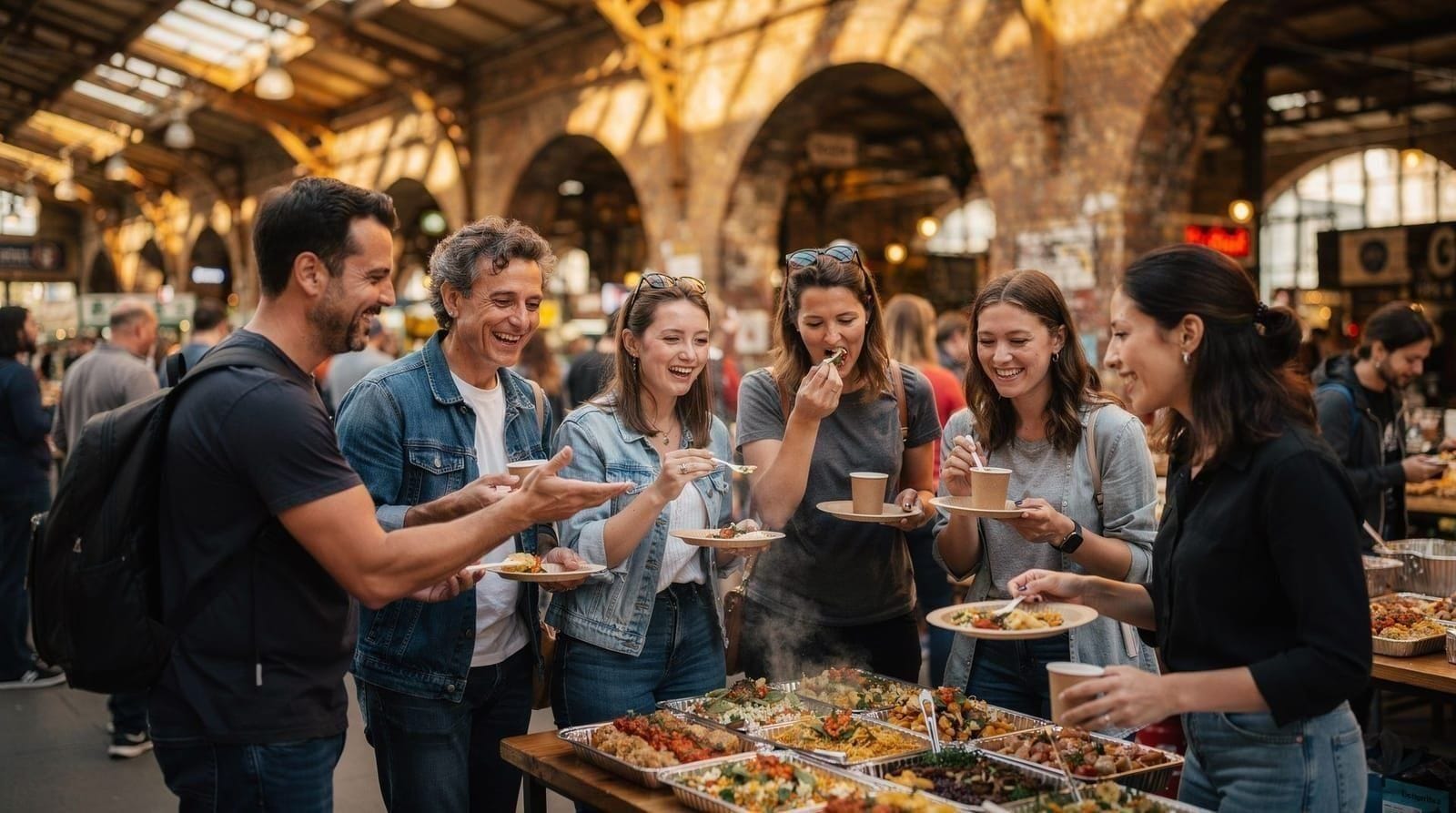
Every Tuesday and Friday, the canal embankment at Maybachufer in Neukölln (nearest U-Bahn: Schönleinstraße) becomes a 600-metre outdoor market running almost entirely on Turkish produce, pastry, and street food. This is not a tourist market. It’s a food shopping market where locals come with trolleys.
What to eat while walking through: börek (flaky pastry with cheese or spinach filling, €2–€3 a slice), simit (sesame bread rings, €1), gözleme (flatbread filled and griddled fresh, €4–€5), and fresh baklava if you hit the right stall.
The produce section has Turkish cheeses, olives in vats, fresh herbs, pomegranates in season, and dried fruit sold by weight. Buy something. Eat it sitting on the canal wall. This is one of the more genuinely Berlin experiences available to visitors, and it costs almost nothing.
The market connects to the wider street food culture covered in the Berlin street food scene guide.
See Kreuzberg’s food scene on foot7. A Vollbier at Prater Biergarten
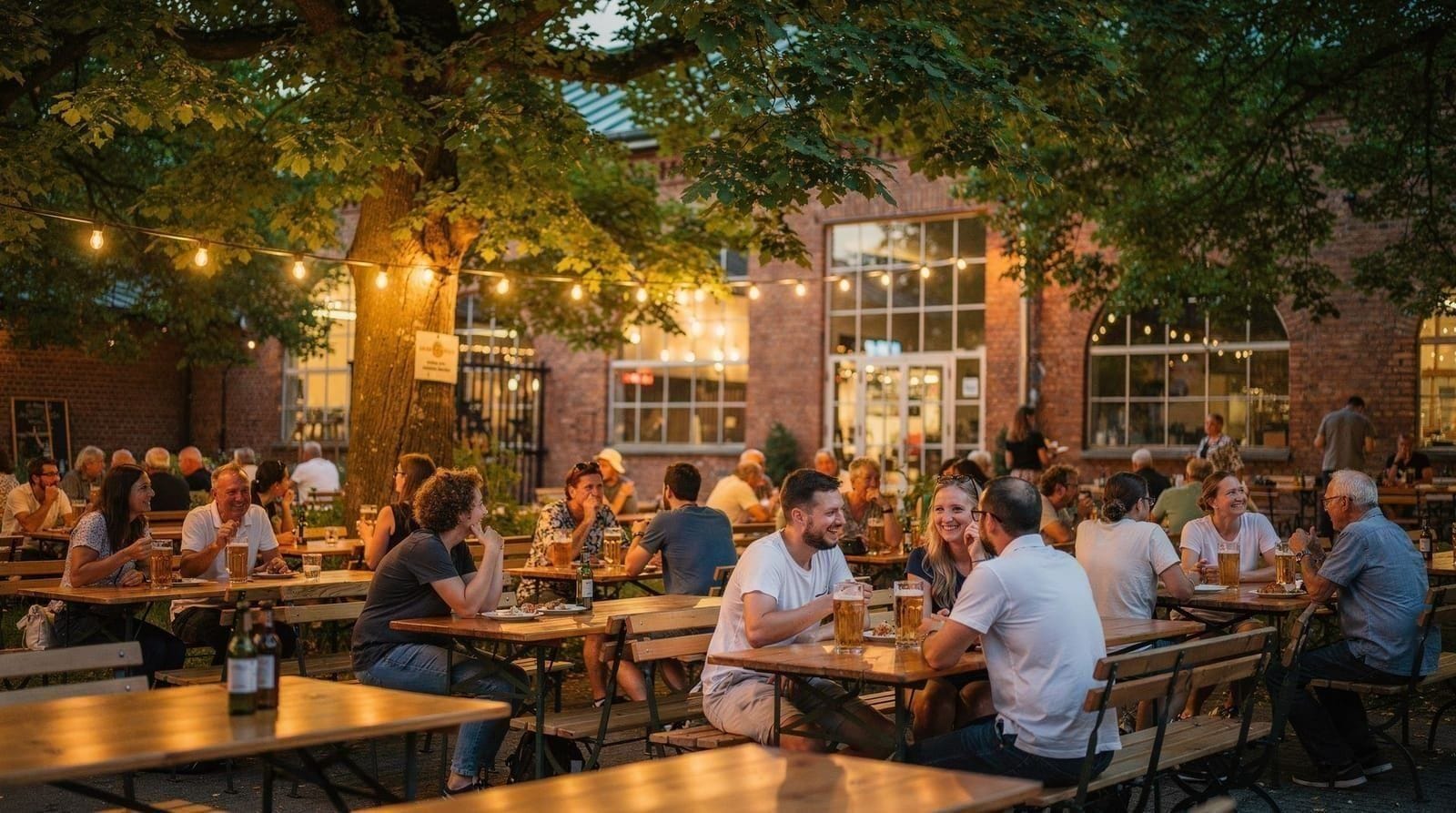
Prater Biergarten (Kastanienallee 7-9, Prenzlauer Berg) is Berlin’s oldest beer garden, open since 1837. In summer it holds around 600 people under chestnut trees. It’s one of those places that would be unremarkable if it weren’t for the fact that it has been doing exactly the same thing for nearly two centuries.
The beer to order is the Prater Vollbier — the house lager brewed on-site in the attached brewery. It’s a straightforward, clean lager with a malt weight you don’t often get from commercial beers. Around €4.50–€5.50 for a 0.5L glass. Don’t overthink the food menu; it’s solid German pub food (Bratwurst, Leberkäse, pretzels) but the beer is why you come.
Go on a weekday afternoon if you can. Weekends fill up by 3pm and you lose the under-the-trees quietness that makes it worth visiting. Bring cash — they can be inconsistent about card payments.
The broader craft and traditional beer landscape is covered in the Berlin craft beer guide.
8. Craft beer — specifically at BRLO Brwhouse
The craft beer scene in Berlin has matured significantly since 2015. The standout venue for both the beer and the space: BRLO Brwhouse (Schöneberger Str. 16, near Gleisdreieck Park) — a brewery restaurant built inside repurposed shipping containers near the park. The beer range changes seasonally and leans toward hoppy styles alongside German lager interpretations.
The food is wood-fire grilled and pairs well with the beer. Budget around €15–€25 for a meal with two beers. The outdoor terrace overlooks Gleisdreieck Park, which is one of Berlin’s better pieces of urban landscape design.
Other notable spots: Hops & Barley (Wühlischstraße 22, Friedrichshain) for a neighbourhood microbrewery with low prices and long wooden tables, and Vagabund Brauerei (Antwerpener Str. 3, Wedding) for a scrappier, more experimental approach.
Book a guided food and drink tour9. Pho — the real version
This follows from item 5, but deserves its own entry because pho is something Berliners eat regularly and seriously, not as a novelty.
Beyond Pho Thin, the two names that come up in conversations with Vietnamese residents: Monsieur Vuong (Alte Schönhauser Str. 46, Mitte) for a slightly more refined take (very popular, expect a wait at dinner), and Viet Kitchen in Lichtenberg closer to the Dong Xuan Center orbit for no-frills, large portions, cash only.
What to order: Pho Bo with tendon and brisket, not the lean-meat-only version. Add chilli and hoisin at the table. Eat it for lunch, not dinner — that’s when the broth is freshest and the kitchen is in its rhythm.
Price: €9–€12. This is one of the best-value meals in the city at that quality level.
10. Matjes herring
Matjes is young, lightly salt-cured herring — softer and milder than pickled herring, with a distinctive silky texture that either converts you or doesn’t. Berlin’s connection to north German food means you can find good matjes in places that take it seriously.
Rogacki (Wilmersdorfer Str. 145, Charlottenburg) is the place. It’s a delicatessen-fishmonger that’s been in the same space since 1928. The fish counter runs along one wall; you point, they plate. Matjes with onions and apple, served with a bread roll — around €8–€10 for a generous portion. There are standing tables. Eat there.
Rogacki is also the best place in Berlin to understand what pre-war Berlin food culture looked like. The smoked eel, the cold cuts, the herring in various preparations — it’s a living museum of a certain kind of German eating. Don’t rush it.
11. Currywurst sauce on its own (yes, really)
This sounds like a joke. It isn’t. When you order currywurst, ask for extra sauce (Extrasauce, around €0.50). Use it as a dipping sauce for the bread roll. That’s what regulars do, and it’s noticeably better than the standard serve. The bottled take-home version sold at Rogacki or some delis — look for Chili Willi brand — is also worth grabbing.
The Berlin budget guide covers how to build entire days of eating around street food costs if you want to track what this kind of eating adds up to.
12. A proper breakfast — not a hotel buffet
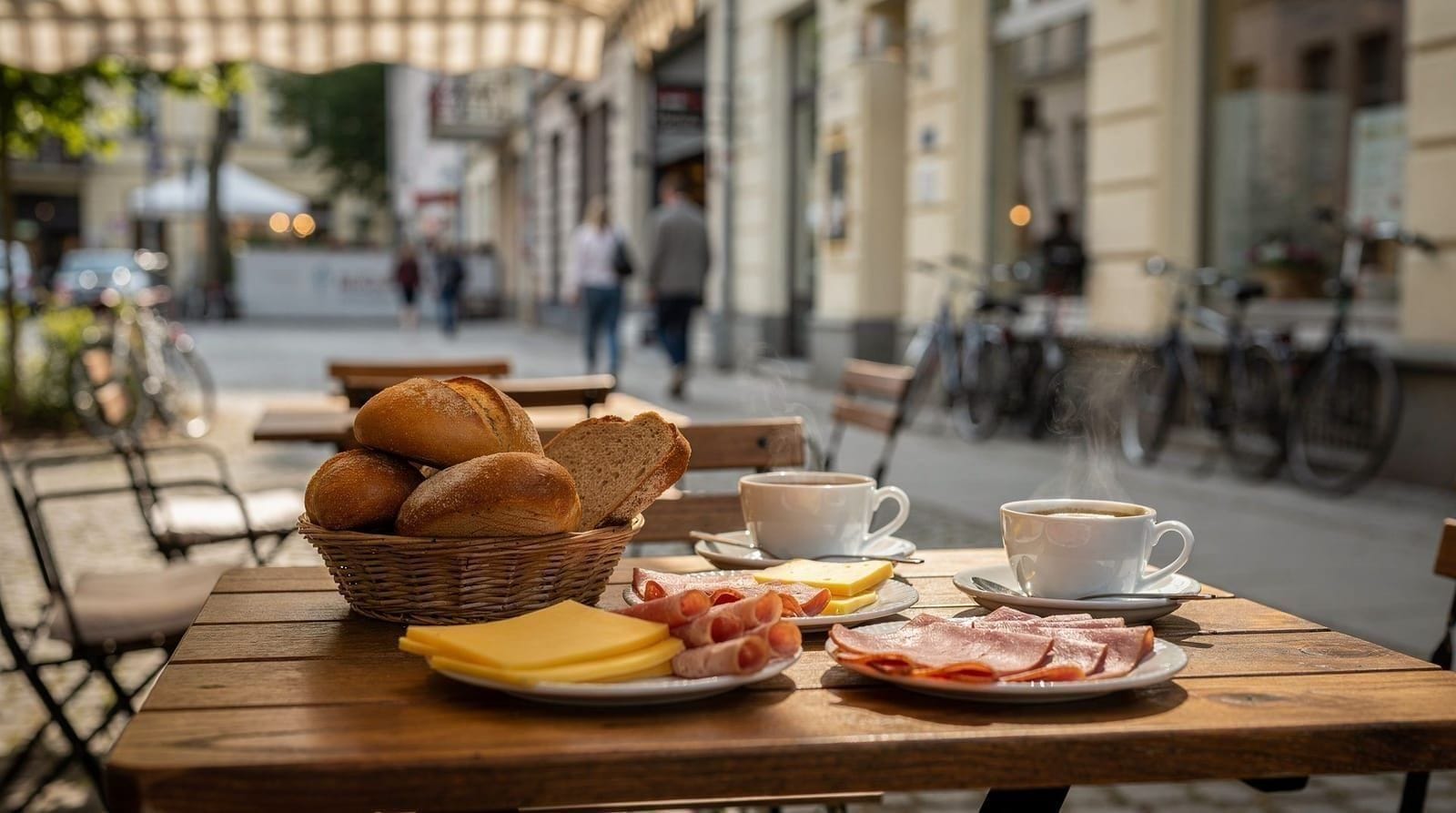
Berlin takes breakfast seriously in a way that isn’t immediately obvious. The city has a strong café-breakfast culture rooted in the long, leisurely weekend morning. A proper Berliner Frühstück involves fresh rolls from the bakery, cold cuts, cheeses, soft-boiled eggs, and coffee — eaten slowly.
Café Einstein Stammhaus (Kurfürstenstraße 58, Tiergarten) does this at the expensive end (€18–€22 for a breakfast set) in a villa that used to be a silent film actress’s home. The Viennese coffee house atmosphere is genuine.
For a neighbourhood version: any local bakery in Prenzlauer Berg or Kreuzberg with tables, and the rolls sold that morning. Budget €5–€8 total. The Berlin breakfast and brunch guide has neighbourhood-by-neighbourhood recommendations.
How to eat through this list without losing the thread
The most efficient way to work through multiple items in a short trip is to build your days around food geography rather than tourist sites. Kreuzberg gives you currywurst, döner, and the Turkish market on a single day. Prenzlauer Berg gives you Konnopke’s and Prater in an afternoon. Mitte connects to Brunnenstraße’s Vietnamese strip and Zur Letzten Instanz. Charlottenburg anchors Rogacki.
If you want a guided introduction to tie several of these together before exploring independently:
Explore Berlin’s food scene with a local guideFor restaurants that go further — Michelin-level Berlin, if that’s relevant to your trip — the Berlin Michelin restaurants guide gives the full picture. For the cooking side, the Berlin cooking classes guide covers hands-on options including traditional German and Vietnamese courses taught in the city.
The food list above isn’t precious. Substitute, adapt, eat what you find interesting. Berlin rewards curiosity more than itinerary-following. The Berlin destinations overview maps the city for context, and the Berlin food tour guide gives you the guided options if you prefer walking with someone who already knows where to stop.
Eat well. Stand outside when you can. Bring cash.
Seasonal additions worth knowing about
A few Berlin food traditions only show up at certain times of year, and it’s worth knowing about them if your trip lines up. Spargel season (white asparagus, roughly late April to late June) turns up on menus across the city, often served simply with hollandaise, ham, and boiled potatoes — a genuinely regional German tradition rather than a tourist gimmick. In winter, the Christmas market food scene adds Kartoffelpuffer, roasted chestnuts, and proper mulled wine to the list above, and several of the dishes here (currywurst, Bratwurst) taste noticeably better eaten outside in cold air than they do in summer. If your trip includes a big cultural event, Karneval der Kulturen in late May or June brings an entirely different, more international food lineup to Kreuzberg for four days.
Dietary notes: vegetarian, vegan, and halal
Berlin’s food scene handles dietary restrictions better than its reputation for currywurst and döner suggests. Most döner and street food stalls, including several on Maybachufer, are halal by default given the concentration of Turkish-owned businesses. Vegetarian and vegan eating is genuinely strong across the city — the vegetarian and vegan guide has a full district-by-district breakdown, and Gemüse Döner without meat is a reasonable substitute if you want the format without the meat. Pho and Vietnamese broths are usually made with meat stock, so ask directly if that matters to you; several Mitte spots now offer a vegetarian pho on request.
FAQ
What’s the single best-value item on this list? Pho at €9-12 for a full, substantial bowl is the strongest value-to-quality ratio on the list, closely followed by the Turkish market’s börek and gözleme at €2-5. Zur Letzten Instanz’s schnitzel is the most expensive item but you’re paying as much for the four-century atmosphere as the food itself.
Do I need reservations for any of these? Only Zur Letzten Instanz, and only for weekend dinners — walk-ins work fine at lunch or on weekdays. Monsieur Vuong doesn’t take reservations and has a wait at dinner; go for lunch instead. Everything else on this list is walk-up.
How much should I budget for a full day of eating through this list? Realistically, three to four items in a day at street-food prices runs €15-25 per person — a currywurst, a pastry, market snacks, and a beer, for example. Add a proper sit-down meal like schnitzel or a Rogacki fish plate and you’re closer to €35-45 for the day. The Berlin budget guide has the fuller cost breakdown if you’re tracking a whole trip’s food spend.