Berlin Karneval der Kulturen — what it's actually like
| When | Whit weekend, 2026: Thu 21 – Mon 25 May |
| Where | Blücherplatz, Gneisenaustrasse, Hasenheide, Kreuzberg |
| Cost | Free to attend; food €8-14, drinks €5-7 |
| Best day | Thursday evening for the calmest crowd |
| Getting there | U8 Hermannplatz or U7 Südstern |
Every Whit weekend — that’s Pentecost, the Sunday and Monday seven weeks after Easter — a chunk of Kreuzberg turns into something unlike anywhere else in Europe. Four days of music, street food, and noise that starts on Thursday evening and doesn’t really stop until Monday night. The Karneval der Kulturen parade on Sunday is the headline act. But the street festival surrounding it is actually what most people end up talking about afterwards.
This is not a brochure. If you want the full logistics — stage programme, opening hours, official maps — the Karneval der Kulturen guide has all of that. This post is about what it’s like to actually be there.
When it happens and how to find the dates
Karneval der Kulturen is tied to Pentecost (Pfingsten in German), which means it moves every year. It lands anywhere between mid-May and mid-June depending on when Easter falls. In 2026, Whit Sunday is 24 May, which puts the parade on Sunday the 24th and the street festival running Thursday 21st through Monday 25th.
The core festival area covers Blücherplatz, the streets around Gneisenaustrasse, and Hasenheide park. The street market — food stalls, music stages, craft sellers — runs continuously Thursday to Sunday. The big parade on Sunday is a separate, single-day event along a specific route.
If you’re planning travel around it, book accommodation early. Kreuzberg and Neukölln fill up fast, and the extra night Monday means people stay the full long weekend. Prices for apartments jump considerably. The Berlin budget guide has practical advice on keeping costs reasonable when the city is at capacity.
The street festival, Thursday to Sunday
Thursday evening is genuinely the most underrated part of the whole weekend. The official opening kicks off around 16:00 on Thursday and the crowd is nothing like what it will be on Sunday. Locals, families, groups eating at the stalls, a stage where someone is playing something excellent — it’s Karneval at human scale.
By Friday the density picks up. Saturday is full. Sunday, before and after the parade, is at a different level altogether.
The festival takes place around Blücherplatz and along Gneisenaustrasse. There are several stages across the area running live music from early afternoon into late evening. The genres span everything from afrobeat to reggae to Latin and cumbia. It’s not curated into neat categories; it overlaps and bleeds together, which is the point.
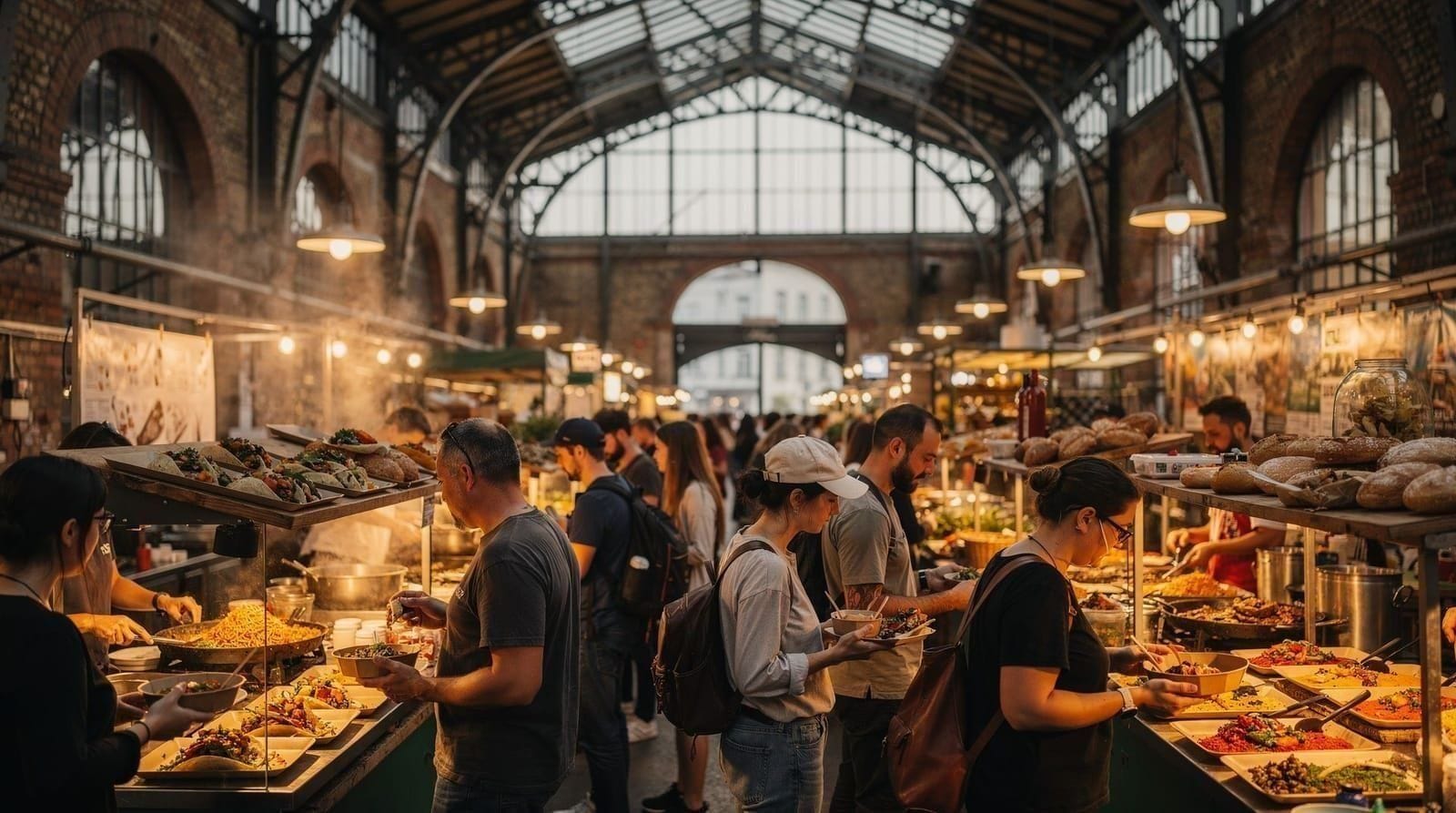
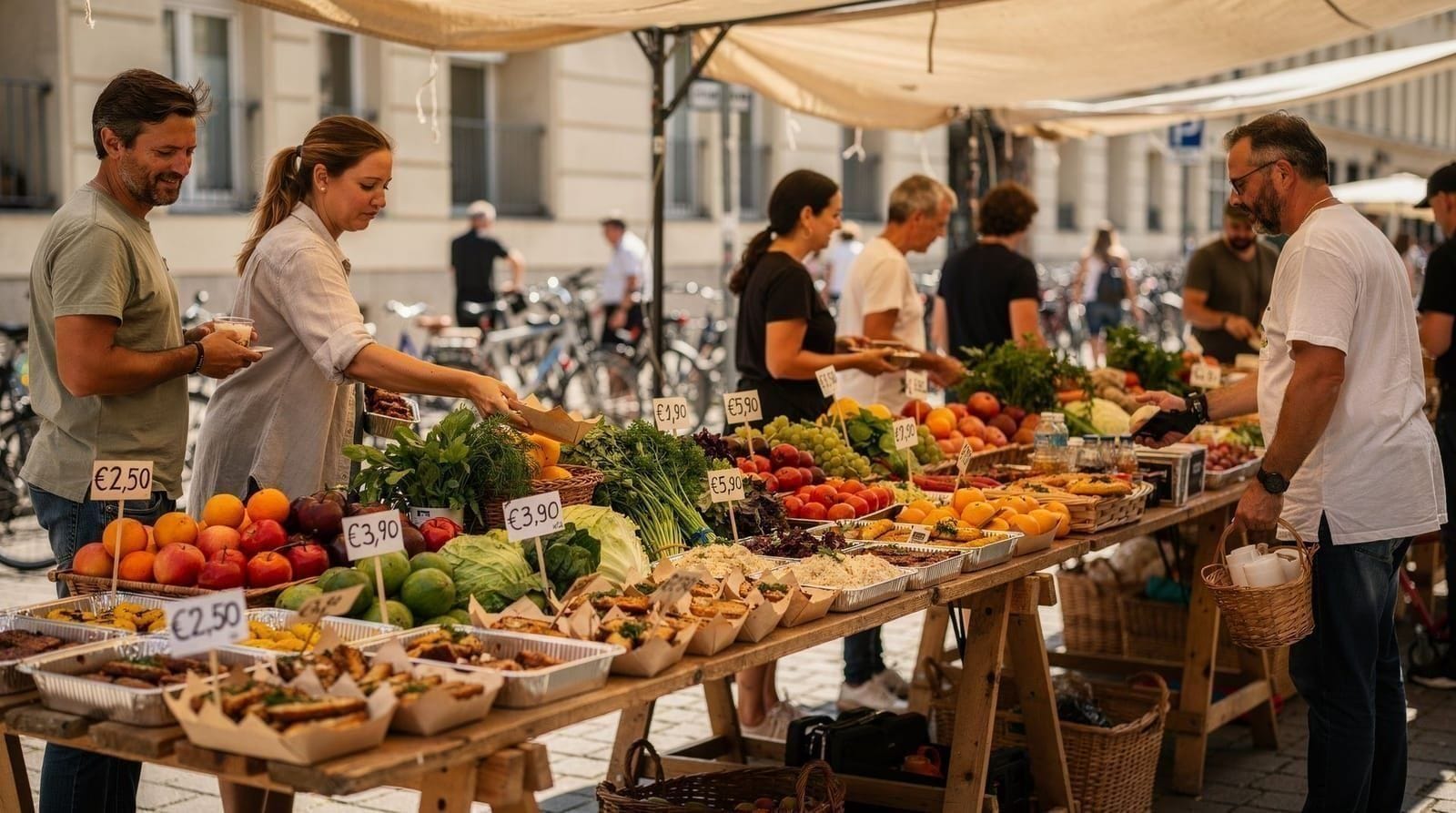
Food stalls are the real reason many people spend hours here. There’s a strong Turkish presence (Berlin’s large Turkish community has been central to this festival from its early days in 1996), Ethiopian injera with various stews, Jamaican jerk, Venezuelan arepas, and a long run of Caribbean and West African food. Prices are festival prices — expect €8-14 for a main — but the quality at the better stalls is genuinely good. The Berlin street food scene guide covers the permanent street food culture year-round if you want context.
The park section of Hasenheide, at the eastern end of the festival zone, tends to be slightly less crowded and is worth knowing about if you want to eat sitting on grass rather than standing.
Getting there — which U-Bahn exit actually works
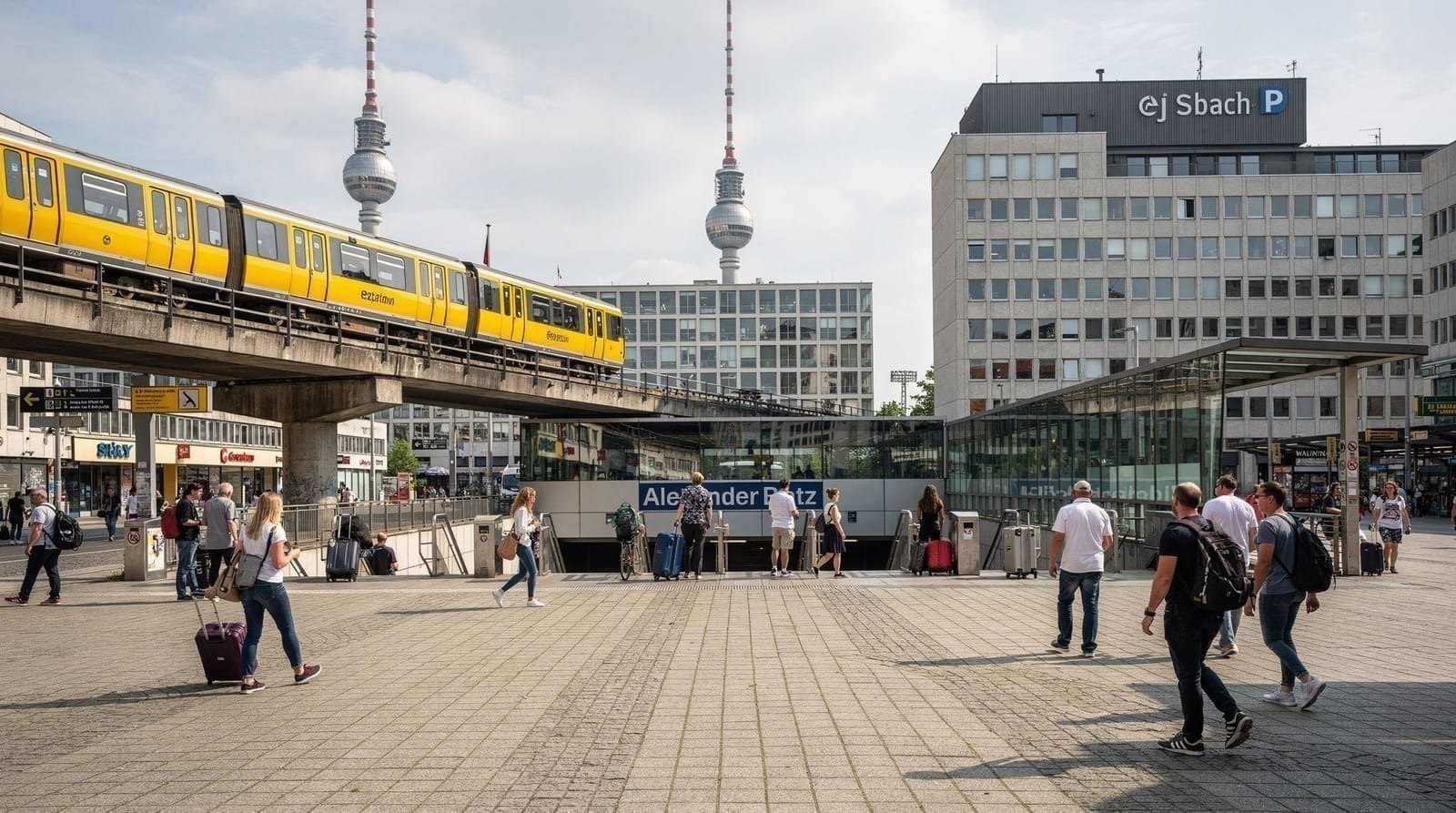
The two stations you want are U8 Hermannplatz or U7 Südstern, depending on which part of the festival you’re targeting.
Südstern drops you almost directly onto Gneisenaustrasse and the northern part of the festival. It’s the better entry point on Thursday or Friday when crowds are manageable. On Sunday during the parade, the U-Bahn runs more frequently (they always boost frequency on parade day) but exits will be channelled. Follow the crowd flow — the BVG posts marshals at the exits.
Hermannplatz gives you access to the southern end and is the better starting point if you’re coming from Neukölln accommodation. The square itself gets very busy on parade day; don’t stop there to orientate, just keep moving towards the festival area.
The full U-Bahn and S-Bahn detail is in the Berlin public transport guide. One practical note: the festival runs four days in a row, which means all four nights the U-Bahn will be packed late. Night buses supplement but get crowded. Walking back to Kreuzberg or Neukölln accommodation after midnight is often faster than waiting for the night bus.
Cycling is an excellent option if you’re staying nearby. Lock up well before the parade because you won’t be able to retrieve your bike from inside the route cordon until the parade has fully passed. The Berlin bike tours guide has route and rental information for getting around by bike.
The Sunday parade — the actual highlight
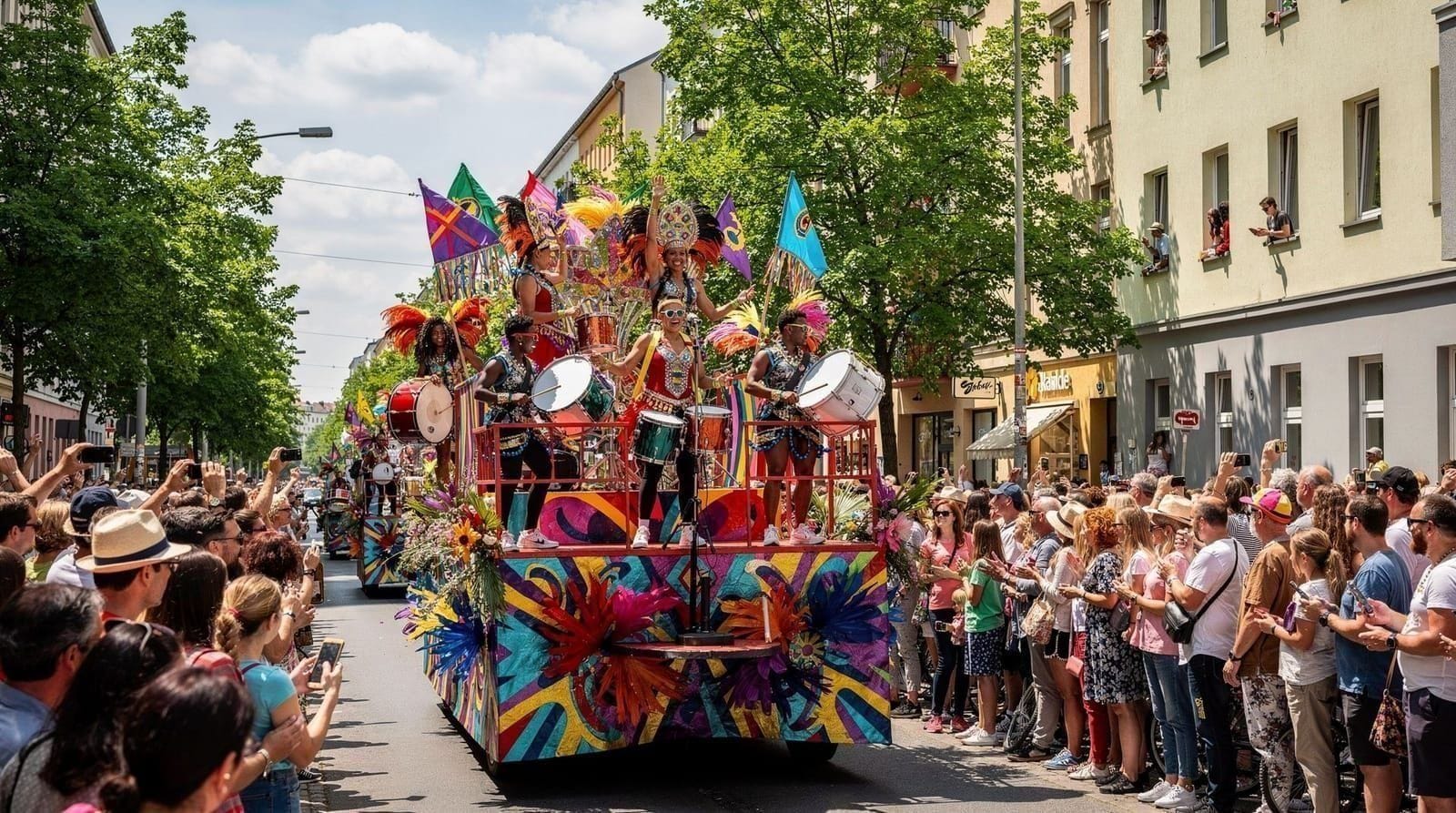
The parade route runs along Yorckstrasse, turns, and comes along Gneisenaustrasse towards Blücherplatz. It starts around 12:30 and the last float usually passes the main area by late afternoon, sometimes 17:00 or later depending on how many groups are participating. There are typically 70-90 floats and performance groups.
The floats are not the polished corporate processions you get at some events. They range from a sound system on a flatbed truck surrounded by people dancing to elaborate constructions with live musicians, stilt walkers, and proper staging. The groups represent Berlin’s diaspora communities — there are Brazilian samba schools, Turkish folk dancers, groups from the Philippines, West Africa, Eastern Europe, and many other places. It reflects who actually lives in this city.
The best viewing spots are along the Gneisenaustrasse section, roughly between Mehringdamm and Blücherplatz. Arrive by 11:00 if you want a position at the front with a clear view. The area around Mehringdamm end fills up earliest because that’s where the parade approaches from, which means the floats are still fresh and the performers still have energy.
The worst spots are the very back edges near Blücherplatz late in the day. By that point the parade is two, three hours in, it’s packed six people deep in places, and the floats have been moving for miles. Still fine, but not the same experience.
Crowd density and what to honestly expect on Sunday
Sunday at peak — roughly 13:00-16:00 — is very dense. Some estimates put attendance at the parade at 700,000 to one million people across the day. That’s a lot of humans in a relatively contained area of Kreuzberg. If you’re claustrophobic or don’t handle packed spaces well, Thursday or Saturday evening is a better option. You can enjoy the festival, the food, the music, and get a real sense of Karneval without the full Sunday crush.
The parade is worth it once, in the sense that it’s a genuinely impressive spectacle. But don’t build your entire weekend around a single viewing position on Sunday. The street parties are often more fun precisely because you can move around, find food, sit down, and leave when you want.
Safety — the practical list
A crowd of this size means standard precautions matter.
Keep your bag in front of you, always, in dense sections. Pickpocketing at large Berlin festivals happens. It’s not epidemic but it’s real. A small crossbody bag worn across the chest and kept closed is the right approach. Do not use a regular backpack with an open top zip.
Don’t bring anything you’d be upset to lose. Leave the good camera at your accommodation. Your phone is probably essential for navigation, but keep it in a front pocket and take photos from secure positions rather than holding it out for extended periods.
Meet-up points. If you’re in a group, agree on a physical meet-up point before you enter the densest sections. Phone signal is unreliable in large crowds and calls drop. Pick a landmark — a specific stall, a stage sign, an exit — that everyone knows.
Toilets. There are portable toilet facilities across the festival site. They are used by hundreds of thousands of people over four days. Go when you find one and it’s not queued, not when you’re desperate.
Heat. If the weather is warm, and in late May/June it sometimes is, drink water and find shade in the Hasenheide sections. The food stall queues in direct sun are unpleasant. The park end of the festival is worth knowing about for exactly this reason.
Rain contingency
This is Berlin in late May or June. Rain is entirely possible. The festival runs regardless — floats are covered, stages have covers, and the street party crowd generally doesn’t leave over light rain. The parade will go ahead in most conditions.
What changes in rain: the crowd thins slightly (genuinely better for viewing), but the ground gets muddy in the park areas. Wear shoes you don’t mind ruining. A packable rain layer is worth bringing on parade day. The food stalls with awnings become very popular; expect longer queues there.
If it’s heavy rain throughout Sunday, the energy is different but the event still happens. Karneval has been running since 1996 and has never been cancelled due to weather.
What’s genuinely fun vs what’s overhyped
Genuinely great: The Thursday evening opening, when the crowds are manageable and the mood is high. The food — there are stalls here you won’t find at any other Berlin event. The diversity of the parade as a spectacle — it’s the real multicultural character of Kreuzberg on display, not a performance of it. The street music in the side areas.
Overhyped or honestly difficult: The Sunday viewing experience if you arrive late (past 12:00 at the route). It’s a wall of people. The beer and wine at festival prices (€5-7 for a plastic cup of something mediocre). The noise levels near the main stage late Sunday night, which make conversation impossible. Finding your group once you’ve split up.
Genuinely free and underrated: Walking the Kreuzberg streets after the parade has passed. The neighbourhood has a specific feeling on Sunday evening — vendors packing up, locals sitting outside with wine, the aftermath of something big. It’s one of the more pleasant Berlin evening walks you can do, particularly around Bergmannstrasse.
Speaking of Bergmannstrasse, the nearby Berlin breakfast and brunch scene makes Saturday morning in Kreuzberg excellent before the crowds build. The cafes along Bergmannstrasse fill up for brunch by 10:00 on parade weekend, so either go early or book ahead.
Before and after the festival weekend
If you’re in Berlin for longer than the Karneval weekend, Kreuzberg and the surrounding area has a lot to offer on the quieter days. The Berlin free walking tours guide covers the tip-based tour options that cover this neighbourhood’s history well. The Berlin flea markets guide is relevant because several markets run on Saturday and Sunday mornings nearby.
For culture beyond the festival, Museum Island is a straightforward day trip from Kreuzberg — about 20 minutes by U-Bahn. The Berlin museums day pass covers whether a combined pass saves you money if you’re doing multiple museums in a day. The Berlin destinations overview is the place to start if you’re planning a broader trip around the festival.
The one thing worth remembering
Karneval der Kulturen didn’t start as a tourist event. It started in 1996 as a Kreuzberg neighbourhood festival — a celebration by and for the communities that actually live in this part of Berlin. It became one of Europe’s largest street festivals almost by accident, as the city grew around it and the reputation spread.
That origin still shows, particularly on Thursday evening and in the less-photographed corners of the festival site. The best moments aren’t at the main stage. They’re at a small Ethiopian food stall where three people are having an argument about the best berbere ratio, or in the park where someone is playing a drum kit they’ve brought from home, or in the queue for a Venezuelan arepa talking to someone who’s been coming since the second year.
Go for the parade because it’s worth seeing. Stay for everything else.
For full logistics — stage schedule, opening hours, parade route map — the Karneval der Kulturen guide has the complete breakdown.
If you’re not into crowds
Karneval isn’t for everyone, and that’s a fine reason to plan around it rather than into it. If you’d rather skip the density entirely, visit Berlin the week before or after — Kreuzberg is quieter and hotel prices haven’t spiked yet. If you’re in the city anyway, the Berlin free walking tours guide covers neighbourhoods well away from the festival zone, and a Museum Island morning (see the Museum Island guide) is a reliable way to spend Sunday if the parade crush isn’t for you. You can always walk down to the edges of the festival in the evening once the parade has passed and the crowd has thinned.
What to pack for the weekend
Beyond the safety basics above, a few practical items make the weekend noticeably easier: a portable phone charger (signal congestion drains batteries faster than usual), a reusable water bottle for the Hasenheide section where queues for drinks stalls get long, and comfortable closed shoes — you’ll be on your feet and standing in dense crowds for hours. If rain is forecast, a packable poncho beats an umbrella, which is genuinely unusable in a dense crowd and will annoy everyone around you.
FAQ
Do I need tickets for Karneval der Kulturen? No. The parade and the street festival are both free to attend. You only pay for food, drinks, and anything you buy from craft stalls.
Is Karneval der Kulturen suitable for families with young children? The Thursday evening opening and the Hasenheide park section are manageable with children — calmer crowds, more space, and shade. The Sunday parade at peak hours (13:00-16:00) is genuinely too dense for pushchairs or small children; if you want to see the parade with a family, arrive early for a spot near the front and be ready to leave before the crush builds.
How does Karneval der Kulturen compare to Notting Hill Carnival or other European street carnivals? It’s smaller in scale than Notting Hill but shares the same spirit — a genuine community festival that grew into a major public event rather than a purpose-built tourist attraction. The food range is arguably broader given Berlin’s specific mix of diaspora communities, and the four-day street festival format (rather than a single-day event) gives it a different rhythm, with the quieter early days offering a real alternative to the Sunday peak.