Currywurst vs döner in Berlin — the honest comparison
Berlin has two street foods that visitors feel obligated to try, and they could not be more different. Currywurst is a post-war West Berlin invention — a grilled pork sausage doused in spiced ketchup and curry powder. Döner kebab in Berlin is a Turkish-German hybrid invented here in the 1970s — rotating meat, lavash bread, salad, and sauce. Both are genuine Berlin food culture. Here’s the honest account of what each actually is and where to find the real version. For full guides, see the currywurst guide and the best döner kebab guide.
| Currywurst cost | around €3.50–5 (up to €10 near tourist spots) |
| Döner cost | around €4.50–6.50 (up to €12 near tourist spots) |
| Best districts | Kreuzberg and Neukölln for both |
| Meal type | Currywurst = snack; döner = full meal |
| Payment | Cash preferred at most imbiß stands |
Currywurst — the Berlin original
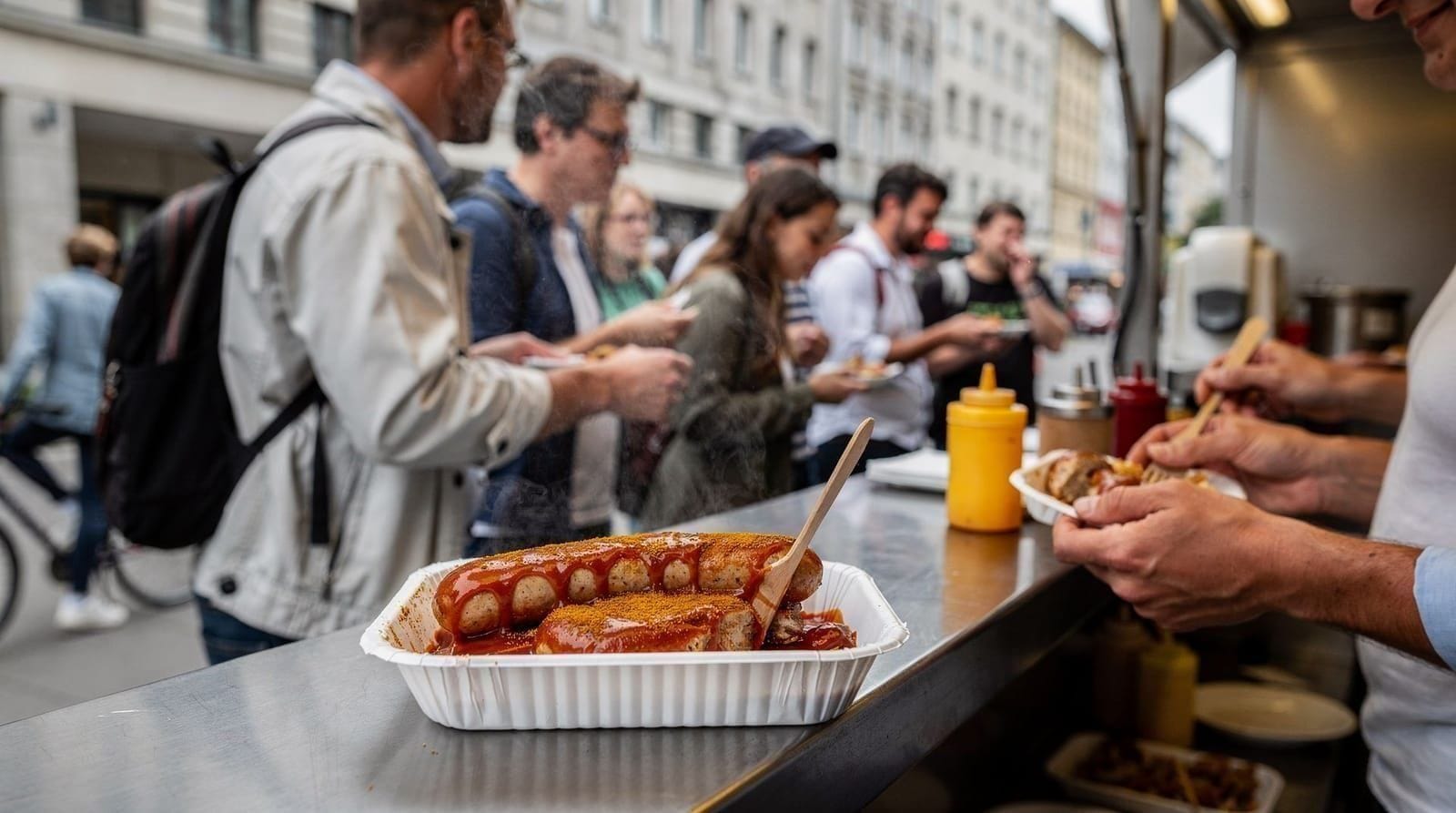
Currywurst was invented by Herta Heuwer at a street stall in Charlottenburg in 1949. She mixed ketchup with curry powder and Worcester sauce, poured it over a grilled pork sausage, and sold it to British and American soldiers during the occupation. The dish became the defining fast food of West Berlin.
The recipe sounds deceptively simple. Variations are actually significant:
- The sausage: Bratwurst (Bavarian style, no casing) versus the Berlin-style red sausage with casing (the casing crisps on the grill)
- The sauce: thin and tomatoey versus thick and complex, with curry powder quality varying enormously
- Toppings: curry powder sprinkled over the sauce (standard) versus curry ketchup without powder
A proper currywurst costs €3.50–5 at a serious imbiß and is served in a cardboard tray with a small plastic fork (Pappgabel). It is always eaten standing.
Where to eat it:
Curry 36 (Mehringdamm 36, Kreuzberg): the most consistent choice. The queue is usually manageable, the sausage quality is reliable, and the price is fair. This is the one to reference when you’ve had currywurst and want to compare.
Konnopke’s Imbiß (Schönhauser Allee 44A, Prenzlauer Berg): under the elevated U-Bahn tracks since 1930. This is the historical institution — it’s an East Berlin original that survived the GDR and reunification. The currywurst here uses the red casing sausage, not the skinless Bratwurst. Different product, genuinely worth trying to understand the variation.
Avoid: Any currywurst stall near Checkpoint Charlie, Alexanderplatz market areas, or tourist bus stops. Prices double (€7–10), quality halves.
The currywurst guide covers the full history, the technical sauce variations, and which parts of the city have the strongest imbiß tradition.
Döner kebab — the Berlin-Turkish invention
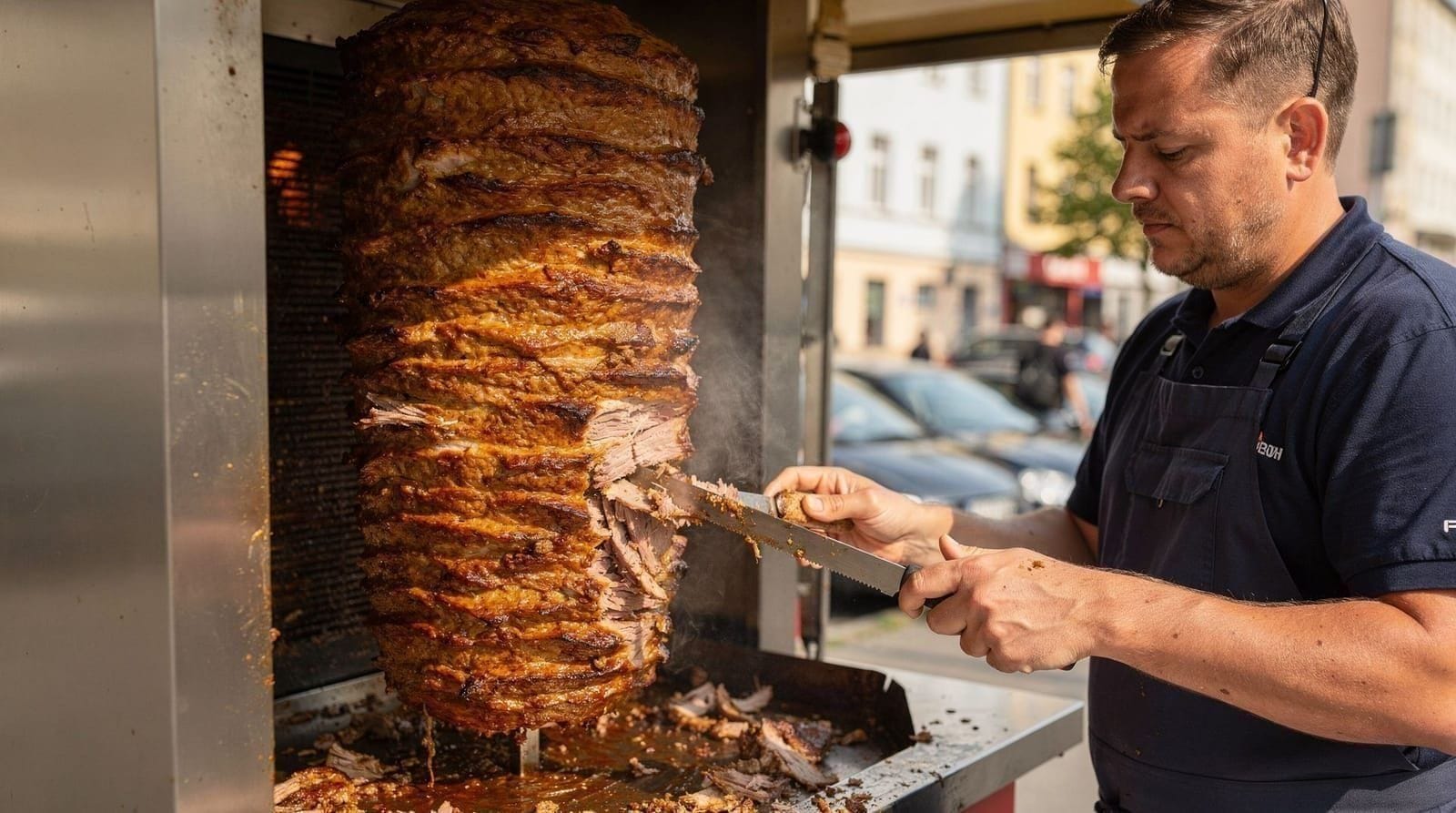
The origin story of Berlin döner is contested, but the most documented claim credits Kadir Nurman, who began selling döner in a Berlin U-Bahn station in 1972, adapting the traditional Turkish rotating meat into a sandwich format for fast German consumption. The key innovation: stuffing the meat into pide bread with raw salad and garlic sauce, making it portable.
This is a Berlin invention, not an import. The döner in Berlin is different from döner in Istanbul, from kebab shops in London, and from any other version of rotating meat in a flatbread. The Berlin döner uses:
- Veal or lamb (premium) or mixed chicken/meat (standard)
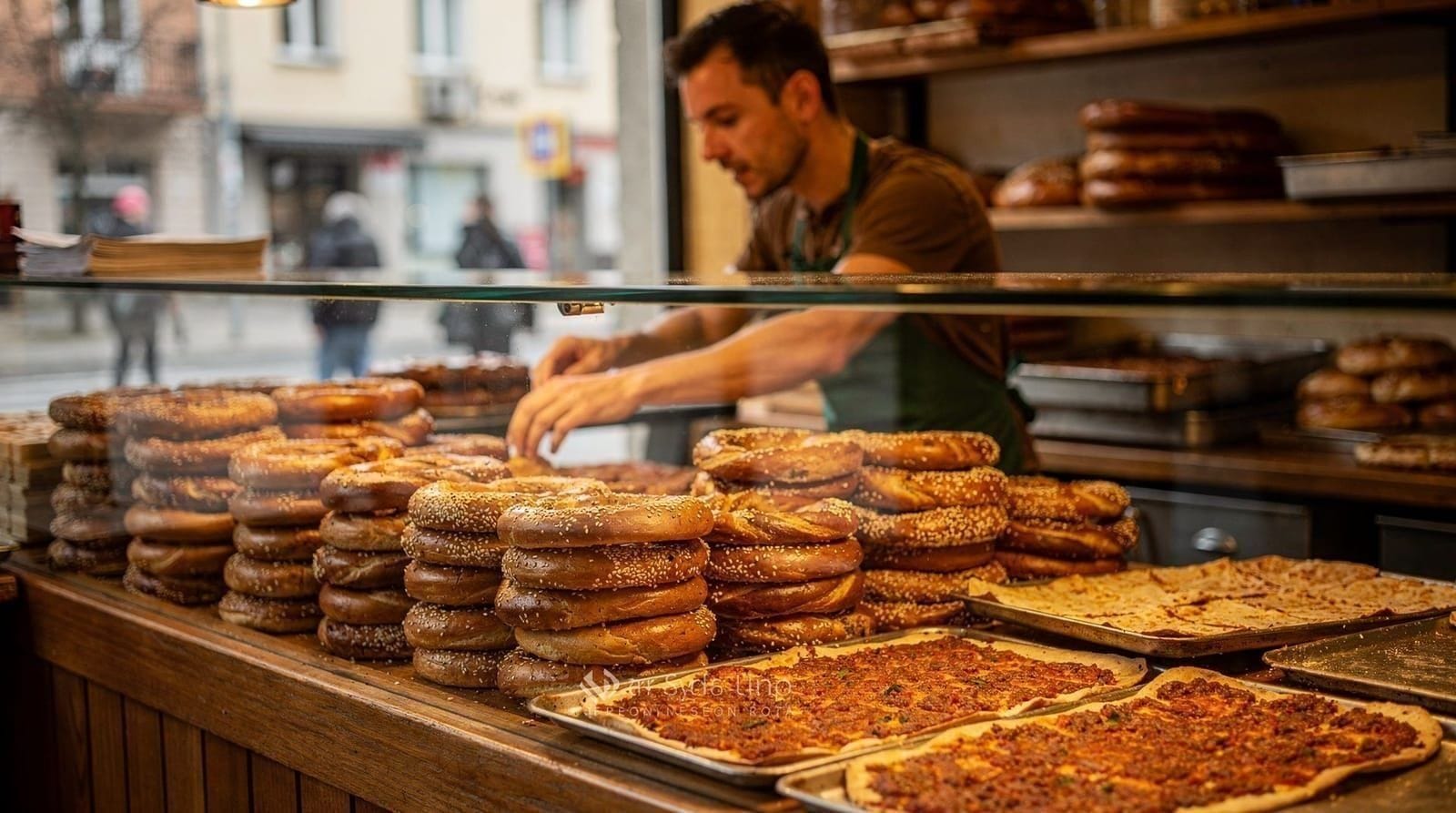
- Pide bread (thick, yeasted) or dürüm (thin lavash wrap)
- Red cabbage, iceberg lettuce, tomato, cucumber, onion
- Garlic sauce (knoblauchsoße) and optional chilli sauce
- Optionally: fried onions, pickled vegetables
A good döner in the right neighbourhood costs €4.50–6.50. Tourist-area versions charge €8–12 for inferior product.
Where to eat it:
Imren Grill (Karl-Marx-Str. 68, Neukölln): consistently ranked among the best in Berlin by people who actually eat döner regularly. The lamb and veal mix, the house sauce, the bread quality — all above average. Queue inevitable on weekends.
Mustafa’s Gemüse Kebap (Mehringdamm, Kreuzberg): the one that appears on every list. The “vegetable kebab” variation uses roasted vegetables with feta and chickpeas alongside the standard meat. Famously has a long queue (sometimes 45+ minutes on weekends). Is it worth the queue? The product is genuinely good but the queue is primarily driven by internet fame. Go on a weekday morning to avoid it.
Sonnenallee strip (Neukölln): the densest concentration of serious döner shops in Berlin. Any of a dozen shops between Hermannplatz and the Ringbahn station will produce a better döner than the tourist-area alternatives. Find the ones with the longest local queue at lunch. The wider Neukölln neighbourhood rewards a slow afternoon of wandering between food stops rather than a single targeted visit.
Avoid: Any döner advertised in multiple languages in the window. Any döner shop near major train stations or central tourist attractions. The rotating spit you can see from the door is not a quality indicator — ask what meat they use.
The best döner kebab guide has the complete neighbourhood-by-neighbourhood breakdown with specific shop names, prices, and what makes each one distinctive.
Guided street food tastings tour — a good primer if you’d rather have someone else pick the stops on a first visitVegetarian and vegan versions worth knowing
Neither dish is naturally meat-free, but Berlin’s food scene has adapted both. Vegetarian and vegan currywurst — usually a plant-based sausage under the same curry-ketchup sauce — shows up at a handful of imbiß stands, including seasonal stalls at Markthalle Neun. It’s a reasonable approximation, better on the sauce than the sausage. Vegan döner is more common and more convincing: seitan or soy-based “meat,” the same salad and bread, and a garlic sauce made without dairy. Look for it specifically in Kreuzberg and Neukölln rather than assuming any stand offers it — ask before you queue. The broader vegetarian and vegan guide to Berlin covers where the plant-based scene is strongest beyond just street food.
Etiquette at the imbiß counter
Both currywurst and döner are ordered standing at a counter, not seated. At a currywurst stand, you’ll be asked “mit oder ohne Darm” (with or without casing/skin) if the stall serves both types, and whether you want pommes (fries) alongside — a common pairing, sometimes called “currywurst mit” as shorthand. At a döner shop, the key choices are the bread (dürüm wrap versus pide) and the sauce heat (scharf for spicy). Ordering in German isn’t required — pointing works, and most stands in tourist-adjacent areas manage English — but knowing “einmal” (one, please) speeds things along in a queue. Pay in cash where possible; many smaller imbiß stands still don’t take cards.
The direct comparison
| Factor | Currywurst | Döner |
|---|---|---|
| Price (good version) | €3.50–5 | €4.50–6.50 |
| Filling | Moderate | High |
| Meal or snack | Snack | Meal |
| Vegetarian option | Rarely | Yes (falafel version) |
| Tourist trap risk | High | High in wrong areas |
| Meal time | Any | Lunch and late night |
| Berlin-specific | Yes (West Berlin) | Yes (Turkish-German hybrid) |
Which to try first
If you’re arriving in Berlin for the first time and have one street food slot: get currywurst for cultural history, then döner for actual sustenance. Currywurst is a snack; döner is lunch.
The most efficient route: Curry 36 at Mehringdamm, then walk north to Mustafa’s Gemüse Kebap (3 minutes) for comparison. You’ve just done both in one Kreuzberg visit.
The food context
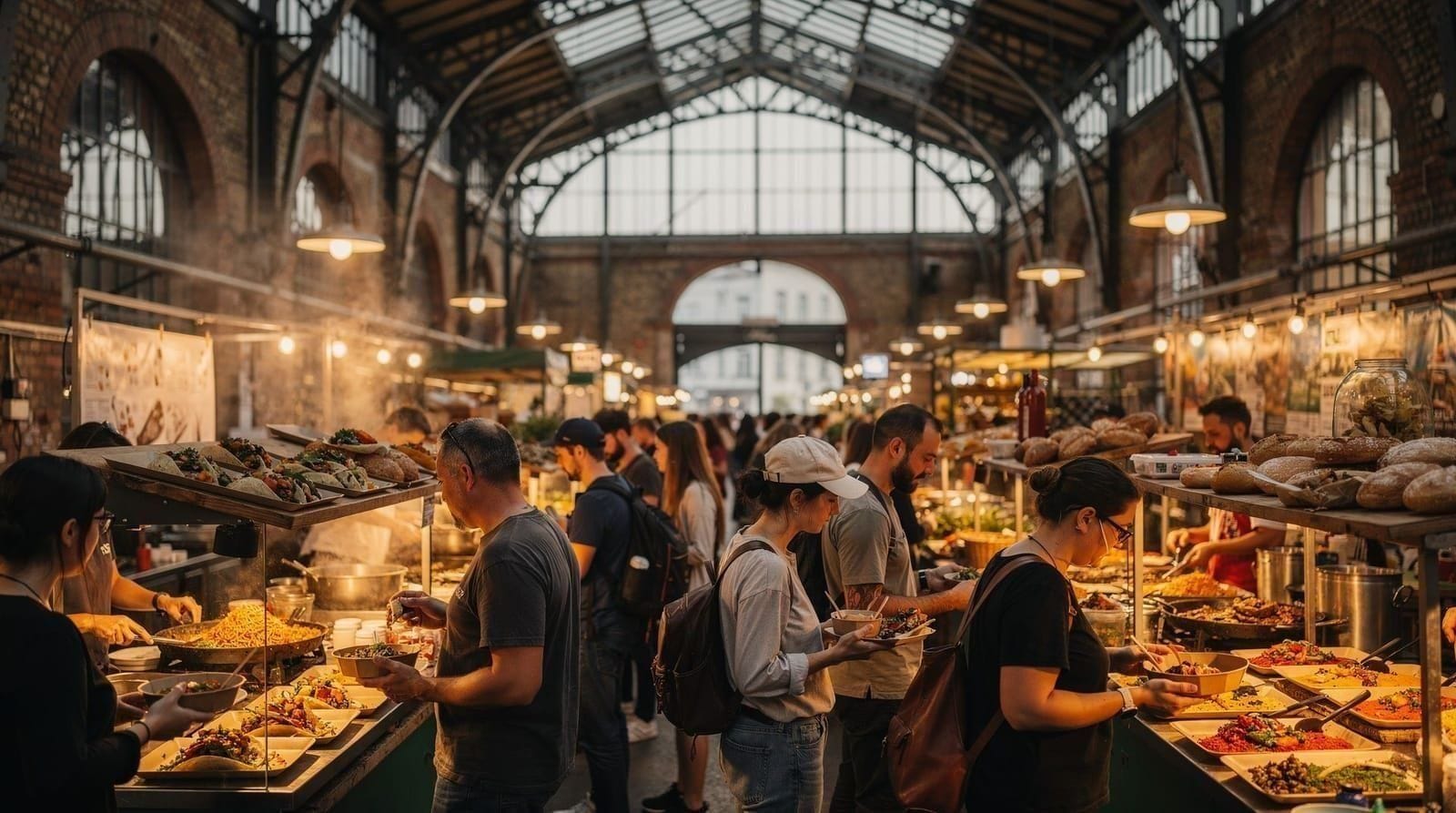
Both currywurst and döner are part of a richer street food scene that also includes falafel (particularly in Mitte and Kreuzberg), Vietnamese food (the legacy of GDR-era Vietnamese workers who stayed after reunification), and the more recent food hall culture at Markthalle Neun and similar venues.
The Turkish food guide explores the broader Turkish-German food culture in Berlin beyond the döner — börek, pide restaurants, Turkish breakfast culture — which is substantial and underappreciated by most visitors focused on the tourist-facing currywurst narrative.
Berlin street food tour — covers eight tastings including currywurst and döner with context on the cultural and immigrant food history of the cityBoth are worth trying. Neither should be eaten near Brandenburg Gate or Checkpoint Charlie. And if you only have room for one meal: döner, from Neukölln or Kreuzberg, at a shop where the person ahead of you in the queue is eating it not photographing it.
For a wider view of what else is worth eating between these two stops, best markets to eat in Berlin covers the food-hall and market side of the same street-food culture.
FAQ
Q: Is currywurst or döner more traditionally “Berlin”? Both are, just from different eras and communities. Currywurst dates to 1949 and West Berlin’s postwar occupation period; döner in sandwich form was invented in Berlin around 1972 by the city’s Turkish-German community. Neither is an import from elsewhere — both were created in Berlin, which is part of why locals bristle at either being called inauthentic.
Q: Can I find good currywurst or döner outside Kreuzberg and Neukölln? Yes, but the odds drop. Prenzlauer Berg has Konnopke’s, a genuine historical institution near the elevated U-Bahn tracks. Elsewhere, quality is inconsistent — the two neighbourhoods above simply have the highest concentration of serious, non-tourist-facing stalls.