Berlin travel tips — practical advice locals don't put on tourist signs
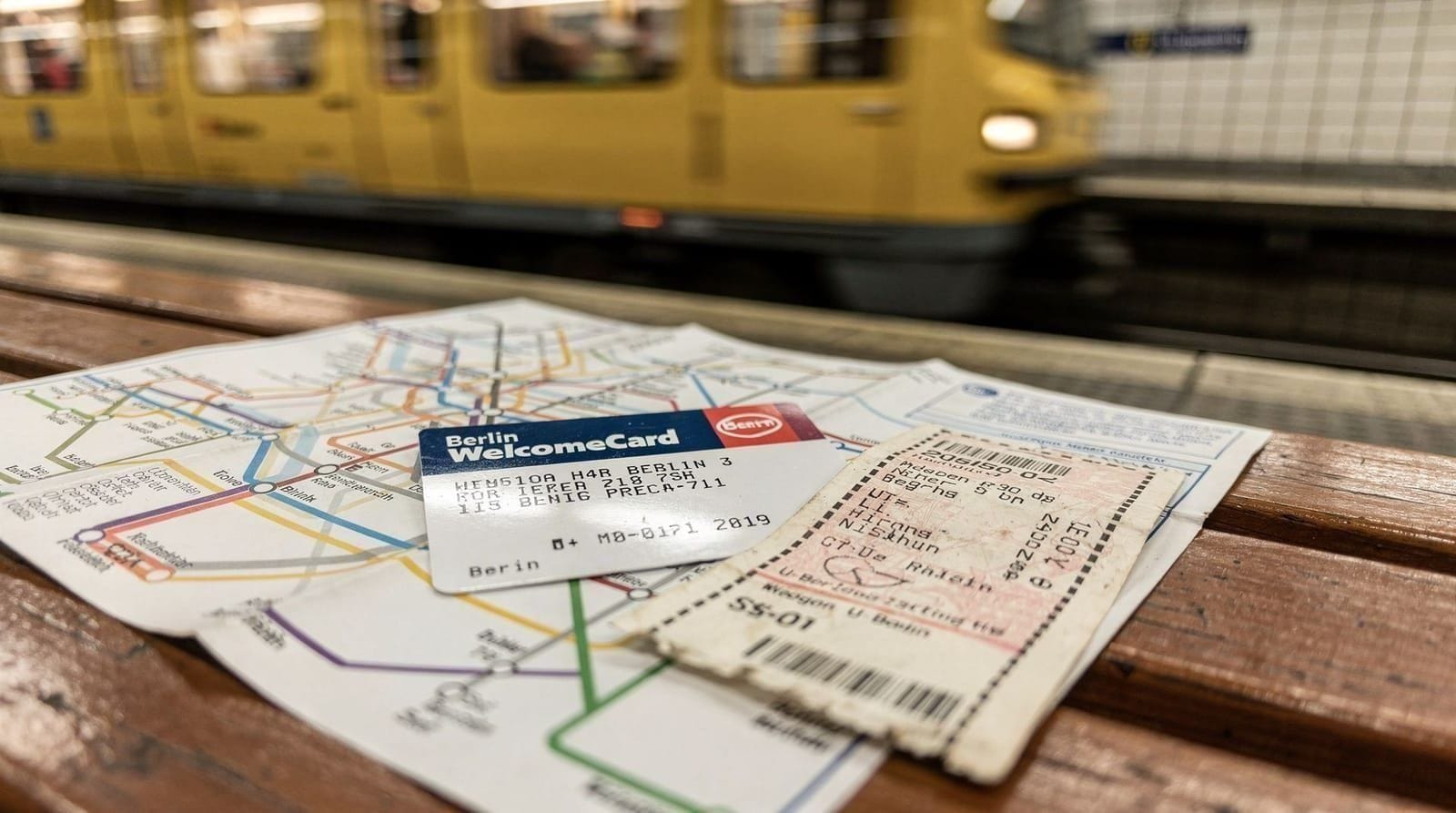
Berlin WelcomeCard: Discounts & Transport Berlin Zones (AB)
What do first-time visitors to Berlin need to know?
Carry cash — many bars, clubs, and small restaurants are cash-only. Validate your transit ticket before boarding, not just buy it. Shops close on Sundays — stock up on Saturday. The Pergamonmuseum main hall is closed until 2027. Learn Guten Morgen and Entschuldigung. Tip by telling the server the total amount, not leaving money on the table.
What do first-time visitors to Berlin really need to know? Not the sights list — there are plenty of those. The practical things that catch people out: cash requirements, Sunday shop closures, Pfand bottle deposits, transit validation rules, tipping customs, and the real situation with the Pergamonmuseum in 2026. This guide covers what isn’t printed on tourist signs.
| Cash to carry | Around €30-50/day, more (€60-80) for a club night |
| Shops | Closed Sundays except stations, bakeries, petrol stations |
| Transport | Buy AND validate the ticket; fine around €60 if checked |
| Tipping | 5-10%, told to the server, not left on the table |
| Pergamon | Main building closed until 4 June 2027 |
For the fuller logistics of building a Berlin itinerary around all this, see the Berlin trip planning guide and the Berlin budget guide.
Cash — more important here than almost anywhere in Europe
Berlin is the most cash-oriented major city in western Europe. This is cultural, not infrastructural — Germany simply has a deep preference for physical money, and Berlin amplifies it.
What requires cash:
- Most nightclubs (Berghain, Tresor, Watergate, KitKat Club, Sisyphos — cash at door and at bar)
- Many traditional Kneipen (pubs)
- Most Imbiss stands (Döner, Currywurst, Falafel, Bratwurst)
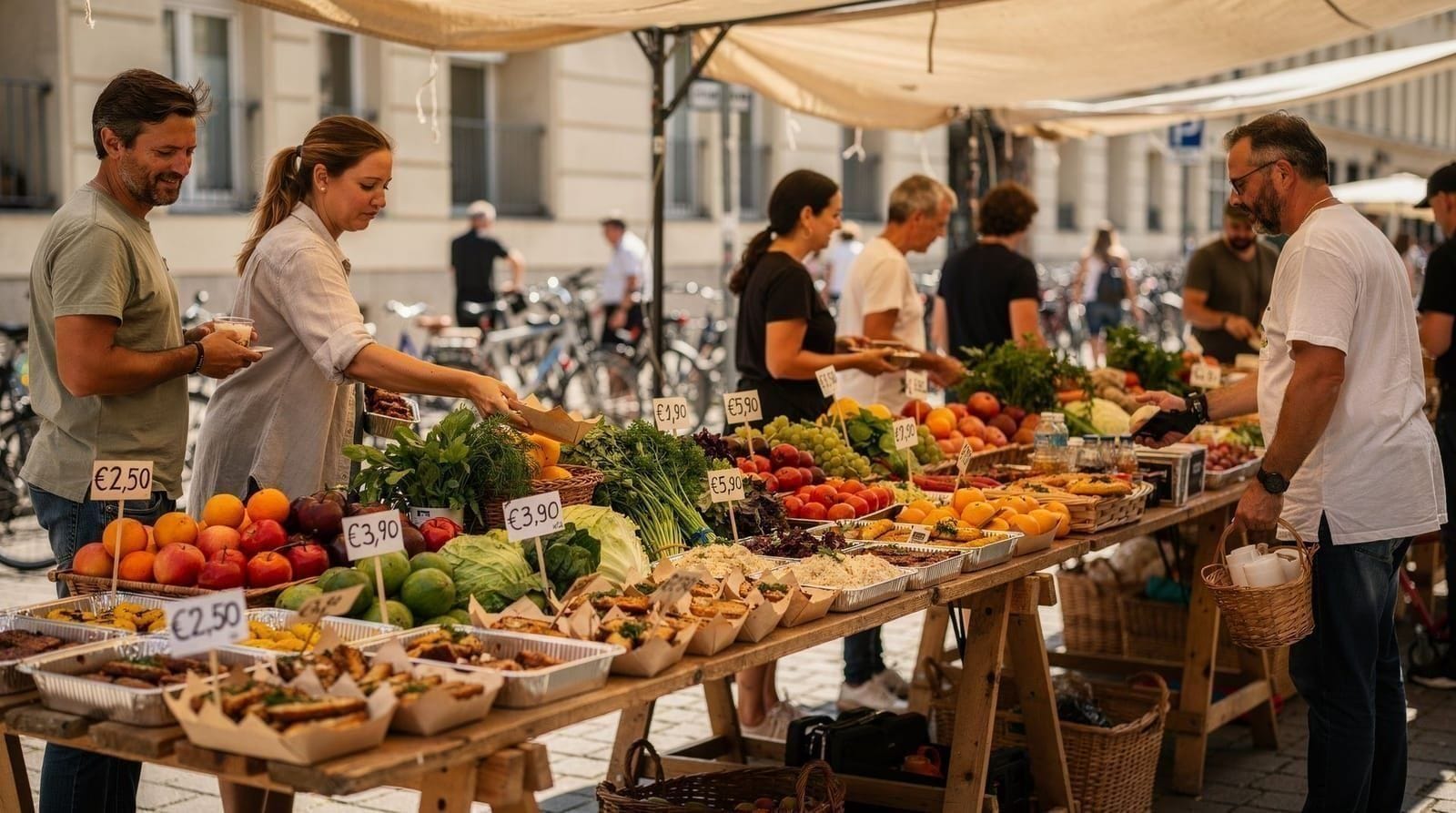
- Market stalls (Mauerpark flea market, Türkenmarkt, Nowkoelln Flowmarkt)
- Some smaller restaurants, particularly in Neukölln and Kreuzberg
- Coin-operated laundry machines in many hostels
- Some older BVG ticket machines (coins only)
What accepts cards:
- Supermarkets (REWE, ALDI, LIDL, Kaufland, Edeka)
- Hotels
- Larger restaurants
- Major museum ticket desks
- The BVG app and modern ticket machines
ATM strategy: Use Sparkasse (red), Deutsche Bank (blue/white), or Commerzbank (yellow) ATMs. Third-party machines — especially Euronet (green) and Cardtronics — charge €4–8 per withdrawal and often offer “dynamic currency conversion” (take the local currency, not the converted rate in your home currency). Decline any ATM offer to convert for you — the rate is always worse.
Carry €30–50 at all times during a normal day. If planning a club night, bring €60–80 minimum.
The Sunday closure rule
German law (Ladenschlussgesetz) requires most shops to close on Sundays. This is strictly enforced and applies to:
- All supermarkets (REWE, ALDI, Kaufland, EDEKA, DM pharmacy)
- Clothing and fashion shops
- Electronics stores
- Most pharmacies (Apotheken) — a duty rotation exists for emergencies, posted on closed pharmacy doors
Open on Sundays:
- Shops inside major train stations (Hauptbahnhof, Ostbahnhof, Spandau, Gesundbrunnen) — these have Sunday trading rights
- Petrol stations (Tankstellen) — can sell basic food items
- Bakeries (Bäckereien) with a dine-in component — can open and sell food on-site
- Tourist souvenir shops in the main tourist areas
Practical consequence: Shop for groceries, toiletries, and medication on Saturday. If you arrive on a Sunday and need supplies, go to the Hauptbahnhof or Ostbahnhof station shops — they stock a reasonable range of food, drinks, toiletries, and basics.
Transport rules — always validate
The BVG’s “honour system” is occasionally misunderstood. You buy a ticket first — from a machine, the BVG app, or at a sales point — then validate it in the orange/yellow stamping machine before boarding (or on the vehicle for trams). Validation prints the date and start time.
Key points:
- Buying ≠ validating. A machine receipt that isn’t stamped is not valid.
- Exception: timed tickets from the app. The BVG app validates automatically when you activate a ticket on-screen. You don’t stamp it.
- Exception: 7-day or monthly passes printed with your validity period already on them — no stamping needed.
- Inspections are common. Plain-clothes Kontrolleure (inspectors) work regularly, particularly at busy times and on the S1, S41/S42 ring, and U6. They will ask for your ticket and ID. The fine is €60, cash payable on the spot, or an invoice sent to your address.
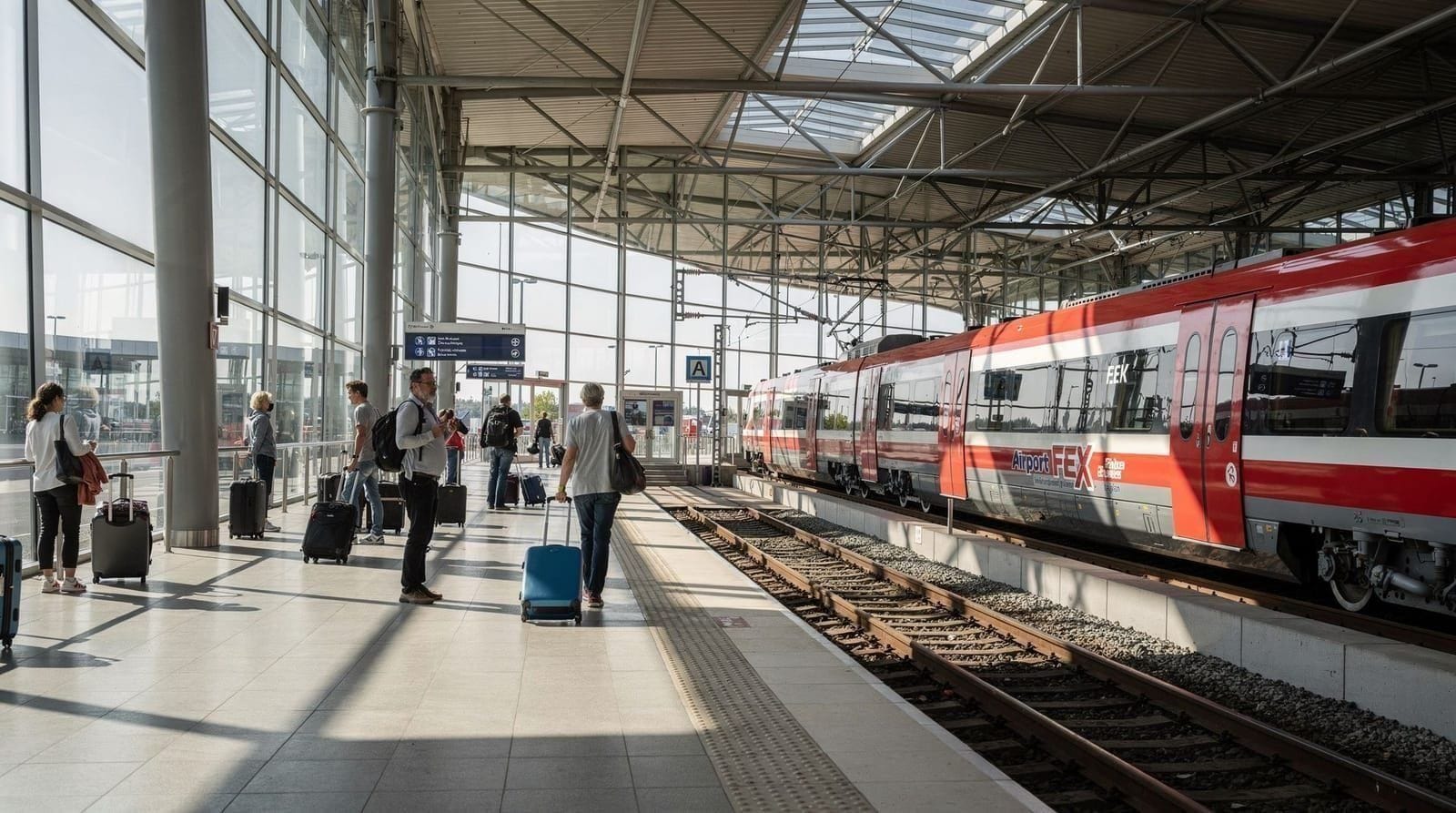
- Zone ABC matters. If you have an AB ticket (covers the city ring) and travel to Potsdam, Oranienburg, or the BER airport on the S9 (not the FEX, which checks independently), you are travelling without a valid ticket. The Zone ABC ticket costs €4.40 single vs. €3.50 for AB.
If you’re staying several days and plan to combine sightseeing with heavy transport use, it’s worth checking whether a multi-day pass beats single tickets — the full comparison is in the Berlin public transport guide.
Check current Berlin WelcomeCard AB-zone pricing (transport + attraction discounts)Pfand — the bottle deposit system
Germany’s Pfand deposit system charges €0.08–0.25 per bottle or can, refunded when you return them. The most common Pfand is €0.25 on plastic bottles and cans.
How to use it:
- Buy a drink from a supermarket — Pfand is added automatically to the price
- Drink the contents
- Return the bottle to any supermarket’s Pfandautomat (vending machine that takes the empties and counts them)
- Collect a receipt from the machine
- Hand the receipt to the cashier at checkout — it’s deducted from your bill or paid out
Note: you do not have to return bottles to the shop where you bought them. Any supermarket’s Pfand machine accepts bottles from any brand. ALDI machines are notoriously finicky; REWE and Kaufland machines work more reliably.
Schankverpackungen (one-way dispensing containers from some small bars and street stalls) sometimes don’t carry Pfand — especially for non-carbonated drinks and juices. If you’re unsure whether a bottle has Pfand, look for the Pfand logo on the label.
The custom of leaving redeemable bottles beside (not inside) rubbish bins is widespread and considered considerate in Berlin — it makes them accessible to people who collect them for the deposit income.
Language — the essentials
German is the language of Berlin. The locals you’ll interact with in tourist-facing roles speak English, but spending 5 minutes learning the following before arrival makes a real difference:
Greetings:
- Guten Morgen — Good morning
- Guten Tag — Good afternoon/Hello (formal)
- Hallo — Hello (informal)
- Auf Wiedersehen / Tschüss — Goodbye (formal/informal)
Essentials:
- Bitte — Please / You’re welcome
- Danke (schön) — Thank you (very much)
- Entschuldigung — Excuse me / Sorry
- Ich spreche kein Deutsch — I don’t speak German
- Sprechen Sie Englisch? — Do you speak English?
Transport:
- Einsteigen bitte / Türen schließen — Board please / Doors closing (listen for this on S-Bahn)
- Endstation — End of the line (terminus)
- Umsteigen — Transfer / change trains
Restaurants:
- Die Karte, bitte — The menu, please
- Zahlen, bitte — The bill, please
- Stimmt so — Keep the change (for tipping)
- Ohne Fleisch — Without meat (for vegetarians)
Berliners are often direct and can seem brusque by other European standards — this is cultural, not hostility. A simple “Entschuldigung” before asking anything goes a long way.
Tipping customs
German tipping is straightforward once you know the mechanics:
In restaurants: 5–10% for satisfactory service. When paying, tell the server the amount you want to pay inclusive of tip — not the total on the bill. So if the bill is €28 and you want to tip €3, say “31 Euro” when you hand over €35. They will return €4 in change. Saying “Stimmt so” means “that’s the exact amount, keep the change.”
Do not: Leave coins on the table and walk away. This reads as careless rather than considerate in Germany. Always hand the tip amount to your server personally.
In bars: Round up the coins if you’re paying with cash. Not expected with card.
At Imbiss stands: No tipping expected.
In taxis: Round up to the nearest euro. For longer journeys, €1–2 tip on top.
The Pergamonmuseum situation in 2026
The Pergamonmuseum’s main building — home to the Pergamon Altar and the Ishtar Gate of Babylon — is closed for structural renovation until 4 June 2027. This is one of the most visited museums in Germany, and the closure causes genuine confusion among visitors who planned their trip around it.
Alternatives in 2026:
- Pergamon Panorama by Yadegar Asisi — a large-format 360° panorama installation near the museum, showing ancient Pergamon. Entry €14. Worth visiting as a standalone experience.
- Neues Museum — the Nefertiti bust alone justifies the visit; the Egyptian collection is substantial.
- Alte Nationalgalerie — 19th-century German and European art, architecturally beautiful.
- Bode Museum — Byzantine art, sculpture, and historical coins; the least crowded of the Museum Island buildings.
See the dedicated Pergamonmuseum 2026 status guide for current details and the Pergamon alternatives guide for how to adjust your museum plan.
Medical, pharmacies and emergencies
Emergency numbers:
- 110 — Police (Polizei)
- 112 — Fire and ambulance (Feuerwehr / Rettungsdienst)
- 116 117 — Medical non-emergency (doctor referral, evenings and weekends)
Pharmacies (Apotheken): Recognisable by the red “A” sign. Open weekdays 9 am–6 pm typically, Saturday until 1 pm. Closed Sundays — in an emergency, look for the posted notice on the door of any closed pharmacy listing the nearest Notdienstapotheke (duty pharmacy). Alternatively, search at www.aponet.de.
Medical care: EU/EEA visitors: bring your EHIC/GHIC card — it covers treatment at German public hospitals and GPs under the same terms as German residents. This does not cover repatriation. UK visitors: GHIC still works in Germany (post-Brexit). US and other nationalities: you will be treated and billed; travel insurance covering medical costs is strongly recommended as German private hospital fees can be high.
Electricity and adapters
Germany uses Type F plugs (Schuko — two round pins, 230V/50Hz).
- US (Type A/B, 120V) visitors: need both a plug adapter AND a voltage converter for older devices. Most modern laptop chargers, phone chargers, and camera chargers are dual-voltage (check the label for 100–240V) — these need only an adapter.
- UK (Type G, 230V) visitors: need only a Type G to Type F adapter. No voltage conversion needed.
- EU visitors using Type C or Type E plugs: these generally fit Type F sockets directly.
Connectivity — SIM cards and wifi
EU/EEA visitors: your home SIM works under roam-like-home rules — no extra setup needed, though very heavy data users should check their carrier’s fair-use cap for travel within the EU.
Non-EU visitors: a local prepaid SIM is the cheapest reliable option. Telekom, Vodafone, and O2 all sell prepaid SIMs at airport kiosks and central train stations, typically €15-25 for several GB of data valid a few weeks. eSIMs from providers like Airalo or Holafly are simpler to set up before arrival if your phone supports eSIM — no queueing at a kiosk on landing.
Free public wifi is patchy outside cafés and hotels — U-Bahn stations have wifi on some lines but it’s inconsistent. Most cafés and all hotels offer wifi without a purchase requirement in Berlin, more so than in some other European capitals.
Arriving in Berlin — first hour logistics
Berlin Brandenburg Airport (BER) connects to the city centre by the FEX express train (around 30 minutes to Hauptbahnhof), regional RE/RB trains, or the S9/S45 S-Bahn (slower, more stops, covered by a standard AB ticket if your destination is within the city ring). Taxis run around €45-55 metered to central Mitte. The full breakdown of every option, including which ticket zone you actually need, is in the Berlin Airport BER to city guide.
However you arrive, buy your transport ticket (or activate one in the BVG app) before boarding — the validation rule applies from your very first ride, including straight off the plane.
Frequently asked questions about Berlin travel tips
Is Berlin easy to navigate for English speakers?
In central Berlin, tourist-facing businesses (hotels, museums, restaurants, major transport hubs) all have English-speaking staff. U-Bahn and S-Bahn announcements are in German only, though displays show station names clearly. Outer neighbourhoods like Neukölln, Wedding, and Marzahn have less English coverage. Google Translate's offline German pack handles most situations.Is Berlin safe for tourists?
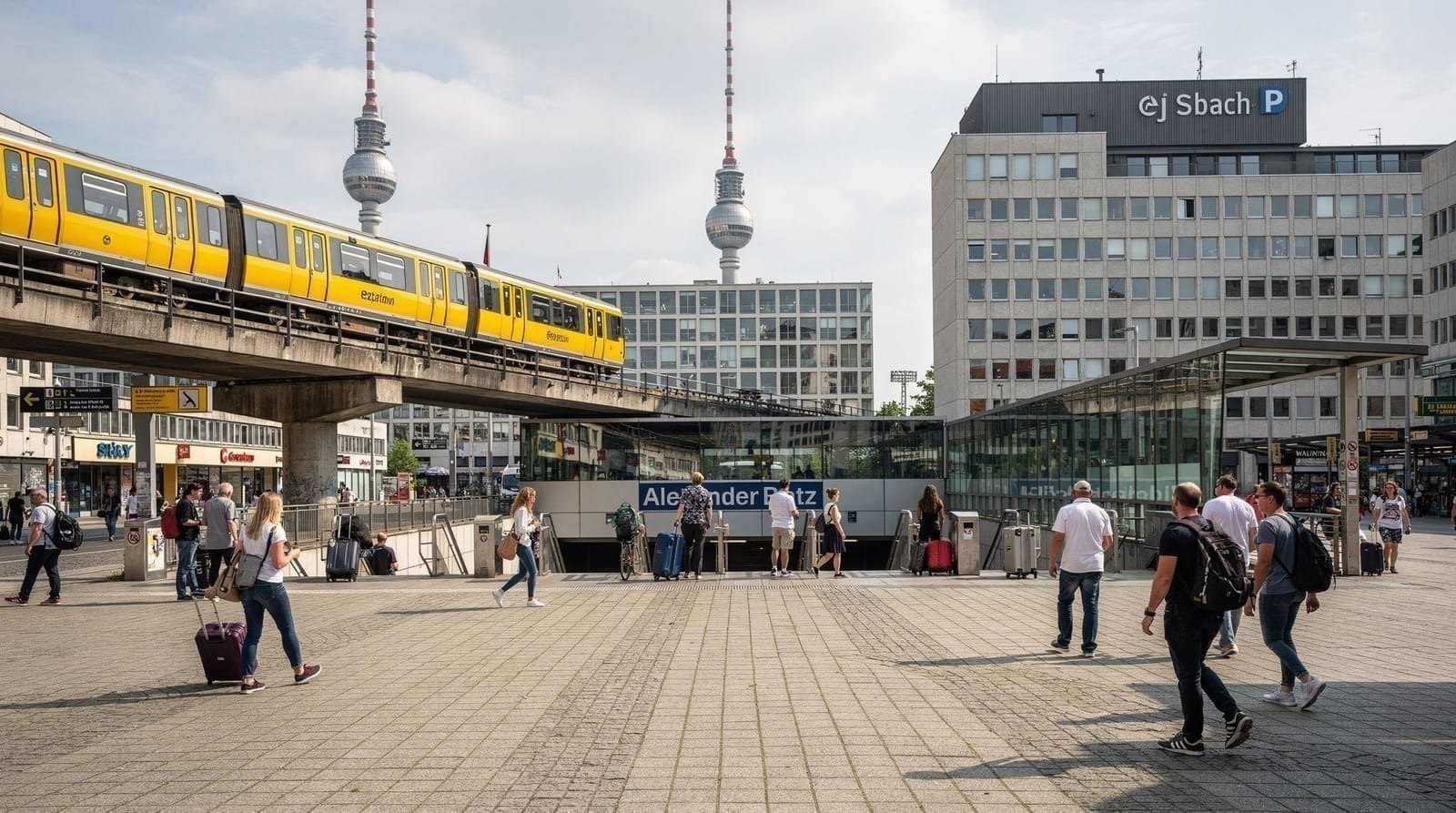
Generally yes. The main risks are standard urban pickpocketing on crowded public transport and around major tourist sites. The Alexanderplatz U-Bahn station and the area around Görlitzer Park in Kreuzberg have reputations for petty crime at night. The S-Bahn network is broadly safe, though late-night carriages can be loud. Solo female travellers report Berlin as more comfortable than many other European capitals.What language do people speak in Berlin?
German. Many Berliners speak English, particularly those under 40. In tourist areas, expect smooth English communication. In outer residential districts, Turkish, Arabic, Russian, Vietnamese, and Polish are as common as German. Learning basic German greetings (Guten Morgen, Danke, Bitte, Entschuldigung) goes a long way — Berliners warm noticeably when you try.Do I need to validate my transit ticket in Berlin?
Yes — always. Buying a ticket and failing to validate (stamp) it before boarding is still riding without a valid ticket under BVG rules. Validation machines (orange or yellow boxes on platforms and inside trams) stamp the date and time. Inspectors work undercover and check regularly; the fine is €60, payable on the spot.What is Pfand and how does it work?
Pfand is a bottle deposit system. You pay a deposit of €0.25 per plastic bottle, can, or reusable glass bottle when you buy a drink. Return the empties to any supermarket's Pfandautomat (returns machine) for a receipt to redeem at the till. Döner shops and Imbiss stands typically don't do Pfand. Some homeless individuals collect returned bottles from bins — leaving bottles beside (not in) a bin rather than recycling them is a common local practice.What should I know about tipping in Berlin?
Stimmt so" (shtimmt zoh) means "keep the change" and is the standard way to tip in Berlin. When paying by card or cash, tell the server the amount you want to pay (including tip) rather than leaving coins on the table after they've left. A 5–10% tip for sit-down restaurant service is standard. Tipping at cafés and bars is optional (round up the change). Do not tip at Imbiss stands.Are Berlin's clubs and bars really cash-only?
Many are. Most serious Berlin clubs (Berghain, Tresor, Watergate, Sisyphos) are cash-only at the door and at the bar. Smaller bars and Kneipen (pubs) often accept only cash. Carry €40–60 for a night out. ATMs are available in most neighbourhoods but not always near club entrances. There are Sparkasse and Deutsche Bank ATMs around Warschauer Strasse station (near the club district) that work reliably.