Pergamon Museum is closed — what to do instead in 2026
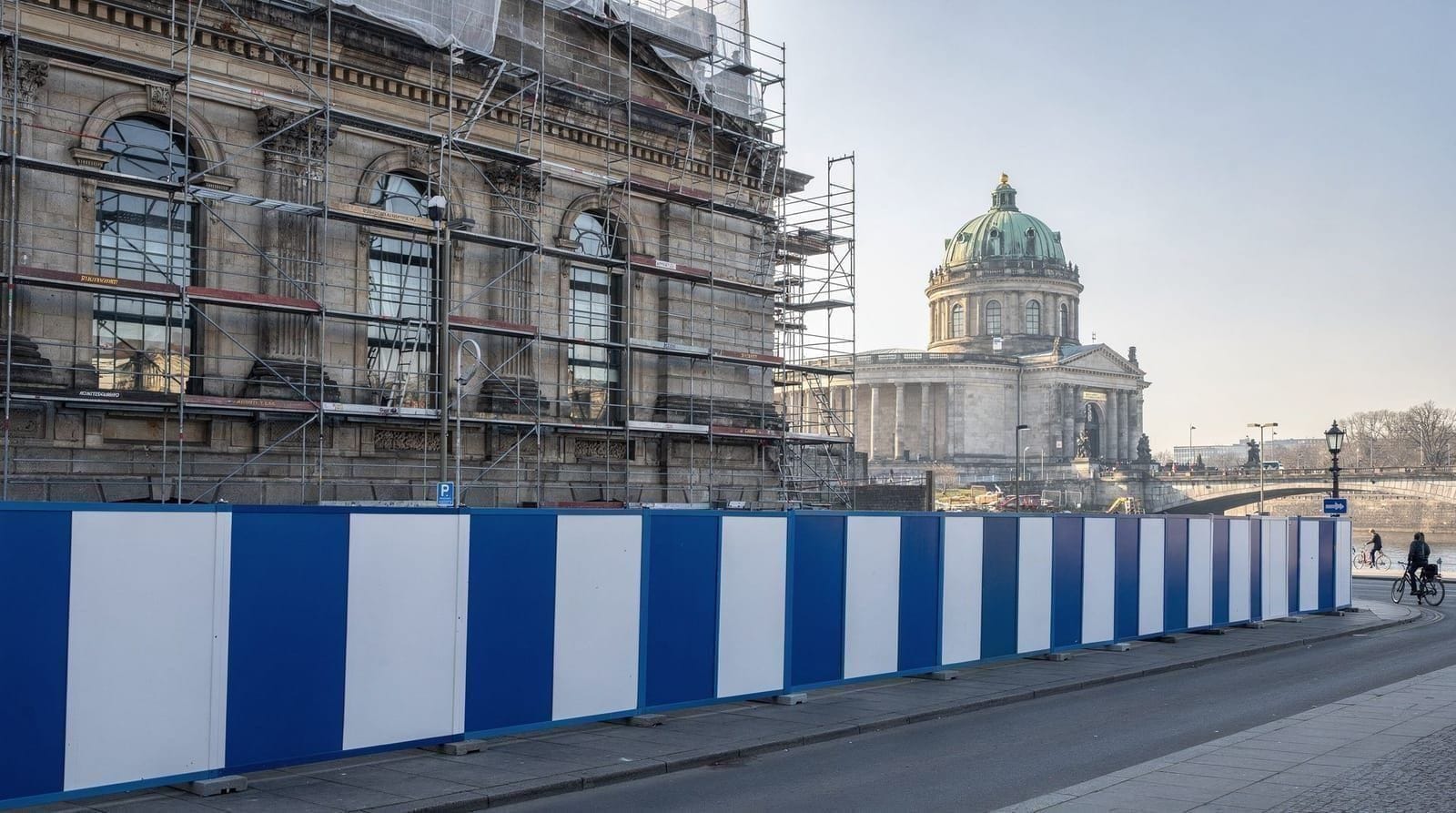
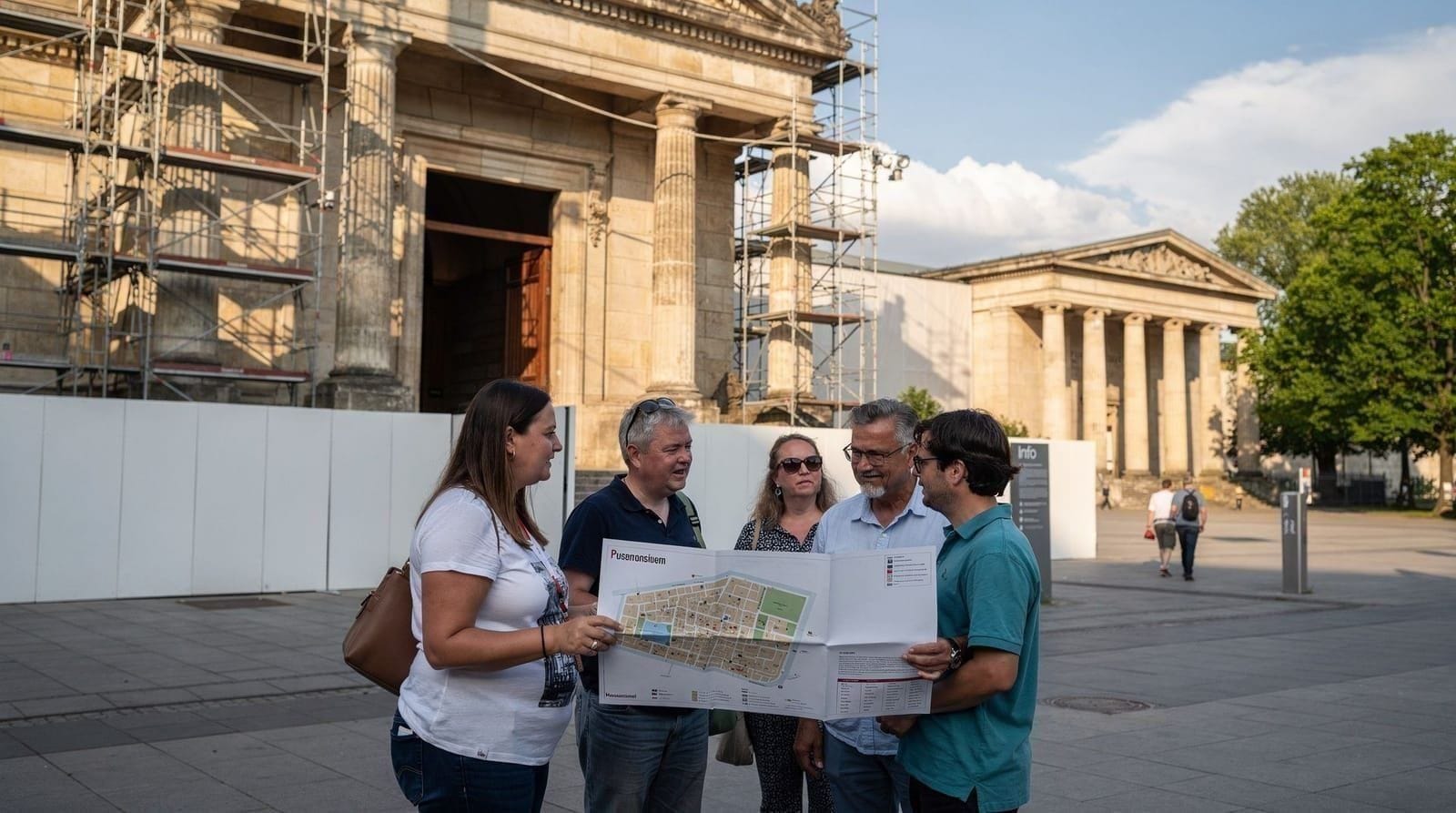
If you’re arriving in Berlin in 2026 expecting to see the Pergamon Altar, the Market Gate of Miletus, or the Ishtar Gate in situ, stop — you can’t. The main hall of Pergamonmuseum has been closed since 2023 for a major structural renovation and won’t reopen until June 4, 2027 at the earliest. This catches a significant number of visitors off-guard because the museum still appears prominently in search results, guidebooks, and “must-see Berlin” articles that haven’t been updated.
Here’s what’s actually open, what partial experience is available, and why 2026 on Museum Island can still be exceptional. The full guide to Pergamon alternatives goes into depth on each option with opening hours, ticket prices, and practical logistics.
| Status | main hall closed since 2023, reopening not before June 2027 |
| What’s open | north wing (Islamic Art), Panorama Asisi nearby |
| Cost | Panorama Asisi around €15 standard, €8 reduced |
| Best alternative | Neues Museum (Nefertiti) or Altes Museum (classical antiquities) |
| Getting there | S-Bahn Hackescher Markt, Museum Island |
Why Pergamon is closed and when it reopens
The closure covers the main south wing — the famous hall housing the Pergamon Altar (the enormous ancient Greek altar to Zeus from the 2nd century BCE), the Market Gate of Miletus (a Roman civic gateway), and the Ishtar Gate (the reconstructed Babylonian entrance decorated with blue-glazed animal reliefs).
The renovation is structural. Pergamonmuseum was built between 1910 and 1930, and the building had been sinking into the sandy Berlin ground for decades — a problem shared by several Museum Island structures. The reinforced foundation work requires emptying the building of its massive artefacts, which were partially removed and partially placed in temporary display elsewhere.
Official reopening: June 4, 2027. This is the current official estimate; large-scale structural renovations have historically extended, so treat it as an earliest-realistic date rather than a guarantee. The 2026 Pergamon status guide tracks updates.
What remains open at the Pergamon address
The north wing of Pergamonmuseum, containing parts of the Islamic Art collection, is accessible through a separate entrance. This includes significant pieces including the Aleppo Room (a wooden panelled reception room from early 17th century Syria) and some architectural fragments from the Islamic collection.
Allow 45–60 minutes for this partial experience. It’s not nothing — the Aleppo Room is extraordinary — but it is a fraction of what Pergamon normally offers and should be treated as a supplement to other Museum Island visits, not the main event.
The Pergamon Panorama — a different experience entirely
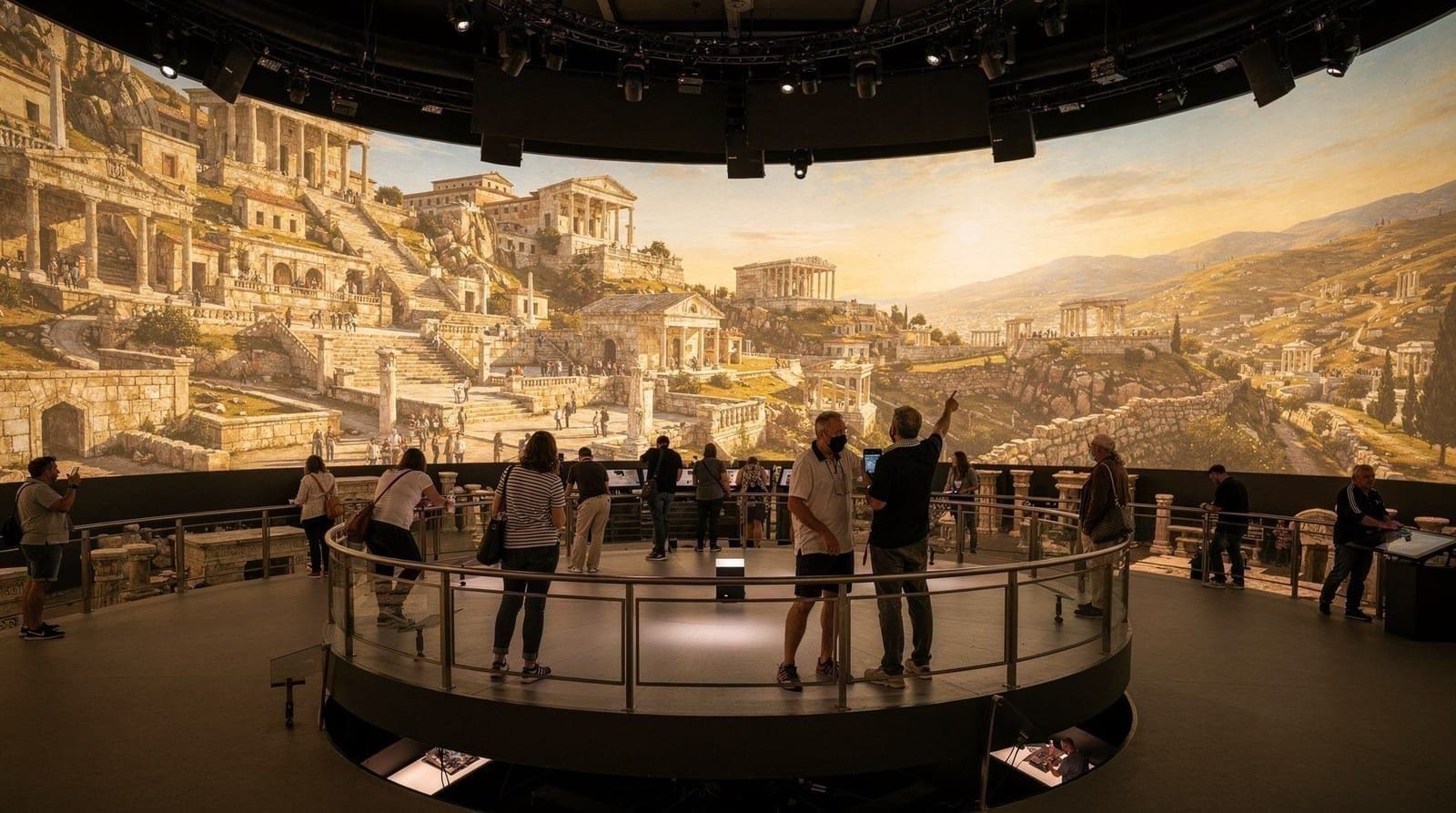
Roger Asisi’s Panorama installation sits in a purpose-built cylindrical pavilion adjacent to the closed Pergamon building on Museum Island. It’s a 360-degree panoramic artwork recreating the ancient city of Pergamon — the full urban environment at a specific moment in time, rendered at enormous scale.
To be clear about what this is: it’s a contemporary artwork, not a museum exhibit. There are no artefacts. The experience is standing in the centre of a massive circular painting/projection and experiencing an artistic reconstruction of the ancient city environment. It’s impressive on its own terms — Asisi’s panoramas are technically accomplished and the scale is disorienting in an interesting way.
Entry: €15 standard, €8 reduced. Duration: 45–60 minutes. Worth visiting if you’re specifically interested in what the ancient city of Pergamon looked like and what the altar was built for — the panorama provides context that the altar itself, when it reopens, won’t provide.
Pergamon Panorama Asisi — skip-the-queue ticket for the panoramic installation, avoids the walk-up queue at the temporary pavilionThe four museums that justify a Museum Island visit in 2026
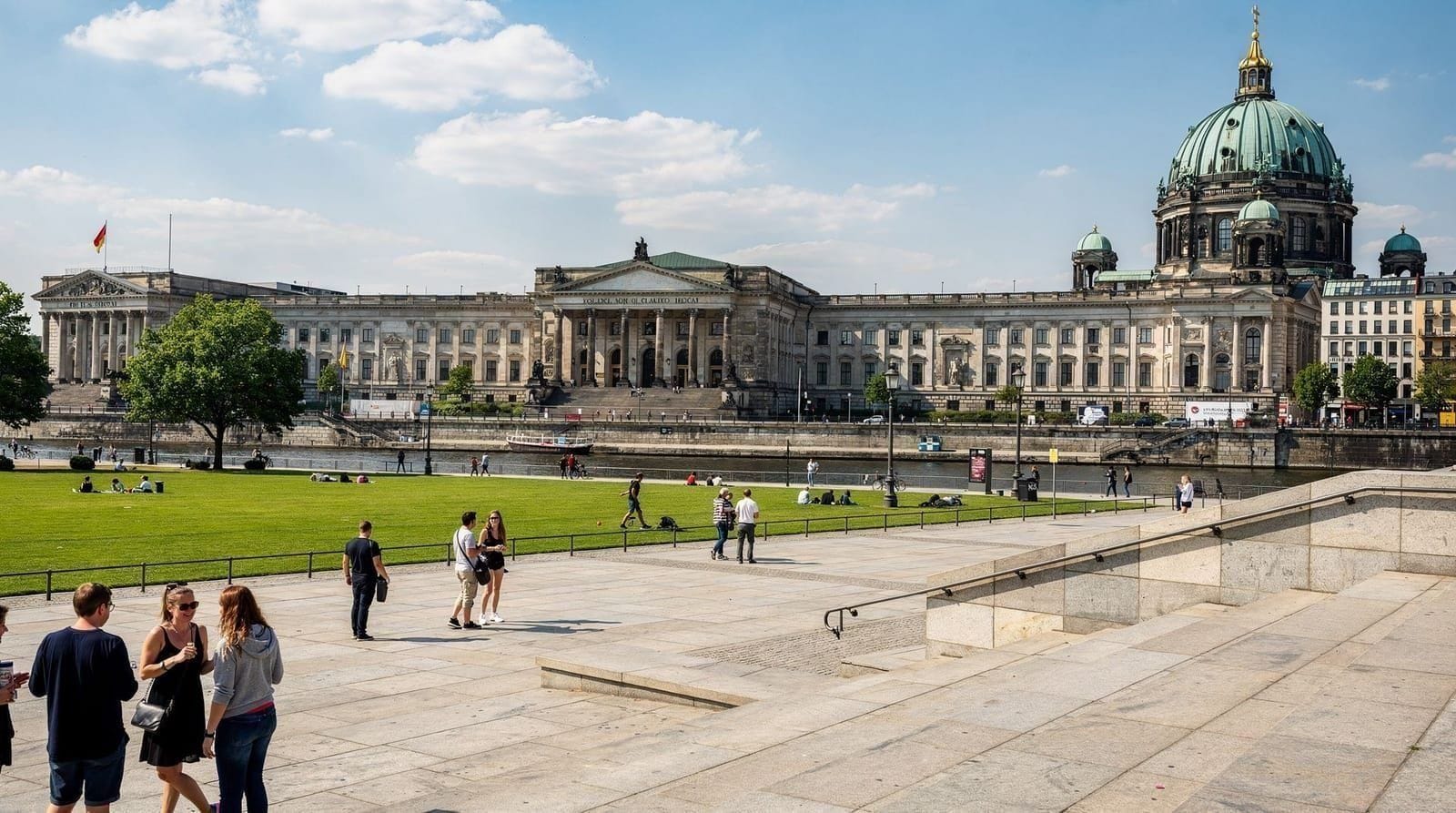
Museum Island has five museums. With Pergamon’s main wing closed, the other four deserve your full attention — and in many respects, the 2026 Museum Island experience is less crowded than in a normal year because visitors who specifically came for Pergamon have not come.
Neues Museum — the highest-priority choice
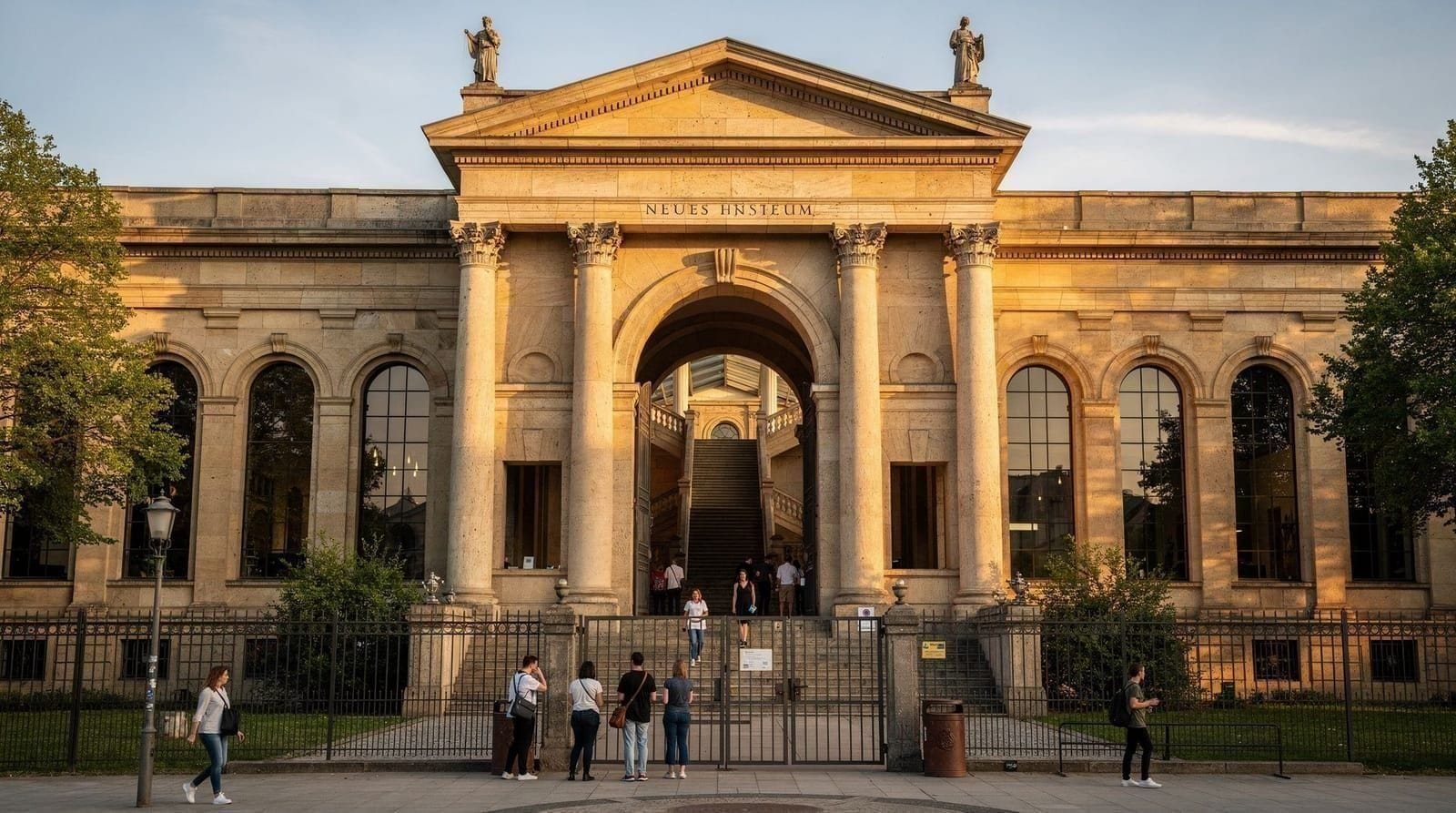
The Neues Museum houses the bust of Nefertiti (from the workshop of Thutmose, circa 1345 BCE) — arguably the most famous single artwork in Berlin and one of the most recognised ancient artworks in the world. The Egyptian collection surrounding it is among the finest in Europe, and the prehistoric section is underappreciated.
The building itself is worth experiencing. David Chipperfield’s reconstruction after WWII bombing (the building was partly destroyed and then left derelict for 50 years) is a masterpiece of working with ruins rather than erasing them — you can see deliberate preservation of wartime damage alongside new construction.
Entry: €12. Allow 2.5–3 hours for the full collection. Buy tickets online or via the Museum Island combination ticket to skip the walk-up queue, particularly in summer.
Altes Museum — classical antiquity at its finest
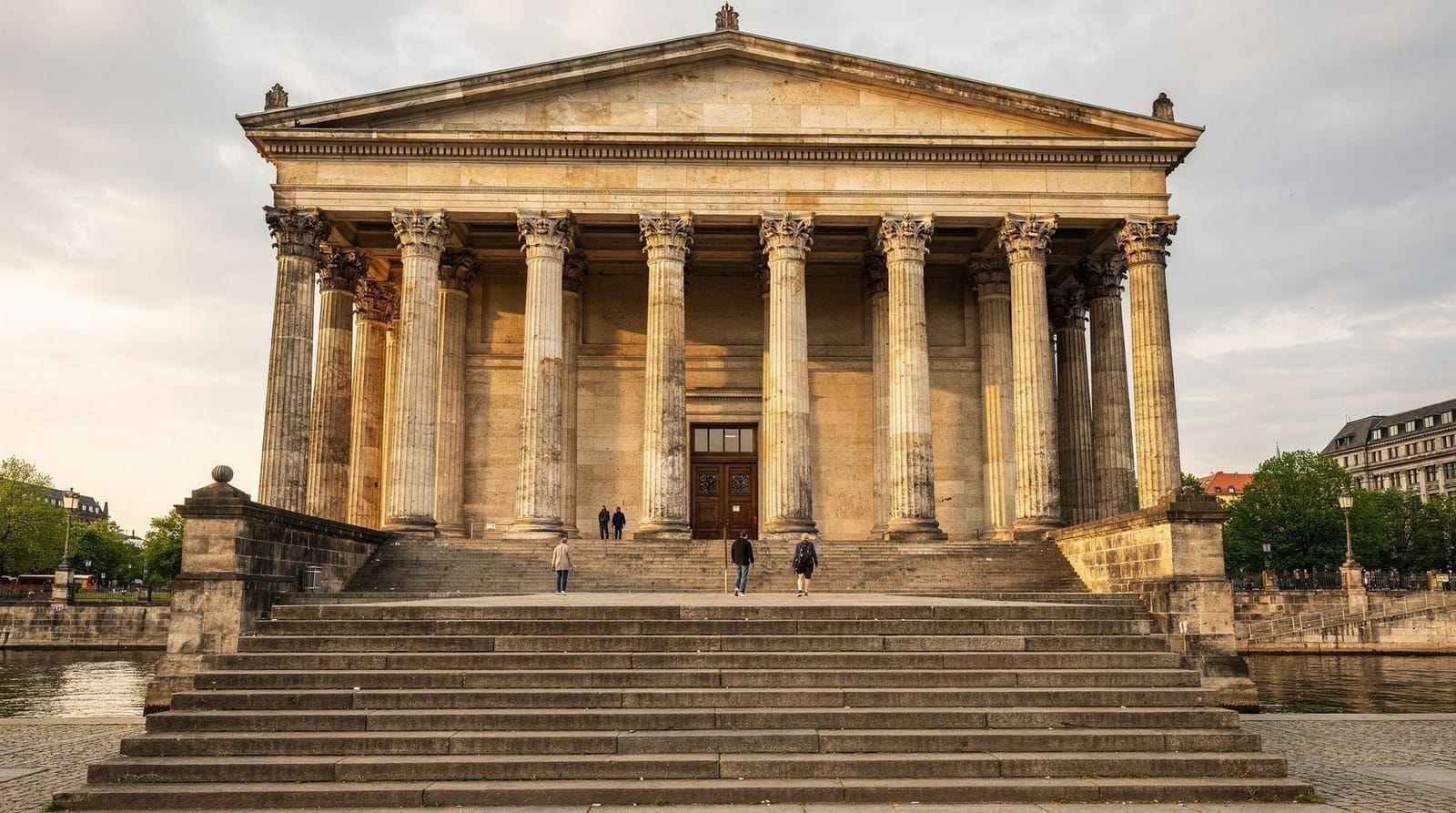
The Altes Museum is the oldest of the five museums, designed by Karl Friedrich Schinkel (1823–1830) and fronting the Lustgarten opposite the Berliner Dom. The rotunda inside is directly modelled on the Pantheon in Rome.
Collections: Greek and Roman antiquities — Etruscan bronzes, Roman portraiture, Greek ceramics, and architectural fragments. The scope is vast. For visitors who came to Berlin partly because of the classical world content that Pergamon normally represents, the Altes Museum is the best substitute.
Entry: €12. Can be visited on the same day as Neues Museum with the combination ticket.
Bode Museum — the overlooked gem
The Bode Museum at the northern tip of Museum Island is consistently the least-visited of the five and arguably the most underrated. Collections include:
- Byzantine art (mosaics, icons, liturgical objects from the 4th–15th centuries)
- Medieval European sculpture
- The Coin Cabinet (Münzkabinett) — 500,000 coins spanning 2,600 years of monetary history
The building exterior is remarkable — the Bode Museum sits at the pointed northern tip of Museumsinsel with river views on both sides. Worth coming for the architecture and the relative quiet even on busy Museum Island days.
Entry: €12. Less crowded than Neues or Altes Museum.
Alte Nationalgalerie — German Romantic painting
The Alte Nationalgalerie holds German Romantic and 19th-century European painting. Caspar David Friedrich’s major works are here — “The Monk by the Sea,” “Abbey in the Oakwood,” “The Sea of Ice” — alongside Adolph Menzel, Wilhelm Leibl, and a strong French Impressionist collection.
For visitors who aren’t specifically focused on ancient world artefacts, the Alte Nationalgalerie may be the most engaging single museum on Museum Island in 2026. The Caspar David Friedrich collection alone is worth the journey.
Entry: €12. Extended hours on Thursday (open until 20:00).
Museum Island combination ticket — 3-day access to all five museums, best value for visitors spending serious time on the islandThe four open museums compared
| Museum | Best for | Entry | Crowd level |
|---|---|---|---|
| Neues Museum | Nefertiti bust, Egyptian collection | €12 | Busiest |
| Altes Museum | Greek and Roman antiquities | €12 | Moderate |
| Bode Museum | Byzantine art, coins, sculpture | €12 | Quietest |
| Alte Nationalgalerie | 19th-century German painting | €12 | Moderate |
Off-island alternatives for ancient world enthusiasts
If the Pergamon Altar and ancient Near East were specifically your reason for coming to Berlin, some alternatives:
Antikensammlung at Charlottenburg: The Berlin Antiquities Collection has a satellite display in the Altes Museum (already listed above) and additional pieces in the Charlottenburg area. The Egyptian Museum Berlin (in the Charlottenburg new wing) has papyri, ushabtis, and small-scale artefacts that complement Neues Museum.
Vorderasiatisches Museum (Museum of the Ancient Near East): Parts of this collection — which normally lives in the same Pergamon building — have been redistributed to other venues during the renovation. Check the current display location via smb.museum, as placement has shifted during the construction period.
Practical planning for Museum Island in 2026
Closed day: All Museum Island institutions are closed on Mondays. Many visitors arrive on Monday to find everything shut — check your dates.
Opening hours: Generally 10:00–18:00 (Tue–Sun), with extended hours on Thursdays. The Alte Nationalgalerie and Neues Museum stay open until 20:00 on Thursdays.
Booking: Online booking is available for all institutions through the smb.museum website or via ticketing partners. In summer (June–August), walk-up queues for Neues Museum can reach 45–60 minutes at peak times. Book ahead.
Combination ticket: The Museum Island combination ticket (Bereichskarte Museumsinsel) costs €29 for three days of access to all five museums. It’s the most efficient option for anyone planning multiple museum visits on the island.
The Museum Island guide covers all ticketing options, which days are least crowded (typically Tuesday and Thursday mornings), and how to sequence multiple museum visits efficiently. The Pergamon closure is a genuine loss for 2026, but the remaining four museums are exceptional by any standard.
FAQ
Q: Will I get a refund if I already booked a Pergamon Museum ticket? If you booked through the official Staatliche Museen Berlin site or a reputable partner, closure-related cancellations are typically handled with a refund or redirect to the Panorama Asisi. Booked through a third party, check that operator’s own terms.
Q: Is the Panorama Asisi worth it if I’m not interested in ancient history? It stands on its own as an immersive art installation regardless of prior interest in antiquity — the scale and technical execution are the draw, not historical context alone. If contemporary large-format art doesn’t appeal, skip it and spend the time at the Alte Nationalgalerie instead.