Berlin money-saving tips — how to see the city for less in 2026
| Cheapest transport | 9-Uhr-Karte, around €6.20 vs €9.50 full day ticket |
| Free museums | Hamburger Bahnhof (1st Sat), Jewish Museum (1st Fri) |
| Best value viewpoint | Siegessäule, around €3 |
| Cheap eats | Döner €5-7, currywurst €3.50-4.50 |
| Multi-day trips | Weekly BVG card beats daily tickets past 4 days |
Berlin has a long-standing reputation as the cheapest major capital in Western Europe, and while that’s eroded a bit since the 2010s, it holds. A weekend here doesn’t have to cost what a weekend in Paris does. But it does require knowing which shortcuts are real and which are tourist traps dressed up as deals. Here’s what actually works.
For the full picture of what things cost and how to budget your days, see the Berlin budget guide. This post is the condensed, punchy version — the stuff you can read on the train to the airport.
The Berlin WelcomeCard — when it works, when it doesn’t
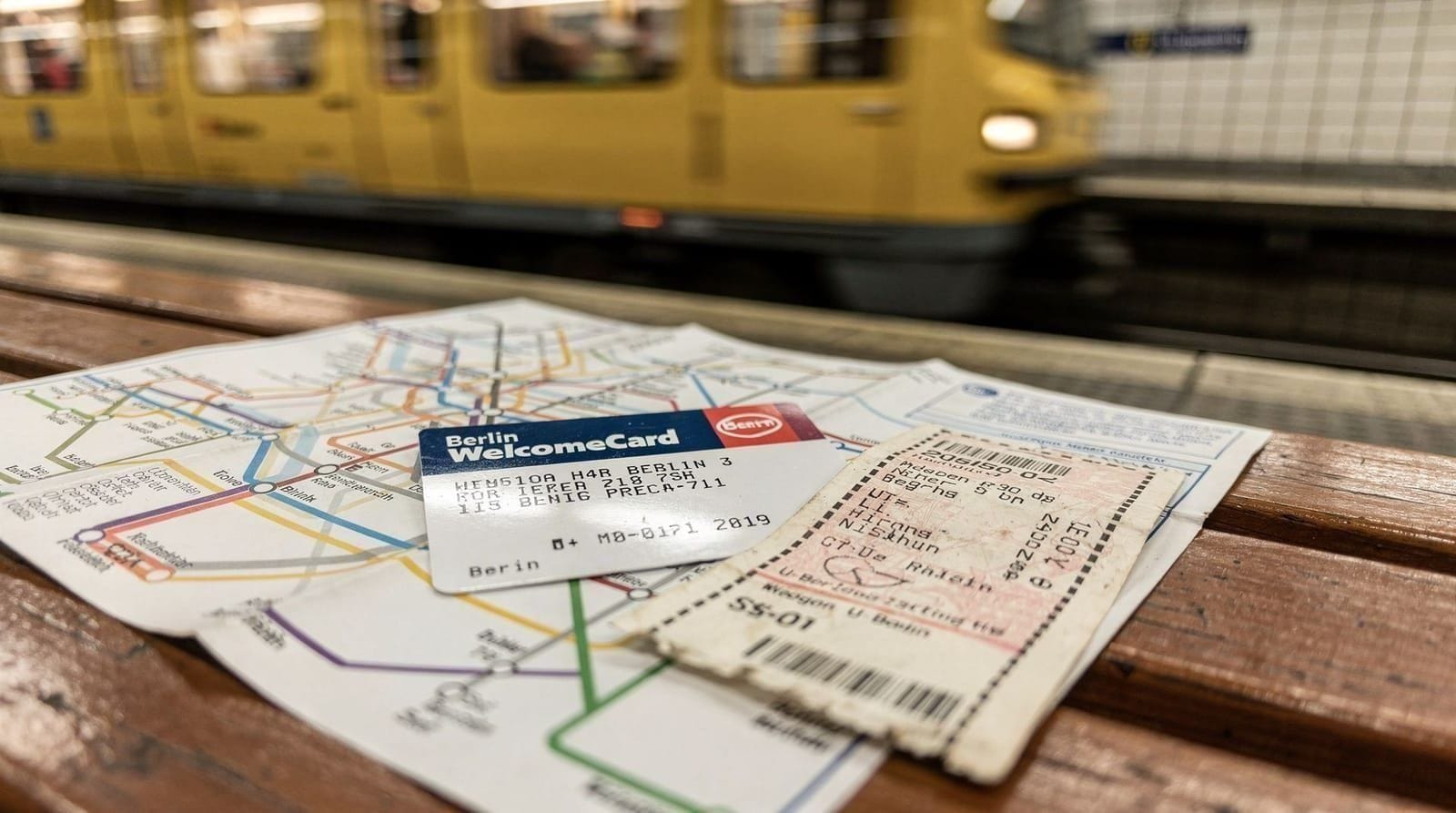
The WelcomeCard is Berlin’s visitor pass combining unlimited public transport with museum discounts. It’s sold in several formats, so let’s be precise.
The AB zones card runs around €23 for 2 days. That covers all BVG transport inside the city — U-Bahn, S-Bahn, tram, bus — plus discounts of 25% at around 200 attractions. A standard AB day ticket is €9.50, so two days of transport alone costs €19. You’re paying a €4 premium for the discount card, which means you need to actually use those discounts to justify it.
The maths is simple: if you’re doing four or more BVG journeys per day and visiting at least one paid attraction where the 25% off applies, the WelcomeCard earns back its cost. If you’re spending two days mainly walking, cycling, and visiting free sites, it doesn’t.
The Museum Island + Transport version is the more expensive option at around €36 for 3 days. It includes a day pass for all five Museum Island institutions — Pergamon, Neues Museum, Alte Nationalgalerie, Bode-Museum, Altes Museum — plus transport. Individual Museum Island entry adds up fast (around €12–14 per museum), so for a genuine museum day this version is good value. For everything you need to know before deciding, see is the Berlin WelcomeCard worth it?
Check current WelcomeCard pricesThe BVG 9-Uhr-Karte — the tip most guides skip
If you’re not commuting and don’t need to be anywhere before 9am, the 9-Uhr-Karte (literally “9 o’clock ticket”) is a reduced day ticket valid from 9am until 3am the following day. It costs around €6.20 versus the full Tageskarte at €9.50. That’s a saving of roughly €3.30 per day.
Over a 5-day trip, starting at 9am every day, that’s over €16 saved on transport alone — more than a night’s worth of döner kebabs. Check current fares at the BVG website or machines before buying, as prices are updated annually. The full breakdown of ticket types is in the Berlin public transport guide.
Free museums — the real ones, with the caveats
Berlin has a genuinely strong roster of free or regularly free museums. The trick is knowing the rules.
Memorial to the Murdered Jews of Europe — the central monument off Ebertstraße near the Brandenburg Gate is always free to walk through. The underground information centre is also free, though it’s worth booking a timed slot in advance during peak months.
East Side Gallery — 1.3 km of surviving Berlin Wall covered in commissioned murals. Always free, open air, no booking needed. Go early morning to avoid tour groups and actually see the paintings without bodies in the way.
Hamburger Bahnhof — one of the best contemporary art museums in Germany, normally charged, but free on the first Saturday of every month. The permanent collection includes Joseph Beuys, Andy Warhol, Anselm Kiefer. Worth timing your visit around this.
Jewish Museum Berlin — normally charges around €10 entry. Free on the first Friday of every month, though you’ll need to book in advance as it fills up. The building itself — designed by Daniel Libeskind — is half the experience.
Topography of Terror — free, every day. Outdoors and indoors sections documenting the site of the former SS and Gestapo headquarters. One of the most sobering and important sites in the city.
Gedenkstätte Berliner Mauer (Berlin Wall Memorial) on Bernauer Straße — also free, open air, with an indoor documentation centre that charges nothing. Better for understanding the actual history of the Wall than the tourist-heavy East Side Gallery.
For a strategic day of free museum visits with transport included, the Berlin museums day pass guide runs the numbers.
Free viewpoints — honest edition
This is where I’ll be straight with you, because several “free viewpoints” guides are quietly lying.
Teufelsberg — the former NSA/British intelligence listening station in the Grunewald forest, built on a rubble hill from wartime demolition. It’s atmospheric, the tower views are genuinely panoramic, and the graffiti inside the radar domes is worth seeing. It is not free — entry currently runs around €8. Well worth it, but don’t show up expecting to walk in without paying.
Müggelturm — the tower in the Köpenick forests in southeast Berlin. Free to walk to, small charge to climb the tower itself. The surrounding Müggelberge hills and lake are free and beautiful — a solid half-day out of the city centre with no cost if you’re happy staying at ground level.
Siegessäule (Victory Column) — the golden figure in Tiergarten. Climbing the column costs €3, which is about as cheap as paid viewpoints get. The 360-degree view over Tiergarten and central Berlin is good on a clear day.
Teufelsberg hill base (free) — you can walk to the bottom of the hill and through the forest without paying. The view from the top of the dome requires the ticket.
Fernsehturm observation deck at Alexanderplatz is worth noting: entry is around €22–25 and it’s a tourist queue situation. Skip it unless views are your priority — the Siegessäule at €3 gives you a comparable experience for a fraction of the cost.
Cheap eats — what under €5 actually gets you
Döner kebab is Berlin’s signature street food and remains the benchmark of cheap eating in the city. Budget €5–7 for a full döner with salad, sauce, and bread at most places. The prices at tourist-area places like near the Brandenburg Gate creep higher — walk one street back and prices normalise. For the broader picture of street food in Berlin, see the Berlin street food scene guide.
Currywurst — a grilled pork sausage sliced and covered in spiced ketchup with curry powder — runs €3.50–4.50 at most Imbiss stands. Curry 36 on Mehringdamm is the famous name, but Konnopke’s Imbiss under the Prenzlauer Berg elevated train line is arguably better and less touristy. For the full obsessive breakdown, see the Berlin currywurst guide.
Falafel on Mehringdamm — the street in Kreuzberg around the U6 Mehringdamm stop has multiple falafel places competing for the same customers, which keeps prices honest. A falafel wrap runs around €4 most days. Dada Falafel (Linienstraße in Mitte) is also worth knowing if you’re on that side of the city.
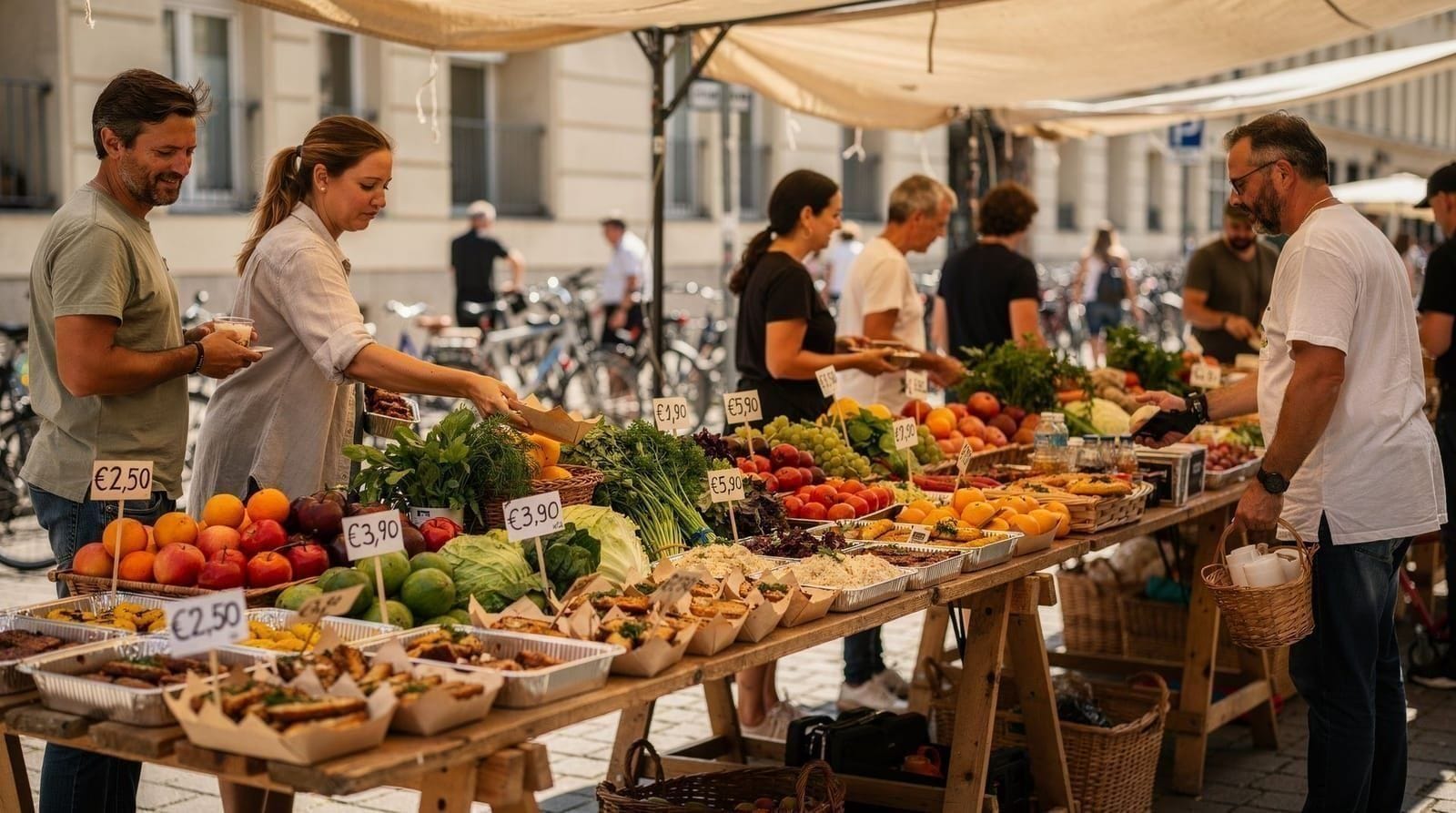
Turkish market at Maybachufer — runs every Tuesday and Friday along the Landwehr canal in Neukölln. Excellent produce, cheese, olives, bread, and prepared food at prices noticeably below supermarket deli counters. Good place to buy supplies for a canal-side picnic.
Supermarkets — Aldi, Lidl, and Rewe are your friends for picnic supplies. German supermarket bread, cheese, and charcuterie is high quality. A solid lunch assembled from a Rewe deli counter costs €3–5. Eating this way for one meal a day cuts your food budget substantially.
Flea markets — free to browse, cheap to buy
Berlin’s flea market scene is one of the best in Europe and almost entirely free to enter.
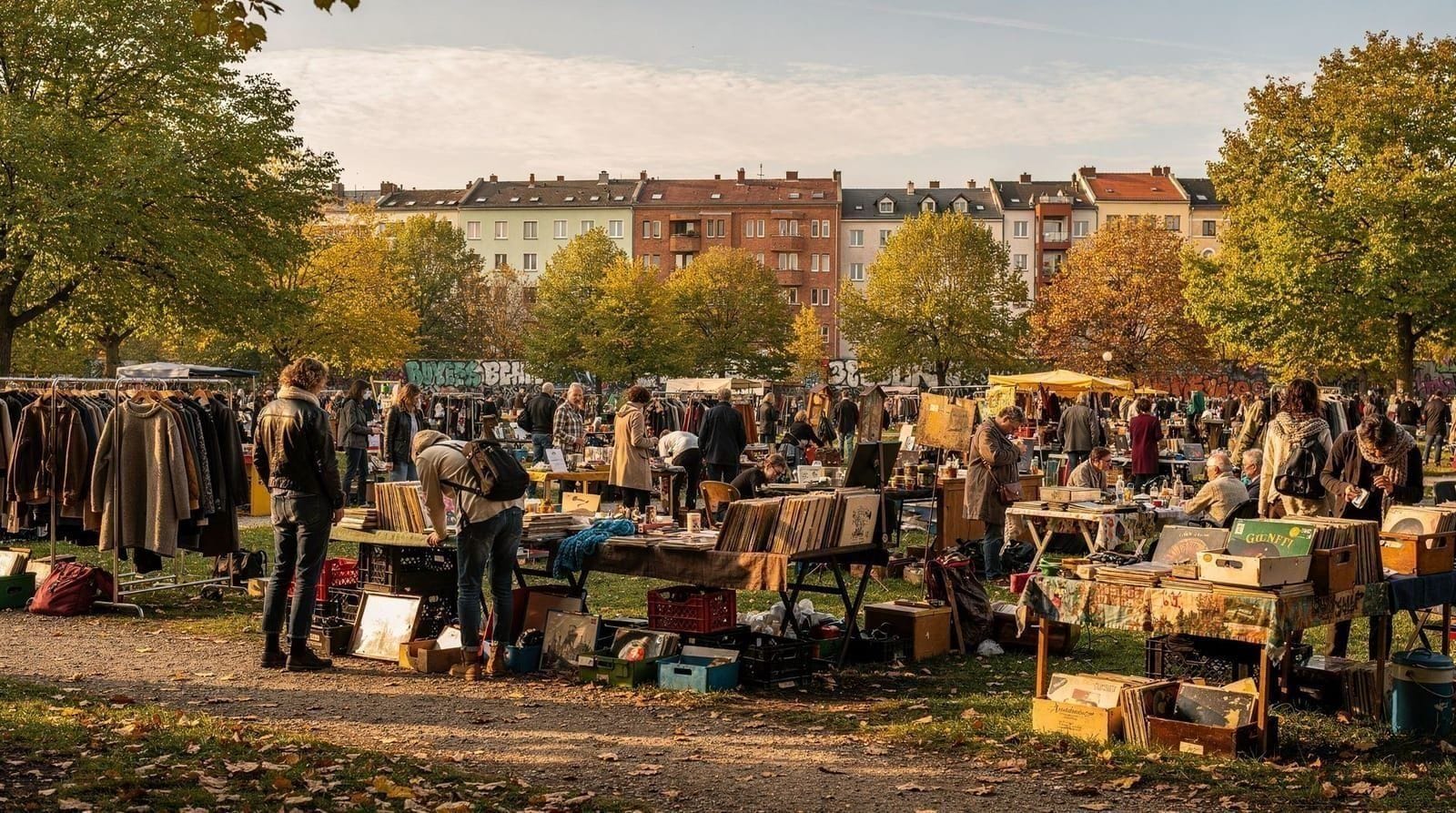
Mauerpark on Sundays is the most famous — large, eclectic, spanning everything from genuine vintage clothing to handmade crafts to junk. The karaoke amphitheatre nearby is also free to watch and genuinely entertaining. Expect crowds by midday; arrive at 10am for better browsing.
Boxhagener Platz in Friedrichshain runs Sunday mornings. Smaller, more local, less tourist-oriented than Mauerpark. Good for records, books, and genuine secondhand finds. Free entry.
Nowkoelln Flowmarkt along the Landwehr canal in Neukölln runs on alternating Sundays. Design-focused, with crafts, vintage, and food stalls. The canal setting makes it a pleasant morning regardless of whether you buy anything. The Berlin flea markets guide has dates and what to expect at each.
Free walking tours — understand the format
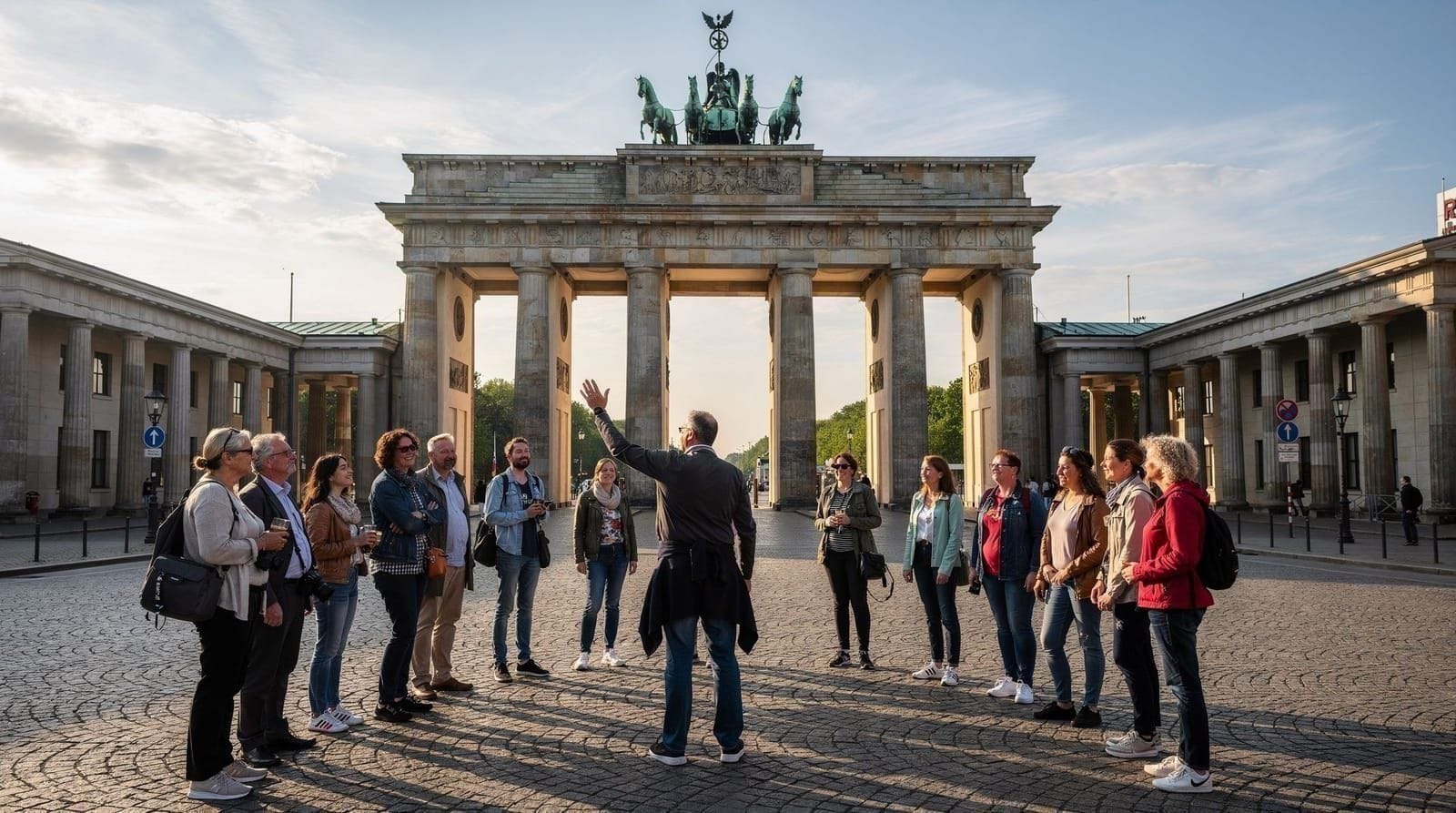
Berlin has a strong culture of tip-based free walking tours, operating daily from Brandenburg Gate and other central points. These are not actually free — the business model is that you pay what you think the tour was worth at the end, and the guides rely on tips for income. Budget €10–15 per person as a fair tip for a 2.5-hour tour.
The value proposition is strong: you get orientation, historical context, and local knowledge that would take hours of research to replicate. For first-timers, doing one on day one pays back the rest of your trip. The Berlin free walking tours guide lists the reputable operators and what each covers.
Getting to other cities — buy in advance
If you’re combining Berlin with Dresden, Hamburg, or Leipzig, Deutsche Bahn Sparpreis tickets bought 2–3 weeks in advance cut costs significantly. Berlin to Dresden on a Sparpreis starts around €17 — the full flexible fare is over €50. The savings are real but the tickets are fixed departure, non-refundable.
The one transport investment that’s always worth it
Regardless of your budget strategy, if you’re spending more than two days in Berlin and plan to get around by public transport, calculate whether a weekly BVG card (7-Tage-Karte, €36 AB) beats individual day tickets. At €9.50 per day ticket, four days of unlimited travel costs €38 — more than the weekly pass. Four days or more, buy the weekly card. It also removes the friction of buying a new ticket each morning, which matters when you’re navigating an unfamiliar city.
For cycling days — Berlin is extremely flat and has good bike infrastructure — renting a bike for €15–20/day from operators near the main stations removes the BVG cost entirely. The Berlin bike tours guide covers routes and where to hire.
See Museum Island WelcomeCard optionsThe short version
Berlin rewards visitors who do ten minutes of planning. The 9-Uhr-Karte saves money every day you use it. The free museums are genuinely good — time your visit for first Saturday or first Friday at the right places. Eat döner and currywurst off the tourist strip. Browse Mauerpark on Sunday morning. And if you’re hitting museums properly, run the WelcomeCard numbers before defaulting to individual tickets.
The city is still one of the more affordable destinations in Europe for what it offers. Keep it that way by not paying tourist prices when the local price is one street further away.
Budget accommodation strategy
Accommodation is usually the largest line item, and Berlin has more budget options than most Western European capitals. Hostels in Friedrichshain and Kreuzberg run €20-35 for a dorm bed; budget hotels in these neighbourhoods and in Neukölln undercut Mitte prices by 30-40% for a comparable room, with transit into the centre still under 20 minutes on the U-Bahn. The Berlin where to stay guide breaks down which neighbourhoods offer the best value without sacrificing convenience. Booking 6-8 weeks ahead for a summer trip typically saves 15-20% versus booking in the final two weeks.
A sample low-budget day
Putting several of these tips together: start with a free walking tour from Brandenburg Gate (tip €10-15), eat a Turkish market lunch at Maybachufer (€6-8), spend the afternoon at Topography of Terror and the East Side Gallery (both free), and finish with a currywurst dinner at Curry 36 (€4). Add a 9-Uhr-Karte for transport (€6.20). Total for the day: roughly €30-35 excluding accommodation — genuinely one of the cheaper full days available in a major European capital.
FAQ
Is the Berlin WelcomeCard worth it for a budget trip? Only if you’re doing four or more transport journeys a day and visiting at least one paid attraction with a discount. For a genuinely tight-budget trip built around free museums and walking, buying single 9-Uhr-Karte tickets is usually cheaper. Run the numbers against your specific plan using the WelcomeCard worth it guide.
What’s the biggest mistake budget travellers make in Berlin? Eating and drinking within a block of major tourist sites. Prices at kiosks near Brandenburg Gate or Checkpoint Charlie run noticeably higher than the same currywurst or coffee one or two streets back — the discount for walking a few minutes further is real and consistent across the city.