Berlin's best photo spots — an honest guide
| Best light | Golden hour, around 8:30-9:30pm in June |
| Least crowded | Before 8am at major sites |
| Free spots | East Side Gallery, Tempelhof Field, Mauerpark |
| Paid spots | Teufelsberg (~€8), Reichstag dome (free but booked) |
| Drone rules | Restricted near government quarter, permit required |
Berlin is one of the most photogenic cities in Europe, not because it’s conventionally beautiful — it isn’t, compared to Paris or Prague — but because it’s layered. History is visible in the architecture. The street art is the highest quality anywhere in the world. The light in summer is extraordinary (the city sits at 52 degrees north, which means long golden hours in June and July). And unlike many over-photographed European cities, there are still parts of Berlin that feel genuinely undiscovered.
This guide covers the spots worth visiting as a photographer or serious phone-photographer, with honest notes on timing, access, and which locations are worth the effort.
East Side Gallery — beyond the obvious shots
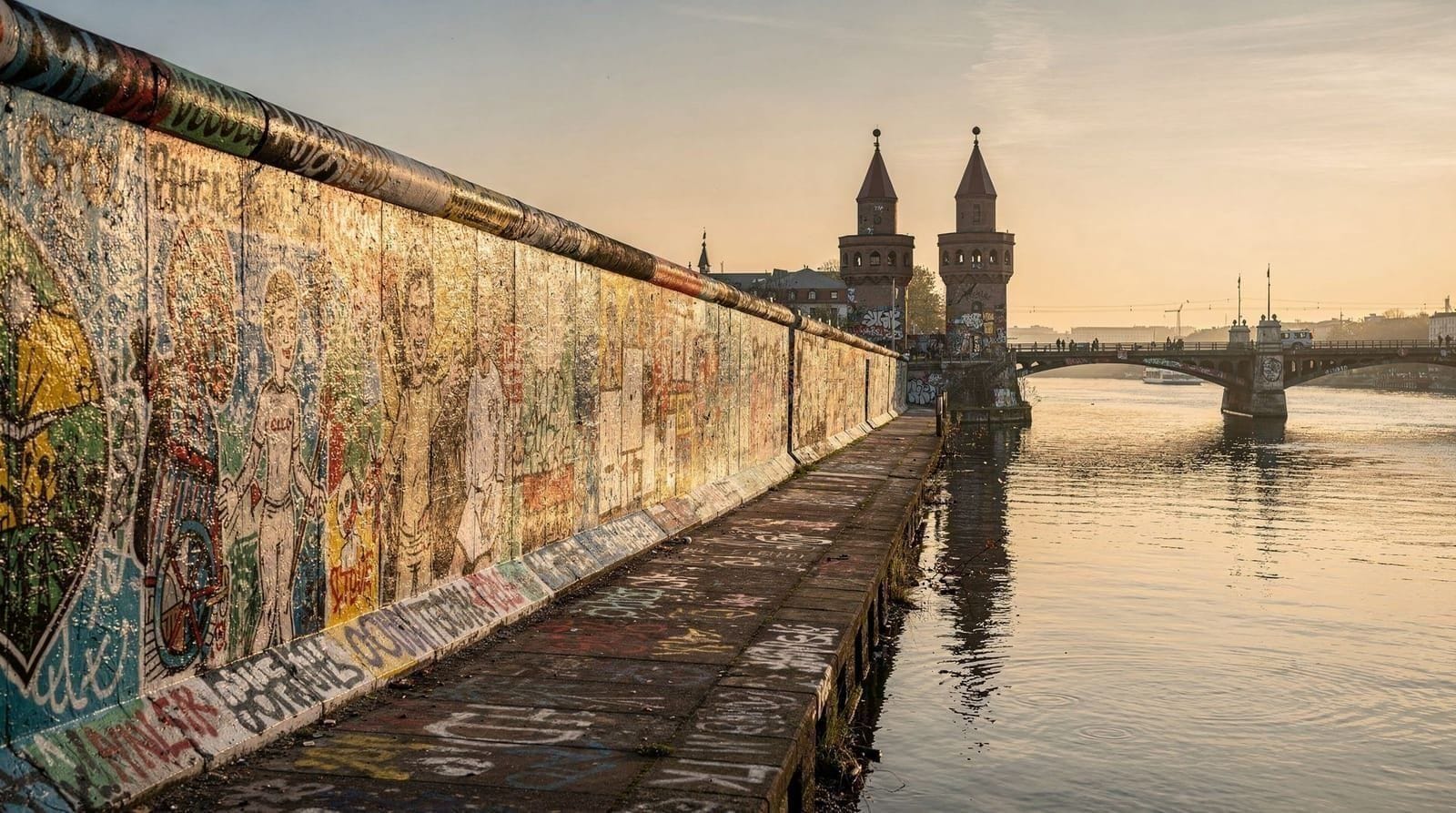
The East Side Gallery is the longest remaining stretch of the Berlin Wall, covered in murals painted in 1990 and since restored. It’s one of the most photographed places in Berlin, but most visitors photograph the same three or four murals and miss the rest.
For photography: arrive early morning (before 8am in summer) for empty stretches and soft light from the east. The Dimitri Vrubel “Fraternal Kiss” mural (Brezhnev and Honecker) is the most reproduced but is also surrounded by souvenir stalls by 10am. The Kani Alavi mural “Es fiel die Mauer” is more nuanced and less photographed.
The full 1.3-kilometre stretch has over 100 murals, each by a different artist. Walking the full length and choosing what catches you is more rewarding than going straight to the famous spots.
For context on the individual murals and their stories, the East Side Gallery guide is the most complete resource.
Street art in Kreuzberg and Friedrichshain
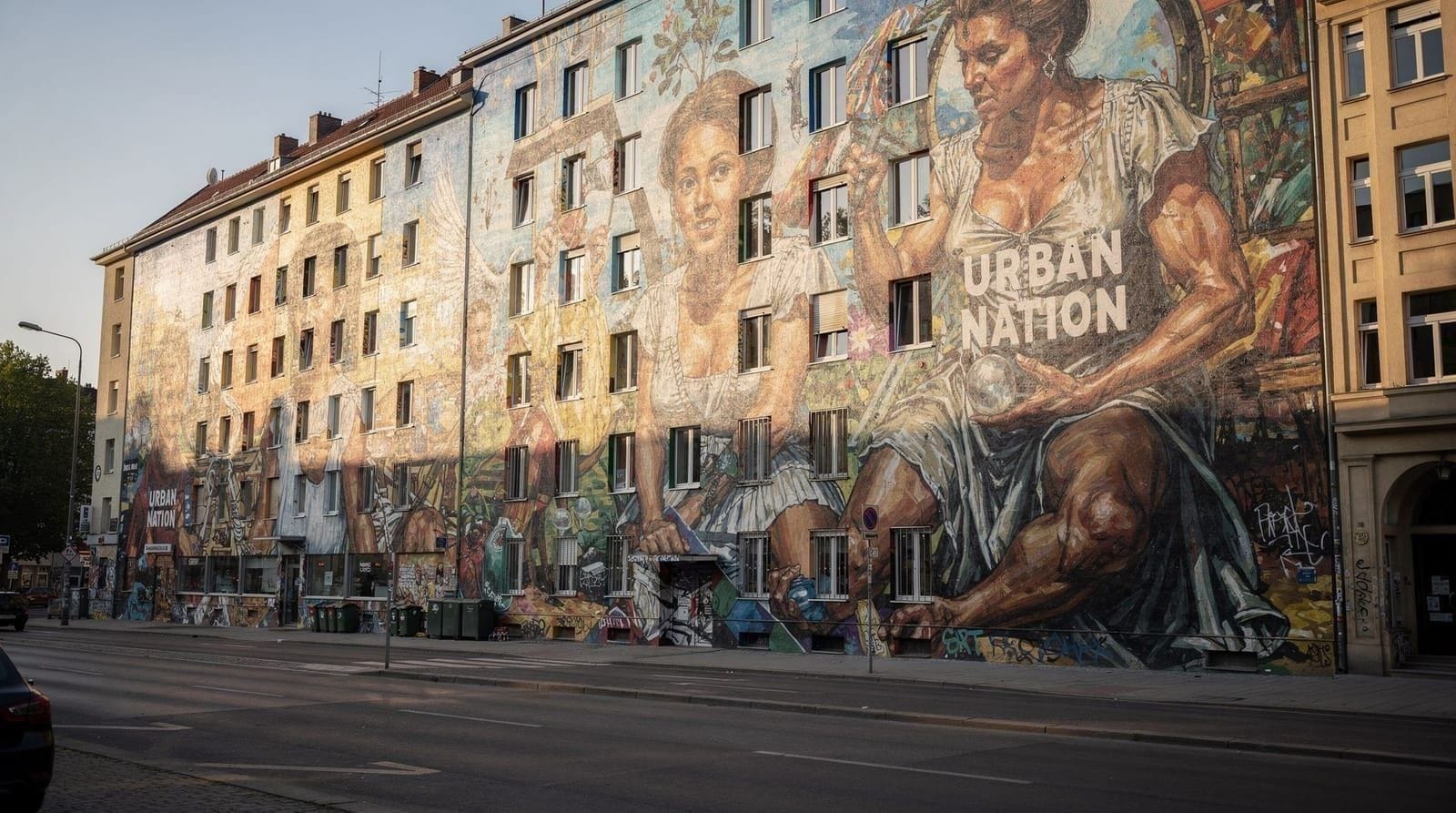
Berlin’s street art scene is not decorative filler — it’s one of the most significant concentrations of urban art in the world. The area around Cuvrystrasse in Kreuzberg, Boxhagener Platz in Friedrichshain, and the RAW Tempel complex are the best concentrations.
RAW Tempel (Revaler Strasse, Friedrichshain): A former railway repair facility that’s now a cultural complex with clubs, a flea market (weekends), and extensive walls covered in murals. Access is free during the day. The combination of decay and art makes it visually very strong.
Cuvrystrasse / Schlesische Strasse area: The large abandoned plot on Cuvrystrasse was once home to the famous Cuvry graffiti installation. The site has been redeveloped but the surrounding streets retain high-quality murals. Walk the streets between the river and Görlitzer Park.
Boxhagener Platz: The square itself is surrounded by Altbau apartment buildings covered in murals. Sunday flea market adds human interest.
The Kreuzberg urban art guide and Berlin street art guide have mapped walking routes.
Teufelsberg — urban decay and city views
Teufelsberg is an artificial hill in the Grunewald forest, built from the rubble of bombed Berlin after the Second World War. On top of it sits an abandoned American Cold War listening station, with spherical radomes (white dome structures) that are now covered in street art.
Entry costs a small fee and access is via guided tours or free-entry periods that vary by day and season — check before going. The views over Berlin from the top are some of the best in the city, and the interior of the domes has extraordinary acoustics and layered murals that reward time.
Getting there requires effort: S-Bahn to Grunewald station, then a 20-30 minute walk or a taxi/Uber. Not a casual stop, but worth making the effort for the views and the atmosphere.
Tempelhof Field
The former Tempelhof Airport is now a public park covering 386 hectares. The runways are still there, now used by cyclists and skaters. The terminal building — one of the largest buildings in the world by footprint — creates an extraordinary backdrop.
For photography: the combination of the stripped-out airfield, the grey brutalist terminal, the kite flyers, and the open sky makes for striking images. The sense of scale is unusual in an urban setting. Sunset from the field, with the terminal lit in golden hour, is particularly good.
Entry is free and the field is open from dawn to dusk. The terminal is accessible via occasional guided tours.
The Berliner Dom and Museum Island from the river
The standard shot of the Berlin Cathedral (Berliner Dom) is from the front, from Lustgarten. A better shot: from the river, either from a bridge or from a Spree boat, with the cathedral, the old royal palace (the reconstructed Humboldtforum), and the museum buildings creating a dense layering of historical Berlin.
The Weidendammer Brücke bridge on the Spree is a classic photography spot for the cast-iron decorations and the view along the river toward the Cathedral dome. Early morning before tourist traffic starts gives you a cleaner shot.
The Museum Island guide covers the architectural context if you want to understand what you’re photographing.
The Reichstag dome at night
The Reichstag dome is one of Berlin’s most distinctive architectural elements — a glass cone above the parliament building, with a mirror funnel at the centre designed to reflect natural light down into the plenary chamber. At night, lit from inside, it’s visually striking.
Visiting requires a free booking in advance via bundestag.de. The glass walkway spiralling up inside the dome is itself a good photography subject. The rooftop view over Berlin from here, particularly at twilight, covers the Brandenburg Gate, the TV Tower, and the government district.
Book as far in advance as possible — slots fill up weeks ahead in summer.
The Hackesche Höfe
The Hackesche Höfe in Mitte is a series of interconnected courtyards (Hinterhöfe) built in 1906-1907 in Jugendstil style. The first courtyard is the most elaborate and decorative; the subsequent courtyards are progressively more functional but interesting in how they reveal Berlin’s layered use of space.
Photography here works best in soft morning light. The tilework of the first courtyard (Schminkwerk) is particularly good. The complex is accessible to the public during business hours.
Mauerpark on Sunday
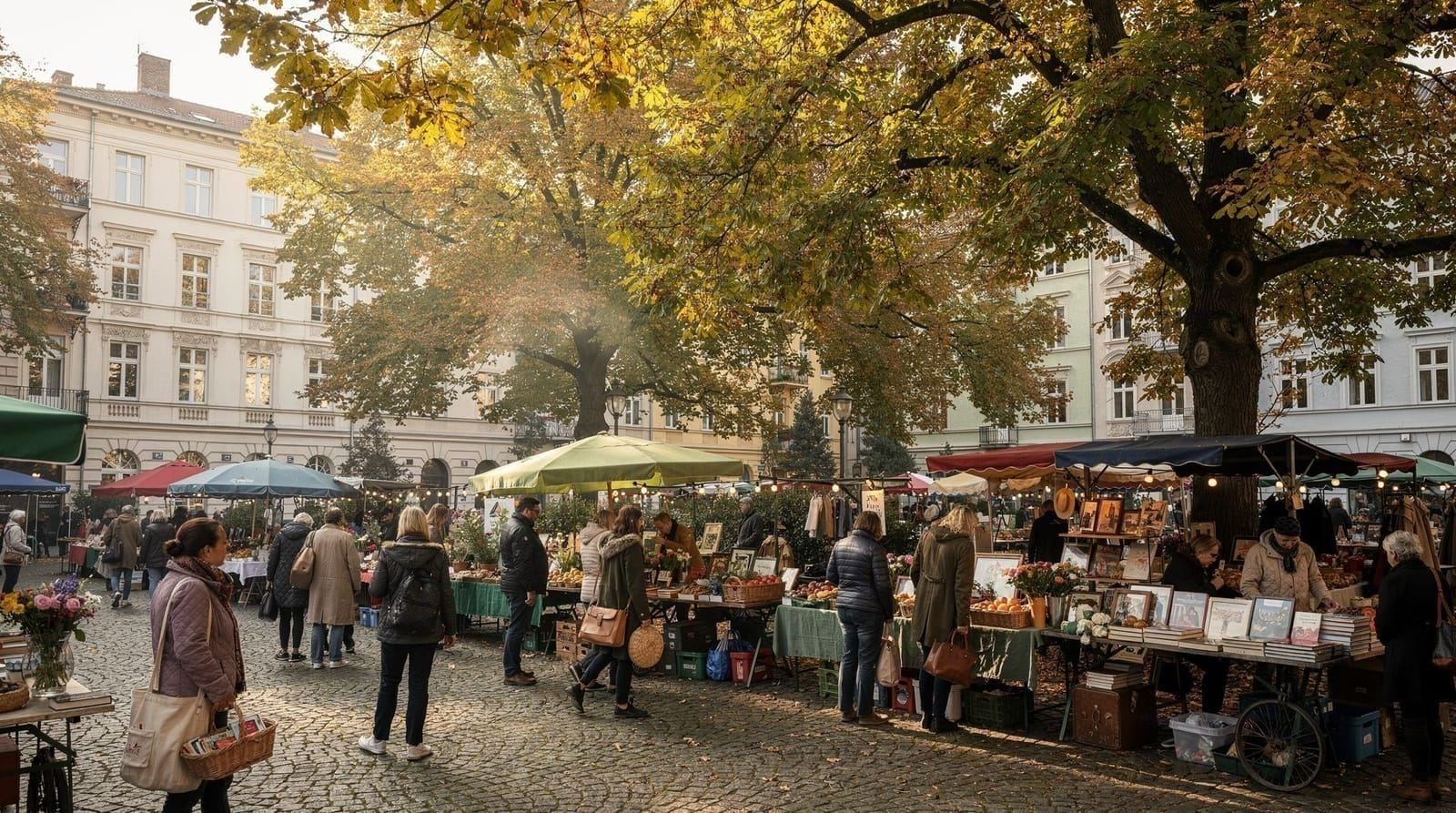
Mauerpark on a Sunday is either the best street photography subject in Berlin or an exercise in frustration, depending on your crowd tolerance. The large flea market draws thousands of people. The open-air amphitheatre hosts a famous free karaoke session (Bearpit Karaoke) from around 3pm, which is a genuinely joyful and photogenic event.
For photography: arrive at 10am when the market is still setting up and there’s more space. By noon it’s dense. The flea market stalls, buskers, food trucks, and eclectic crowd make it a rich documentary photography subject. The section near the former death strip — now a park path — is quieter and shows the Wall’s former course.
The Mauerpark guide covers the flea market and karaoke in detail.
Klunkerkranich rooftop
Klunkerkranich is a rooftop bar and cultural space on top of the Neukölln Arcaden shopping centre in Karl-Marx-Strasse. It has a rooftop garden with panoramic views over the neighbourhood and the city beyond. Entry costs around €2-4 depending on the day.
It’s not the highest viewpoint in Berlin, but it captures the texture of western Neukölln and the Berlin streetscape particularly well. Best in late afternoon when the sun is angled across the rooftops.
The TV Tower and Alexanderplatz
The Fernsehturm (TV Tower) is the most recognisable Berlin landmark — 368 metres tall, visible from almost everywhere in the city. The sphere at the top contains an observation deck (at 203 metres) and a revolving restaurant.
For photography: from the ground, the tower works best as a reference point or scale marker alongside other Berlin architecture. From inside, the observation deck gives panoramic 360-degree views, though the glass can be reflective and the crowds can be dense on summer weekends.
Tickets sell out — book online in advance. The Berlin TV Tower guide covers the different ticket options and which views work best for photography.
The Viktoriapark waterfall and cross
Viktoriapark in Kreuzberg has a small artificial waterfall and a panoramic point at the top with a view toward the TV Tower and Mitte. It’s a 15-minute walk from Mehringdamm U-Bahn. Almost no tourists know it. The view from the top with the cast-iron Schinkel monument is good at sunset.
Photography tips for Berlin
Golden hour: Berlin in June has golden hour from around 8:30-9:30pm, with sunset after 9pm. Evening light is extraordinary and the streets are still active.
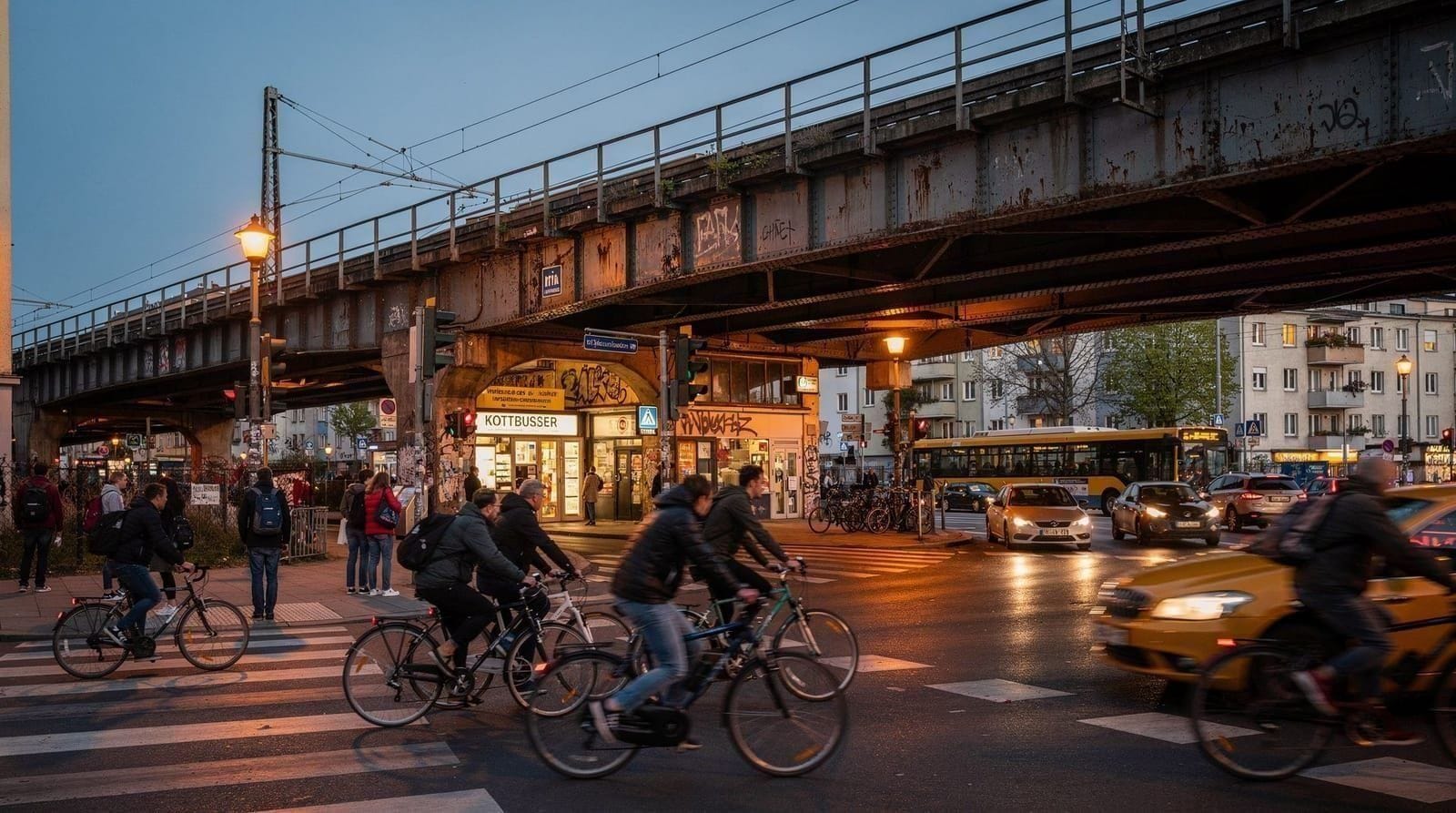
Overcast days: For street photography and street art, overcast days work better than bright sun — no harsh shadows or blown-out whites. Rainy days after a shower give reflections on cobblestones.
Crowded spots: Brandenburg Gate, Checkpoint Charlie, and the Holocaust Memorial are worth photographing but are dense with other visitors by 10am. Go before 8am in summer.
Drone photography: Requires permits and is restricted in much of central Berlin due to airspace near the Reichstag and government quarter. Check current regulations before flying.
Best time of day, by location
| Location | Best time | Why |
|---|---|---|
| East Side Gallery | Before 8am | Empty stretches, soft eastern light |
| Brandenburg Gate | Before 8am or golden hour | Crowds build fast after 9am |
| Tempelhof Field | Golden hour | Terminal lights up, open sky |
| Reichstag dome | Twilight/night | Interior lighting and city views peak |
| Mauerpark | 10am | Market still setting up, more space |
| Teufelsberg | Midday to afternoon | Best light inside the domes |
Neighbourhood-based photo walks
If you’d rather structure a whole afternoon around photography than chase individual spots, Kreuzberg and Friedrichshain both reward slow, on-foot exploration beyond the named murals above — side streets, courtyards, and the canal all turn up compositions the famous spots don’t. The Berlin street art guide has a fuller neighbourhood-by-neighbourhood route if you want to plan a dedicated half-day around it rather than fitting photography around other sightseeing.
FAQ
Q: What’s the most photographed place in Berlin? The Brandenburg Gate, followed by the East Side Gallery and Checkpoint Charlie. All three are heavily visited; early morning offers cleaner shots.
Q: Is Teufelsberg worth the trip for photos? Yes, if you’re interested in urban exploration and Cold War history as well as photography. It takes 45-60 minutes to reach from central Berlin. Plan a half-day.
Q: Can you photograph the inside of Berghain? No. Camera stickers on phone cameras are applied at the door, and no photography of any kind is permitted inside.
Q: Where is the best view of the TV Tower? From Alexanderplatz looking south, or from Karl-Marx-Allee looking west. The long Soviet-era boulevard of Karl-Marx-Allee gives the tower a dramatic framing.
Q: Are there photography tours in Berlin? Yes — photography-specific walking tours exist, usually in the street art areas. The Berlin alternative walking tour covers some of the same ground with a guide.
Q: What camera gear should I bring for a day of Berlin photography? A standard zoom (24-70mm equivalent) covers most of the locations above. For Teufelsberg’s interior domes and low-light night shots of the Reichstag dome, a wider lens and a small tripod or a wall to brace against make a real difference. A phone with a good night mode covers the rest reasonably well.
Q: Is it safe to bring expensive camera gear to Mauerpark or RAW-Gelände? Generally yes with normal awareness — keep gear on you rather than in an open bag, and be more careful during the busiest hours (Mauerpark past noon on Sundays, RAW-Gelände at night). Neither location has a particular reputation for camera theft, but crowded, packed spaces always warrant basic caution.