Berlin Festival of Lights — what to know before you go
| When | Mid-October, around 10 days (check official dates) |
| Hours | Dusk to midnight, best window 8-10pm |
| Cost | Outdoor installations free; boat cruises and some events ticketed |
| Best nights | Tuesday-Thursday for smaller crowds |
| Route | Charlottenburg to Museum Island, around 4-5km on foot |
The Berlin Festival of Lights is one of Europe’s largest light art events — typically held over ten days in October, it transforms Berlin’s most significant buildings, monuments, and public spaces with 3D projections, light installations, and illuminated artwork. In 2026, the festival runs in mid-October (check the official festival website for exact dates, which are usually confirmed by summer).
For the full programme details, venue-by-venue guide, and projected schedule, see the dedicated Berlin Festival of Lights guide. This post covers the practical side: how to plan your visit, where to position yourself, and what to realistically expect.
What the Festival of Lights actually is
The Berlin Festival of Lights (Berliner Lichterfest, often just BLoL) began in 2004 and has grown into a major cultural event, drawing around two million visitors over its run. The format is a mix of professional light art installations, international artists’ projections onto building facades, and commercial sponsorship.
That last element — commercial sponsorship — is worth being honest about. The festival is partly underwritten by corporate partners, which occasionally means a building is projection-mapped with a car brand’s logo alongside the art. This is a feature of the event rather than a flaw; the quality of the projections has generally improved year-on-year regardless.
The installations appear across the city on multiple axes: the Brandenburg Gate and Pariser Platz, the Gendarmenmarkt, the TV Tower, Museum Island, the Charlottenburg Palace, the Siegessäule (Victory Column), and various neighbourhood locations.
When the light shows happen
Projections typically start at dusk — around 7:30-8pm in October — and run until around midnight. The schedule varies by installation. Some run continuously; others have timed shows at specific intervals (the 3D projection-mapped shows on building facades tend to run as 5-15 minute programmes on a loop).
The best time to visit is between 8pm and 10pm. Before 8pm, the light isn’t fully dark enough for maximum impact. After 10pm, crowds thin but some installations have ended.
The key locations and how to approach them
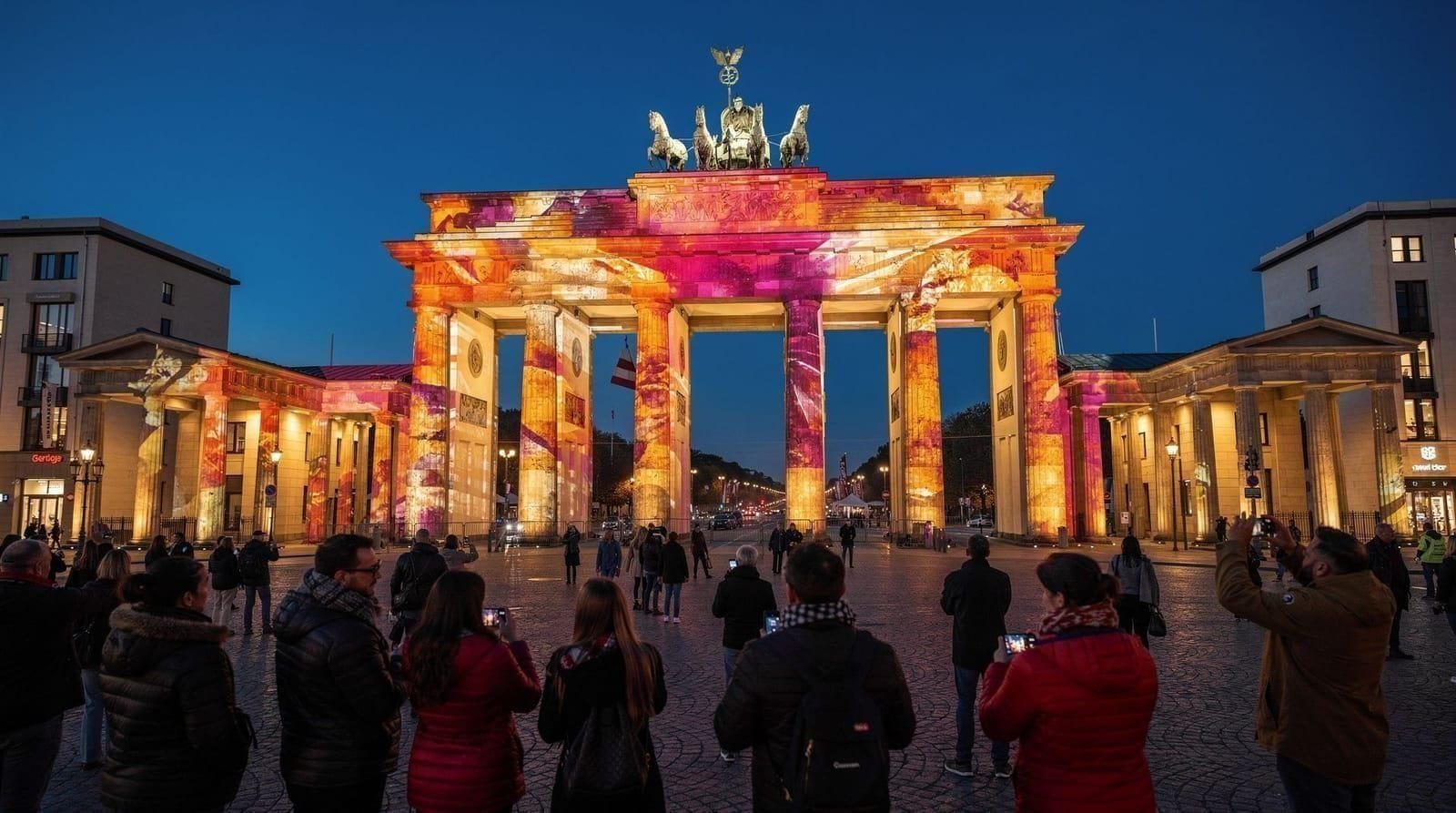
Brandenburg Gate (Brandenburger Tor): This is the centrepiece of most years’ festival and consistently draws the largest crowds. The projection surface of the Gate is large and visible from a significant distance. Best viewing is from the west (Pariser Platz) looking east, or from the Tiergarten side looking at the rear.
Advice: arrive by 8pm at the latest. By 9pm, the crowd density at the Gate makes movement difficult. Watch one or two cycles of the projection show (typically 5-10 minutes long), then move on.
Gendarmenmarkt: The square flanked by the German Cathedral, French Cathedral, and Schinkelbau is one of Berlin’s most architecturally significant spaces and an excellent projection surface. Usually less crowded than the Brandenburg Gate. The square has food and drink stalls during the festival.
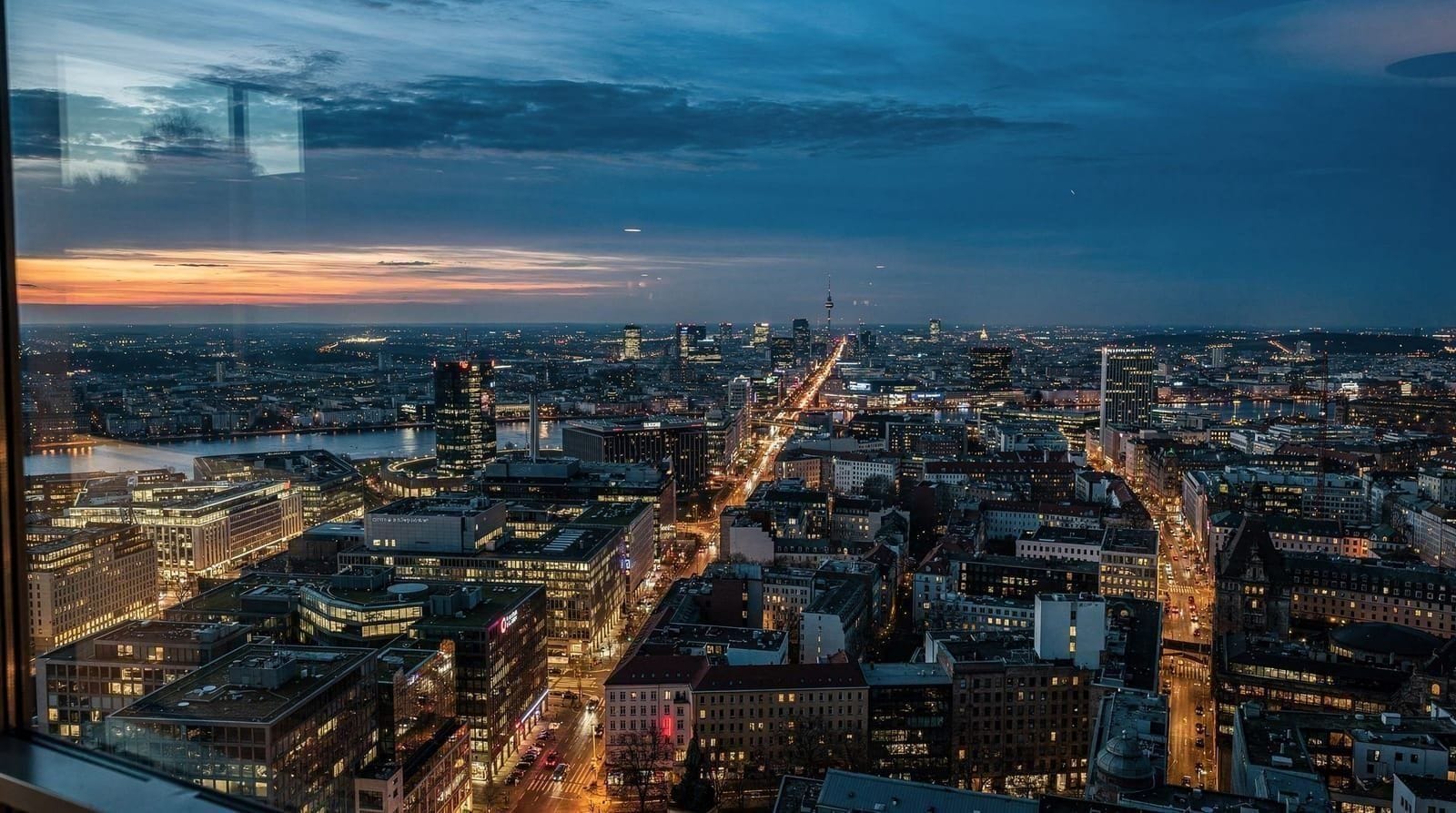
TV Tower: The Fernsehturm is usually lit in specific colours or patterns during the festival. You can’t project onto a tower, but the colouring of the sphere makes it a consistent landmark throughout the night.
Museum Island: The Berliner Dom (Cathedral) and the Altes Museum are frequently used as projection surfaces. Viewing from the Lustgarten or from the Spree bridges around the island.
Charlottenburg Palace: The western outpost of the festival. Less crowded than central locations. The baroque facade of the palace takes projection particularly well. Worth combining with an evening in Charlottenburg.
Siegessäule: The Victory Column in the Tiergarten is illuminated and serves as a beacon point for the festival route through the park.
Walking the festival on foot
The main festival route through central Berlin is walkable in one evening — approximately 4-5 kilometres from Charlottenburg Palace through the Tiergarten, past the Siegessäule and Brandenburg Gate, to Museum Island and the Gendarmenmarkt. Allow 3-4 hours for this route including viewing time at each location.
Start at Charlottenburg Palace (quieter) and work east as the evening progresses. By the time you reach the Brandenburg Gate, it will be 9-10pm and the crowd will have cycled somewhat from the earlier rush.
Crowds and crowd management
The festival draws large crowds, especially on weekends and especially around the Brandenburg Gate. Mid-week evenings are significantly quieter. If you have flexibility, visit Tuesday-Thursday for the least crowded experience.
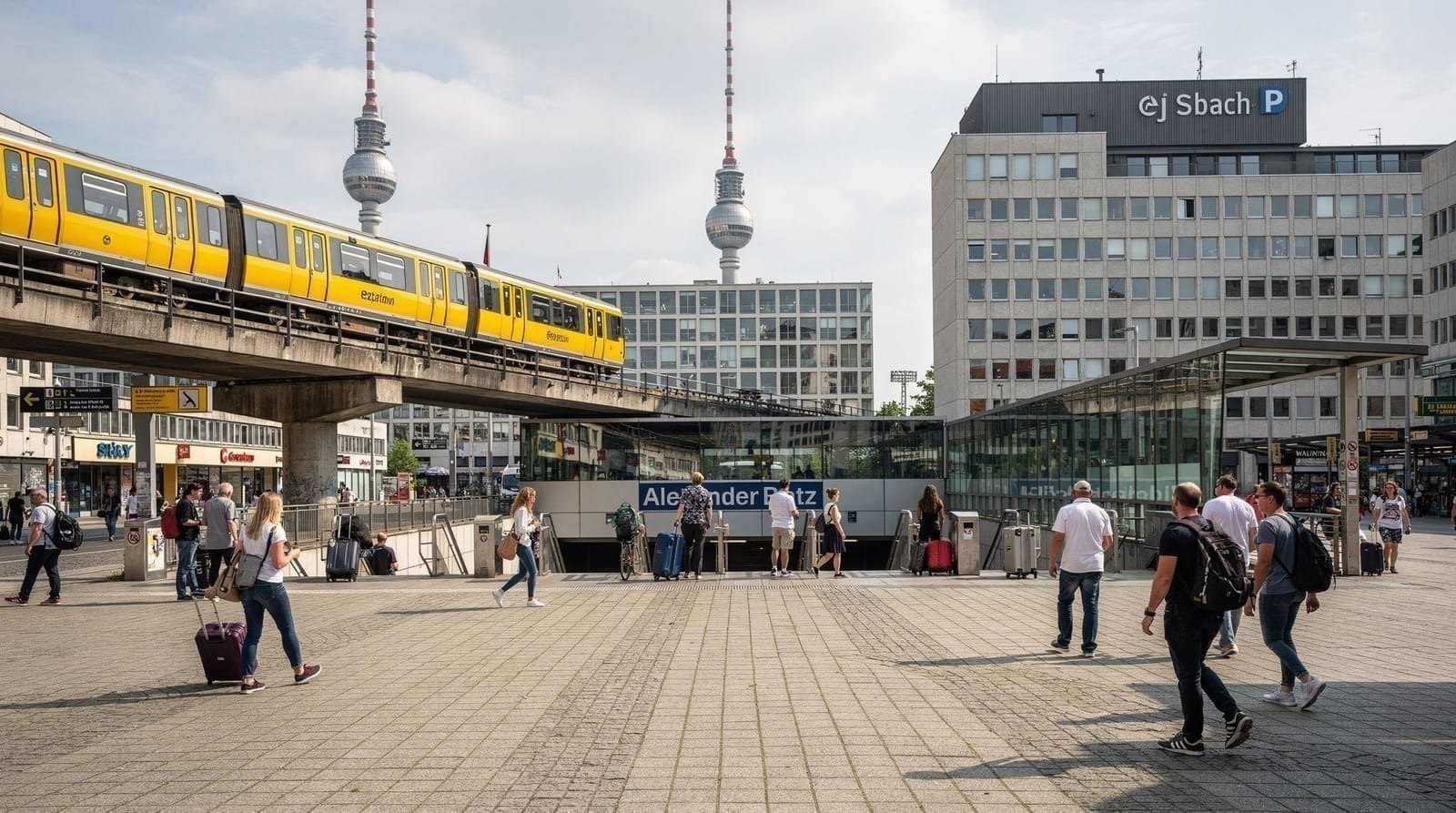
The city adds extra tram and bus services during the festival. The regular S-Bahn and U-Bahn network handles the additional volume but gets crowded on central lines around 10-11pm as people finish their evenings.
Avoid bringing large bags or pushchairs to the central locations on peak evenings. The crowd density around Pariser Platz can make movement with anything bulky genuinely difficult.
What to wear
October in Berlin is autumn: temperatures typically range from 5-15°C in the evenings. It can rain. A warm layer and a waterproof jacket are essential. You’ll be standing outside for several hours, and light-show watching doesn’t generate body heat.
Good shoes are important — you’ll walk 4-6 kilometres over the evening and be standing on pavements and cobblestones.
Food and drink during the festival
The Gendarmenmarkt has food stalls with a reasonable selection during the festival. The Christmas market tradition hasn’t started yet in October (that’s December), so these are temporary festival stalls rather than the elaborate Weihnachtsmarkt setup.
For a proper dinner, the restaurants around Gendarmenmarkt and in Mitte are all operational; booking ahead is advisable on weekend evenings during the festival period when the city is busier than usual.
Boat tours during the festival
The Spree boat operators typically run special Festival of Lights evening cruises, giving a perspective on the illuminated waterfront that’s impossible from the banks. The cruise route goes past Museum Island and various riverside installations.
These are popular and book up in advance. Check schedules from operators like Stern und Kreisschiffahrt.
Berlin evening Spree cruisePhotography at the Festival of Lights
The projections are spectacular in person and challenging to photograph on a standard phone camera in the dark. Modern phone cameras handle low light better than they used to, but purpose-built cameras with manual exposure settings produce significantly better results.
Key points for photography:
- Use a tripod or find a wall to brace against for the longer exposures needed in darkness
- RAW files give more flexibility in post-processing
- The projection cycle repeats — watch it once to understand the programme, then photograph the second run
- Step back from the crowd to include the building in context, rather than filling the frame with just the projection surface
Is the Festival of Lights worth visiting Berlin for?
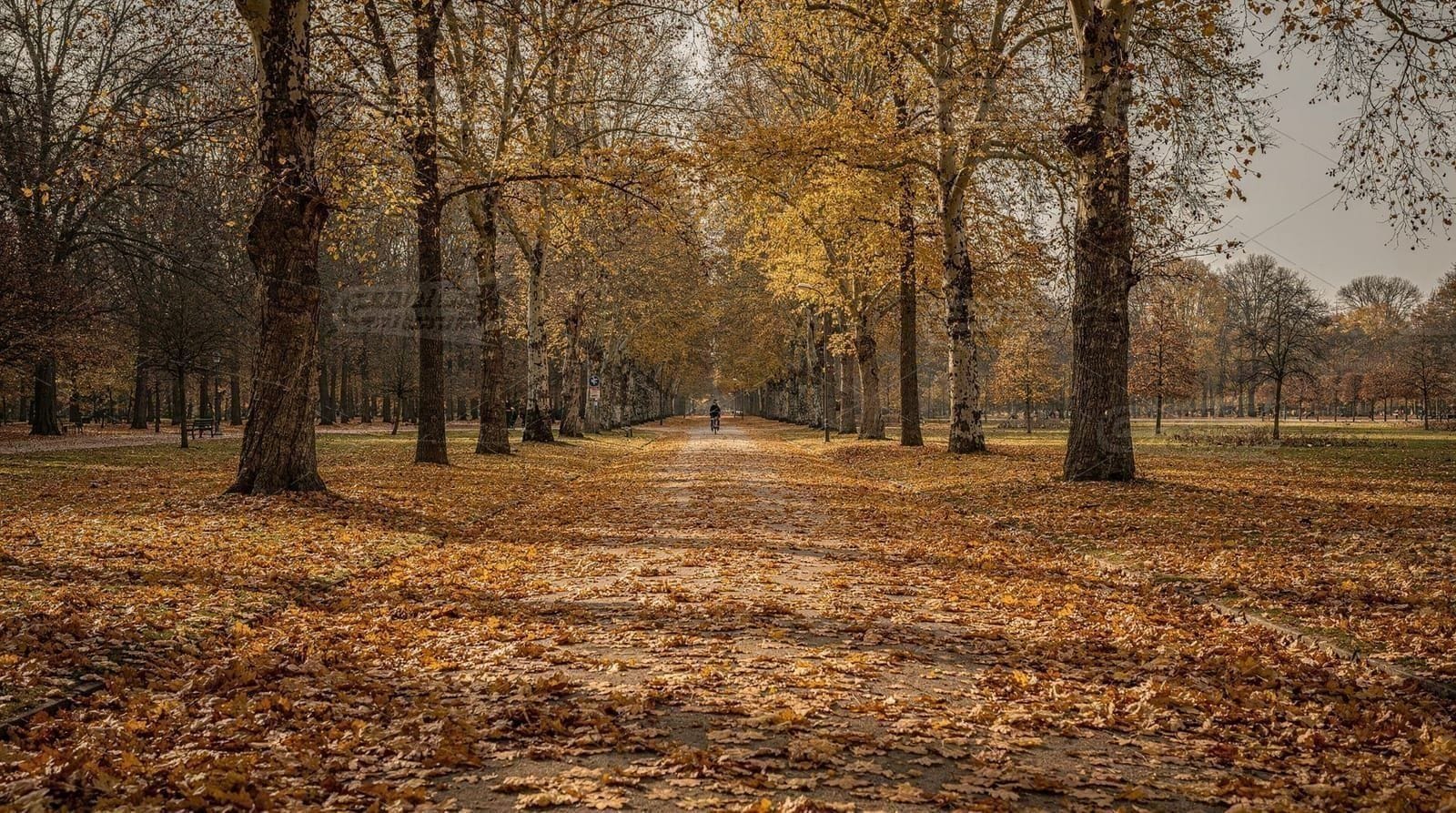
If you’re choosing October for a Berlin trip, the Festival of Lights is a genuine bonus — the city is excellent at this time of year anyway (autumn colour in the parks, less tourist volume than August, mild if variable weather), and the festival adds a distinctive evening programme.
Visiting Berlin specifically for the festival requires reasonable expectations. It is not as immersive as Amsterdam Light Festival or Lyon’s Fête des Lumières, which are longer and more spatially concentrated. Berlin’s version is more urban, more spread out, and takes more effort to navigate.
For the broader picture of what October in Berlin offers, the Berlin autumn guide covers the full range of seasonal activities.
Where to stay for easy access to the route
Because the festival route runs roughly from Charlottenburg through Tiergarten to Mitte, staying anywhere along that corridor cuts down on transit time between installations. Charlottenburg works well if you want a quieter start to the evening, while Mitte puts you closest to the Brandenburg Gate and Museum Island installations, the two busiest points. The Berlin neighbourhoods overview has the fuller comparison if you haven’t booked accommodation yet.
Combining the festival with dinner in Mitte
Restaurants around Gendarmenmarkt and in the Hackescher Markt area get busy during the festival period, more so than a typical October weeknight. Book ahead if you want a sit-down dinner between installations rather than relying on the festival food stalls. The Berlin breakfast and brunch guide is aimed at mornings but its neighbourhood picks in Mitte also make solid dinner starting points if you want somewhere reliable near the route.
Practical planning checklist
- Check official festival dates (typically mid-October, released by summer)
- Mid-week visits are significantly less crowded
- Start at Charlottenburg, work east
- Allow 3-4 hours for the central route
- Dress warmly — it’s October
- Book boat tours in advance
- Have the BVG transit app ready for journey planning
- Download the official festival map before you go (available from the festival website)
FAQ
Q: When exactly is the Berlin Festival of Lights in 2026? The dates are confirmed closer to the event. Check the official Berlin Festival of Lights website. Historically it runs in the second or third week of October.
Q: Is entry to the Festival of Lights free? The outdoor installations are free to view. Some special indoor events and boat cruises have tickets. The festival map is free to download.
Q: How long does the Festival of Lights last? Approximately 10 days. The opening weekend and the final weekend tend to draw the largest crowds.
Q: Can I see the Festival of Lights from outside the city centre? The central locations are the heart of the festival. Some neighbourhood installations appear further out. Check the official programme map for locations outside Mitte.
Q: Is the Festival of Lights suitable for children? Yes. The light shows are visually engaging for children of most ages. The crowd levels on peak weekends are the main practical consideration — small children in pushchairs will struggle in the densest areas around the Brandenburg Gate.
Q: Does the festival run if it rains? The outdoor projections are designed to operate in all weather. Rain doesn’t cancel the festival. It does make standing outside for extended periods less pleasant — prepare accordingly.
Q: Do I need to book anything in advance? No advance booking is needed for the outdoor installations themselves. Boat cruises and any indoor ticketed events do sell out, so book those a few days ahead if they’re part of your plan.
Q: Is one evening enough to see the whole festival? One evening covers the main route if you’re efficient and start early, but you’ll be choosing between spending longer at fewer locations or moving quickly through more. Two evenings let you split the route and see everything without rushing.