Berlin BER airport: your 2026 practical guide
Berlin Brandenburg Airport (BER) is a straightforward airport once you know how it works. But its unusual structure — two terminals, one of which operates differently to what most travellers expect — catches people out. This guide covers what you need to know for a smooth arrival and departure in 2026.
For the full guide to transport options from the airport into the city centre, with prices, times, and route details, see the Berlin airport BER to city guide.
| Where | 20km southeast of Mitte, Schönefeld area |
| Fastest transfer | Airport Express (FEX), around 30 min to Hauptbahnhof |
| Cost | Single ABC ticket, around €4.40 |
| Terminals | T1 (main, full-service) and T2 (Ryanair/easyJet, separate building) |
| Security buffer | 2hrs international, 90min domestic/Schengen |
BER’s basics in 2026
BER opened in November 2020, nine years late and with a history of construction disasters that became a national joke. The airport serves all flights that previously used Tegel (closed in November 2020) and Schönefeld. It is the sole commercial airport for Berlin.
There are two main terminal buildings:
Terminal 1 (T1): The main terminal, handling most international and long-haul flights plus Lufthansa, British Airways, Air France, and other full-service carriers. This is the large building that was nine years in the making.
Terminal 2 (T2): A separate building across the road, handling Ryanair and easyJet primarily. It’s smaller, more basic, and deliberately budget-focused. Check-in, security, and gates are simpler but the facilities are more limited.
Make sure you know which terminal your flight uses before you arrive. The two terminals are connected by a shuttle bus but are not in the same building, and the walk or bus journey adds 10-15 minutes.
Pier Nord: An extension of T1 for Lufthansa Group flights. Connected to T1 by an internal walk.
Getting from BER to Berlin city centre
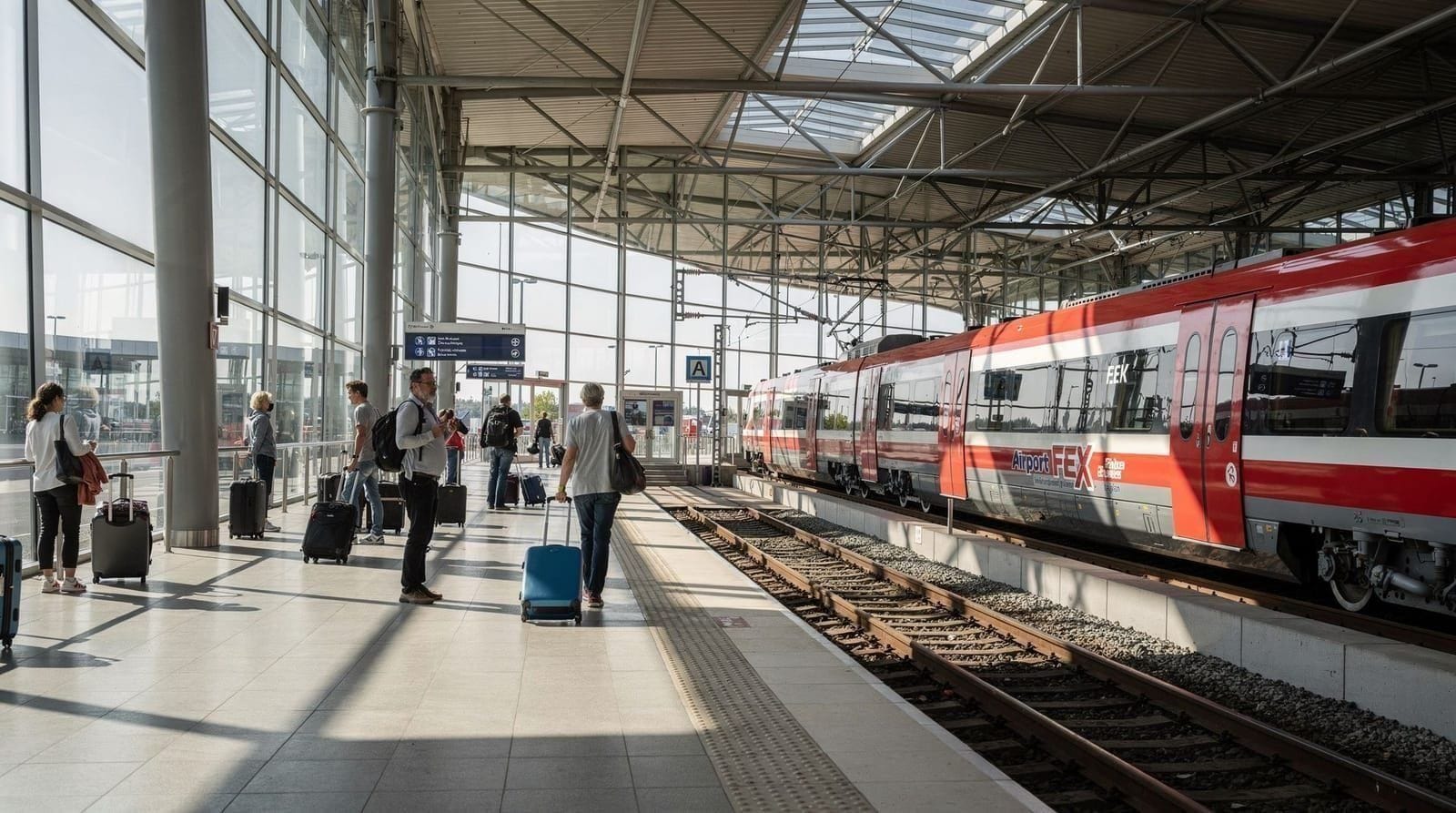
The most used route is the Airport Express (FEX) train, which runs from the airport station (under Terminal 1) directly to Berlin Ostbahnhof, Alexanderplatz, Friedrichstrasse, Hauptbahnhof, and Zoologischer Garten. Journey time to Hauptbahnhof: approximately 30 minutes. Trains run twice per hour most of the day.
The S9 S-Bahn also runs from the airport through Ostbahnhof and across the city. It’s slower than the FEX (around 45-50 minutes to central Berlin) but runs more frequently and stops at more stations.
Fare zones: BER is in fare zone C, which means you need a Berlin ABC ticket (not just AB). In 2026, a single ABC ticket costs approximately €4.40. A day ticket for zones ABC is approximately €10.80. The Berlin WelcomeCard and other tourist cards cover zone C if they specify ABC or airport.
S-Bahn platform access: The S-Bahn and Airport Express platforms are in the basement of Terminal 1. Follow signs from the arrivals hall. The walk from arrivals to the platform takes about 5 minutes.
From Terminal 2: You cannot access the train directly from T2. Take the X7 bus or the shuttle to Terminal 1, then take the train. Alternatively, the X7 bus from T2 runs to U-Bahn Rudow (U7 line) if you’re heading to Neukölln, Kreuzberg, or that side of the city.
Taxis and rideshares
Taxis to central Berlin cost approximately €40-55 depending on destination and traffic. There is a taxi rank outside arrivals at both terminals. Agree on a metered fare — fixed airport fares are offered by some drivers but are usually more expensive.
Uber and Bolt operate at BER. Book through the app and follow signs to the designated rideshare pickup area (not the taxi rank).
Car rental
All major rental companies (Hertz, Europcar, Sixt, Avis, Enterprise) have desks in the T1 arrivals hall and in a dedicated car rental centre accessible by a short walk or shuttle. If you’re renting, have your confirmation reference ready — the desks get busy during peak arrival windows.
Note that Berlin itself has an environmental zone (Umweltzone) covering much of the city centre. Rental cars are typically compliant (Euro 4 or better), but check your rental contract.
Airport lounges at BER
Lufthansa Business Lounge and Lufthansa Senator Lounge: In T1 after security, Schengen side. Access by Lufthansa business class ticket, Senator or HON Circle card, or Priority Pass (check current terms — some Priority Pass lounges have restricted access).
Air France-KLM Lounge: Available to business class and Flying Blue elite members on Air France and KLM flights.
Pay-access lounges: There are no independent pay-access lounges at BER in the same way major hubs like LHR or CDG have them. If you want lounge access, a Priority Pass membership is the most reliable option, though availability varies by terminal and flight type.
Security and check-in — how long to allow
Officially the airport recommends 2 hours for international (non-Schengen) flights and 90 minutes for domestic/Schengen. In practice, during peak travel periods in summer and around Christmas, security queues at T1 can take 30-45 minutes.
T2 (Ryanair/easyJet) handles volume well at most times but gets congested during early morning departure banks (typically 5:30-8am). Arrive at T2 at least 90 minutes before departure even if the airline suggests less.
For US, UK, and non-EU passport holders: there is passport control on departure for non-Schengen flights. Allow extra time.
Facilities inside BER
T1 has a reasonable selection of shops (Relay, various clothing brands), restaurants (including a basic sit-down option and several grab-and-go options), and a duty-free area after security. The selection is not particularly exciting but covers essentials.
T2 has minimal facilities: a café, a newsagent, and vending machines. Don’t plan to eat a proper meal at T2.
ATMs are available at both terminals. Currency exchange is available in T1 arrivals but rates are poor — use your card or get euros at a bank ATM in the city before departure.
Luggage storage at BER
Luggage storage (Gepäckaufbewahrung) is available in T1, located on the ground floor of the arrivals area. Lockers are available for various sizes and duration. This is useful if you have a late flight and want to explore Berlin on your last day without carrying bags.
Connectivity: SIM cards and Wi-Fi
BER Wi-Fi is free and works reasonably well throughout the terminals. For data during your stay in Berlin, SIM cards are available from Vodafone and Telekom stores in T1 arrivals. A tourist SIM with data costs approximately €15-25 for a week. EU residents with EU SIMs can roam without extra charges.
Connecting to Berlin’s public transport network
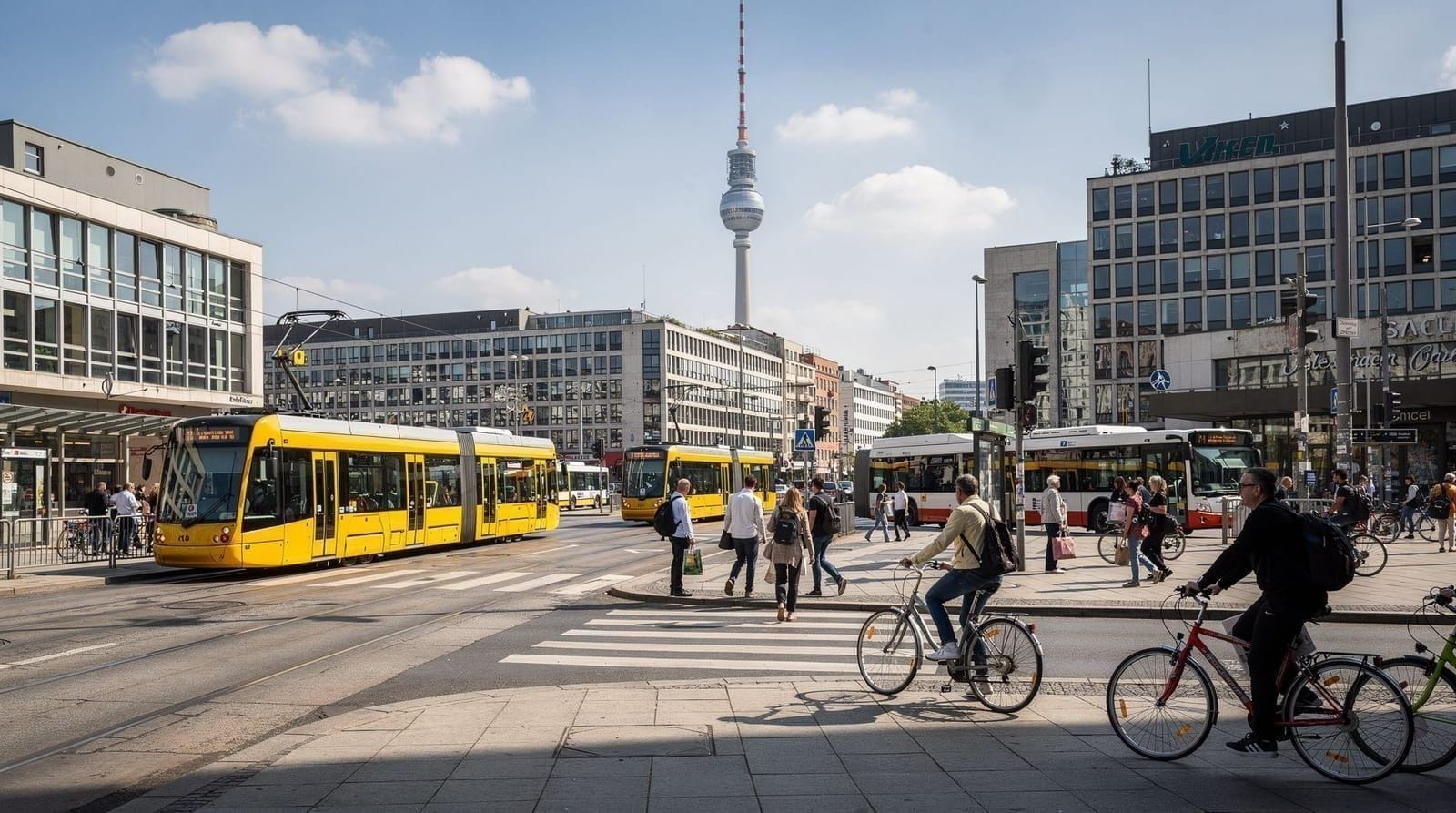
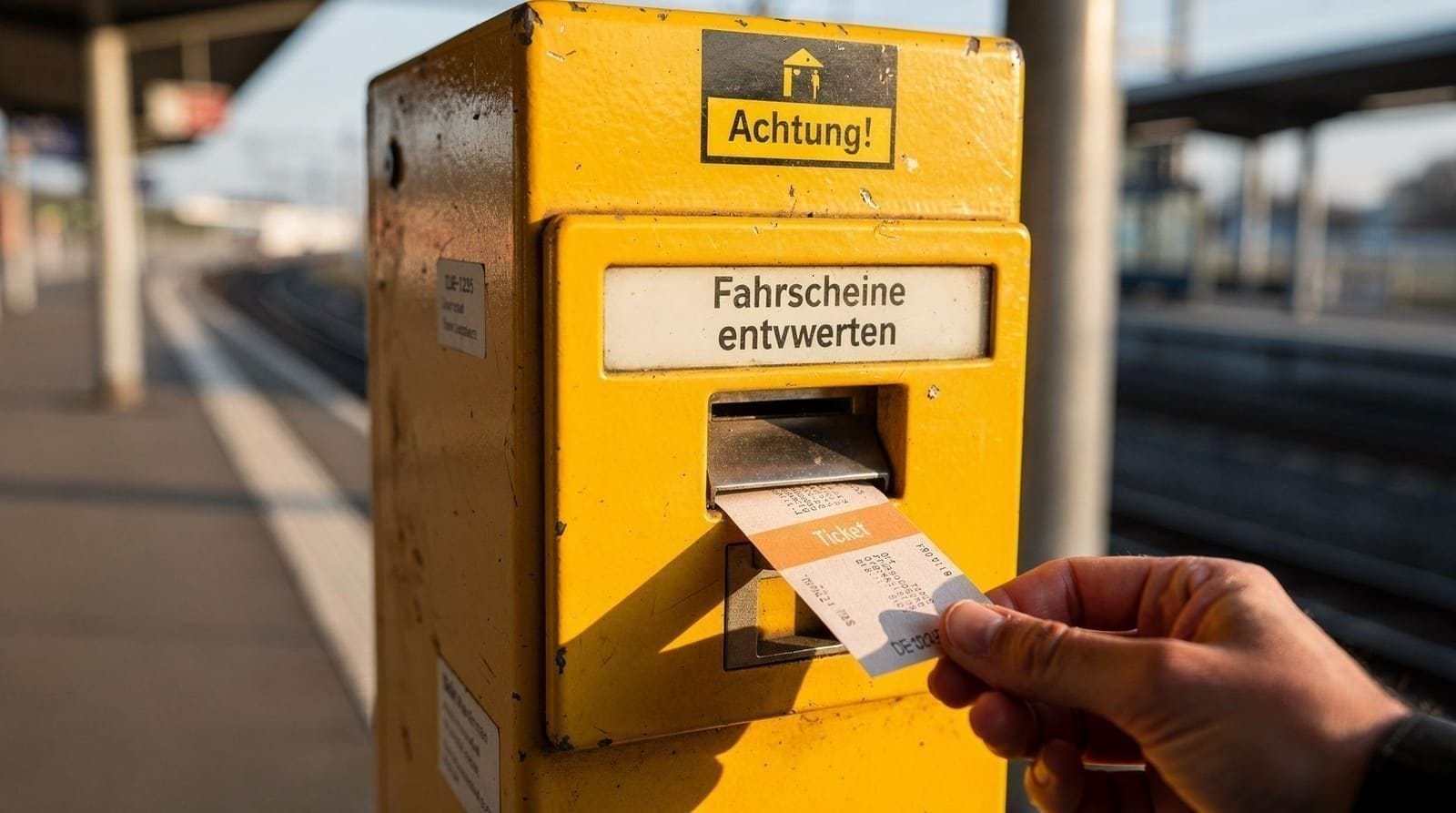
BER sits on the S-Bahn and regional rail network, which connects directly to Berlin’s extensive U-Bahn and tram system. The Berlin public transport guide covers everything from ticket validation to night services.
Key stations accessible from BER:
- Hauptbahnhof (central hub, U-Bahn/S-Bahn connections)
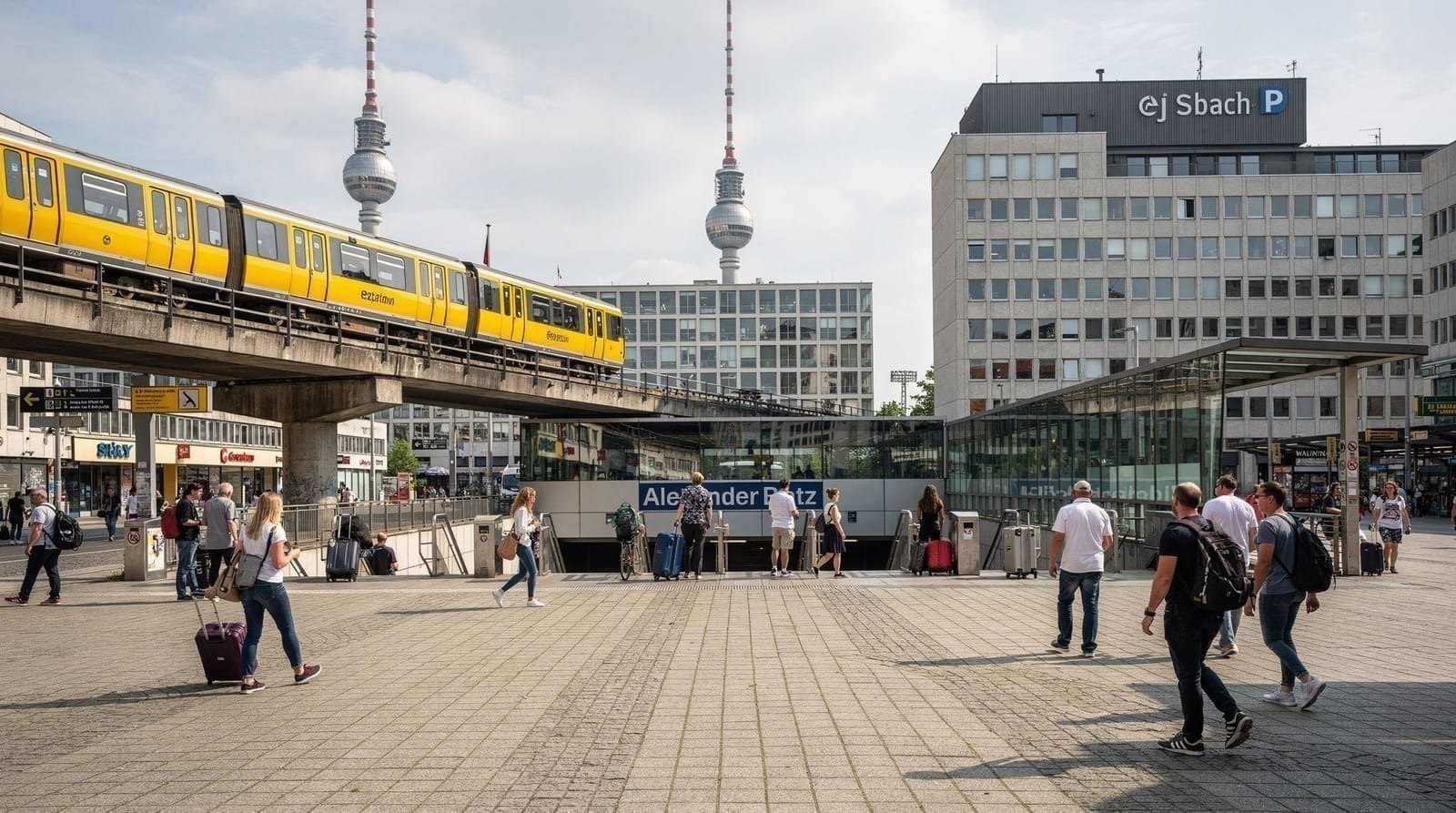
- Alexanderplatz (U-Bahn U2, U5, U8; S-Bahn multiple lines)
- Zoologischer Garten (west Berlin hub)
- Ostbahnhof (east Berlin hub, Friedrichshain connections)
If you’re staying in Mitte, Prenzlauer Berg, or anywhere east of the centre, the Airport Express is your best bet. For Charlottenburg or Schöneberg, take the FEX to Zoologischer Garten.
Departure from Berlin — getting to BER
The same rules in reverse. Allow sufficient time: the FEX and S9 run reliably but delays do occur. Don’t cut it to under 2.5 hours before an international departure.
Note that U-Bahn does not directly reach BER. The U9 and U7 do not extend to the airport. You need the S-Bahn (S9), the Airport Express (FEX), the regional RE7 or RB14 train, or a taxi/rideshare.
From Kreuzberg or Neukölln, the X7 bus to U-Bahn Rudow (U7) adds time. It’s often faster to take the S9 from a central S-Bahn station rather than connecting via bus.
Staying near the airport — is it worth it?
The answer is generally no, unless you have a very early departure (before 6am) and live far from the city. BER is 20 kilometres from central Berlin and well-connected by rail. The surrounding area (Schönefeld, Waßmannsdorf) is residential and industrial with very few attractions. Hotels near the airport are primarily business traveller-focused and not cheap.
If you have an early flight, the calculation changes. A 5am departure means arriving at the airport by 3am, which means either a very early night bus from central Berlin or a taxi costing €50+. In that case, an airport hotel the night before makes sense. Check options in the Schönefeld area — the IBIS and NH hotels near BER are serviceable and directly connected to the terminal.
BER vs old Tegel/Schönefeld — what changed
Before November 2020, Berlin had two airports: Tegel (TXL) in the northwest, serving most western airlines, and Schönefeld (SXF) in the southeast, serving budget carriers and some eastern European routes.
Tegel was an unusually efficient hexagonal terminal that was much-loved by frequent fliers for its speed — you could be off the plane and in a taxi in under ten minutes. It closed permanently when BER opened.
Schönefeld’s old terminal (now designated T5 at BER) is still technically part of the airport but is used only for charter flights and as a cargo/aviation operations facility. If your airline lists BER but you’re routed to a different building, check whether T5 is involved — it’s even further from the main terminal complex.
The net result: BER is more modern and centrally organised than the old pair, but lacks the quirkily efficient charm that Tegel had.
Accessibility at BER
BER was designed with accessibility as a stated priority. Lifts and ramps connect all levels. Tactile guidance paths exist throughout T1. Accessible toilets are available throughout both terminals.
If you are travelling with a wheelchair or mobility aid, contact your airline in advance to arrange assistance. The airport’s own service (Reisenden-Service) can arrange ground assistance between check-in, security, and the gate. Request this when booking your ticket and again through the airport’s own contact system.
Assistance dogs are permitted and there are designated relief areas for dogs near the terminal exits.
Transit — connecting through BER
BER is not a major transit hub in the same class as Frankfurt or Amsterdam. If you’re connecting through Berlin, allow at least 90 minutes for a domestic-to-international connection and 2 hours for any connection that involves changing from Schengen to non-Schengen.
For EU/Schengen passengers, connections are simpler. BER’s transit lounge in T1 allows landside movement between connecting gates without re-entering security for connecting Schengen flights.
Non-EU passengers connecting to non-Schengen destinations need to use the transit area. If your layover is long (4+ hours) and you don’t hold an EU visa, check whether you require a transit visa for Germany before booking.
First moves after landing
Once you clear arrivals, resist the urge to sort everything at the airport. Buy your transport ticket from a machine or the BVG app before you reach the platform — queues at ticket machines during peak arrival banks can cost you 10-15 minutes you don’t need to lose. If you’re heading straight into sightseeing rather than a hotel, the getting around Berlin guide explains how a single ABC ticket also validates on the U-Bahn and tram network once you’re in the city, so you don’t need a separate ticket for the last leg. For a general packing and logistics checklist beyond the airport itself, see the Berlin travel tips guide.
Which neighbourhood to head to first
If you’re staying in Mitte or Prenzlauer Berg, take the Airport Express to Alexanderplatz or Hauptbahnhof and connect from there. For Kreuzberg or Neukölln, the S9 via Ostbahnhof or the X7 bus to U-Bahn Rudow both work — check which gets you closer to your accommodation before committing to one. For Charlottenburg or Schöneberg, the FEX to Zoologischer Garten is the most direct option. The Berlin where to stay guide covers which neighbourhoods suit which kind of trip if you haven’t booked accommodation yet.
FAQ
Q: Is BER easy to navigate? For a new airport, yes. The terminal is not huge by international standards and signage is good in German and English. The main complication is the two-terminal split.
Q: Can I get from BER to the centre for under €5? Yes, on the S9 or FEX with a single ABC ticket (approximately €4.40 in 2026). Don’t pay more.
Q: Is there a night service? Night buses serve BER when the S-Bahn isn’t running. Check BVG’s night bus map for current routes.
Q: How far is BER from central Berlin? About 20 kilometres southeast of Mitte. The distance is manageable by train; less manageable by taxi if you’re budget-conscious.
Q: Does BER have luggage lockers? Yes, in T1 arrivals. Useful for a last day in the city before an evening flight.
Q: Is Terminal 2 in the same building? No. T2 is a separate building across the road from T1. You cannot walk between them without going outside or taking the shuttle bus.
Q: Can I use the Berlin WelcomeCard for the airport transfer? Only the ABC zone version. The standard AB zone WelcomeCard doesn’t cover zone C, which is where BER sits, so check which version you’ve bought before relying on it at the airport.
Q: Is it worth taking a taxi instead of the train? Only if you’re carrying a lot of luggage, travelling late at night when trains are less frequent, or splitting the cost across a group of three or four. For one or two people with manageable bags, the FEX or S9 is faster and considerably cheaper.