Spreewald canoe and kayak guide — paddling Berlin's backyard wilderness
From Berlin: Spreewald Canoe or Kayak Tour with Guide
Can you canoe in the Spreewald as a day trip from Berlin?
Yes. Trains from Berlin Hauptbahnhof reach Lübbenau or Lübben in about 1h15 and 1h respectively. Kayak and canoe rental is available at both towns from around €10–15 per person per day. No car needed, no experience required — the canal network is calm and beginner-friendly. April to October is the operating season.
Quick answer: The Spreewald is a UNESCO Biosphere Reserve about 100 km south of Berlin — 970 km of forested canals, no motorboats, and kayak hire from around €12 per person. Trains reach it in under 1h15 with no car required. Beginner-friendly, family-suitable, and genuinely one of the best day trips from the city.
| Where | Spreewald, Brandenburg, around 100km south of Berlin |
| Cost | around EUR 10-15/person kayak hire per day |
| Time needed | half day to full day (3-8 hours on the water) |
| Getting there | RE train from Berlin Hauptbahnhof, around 1h-1h15 |
| Best time | April-May or September-October |
What makes the Spreewald different from Berlin’s other green escapes
Berlin has no shortage of water. The city itself has lakes, rivers, and forest — and if you have not yet explored Müggelsee, Grunewald Forest, or the swimming lakes around the city, those are worth your time too. But the Spreewald is in a different category.
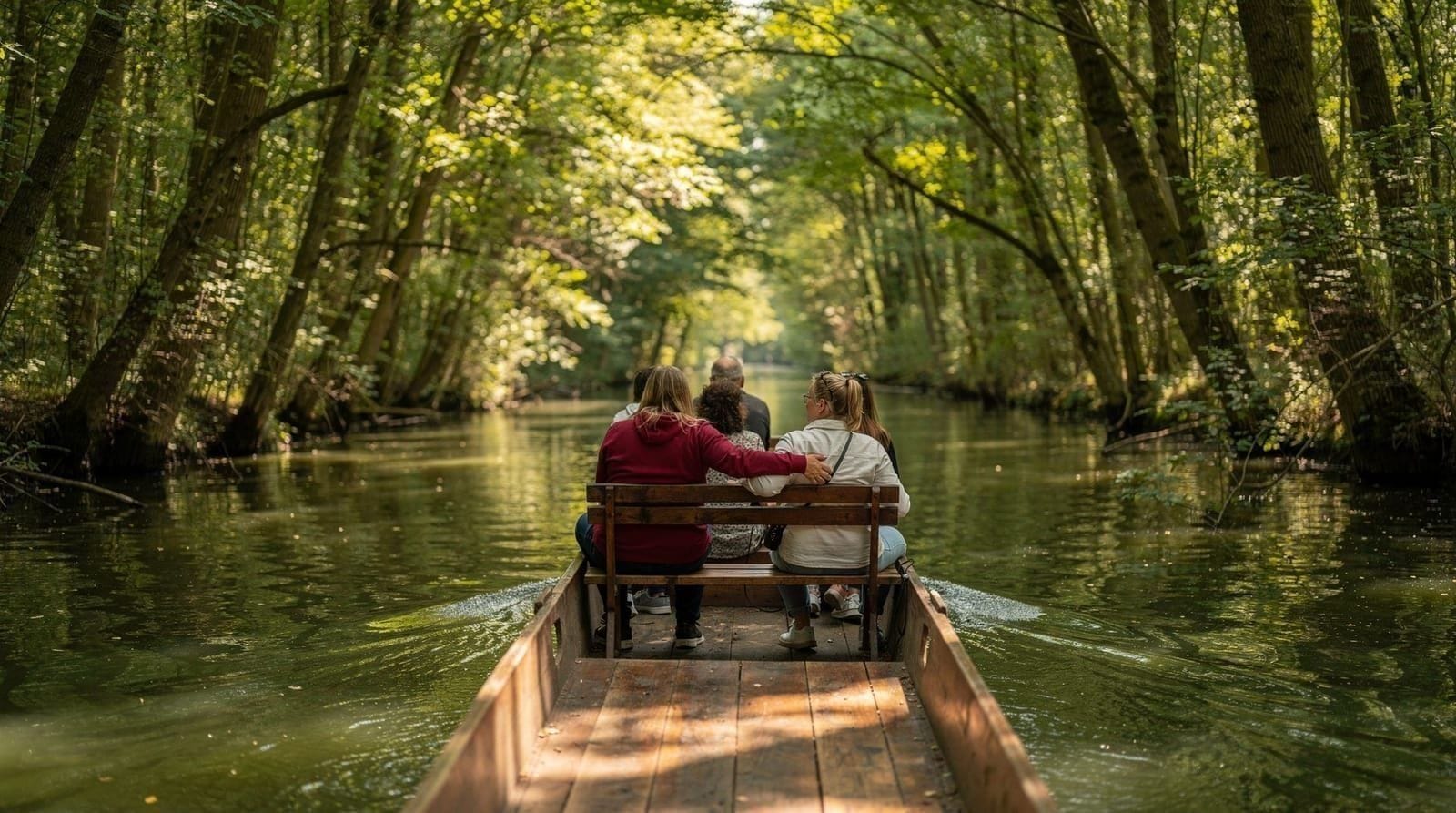
The Spreewald — literally the Spree Forest — is a flat floodplain in Brandenburg where the Spree River fractures into hundreds of interconnected channels before slowly reassembling. The result is a labyrinthine canal network woven through dense alder and birch forest. There are no roads between the villages. The traditional method of travel — still in use today for tourists and, in living memory, for deliveries — is a flat-bottomed wooden punt. And since motorboats are banned from most of the inner network, the canals are as quiet now as they were a hundred years ago.
This is where Berliners go when they want to feel genuinely far from the city in less than two hours.
Getting there from Berlin — train is the right call
You do not need a car to reach the Spreewald, and the train journey is easy enough that it barely counts as logistics.
From Berlin Hauptbahnhof or Berlin Ostbahnhof, take a Regional Express (RE) — specifically the RE2 or RE7 depending on your destination. The critical point: the S-Bahn does not reach the Spreewald. You need a Regional Express, not a suburban train.
- Lübbenau/Spreewald station: approximately 1h15 from Berlin Hauptbahnhof. Lübbenau is the larger and more visited of the two main towns — the canal network is extensive and the boat harbour is a 10-minute walk from the station.
- Lübben station: approximately 1h from Berlin Hauptbahnhof. Lübben is smaller and noticeably less touristy. Worth considering if you want a quieter experience and are comfortable with a slightly smaller hire network.
For ticketing, the Brandenburger Ticket (€32 for up to 5 people, valid all day on regional trains throughout Brandenburg) is almost always the best option for groups. Pairs and solo travellers should check the single-day RE price — it varies but is typically around €20–24 return. Book at Deutsche Bahn or via the RBB Verkehr app.
The train journey itself is pleasant — flat Brandenburg countryside opening up as you leave Berlin’s suburbs behind. No changes required on most departures.
For more on planning the day trip logistics, the Berlin to Spreewald day trip guide covers options including combined tour itineraries and what to do if you want someone else to handle the transport.
Lübbenau vs. Lübben — which town to choose
Both towns are good. The choice comes down to your priorities.
Lübbenau is the Spreewald’s main tourist hub. The Kahnfährhafen (boat harbour) is large, well-signposted, and has multiple competing hire companies. The canal network accessible from here — the Oberspreewald — is the most extensive part of the reserve. There are good restaurants near the harbour, a useful tourist information office, and a proper town centre. The downside is that in July and August, Lübbenau can feel overwhelmed with day trippers, particularly in the harbour area.
Lübben is smaller, calmer, and sees fewer visitors. The Burg (a ruined castle on the water) gives the town a photogenic centre, and the canal network accessible from here — the Unterspreewald — is less dense but still perfectly adequate for a full day’s paddling. If you are visiting on a summer weekend and want to avoid the main crowds, Lübben is worth the consideration.
If this is your first Spreewald visit and you want the maximum canal variety, start with Lübbenau. If you have been before, or are visiting in peak season, Lübben offers a meaningfully different experience.
Lübbenau vs Lübben at a glance
| Lübbenau | Lübben | |
|---|---|---|
| Crowds | Busiest, especially July-Aug | Quieter year-round |
| Canal network | Larger (Oberspreewald) | Smaller (Unterspreewald) |
| Amenities | More restaurants, hire companies | Fewer, more relaxed |
| Best for | First-timers, canal variety | Repeat visitors, peace |
| Train time from Berlin | around 1h15 | around 1h |
Canoe and kayak rental — how it works
Hiring a kayak or canoe in the Spreewald requires no prior booking on most weekdays outside summer. On summer weekends (especially July and August Saturdays), boats sell out by mid-morning. Book ahead.
In Lübbenau: Several hire companies operate from the Kahnfährhafen. Canow.de is one of the best-known operators — they have a large fleet, staff who speak English, and provide a decent waterway map with the hire. Pricing across most companies is similar: €10–15 per person per day for a single-seat kayak, somewhat more for a two-person open canoe (around €20–28). A refundable deposit of €3–5 is standard.
In Lübben: Companies including Kahnfahrten am Burgwall operate with comparable pricing and conditions. The harbour is directly below the castle ruins — you can have a coffee at the waterfront before setting off.
What you get: A boat, a paddle, a basic life jacket, and usually a map of the main canal network. Waterproof dry bags are sometimes available to rent — bring your own if you have one. Hire companies set a return time (usually 5 or 6 pm) so build your route accordingly.
Choosing a boat type: Single kayaks suit solo paddlers or anyone who wants full control of their own pace. Two-person open canoes work well for couples or a parent paddling with a young child seated between them, and are more stable for beginners nervous about tipping. Larger group canoes for 4-6 people are available at some hire points and are a sociable option for families or groups of friends, though they are slower and harder to manoeuvre through the narrowest canal bends. Electric-motor punts are also available for hire at some locations for visitors who want the canal experience without the physical effort of paddling — a reasonable option for older visitors or those with mobility limitations, though they lack the quiet immersion that makes self-paddling special.
Safety basics: Life jackets are provided and recommended for all ages, mandatory for children. The canals are shallow and calm with essentially no current in the inner network, so the main risks are sunburn, dehydration, and minor collisions at busy junctions rather than anything more serious. Non-swimmers can paddle comfortably given the shallow depth and slow water, though a life jacket is still sensible.

Canal routes — what to expect on the water
The Spreewald has approximately 970 km of navigable waterways across the Oberspreewald and Unterspreewald sections. That sounds enormous because it is — but in practice, most day visitors cover a focused circuit of 12–25 km depending on pace and energy.
Short route: Lübbenau to Leipe (3–4 hours, ~12 km)
The most recommended beginner route. You paddle from the Kahnfährhafen at Lübbenau through narrowing forest canals to Leipe, one of the most intact Sorb villages in the reserve. Leipe has no roads — only water access — and the wooden houses with their traditional gardens along the canal bank give a vivid sense of how the Spreewald was lived in for centuries. There is a small café in the village. Return via a different canal so you see new water. This route is suitable for children from around age 6 upward.
Full day: Lübbenau–Lehde circuit (6–8 hours, 20–25 km)
Lehde is another preserved Sorb water-village, smaller than Leipe but similarly car-free. The circuit from Lübbenau through Lehde and back via the outer canals is the standard full-day route — covering the most scenic parts of the Oberspreewald while still returning to the hire point by early evening. You will need to be reasonably confident about navigation by mid-route as some of the junctions are genuinely confusing. The Komoot app’s Spreewald tracks are useful here, downloaded before you lose phone signal in the forest.
Multi-day routes
The reserve has designated camping sites along the canals — pre-booking is mandatory. A two-day paddle from Lübbenau to Lübben (or vice versa) covers much of the network and is popular with experienced paddlers looking for a slower experience. Ask your hire company for current campsite availability and the relevant waterway map sections.
Punts — the traditional alternative
Before kayaks, there were Kähne — the flat-bottomed punts that served as the Spreewald’s roads, postal service, and school buses for centuries. A Kahnführer (punt ferryman) in traditional dress still poles tourists along the main canals in the same vessels used a hundred years ago.
A standard 2-hour punt tour from Lübbenau costs around €12–15 per person. You sit on wooden benches while the Kahnführer navigates and, if you are lucky, explains something about the history and ecology of the canals.
One note on the tourist economy at Lübbenau harbour: you will see prominently advertised “priority boarding” or “exclusive” punt options at higher prices. These are not worth the premium — the same routes run all day, the boats are identical, and the queues are rarely as long as they appear. Book a standard punt tour and spend the saved money on lunch.
The punt tour and independent canoe hire are not mutually exclusive. Many visitors take an organised morning punt tour for the guided context, then rent a kayak for a few hours in the afternoon to go where they want.

The Sorb culture of the Spreewald
The Spreewald is the historical homeland of the Lusatian Sorbs — a West Slavic people who have lived in this part of eastern Germany for over a thousand years. There are roughly 60,000 Sorbs in total across the Lusatia region, with the Spreewald communities representing the southern Sorbs (Lower Sorbs or Niedersorben).
Evidence of this culture is everywhere once you know to look. Road signs and village names are bilingual — German on top, Sorbian underneath (Lübbenau is Lubnjow in Lower Sorbian; Lehde is Lědy). Traditional Sorbian costumes — elaborate headdresses and embroidered aprons for women, simpler dark suits for men — are still worn at festivals and church celebrations, particularly around Easter.
The Sorbian Easter traditions in the Spreewald are among the most distinctive in Germany: the Easter procession of men on horseback in traditional dress rides between villages in a ritual that has survived several centuries of changing political rulers. If you visit around Easter, check whether the processions are happening — they draw significant local pride rather than being staged for tourists.
For day visitors, the Sorbian presence is most visible in the village architecture of Leipe and Lehde, in the bilingual signage, and in the food. Spreewälder Gurken — the region’s pickled gherkins — hold Protected Geographical Indication (PGI) status and are essentially the culinary symbol of the region. You will find them at every restaurant, market stall, and roadside shop. They are excellent. Buy a jar to take home.
Wildlife on the canals
Paddling the inner canals in early morning or late afternoon offers the best wildlife encounters. The forest canopy closes over the narrower channels, creating a dim green tunnel effect that tends to slow paddlers down instinctively — which helps with spotting what is there.
Kingfishers are reliable along the slower-moving canals — flash of electric blue above the waterline, gone before you have time to point. Grey herons stand motionless in the shallows and are large enough to see easily. Common terns work the wider stretches. In the water itself, carp are abundant and visible in clear, shallow sections; pike lurk in the weed beds.
Otters are present in the Spreewald — the reserve’s ecology supports them — but they are genuinely rare to spot. Beaver are also occasionally seen, particularly at dawn and dusk. If wildlife spotting is a priority, the spring shoulder season is better than midsummer for quiet water and active animals.
The reserve’s ecology is actively managed as a UNESCO Biosphere Reserve, and the canal network is maintained partly for ecological function (flood regulation, habitat connectivity) rather than purely for tourism. This matters for the experience — the water is clean, the banks are largely unmodified, and the sense of paddling through something genuinely wild rather than a manicured park is real.
Dragonflies and damselflies are abundant along the reed-lined margins from late spring through summer, adding constant small movement to the slower stretches. Frogs and toads are audible rather than visible for much of the day but create a genuine chorus at dusk near the quieter canals — worth timing a late-afternoon paddle for if you are staying overnight in the region rather than doing a strict day trip.
Practical information for the day
What to bring
A waterproof dry bag is non-negotiable. Kayak hire companies sometimes provide them, but bring your own if you have one. Your phone, wallet, camera, and any medication should be in a sealed dry bag, not in a pocket.
Food and water: There are no shops or cafés accessible from the canals between villages. Pack a proper lunch, enough snacks for the day, and at least 1.5 litres of water per person. Lübbenau has a supermarket a short walk from the harbour — stock up before setting off.
Sun protection: The open sections of canal, particularly around Lübbenau harbour, offer zero shade. Forest sections provide intermittent cover. Hat and sunscreen are important even in cloudy conditions.
Navigation: Download the Komoot Spreewald routes offline before departure — mobile signal is patchy in the forest interior. The printed waterway map provided by hire companies is useful as a backup and shows the key junctions more clearly than a phone screen in bright sunlight.
Clothing: Light layers work better than one heavy piece. A light waterproof jacket takes up no space and matters when clouds roll in. Wear shoes or sandals that can get wet — you may need to step out of the boat at a landing stage.
With children: Life jackets are mandatory for children and provided by all hire companies at no extra cost. The Lübbenau-Leipe short route is the realistic option for families with younger children; the longer Lehde circuit asks more stamina than most children under 10 comfortably have. Bring extra snacks and build in a break at Leipe’s small café rather than pushing straight through.
Toilets: Public toilets are available at both harbours (Lübbenau and Lübben) and at Leipe village, but not elsewhere along the canal network — plan bathroom stops around these points.
When to go
April and May are ideal — light traffic, fresh green forest, and full hire availability from around April 1. September and early October are also excellent, with autumn colour starting and significantly fewer crowds than summer.
July and August are peak season. The canals are busy on weekends but the experience is still good — just expect company. Weekdays in summer are noticeably calmer than weekends.
Outside the season (November–March): Most hire companies close. Some punt operators run reduced winter schedules for hardier visitors, but independent canoe hire is not practically available.
Food and eating in Lübbenau
The restaurants clustered near the Kahnfährhafen are uniformly oriented toward day trippers, which means quality is variable and prices reflect the footfall. That said, several serve decent regional food — duck, pike-perch (Zander), and gherkin-based dishes feature prominently. Lunch before paddling or dinner after returning your boat is both practical and good enough.
Spreewälder Gurken — the gherkins — deserve a dedicated moment. These are not the vinegary, sweet pickles of supermarket shelves. They are pickled in a specific regional style using dill, mustard seed, and horseradish, and the flavour is significantly more complex and less sharp than most commercially produced alternatives. The PGI protection means the real version must be grown and produced in the Spreewald. Buy at least one jar from a market stall or the harbour shops rather than a supermarket.
There are also gherkin-infused vodkas, gherkin soup, and (at the more tourist-facing stalls) gherkin ice cream — the last of which is more of an experience than a recommendation.
Beyond gherkins: Look for Spreewälder Leinöl (regional linseed oil, traditionally drizzled over quark and boiled potatoes — a genuinely local dish worth trying if a menu offers it), smoked fish from canal-side smokehouses, and honey from beekeepers working the forest margins. Farm shops along the roads into Lübbenau sell these directly, often cheaper and fresher than the harbour-area shops aimed squarely at day trippers.
Combining the Spreewald with a broader Berlin nature itinerary
The Spreewald works well as a standalone day trip, but it also fits naturally into a longer Berlin itinerary that takes the city’s green side seriously.
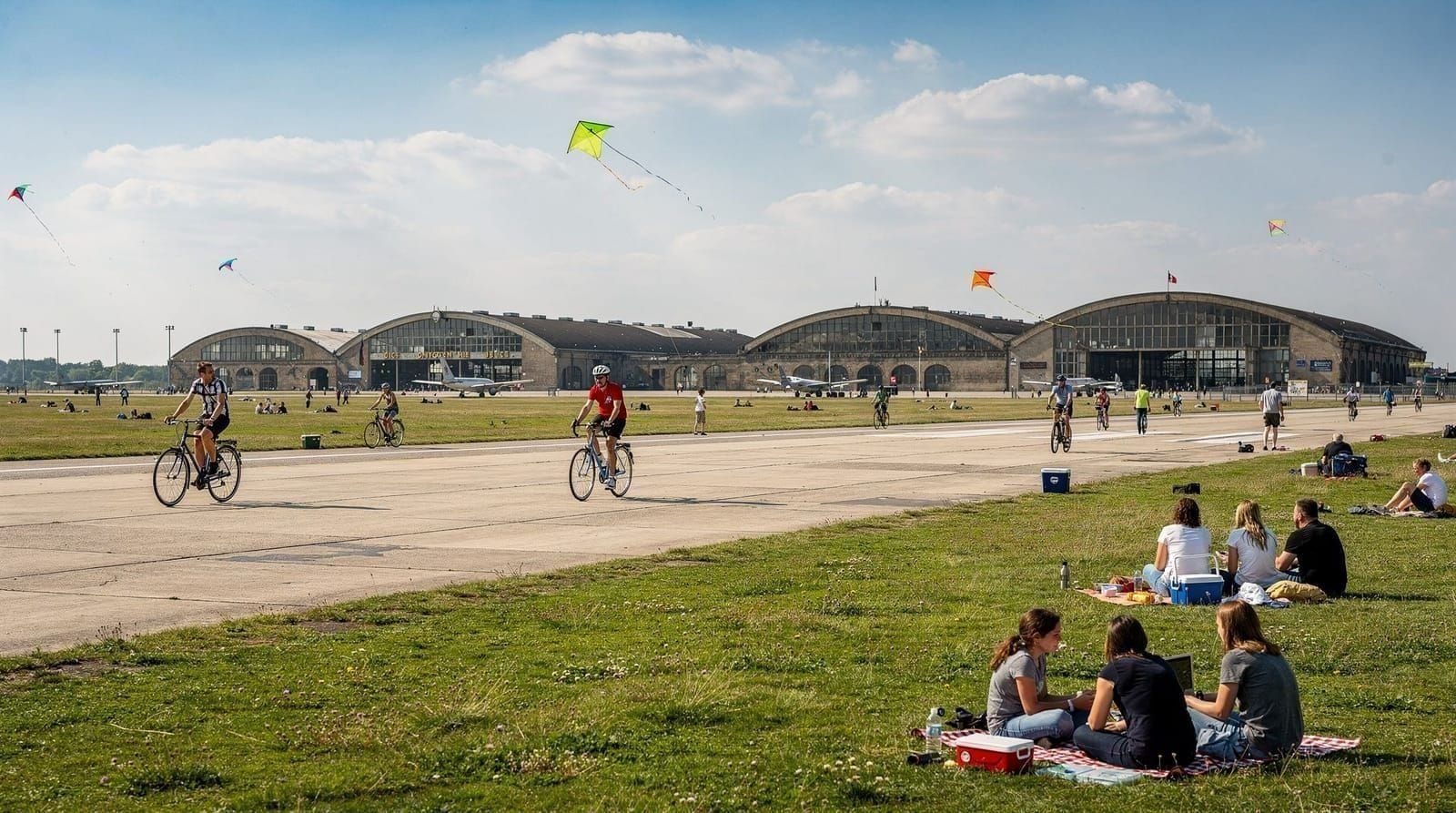
For waterfront and urban nature within Berlin itself, Tiergarten is the city’s central park and always worth an afternoon. Tempelhof Field offers something entirely different — an enormous open prairie on a former airport runway. The Berlin boat tours on the Spree provide an urban water perspective that contrasts usefully with the Spreewald’s forest canals.
For families, the Spreewald is one of the most consistently successful day trips in the region — the Berlin with kids guide includes it alongside other child-friendly options. The Berlin family day trips guide covers logistics for travelling with children on Brandenburg trains.
If you are building out a week in the region, a 5-day Berlin itinerary would naturally include a Spreewald day alongside the main city attractions. The Berlin and Potsdam weekend is another popular combination — Potsdam’s palace gardens and the Spreewald occupy very different registers but are both reachable in roughly the same journey time.
For a private guided Spreewald experience that includes transport from Berlin, the following tour covers the full route with a guide who handles navigation:

How the Spreewald day trip fits your energy level
Not every visitor wants a full day of paddling, and the region accommodates a range of ambition levels. A relaxed half-day works well for families with younger children or anyone short on time: a 2-hour punt tour in the morning, lunch near the harbour, and a short independent paddle of an hour or two in the afternoon rather than a full circuit. A moderate day means the Lübbenau-Leipe route described above — 3-4 hours of paddling with a stop in the village, doable comfortably by most fitness levels including children from age 6. An ambitious day means the full Lübbenau-Lehde circuit or beyond, requiring genuine stamina and comfort with self-navigation across 20-25 km.
Matching the route to your group’s realistic energy and attention span matters more than covering distance for its own sake — the canals reward slow observation, and rushing to complete a long circuit tends to undercut exactly what makes the Spreewald worth visiting in the first place.
Frequently asked questions about Spreewald canoe and kayak guide
How do you get to the Spreewald from Berlin by train?
Take a Regional Express (RE) from Berlin Hauptbahnhof or Ostbahnhof — not the S-Bahn, which does not reach the Spreewald. Lübbenau/Spreewald station is about 1h15 away; Lübben is about 1h. The Brandenburger Ticket (€32 for up to 5 people, valid all day on RE and regional trains in Brandenburg) is excellent value for groups. Book at DB or via the RBB app.How much does canoe or kayak rental cost in the Spreewald?
Most hire companies at Lübbenau's Kahnfährhafen (boat harbour) charge €10–15 per person per day for a single kayak or canoe, plus a small deposit of €3–5. Prices at Lübben are similar. A two-person canoe is typically around €20–28 for the day. Book ahead in July and August when availability tightens on weekends.Do you need experience to canoe the Spreewald canals?
No. The Spreewald's inner canal network has almost no current and is largely shielded from wind by the forest. Children aged 6 and over paddle comfortably. The main challenge is navigation — the canal network is dense and some junctions look alike. Download the Komoot Spreewald routes offline, or buy the printed waterway map at the harbour.What is the best Spreewald canoe route for beginners?
The Lübbenau to Leipe route is the most recommended introduction. It covers around 12 km of quiet forest canals and takes 3–4 hours at a relaxed pace. Leipe is a preserved Sorb village with wooden houses and a small café. You return on a different canal, so the route does not double back on itself.Is the Spreewald worth visiting outside summer?
Spring (April–May) and early autumn (September–October) are arguably the best times. Canal traffic is light, the forest is either budding or turning, and hire companies are still fully operational. July and August are popular but noticeably busier — narrow canals can feel crowded on summer weekends. Winter closures run roughly November to March.What should you bring on a Spreewald canoe trip?
A waterproof dry bag for your phone, wallet, and camera is essential — canoes do tip occasionally on narrow bends. Bring sun protection, at least 1.5 litres of water per person, and a packed lunch. There are no shops or cafés on the canals themselves. A light waterproof jacket is useful even in summer; the forest creates its own microclimate.Are there camping options in the Spreewald for multi-day trips?
Yes. The Biosphere Reserve has designated campsites along the canals, and multi-day routes of 2–3 days are popular with experienced paddlers. These sites must be booked in advance — wild camping in the reserve is prohibited. Check the Tourismusverband Spreewald website or ask at your hire company for the current campsite map.What is the difference between a punt tour and a canoe hire in the Spreewald?
A punt (Kahn) is a traditional flat-bottomed wooden boat propelled by a ferryman (Kahnführer) with a long pole. You sit as a passenger on a guided 2-hour circuit for around €12–15 per person. A canoe hire gives you a boat for the full day to paddle yourself wherever you like within the network. Both are worthwhile — the punt tour is a cultural experience, the canoe hire is freedom. Many visitors do the punt tour in the morning and a short independent paddle in the afternoon.
Top experiences
Bookable activities with verified prices and instant confirmation on GetYourGuide.