Leipzig: Bach, revolutions, and Germany's most underrated city
Leipzig is 75 minutes from Berlin by ICE: Bach's Thomaskirche, the Völkerschlachtdenkmal, Nikolaikirche of the 1989 revolution, and a thriving arts scene.
Quick facts
- Travel time
- ~1h15 by ICE from Berlin Hbf
- Train cost
- €20–50 return (DB)
- Best for
- Music, history, contemporary art
- Days needed
- 1 day; 2 to do it properly
- Free highlights
- Nikolaikirche, Mädler-Passage, Augustusplatz
The city that changed Germany without firing a shot
On 9 October 1989, roughly 70,000 people walked out of the Nikolaikirche in Leipzig and into the surrounding streets. The GDR security forces were positioned and ready. But the order to fire never came. The peaceful march swelled as it moved through the city centre — by the time it reached Karl-Marx-Platz (now Augustusplatz) the column stretched back for kilometres. Four weeks later the Berlin Wall fell.
Leipzig had been here before. The city hosted the Congress of Vienna in its aftermath of another epoch-defining moment: the 1813 Battle of Nations, when Prussian, Russian, Austrian, and Swedish forces defeated Napoleon in the largest land battle in history up to that point. The Völkerschlachtdenkmal — a colossal stone monument that dominates the southern skyline — was built a century later to commemorate it.
And before all of that, Leipzig was the city where Johann Sebastian Bach spent the last 27 years of his life, where he wrote the Mass in B Minor and the St Matthew Passion, and where he is buried. The Thomaskirche still employs the Thomanerchor, the boys’ choir Bach himself trained, and they still sing on Fridays and Saturdays.
Three chapters of European history, one compact city, 75 minutes from Berlin Hauptbahnhof. Leipzig is the most underestimated day trip on the eastern German rail network.
| Where | Saxony, ~190 km south-west of Berlin |
| Getting there | ICE from Berlin Hbf, ~1h15, around €20–50 return |
| Time needed | 1 full day; 2 days for the Spinnerei and Völkerschlachtdenkmal properly |
| Free highlights | Nikolaikirche, Mädler-Passage, Augustusplatz, Spinnerei complex |
| Best time | May–June and Sept–Oct; June for Bachfest, December for the Christmas market |
Getting there from Berlin
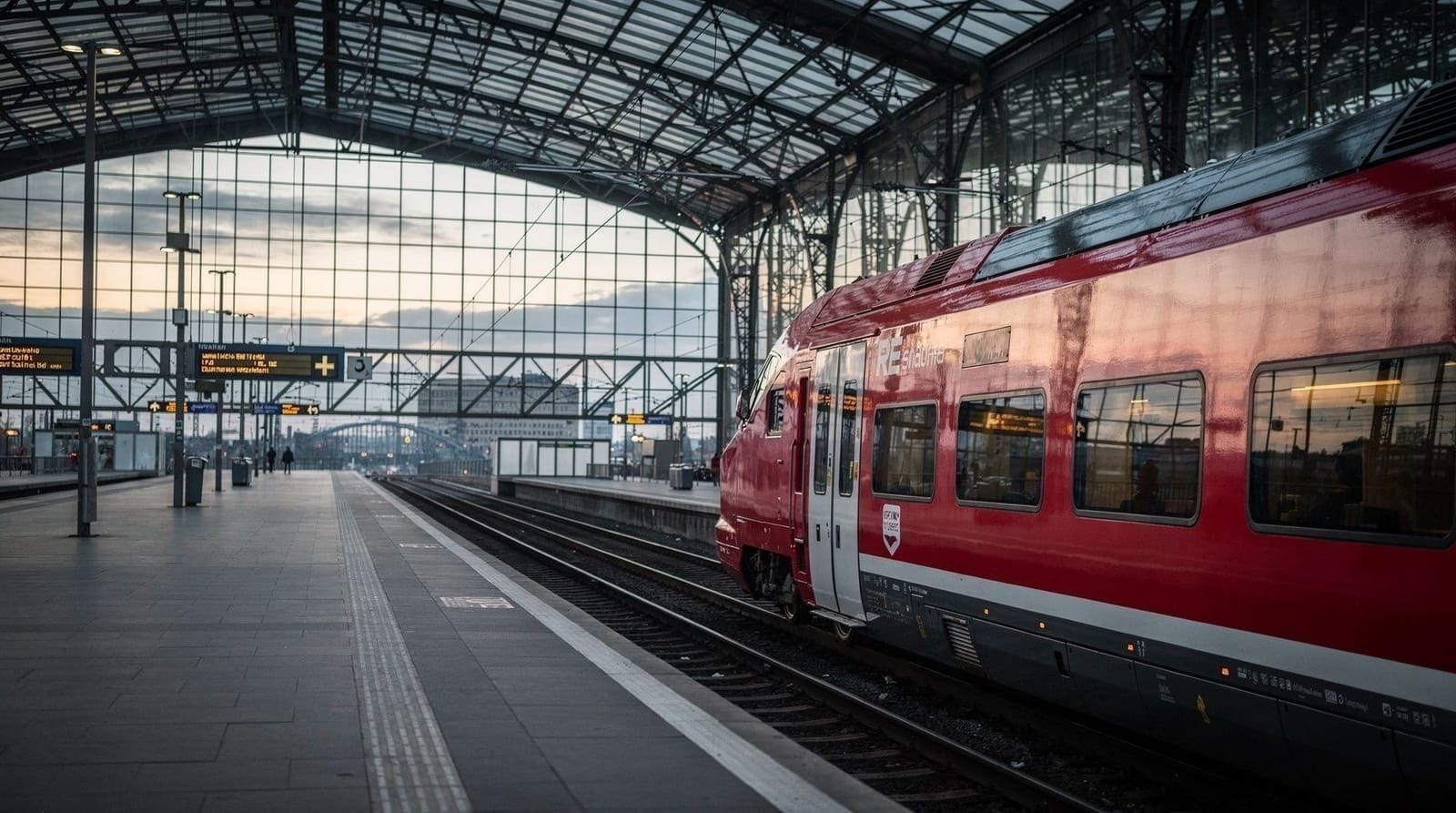
The ICE service from Berlin Hauptbahnhof to Leipzig Hauptbahnhof takes approximately one hour and fifteen minutes on the fastest services, with some trains stopping at Bitterfeld adding a few minutes. Trains run frequently throughout the day — typically every 30 minutes during peak hours. A return ticket booked in advance costs €20–50; advance Sparpreis fares can bring a single leg down to around €14.90.
Leipzig Hauptbahnhof is itself worth a moment’s attention. Completed in 1915, it is the largest terminus station in Europe by floor area, with a vast arcaded concourse that now houses several floors of shops alongside the platforms. You emerge directly into the city centre: Augustusplatz is a ten-minute walk south, the Thomaskirche about fifteen minutes west.
For a full breakdown of day trip train logistics from Berlin, the day trips by train from Berlin guide covers seat reservations, ticket types, and the Brandenburger Ticket (which does not cover Leipzig — you need a full DB ticket for this route). The best day trips from Berlin page puts Leipzig in context alongside the other eastern German destinations.
Thomaskirche and the Bach legacy
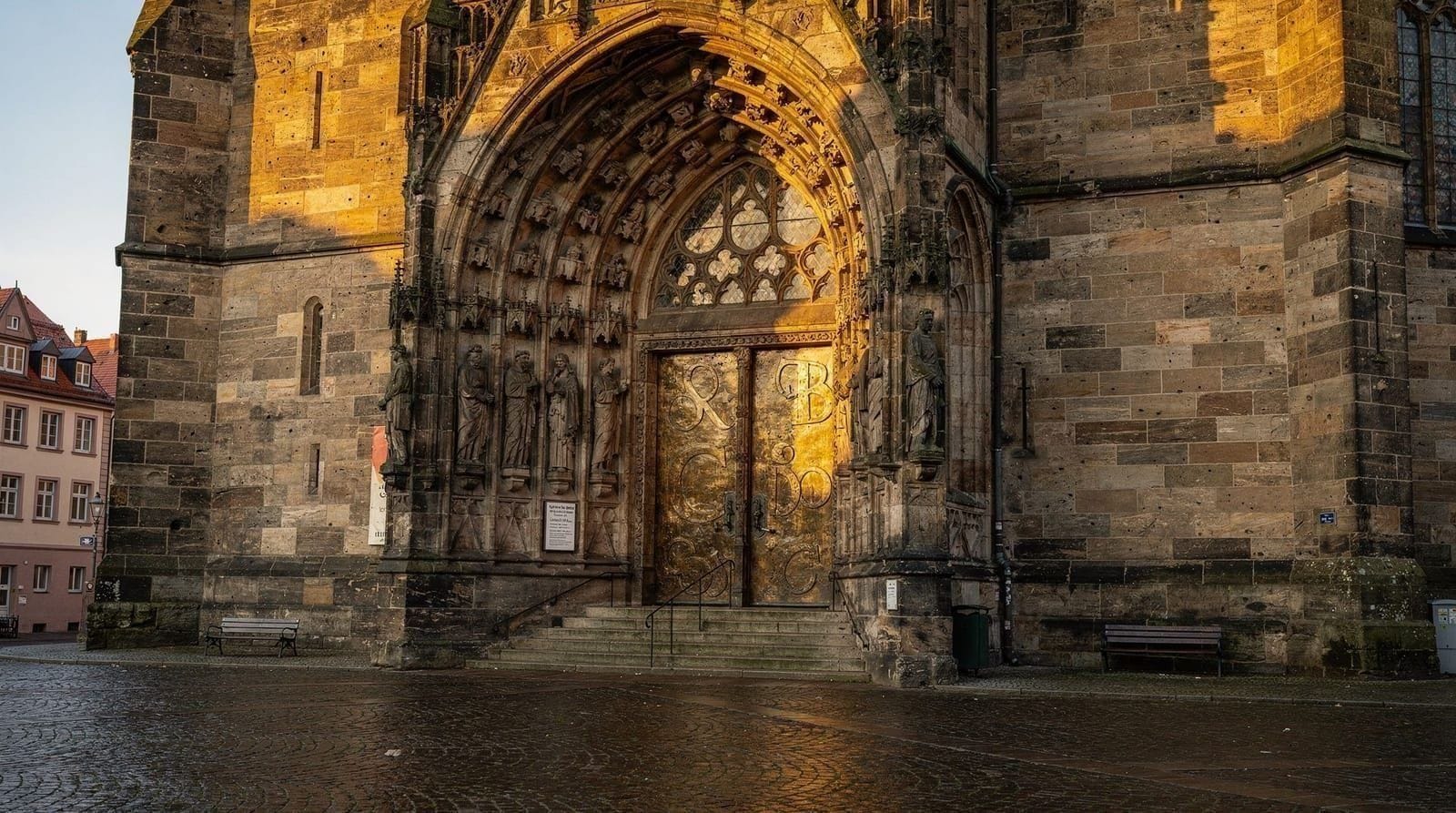
The Thomaskirche — Church of St Thomas — has stood in some form since the 13th century. For most visitors it is associated entirely with Bach, who served as Kantor here from 1723 until his death in 1750. His grave is beneath the high altar in the choir, marked by a simple bronze plaque. It is a genuinely moving thing to stand over — not reverential or theatrical, just quiet and present.
The Thomanerchor, founded in 1212, is one of the oldest boys’ choirs in the world. They sing motets on Friday evenings at 18:00 and Saturday afternoons at 15:00 during term time (check the Thomaskirche website for current schedules, as these change around school holidays and major feast days). Entry to the church is free; there may be a small donation box for the motets. Hearing the choir in the acoustic of the nave — the music arriving from behind you, from the rear gallery where the choir sings — is one of those experiences that justifies the entire day trip.
Directly opposite the church, the Bach Museum opened in its current expanded form in 2010. It covers Bach’s Leipzig years in substantial detail, with original manuscripts, instruments from his period, and a listening station that lets you work through the cantatas with annotation. Entry costs around €10 in 2026. Even if Bach is not your primary interest, the museum is well designed and does not require specialist knowledge to enjoy.
Nikolaikirche: where the revolution started
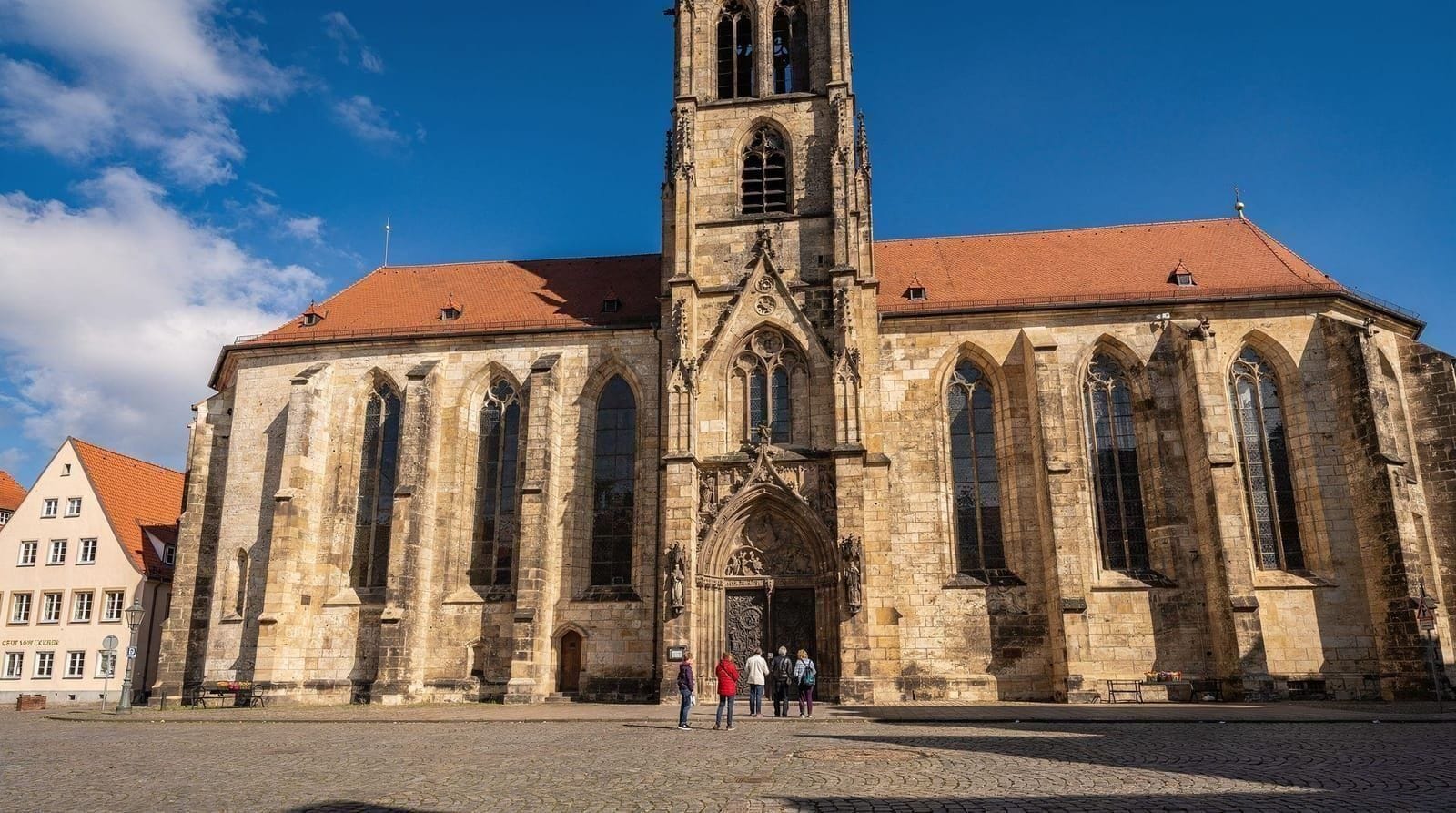
Walk east from the Thomaskirche for about fifteen minutes and you reach the Nikolaikirche, Leipzig’s oldest church and the physical location where the 1989 Peaceful Revolution began. The Monday Demonstrations (Montagsdemonstrationen) started here in 1982 as small prayer meetings for peace, held weekly throughout the mid-1980s with increasing attendance. By autumn 1989 the congregation had outgrown the building.
The interior is striking — a 18th-century neo-Classical remodel gave the nave palm-tree columns in cream and pale green, which are both slightly absurd and genuinely beautiful. A plaque in the floor marks the space where the peace prayers were held. There is no admission charge, and the church keeps reasonable visiting hours throughout the week.
Outside, in Nikolaikirchhof, a single column topped with a palm-tree capital stands in the square — a deliberate echo of the interior, placed there in 1999 as a memorial to the Monday Demonstrations. It is easy to walk past without noticing what it represents; once you know, it becomes one of the most charged pieces of public art in Germany.
For visitors interested in the wider Cold War history of the region, Sachsenhausen north of Berlin and Ravensbrück are the most significant memorial sites in the Berlin day-trip radius, though they cover a very different period.
Augustusplatz and the city centre
From the Nikolaikirche, five minutes of walking south brings you to Augustusplatz — formerly Karl-Marx-Platz under the GDR, one of the largest city squares in Germany. The name change back to its pre-1953 form came with reunification, though the scale of the square and the monumental GDR-era buildings that frame it on three sides remain.
The Gewandhaus concert hall sits on the eastern edge — home to the Gewandhausorchester, one of the world’s oldest civic orchestras (founded 1743). The opera house faces it across the square. Between them, a fountain and the university tower (informally known as the “wisdom tooth” for its jagged roofline) give the square a mix of periods and architectural registers that somehow coheres. On market days and during the Christmas season the square is even more animated.
The Mädler-Passage, one of several historic Kaufpassagen (shopping arcades) in central Leipzig, is three minutes from Augustusplatz heading toward the main station. Built in 1914 on the site of Auerbach’s Keller — the wine cellar where Goethe set a scene in Faust — it remains one of the most beautiful commercial arcades in Germany. Auerbach’s Keller is still a functioning restaurant in the basement; the food is reliably Saxon and the ambience is worth the experience even if you only have a coffee. Bronze statues of Faust and Mephistopheles mark the stairs down.
The Völkerschlachtdenkmal
The Monument to the Battle of Nations stands in the Probstheida district, about 4 km south of the centre — reachable by tram 15 in around 15 minutes from Augustusplatz. It is one of the most extraordinary pieces of monumental architecture in Europe, almost always overlooked in favour of Leipzig’s city-centre sights.
Built between 1898 and 1913 for the centenary of the 1813 battle, the Völkerschlachtdenkmal reaches 91 metres in granite-aggregate concrete. The entrance figures alone stand over 11 metres tall. Inside, a crypt with warrior-monk sculptures leads to a central hall and dome, then 364 steps — with a lift for part of the ascent — to a panoramic platform over the Saxony plain. The monument does not soften the scale of the catastrophe: roughly 600,000 soldiers, around 100,000 dead over four October days in 1813. Entry ~€10. Allow 90 minutes.
Spinnerei: cotton mills turned art district
The Spinnerei complex in the Plagwitz district, about 3 km west of the centre, is the best argument for spending two days in Leipzig rather than one. A former cotton-spinning mill founded in 1884 — at its peak the largest in continental Europe — the Spinnerei has since the early 2000s housed over a hundred artist studios, eleven galleries, a cinema, and various creative businesses in its converted red-brick mill buildings.
This is where the so-called New Leipzig School of painters — Neo Rauch, Tilo Baumgärtel, and their generation — established their studios, and several are still here. The galleries (including Galerie EIGEN + ART Leipzig, the commercial gallery most associated with the movement) are free to enter and are typically open Tuesday through Saturday. The complex itself is open and freely accessible on foot at all times.
Getting there: tram 14 from the Hauptbahnhof to Plagwitz, then a short walk. The journey takes about 20 minutes. In good weather, the walk along the Karl-Heine-Kanal from the Plagwitz tram stop to the Spinnerei entrance is pleasant.
Coffee, cake, and where to eat
Leipzig has genuine claim to a coffee-house tradition older than Vienna’s. Zum Arabischen Coffe Baum, just off the Markt, has served coffee continuously since around 1711, making it one of the oldest coffee houses in continental Europe; Bach, Goethe, Wagner, and Schumann are all recorded as former patrons. The ground floor is a working café — go for coffee and a slice of Leipziger Lerche (a shortcrust pastry with almond filling, named after the skylarks once trapped and cooked in the city, a practice banned in the 19th century) — while the upper floors house a small coffee museum, free with a drink purchase.
For a full meal, the Barfußgässchen and Kleine Fleischergasse lanes just west of the Markt are dense with restaurants ranging from traditional Saxon Gaststätten to modern bistros; expect €12–20 for a main course. Auerbachs Keller (inside the Mädler-Passage) is the atmospheric choice for one meal, though it leans firmly toward tourists — book ahead for dinner. In Plagwitz and the Südvorstadt, prices drop and the crowd skews local; the streets around Karl-Liebknecht-Straße (“Kalle”) have Leipzig’s highest concentration of cafés, bars, and casual restaurants, and are worth the tram ride even without a Spinnerei visit.
Beyond the centre: Plagwitz after dark and the Karl-Heine-Kanal
If your day trip stretches into the evening, or you have opted for the two-day version this guide recommends, Plagwitz rewards lingering well past the Spinnerei’s closing time. The Karl-Heine-Kanal, built in the 1860s to connect Plagwitz’s factories to the Weiße Elster river, has been reclaimed as a canal-side promenade lined with converted warehouses, small breweries, and waterside bars that fill up on warm evenings. Kayak and stand-up-paddle rental operators work the canal in summer, offering an unusual angle on Leipzig’s industrial architecture from the water.
The Südvorstadt district, reachable on foot from the centre or by tram, is Leipzig’s main student and nightlife quarter — Karl-Liebknecht-Straße again the spine — with a density of independent bars that has made Leipzig, alongside Berlin, one of eastern Germany’s more talked-about nightlife cities in recent years, at a fraction of Berlin’s prices. None of this requires advance planning; it rewards simply walking rather than following a fixed itinerary.
Leipzig as part of a wider itinerary
Leipzig pairs well with Lutherstadt Wittenberg, where Martin Luther nailed his 95 Theses in 1517. Wittenberg is about 75 minutes north of Leipzig by regional train, or reachable from Berlin on a separate day trip. The Berlin 3-day itinerary and Berlin trip planning guide both include Leipzig with suggested scheduling.
Practical information
Getting there: ICE from Berlin Hbf to Leipzig Hbf, multiple services per hour during peak times, ~1h15 on the fastest. Book via bahn.de or the DB app. Advance Sparpreis from ~€14.90 single.
Getting around: Central Leipzig is very walkable. Trams serve the outer districts — day tickets cost around €7.50 and cover tram, bus, and S-Bahn within the city zone.
Opening hours: Thomaskirche: daily 09:00–18:00. Bach Museum: Tue–Sun 10:00–18:00. Nikolaikirche: Mon–Sat 10:00–18:00, Sun open after services. Völkerschlachtdenkmal: daily 10:00–18:00 (Oct–Mar until 16:00). Spinnerei galleries: Tue–Sat 11:00–18:00.
Costs: Bach Museum ~€10. Völkerschlachtdenkmal ~€10. Nikolaikirche free. Thomaskirche free (motets by donation). Mädler-Passage and Augustusplatz free to visit.
Budget: A full day in Leipzig — train return, Bach Museum, Völkerschlachtdenkmal, lunch, tram — typically costs €60–80 per person. See the Berlin budget guide for general cost context.
Frequently asked questions about Leipzig
Is Leipzig worth visiting on a day trip from Berlin?
Yes — and it is arguably better suited to a day trip than Dresden because the main sights cluster more compactly around the city centre. The Thomaskirche, Nikolaikirche, Augustusplatz, and the Mädler-Passage can all be covered on foot in a comfortable half-day, leaving the afternoon for the Völkerschlachtdenkmal or the Spinnerei.
How long does the train from Berlin to Leipzig take?
The fastest ICE services cover the distance in approximately 1 hour and 15 minutes. Some services stopping at Bitterfeld take around 1 hour 25 minutes. Trains run frequently throughout the day. The day trips by train from Berlin guide has current timetable guidance.
Can I hear the Thomanerchor at the Thomaskirche?
Yes, if your visit falls on a Friday evening (motets at 18:00) or Saturday afternoon (15:00) during the choir’s term time. Entry to the church is free; a donation is customary. Check the Thomaskirche website before your visit as the schedule changes around school holidays and major church festivals.
What is the Völkerschlachtdenkmal and is it worth visiting?
The Völkerschlachtdenkmal (Monument to the Battle of Nations) is a 91-metre granite-clad monument built to commemorate the 1813 battle where Napoleon was defeated. It is one of the largest monuments in Europe and the scale only becomes apparent in person. The interior, crypt, and viewing platform are all included in the entry fee (~€10). It requires a tram ride from the centre but is absolutely worth visiting.
Is Leipzig expensive compared to Berlin?
Leipzig is slightly cheaper than Berlin for food and drink. Neighbourhood restaurants around Plagwitz and the Südvorstadt are particularly good value. The main museums are modestly priced at around €10 each.
What is the connection between Leipzig and the 1989 revolution?
The Monday Demonstrations at the Nikolaikirche were a series of peaceful protest gatherings that began in 1982 and grew significantly through the late 1980s. On 9 October 1989 — the critical date — approximately 70,000 people participated in the march around the city centre despite the presence of armed security forces. The protest passed without violence, marking a turning point that contributed directly to the fall of the Berlin Wall on 9 November 1989. The Nikolaikirche, the Stasi museum (Runde Ecke, nearby), and the palm-column memorial in Nikolaikirchhof are the main physical reminders of this history.
What is the Spinnerei and do I need to be interested in art to visit?
The Spinnerei is a former industrial cotton mill converted into a sprawling creative complex with artist studios and galleries. You do not need specialist art knowledge to enjoy it — the setting alone (vast red-brick mill buildings, courtyards, a canal) is compelling. The galleries are free to enter and are busiest during the quarterly open-studio events. It is best visited in the afternoon after the city-centre sights.
How does Leipzig compare to Dresden as a day trip from Berlin?
Dresden has more concentrated Baroque grandeur and world-class art museums; Leipzig has stronger modern history (1989), a more lived-in contemporary culture, and a marginally shorter journey time. They suit different interests and are ideally visited on separate days. If forced to choose one, history and music lovers tend to prefer Leipzig; art and architecture enthusiasts tend to prefer Dresden.
Where should I eat in Leipzig?
For something historic, Auerbachs Keller in the Mädler-Passage or a coffee and Leipziger Lerche at Zum Arabischen Coffe Baum near the Markt. For better value and a local crowd, head to Karl-Liebknecht-Straße in the Südvorstadt or the canal-side bars around Plagwitz, both reachable by tram from the centre.
Is Leipzig good for nightlife, not just day-trip sightseeing?
Yes — if you stay into the evening or come for a weekend, Leipzig has a reputation (alongside Berlin) as one of eastern Germany’s livelier nightlife cities, centred on the Südvorstadt and the Karl-Heine-Kanal in Plagwitz, at noticeably lower prices than equivalent Berlin venues.