Ravensbrück — women's concentration camp memorial north of Berlin
Ravensbrück was Nazi Germany's main concentration camp for women. The memorial is 90 km north of Berlin, admission free, and open year-round.
Quick facts
- Address
- Straße der Nationen 13, 16798 Fürstenberg/Havel
- From Berlin
- RE5 from Berlin Hauptbahnhof to Fürstenberg/Havel (~1h 10min), then 2 km walk or taxi
- Admission
- Free (permanent exhibitions and outdoor site)
- Opening hours
- April to October — Tue to Sun 09:00–18:00; November to March — Tue to Sun 09:00–16:00; closed Mondays and 24–25 December
- Time needed
- 2–3 hours for a thorough self-guided visit
- Website
- ravensbrueck.de
Ravensbrück was the largest Nazi concentration camp established specifically for women. Built in 1939 on the shores of the Schwedtsee lake near Fürstenberg/Havel, approximately 90 kilometres north of Berlin, it operated until liberation by Soviet forces in April 1945. Over those six years, more than 130,000 women — and several thousand men, held in a separate sub-camp from 1941 — were imprisoned here. Prisoners came from over 30 countries: political opponents, Jews, Sinti and Roma women, so-called “asocials,” lesbians, Jehovah’s Witnesses, and resistance fighters from across occupied Europe.
The Mahn- und Gedenkstätte Ravensbrück (Memorial and Museum Ravensbrück) occupies a significant portion of the original camp site. It is one of the least visited of Germany’s major concentration camp memorials, yet one of the most historically significant: this is where the SS developed and practised systematic medical experiments on female prisoners, and where the killing programme expanded markedly from 1944 onward. Visiting is a sobering and important experience.
| Where | Fürstenberg/Havel, Brandenburg, ~90 km north of Berlin |
| Getting there | RE5 from Berlin Hbf, ~1h10, then 2 km walk or taxi |
| Cost | Free entry; audio guide around €3 |
| Time needed | 2–3 hours for a thorough self-guided visit |
| Best time | Spring and early autumn; weekday mornings are quieter |
What happened at Ravensbrück
The camp was built using forced labour from the earlier Sachsenhausen camp 35 kilometres to the south. Sachsenhausen served as the administrative headquarters of the entire SS concentration camp network, and Ravensbrück was designed as a satellite within that system — controlled from Oranienburg, staffed by SS personnel trained in part at Sachsenhausen, and subject to the same bureaucratic apparatus that governed all Nazi camps.
Prisoner work at Ravensbrück fed the Nazi war economy directly: textile and uniform production, construction work, and later armaments manufacture at the Siemens sub-camp built on the site’s eastern edge. Siemens established a factory using camp prisoner labour in 1942, supplying parts for military electronics. This relationship — a major German corporation building a production facility within a concentration camp — is documented in the memorial’s exhibitions as a case study in corporate complicity in forced labour.
Medical experiments conducted at Ravensbrück remain among the most documented war crimes of the period. Dr. Carl Clauberg and others carried out surgical procedures, bone transplants, and wound infection studies on prisoners without consent or anaesthesia. The experiments were designed to test treatments for battlefield injuries and to study mass sterilisation methods. These crimes were prosecuted at the Nuremberg Doctors’ Trial in 1946–47, resulting in the conviction of several perpetrators. The testimony of Ravensbrück survivors — the so-called “Rabbits,” named after a self-deprecating term survivors used for the experimental subjects — was central to the prosecution.
From late 1944, as the regime accelerated its killing programme and the Red Army advanced from the east, a gas chamber was constructed at Ravensbrück. Between January and April 1945, an estimated 5,000 to 6,000 prisoners were killed there — a period of intensified murder in the final months of the camp’s operation. The gas chamber’s construction came late — Ravensbrück was not designed as an extermination camp in the sense that Auschwitz-Birkenau or Treblinka were — but the killings that occurred there in the final months were systematic and documented.
Liberation came on 30 April 1945, when Soviet forces arrived at the camp. In the weeks before liberation, the SS had forced approximately 20,000 prisoners on death marches westward. Red Cross negotiations in the final weeks secured the release of around 7,500 prisoners — primarily Scandinavian nationals — to Sweden and Denmark. The White Buses operation, organised by the Swedish Red Cross and the Swedish government, became one of the most significant rescue operations of the final months of the war.
Getting to Ravensbrück from Berlin
By train is the practical approach for most visitors. The RE5 regional train runs from Berlin Hauptbahnhof directly to Fürstenberg/Havel in approximately 1 hour 10 minutes. Trains run roughly every two hours, so checking the schedule in advance on bahn.de and timing your departure is important — there is no point arriving only to find the next return train is three hours away.
The Brandenburg Ticket offers the best value for most visitors: €29 per person (valid from 9 am on weekdays, all day at weekends), covering all regional trains and S-Bahn within Brandenburg and Berlin. For a group of two to five people, the group Brandenburg Ticket is €39. Standard single fares from Berlin to Fürstenberg/Havel are approximately €14–16 depending on discount card status.
From Fürstenberg/Havel station, the memorial is approximately 2 km south-east. The walk takes about 25 minutes and is signposted from the station exit. A taxi from the station costs approximately €8–10; there is no guaranteed taxi rank at a small station like this, so it is worth calling ahead (the tourist information office in Fürstenberg can help with current taxi numbers, or ask at the station). Bus connections between the station and the memorial are limited and infrequent — do not rely on them without confirming the timetable.
By car: Take the A111 north from Berlin to the A10 ring road, then the A19 towards Rostock, exiting at Fürstenberg. The drive takes approximately 70–80 minutes from central Berlin depending on traffic. Free parking is available at the memorial site on Straße der Nationen.
There is no direct coach tour from Berlin to Ravensbrück comparable to the organised Sachsenhausen excursions — this is a destination that rewards independent planning rather than a packaged day trip.
The memorial site: what to see
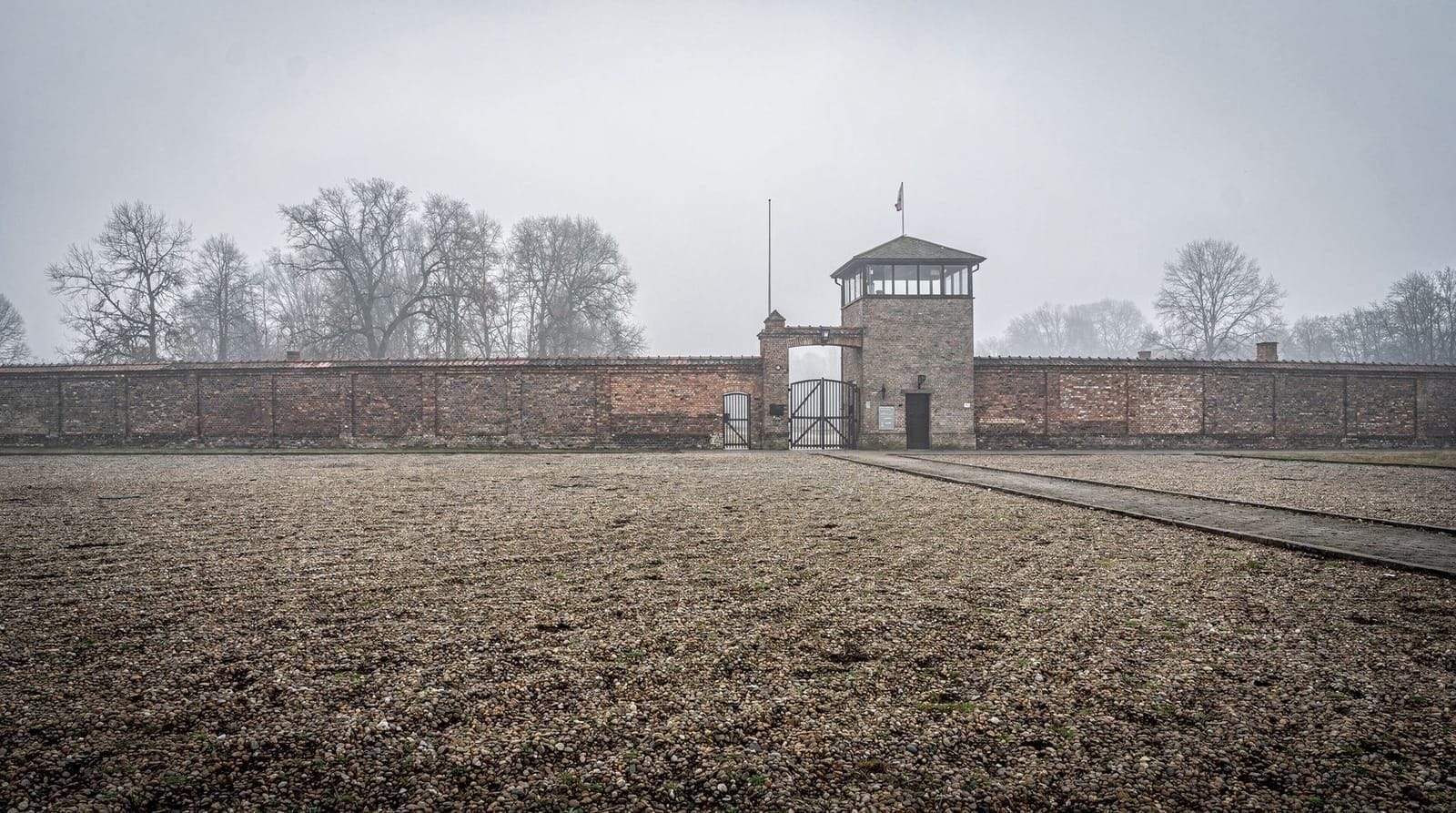
The Gedenkstätte (memorial and museum) is divided between the original camp grounds and two exhibition buildings. The outdoor areas are extensive; allow at least 45 minutes just to walk the perimeter and understand the scale.
The main exhibition building: Opened in 2013, this houses the core historical documentation — the camp’s establishment, prisoner categories, the forced labour system, and the medical experiments. The exhibition is organised thematically rather than purely chronologically, which allows it to address different prisoner groups and different aspects of camp life without reducing everything to a single linear narrative. Texts are in German with English translations. The exhibition does not soften the record; it documents individual cases extensively, drawing on prisoner testimony, SS files, and post-war trial evidence.
The “Zellenbau” (cell block): The punishment block where prisoners were subjected to solitary confinement and other disciplinary measures is partly preserved and accessible. It was here that prisoners sentenced to corporal punishment — flogging — were held, and where some of the medical experiment subjects were kept between procedures. Entry is included in the general visit.
The Lagergelände (camp grounds): The roll-call square (Appellplatz), the foundations of prisoner barracks, and several reconstructed elements allow the original spatial organisation of the camp to be understood. The triangular layout differs from the design of some other camps — Ravensbrück was expanded several times as prisoner numbers grew, and the original plan became difficult to read as extensions pushed the boundaries outward. A lakeside path leads to the site of the crematorium and the gas chamber area.
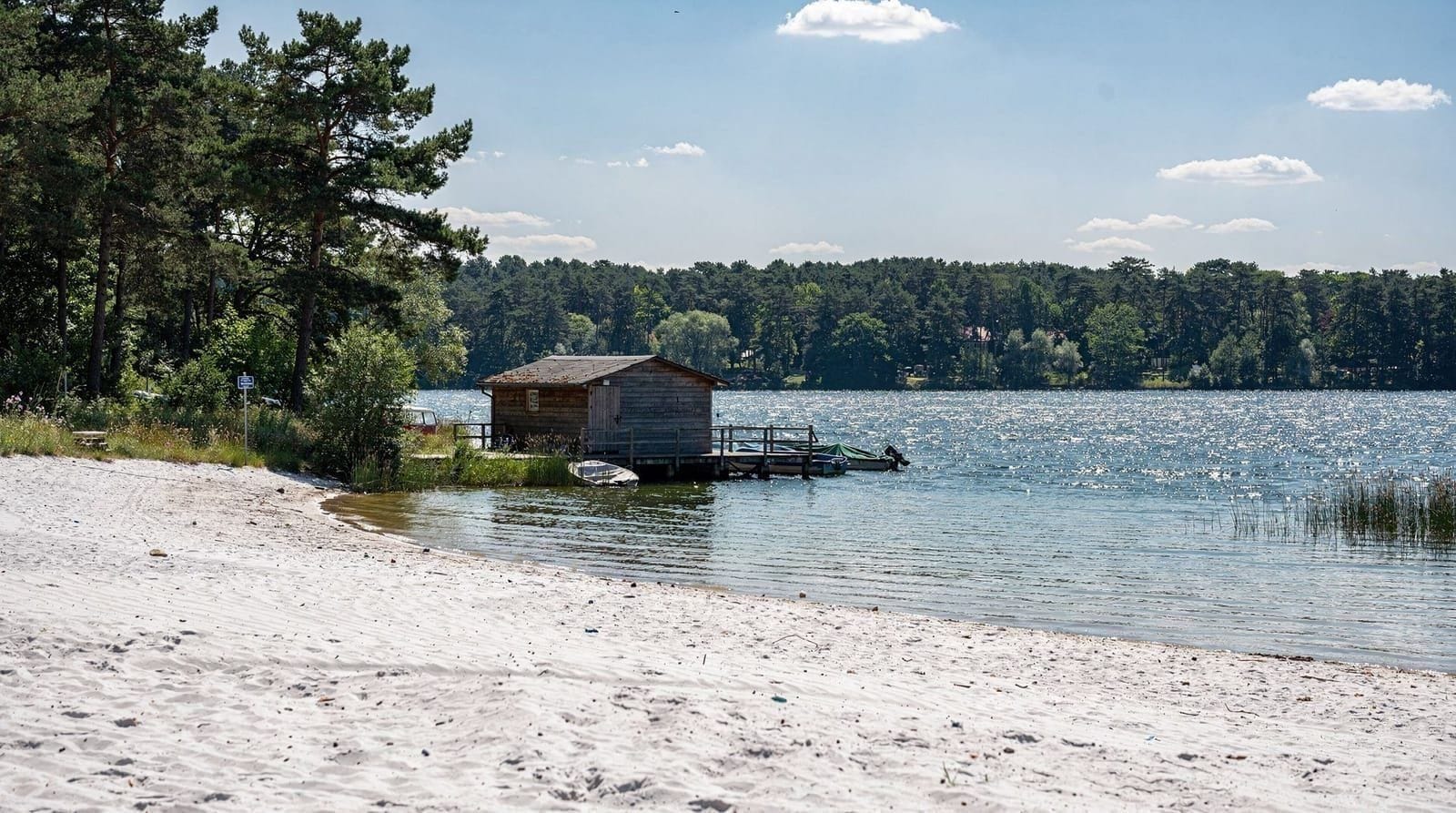
The Lake and the Ashes: A particularly significant part of the memorial is the foreshore of the Schwedtsee lake, into which the ashes of cremated prisoners were dumped by the SS. The lake view from the memorial grounds carries this knowledge explicitly — there is a commemorative marker at the lakeside, and the information is presented without sentimentality. The memorial’s decision to make this geography legible, rather than simply indicate it on a map, is one of the more effective choices in its design.
The exhibition on the men’s camp and the Siemens sub-camp: A smaller exhibition documents the men’s camp established in 1941 and the economic exploitation of prisoners by Siemens. This exhibition is particularly valuable for those interested in corporate history and the relationship between German industry and the Nazi camp system — a subject that received serious historical attention only from the 1990s onward.
The “Youth Centre” (Jugendherberge): On the northern edge of the site, a hostel occupies former SS buildings and is operated by the memorial as a place for school groups and educational seminars. It is not a tourist facility for general visitors but contextualises how the memorial functions as an educational institution. School groups from across Germany and Europe attend multi-day seminars here.
The national memorials on the grounds
Scattered through the site, and easy to overlook without knowing to look for them, are individual memorial stones and sculptures placed by the countries whose citizens were imprisoned at Ravensbrück — a physical record of how international the camp’s population was. France, Poland, Norway, Belgium, and several other nations have each erected their own commemorative markers, some dating from the immediate postwar decades and others added more recently as historical understanding of the camp’s full population has deepened. The most prominent is the large bronze sculpture Tragende (“Burdened Woman”) by Will Lammert, installed at the lakeside in 1959 during the GDR period and still one of the most striking pieces of memorial art at any German camp site.
Walking past these markers in sequence — rather than heading directly for the main exhibition building — gives a different, slower sense of the camp’s scale and international reach than the documentary exhibitions alone convey. Allow an extra 20–30 minutes if you want to see the national memorials as a deliberate part of your visit; the memorial provides a site map at the entrance that marks their locations.
Fürstenberg: the town beside the memorial
Fürstenberg/Havel itself is a small Brandenburg lake town of around 6,000 people, largely unremarkable beyond its role as the memorial’s transit point, though it sits amid the same Mecklenburg Lake District waterways that make towns further north popular for boating holidays. There is little reason to linger beyond the walk to and from the station — a bakery or two near the station can supply provisions, since food options at the memorial itself are limited — but visitors connecting onward by RE5 to explore the wider lake district, or returning to Oranienburg to combine the day with Sachsenhausen, will pass through it as a matter of course.
Understanding the memorial’s curation
The Ravensbrück memorial’s approach to its subject matter has evolved significantly since its founding. Under the GDR, the site was framed principally as a monument to anti-fascist resistance — emphasising Communist and politically active prisoners while understating other prisoner groups, particularly Jewish victims and Sinti and Roma women. The postwar East German state legitimised itself partly through its anti-fascist identity, which meant selectively emphasising political resistance categories over the full spectrum of Nazi persecution.
Since German reunification, the memorial has undertaken serious self-examination of this selective history. The 2013 exhibition explicitly addresses the GDR curation and its blind spots, and works to represent the full diversity of prisoner experience — including women who were imprisoned not for political resistance but simply for belonging to persecuted groups. This historiographical honesty is itself noteworthy: the memorial explains not just what happened at Ravensbrück but how it has been remembered, and misremembered, in the decades since.
Visiting with appropriate preparation
Ravensbrück documents extreme violence directed specifically at women — including medical torture and sexual exploitation. The memorial does not sensationalise this, but the documentation is direct and detailed. Visitors should come with some prior knowledge of the camp system and be prepared for content that is genuinely distressing.
Language: Exhibition texts are primarily in German, with English translations in the main building. Audio guides are available at the entrance in multiple languages (€3). The audio guide is strongly recommended for visitors without prior knowledge of the camp — the physical site alone, without interpretive context, is difficult to read.
Guided tours: The memorial offers official guided tours in German on selected weekdays and weekends. English-language guided tours for groups can be arranged in advance via the memorial’s education department (ravensbrueck.de). There is no regular English public tour comparable to those offered at Sachsenhausen. Individual visitors should not arrive expecting an English-language tour without prior arrangement.
Photography: Permitted on the outdoor grounds. Inside the exhibition buildings, follow posted guidance — some areas request that photography be avoided out of respect for victim documentation displayed there.
Eating and facilities: A small café operates during opening hours in warmer months. Toilets are available in the main building. Bring food if planning a thorough visit — the town of Fürstenberg has basic facilities, and you will likely need to wait for a train return in any case.
Mobility: The memorial grounds are largely flat gravel and grass paths, generally manageable for visitors with mobility considerations, though the Zellenbau and some exhibition areas involve steps. Contact the memorial’s education department in advance for specific accessibility questions, as facilities vary between the exhibition buildings and the outdoor grounds.
Connecting Ravensbrück with other memorial sites
Ravensbrück sits within a geography of Nazi camp sites that can be understood as a connected network. The Sachsenhausen memorial in Oranienburg, 35 kilometres south, served as the administrative headquarters for the entire camp system and as the SS training ground where many Ravensbrück personnel were prepared. Visiting Sachsenhausen provides essential context for understanding how Ravensbrück was organised and commanded.
The Wannsee Conference Memorial in south-west Berlin documents the January 1942 coordination meeting at which senior Nazi officials formalised the “Final Solution” — the administrative decision-making that accelerated the killing programme throughout the camp system. The connection between bureaucratic decision and camp-level reality is made concrete by visiting both sites.
For visitors following the third-reich-history-trail itinerary, Ravensbrück fits logically as a full-day northern excursion from Berlin — ideally combined with a morning visit to Oranienburg (Sachsenhausen) if travelling by car, given the two sites are 55 kilometres apart.
Frequently asked questions about Ravensbrück
Is admission to Ravensbrück free?
Yes. Entry to the Ravensbrück Memorial and all permanent exhibitions is free of charge. Audio guides are available for €3. Any guided tour arranged through the memorial’s education department carries a group fee, which varies depending on the format and duration. Individual audio guides are the only paid element of a standard independent visit.
How do I get from Berlin to Ravensbrück by public transport?
Take the RE5 regional train from Berlin Hauptbahnhof to Fürstenberg/Havel — approximately 1 hour 10 minutes. From the station, the memorial is a 25-minute walk (2 km, signposted from the station exit) or a short taxi ride (€8–10, call ahead). Check the RE5 timetable on bahn.de before you go, as trains run roughly every two hours. The Brandenburg Ticket (€29 single from 9 am weekdays, all day weekends) covers the full journey and is the most economical option.
How does Ravensbrück compare to Sachsenhausen?
Both are major concentration camp memorials within reach of Berlin by train. Sachsenhausen (35 km north of central Berlin, ~45 minutes by S1) is larger, more visited, and has more organised English-language tours available from Berlin. Ravensbrück is further (90 km, ~70 minutes by RE5), considerably quieter, and focuses specifically on the women’s camp — making it a valuable complement to rather than a substitute for Sachsenhausen. Sachsenhausen is the more accessible first visit; Ravensbrück rewards a dedicated separate trip, especially for visitors with specific interest in women’s history under National Socialism.
Can I combine Ravensbrück with Sachsenhausen in one day?
Not conveniently by public transport. The two sites are 55 km apart and the train routing via Berlin would consume most of a day in transit. By car it is more feasible: Ravensbrück to Oranienburg (Sachsenhausen) is approximately 55 km south, about 50 minutes. However, combining two concentration camp memorials in a single day is emotionally demanding and tends to result in superficial visits to both. Most visitors benefit more from dedicating a full half-day to each on separate occasions.
Is there an audio guide in English at Ravensbrück?
Yes. Audio guides in English and several other languages are available at the entrance for €3. The guide covers both the outdoor grounds and the main exhibition building. It is the most practical resource for English-speaking independent visitors, as regular public tours in English are not offered without advance group arrangement.
When is Ravensbrück closed?
The memorial is closed every Monday and on 24–25 December. April to October: open Tuesday to Sunday 09:00–18:00. November to March: open Tuesday to Sunday 09:00–16:00. The outdoor grounds can be accessed outside these hours, but exhibition buildings and audio guides are only available during opening times.
Is this appropriate for children and teenagers?
The memorial is most appropriate for teenagers (14+) with adult accompaniment and prior preparation for the subject matter. The content — systematic violence against women, medical experiments, mass killing — is explicit and documented in detail. Primary-age children are generally not well-served by a visit without substantial adult guidance and context. German secondary schools commonly bring student groups here as part of the curriculum, usually with preparatory classroom sessions before the visit.
What survivor testimonies and books should I read before visiting?
Ravensbrück: Life and Death in Hitler’s Concentration Camp for Women by Sarah Helm (2015) is the most accessible and comprehensive English-language account, drawing on survivor testimony and SS records. It covers the full span of the camp’s operation and the full diversity of prisoner experience, and is recommended reading before visiting. The memorial’s own publications (available in the visitor shop in German and some in English) include shorter documentary volumes on specific prisoner groups and the medical experiments.
What are the national memorials on the grounds?
Several countries whose citizens were imprisoned at Ravensbrück — including France, Poland, Norway, and Belgium — have placed their own commemorative stones and sculptures around the site. The most prominent is Tragende (“Burdened Woman”) by Will Lammert at the lakeside, installed in 1959. A site map at the entrance marks their locations; seeing them as a deliberate sequence adds roughly 20–30 minutes to a visit.
Is there anywhere to eat near the memorial?
Options are limited. A small café operates at the memorial in warmer months, and Fürstenberg town, near the station, has a bakery or two for basic provisions. Most visitors either bring food or plan to eat once back in Berlin; this is not a destination with restaurant options built into the day.