Berlin to Wittenberg day trip — the Reformation city in 40 minutes
From Berlin: Martin Luther's Wittenberg Day Tour
How do I get from Berlin to Lutherstadt Wittenberg?
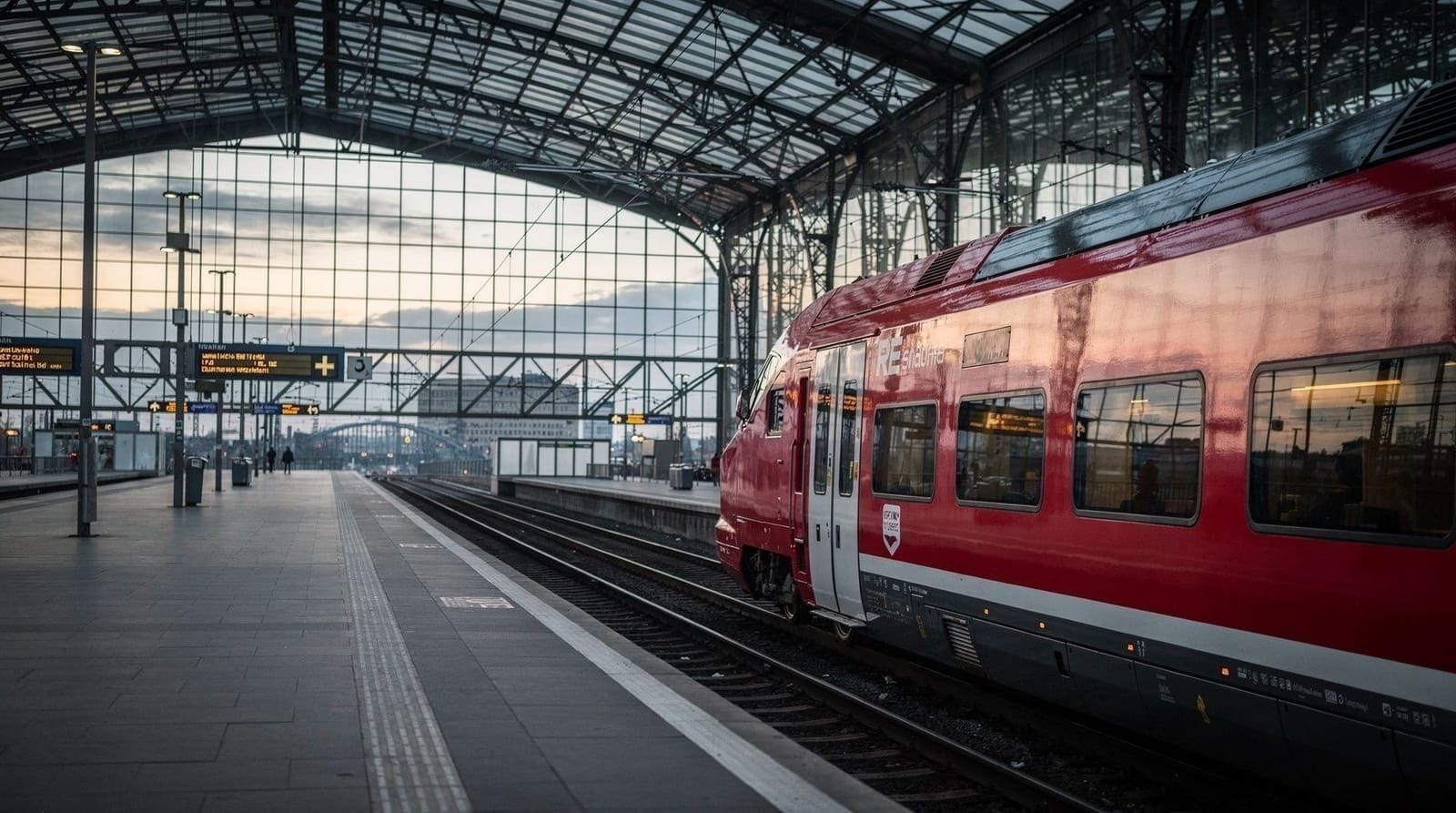
ICE trains from Berlin Hauptbahnhof reach Wittenberg in approximately 40 minutes (from €15 advance). Regional RE trains take about 1.5 hours and are covered by the Brandenburg Day Ticket (~€29 for up to 5 people). The entire historic centre is walkable from the train station.
Quick answer: ICE from Berlin Hauptbahnhof to Lutherstadt Wittenberg takes about 40 minutes (advance tickets from €15 each way). Regional RE trains take 1.5 hours and are covered by the Brandenburg Day Ticket. The historic centre is entirely walkable from the station.
On 31 October 1517, a 33-year-old theology professor at the University of Wittenberg wrote 95 arguments against the Catholic Church’s practice of selling indulgences and either nailed them to the door of the Schlosskirche or sent them by letter to the Archbishop of Mainz, or both. Within weeks, printed copies had spread across Germany. Within 10 years, the Protestant Reformation had permanently split Western Christianity.
The town of Wittenberg, renamed Lutherstadt Wittenberg to honour this history, is compact, calm, and takes approximately half a day to cover properly. It’s an unusual day trip from Berlin — not spectacular architecture or dramatic landscape, but one of the most significant sites in European religious and cultural history.
| Where | Lutherstadt Wittenberg, Saxony-Anhalt (around 100km southwest of Berlin) |
| Getting there | ICE around 40 min (from around €15) or RE around 1.5h (Brandenburg Day Ticket around €29) |
| Time needed | Half a day (4–5 hours) for the main sites; a full day with Melanchthon House |
| Cost | Train fare, plus Luther House around €10, Melanchthon House around €5 |
| Best time | Weekday mornings; expect crowds around 31 October (Reformation Day) |
ICE or RE — quick comparison
Both options cover the same distance, but the trade-off between speed and cost is worth weighing before you book, especially if you’re travelling as a group.
| ICE | Regional RE | |
|---|---|---|
| Duration | Around 40 minutes | Around 1.5 hours |
| Cost | From around €15 pp (advance Sparpreis) | Around €29 for up to 5 people (Brandenburg Day Ticket) |
| Frequency | Roughly every 2 hours | Hourly, more intermediate stops |
| Best for | Solo or duo travellers on a tight schedule | Groups of 3+, or a more flexible day |
For most independent travellers going as a pair or more, the Brandenburg Day Ticket via RE works out cheaper even accounting for the extra hour each way — useful if your day also includes Potsdam or another regional stop on the same ticket.
Getting from Berlin to Wittenberg
Option 1 — ICE (faster, costs extra)
ICE trains from Berlin Hauptbahnhof to Lutherstadt Wittenberg: approximately 40 minutes. Trains run approximately every 2 hours.
Advance saver tickets (Sparpreis): from approximately €15 each way, depending on how far in advance you book. Book through the DB Navigator app or deutsche-bahn.de.
Option 2 — Regional RE (slower, covered by Brandenburg Day Ticket)
Regional RE trains from Berlin to Lutherstadt Wittenberg: approximately 1.5 hours, with stops at Dessau and other towns. These are the trains covered by the Brandenburg Day Ticket.
The Brandenburg Day Ticket (~€29 for up to 5 people) covers the round trip including any bus connections within Brandenburg state. Note that Wittenberg is technically in Saxony-Anhalt, not Brandenburg, but the ticket’s network coverage includes it when departing from Berlin.
Practical comparison:
- Solo traveller, tight schedule: take the ICE (saves almost an hour each way, worth the premium)
- Group of 3–4 people: Brandenburg Day Ticket saves significant money and the extra hour each way is manageable with an early start
- Day with flexible timing: either works
From Berlin Hauptbahnhof, walk to platform 11–16 (lower level) for most ICE departures. RE trains typically depart from the upper-level platforms.
Walking from Wittenberg station to the historic centre
Lutherstadt Wittenberg station is at the eastern edge of the old town. The main street (Collegienstrasse) runs directly west from the station toward the market square and the major sites.
Walking the full length of Collegienstrasse from station to Schlosskirche (at the western end) takes approximately 20 minutes at a relaxed pace. All the major sites are on or just off this axis.
Route from station:
- Luther House Museum (300m from station, north side of Collegienstrasse)
- Melanchthon House (500m, short detour)
- Market square with Luther and Melanchthon statues and Stadtkirche
- Continue west along Collegienstrasse
- Schlosskirche (1.2 km from station, western end)
What to see in Wittenberg — the major sites
Luther House Museum (Lutherhaus): The house in the former Augustinian monastery where Luther lived from approximately 1508 until his death in 1546 is now the most comprehensive Reformation museum in the world. The collection includes:
- Original first-edition printings of Luther’s writings, including the 95 Theses
- Luther’s personal Bible and correspondence
- Lucas Cranach portraits of Luther, his wife Katharina von Bora, and Philip Melanchthon (the primary visual record of the Reformation figures)
- A well-documented account of the political and theological context of the Reformation
The museum is large and detailed. Allow 1.5–2 hours. English audio guide available at entry (~€3). Entry fee: approximately €10.
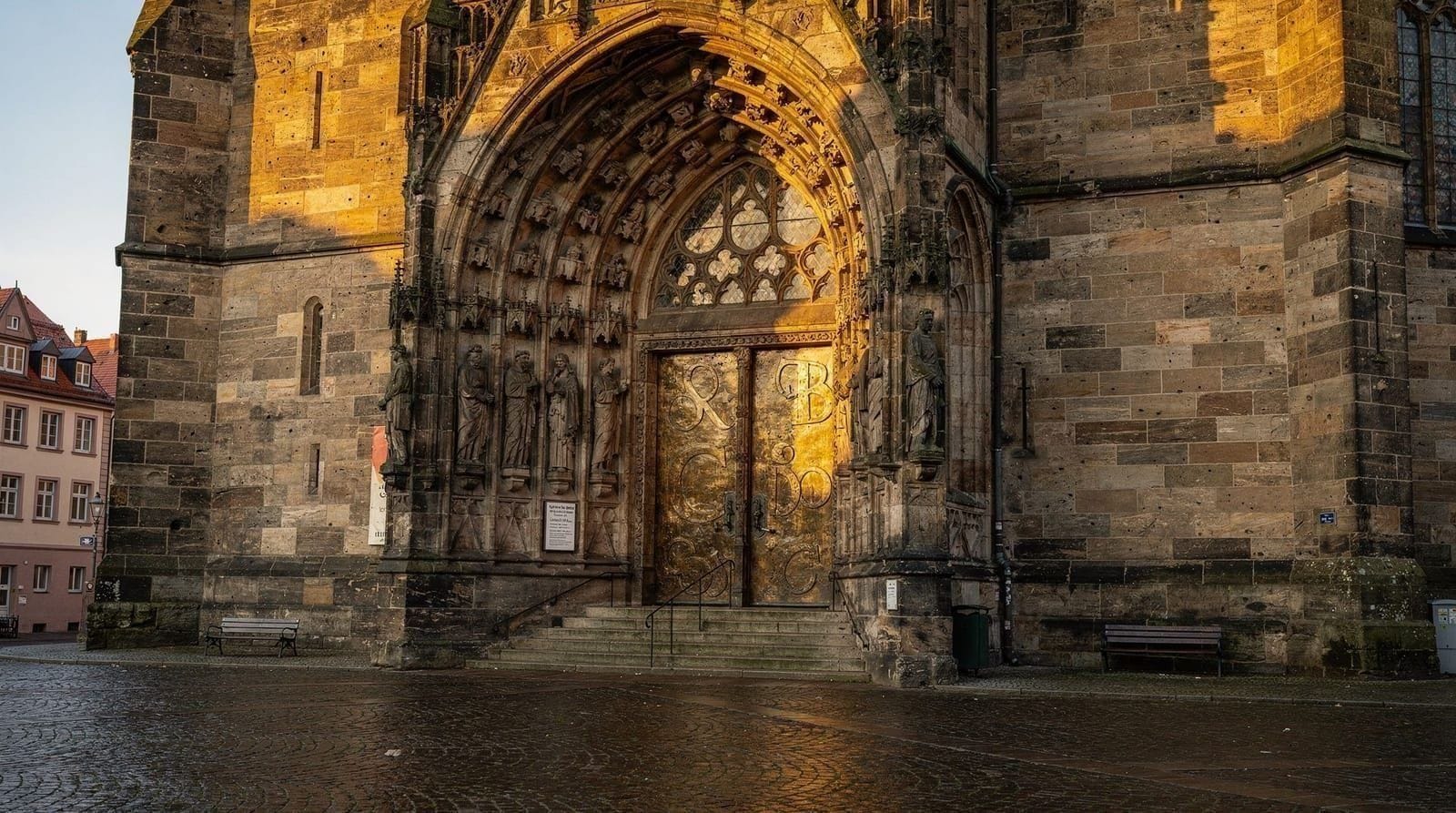
Book a guided tour of Wittenberg’s Luther sites with a specialist Reformation historianSchlosskirche (Castle Church): This is the church whose door Luther is alleged to have used for his 95 Theses posting — though the specific door is a later 19th-century bronze replacement, the originals having been destroyed by fire. Luther and Melanchthon are both buried inside the church beneath their tombs (Luther’s tomb is at the high altar).
Entry to the church is free; there may be a charge for ascending the church tower. The church holds regular Lutheran services; check times before visiting if you want to attend one. The church is more pilgrimage site than spectacular architecture, but its historical significance is real.
Stadtkirche (Town Church): The main parish church of Wittenberg, where Luther preached. The Reformation altarpiece by Lucas Cranach the Elder (completed by his son) is the most important artwork in the church and one of the most significant Reformation documents in painted form: it shows Luther and Melanchthon as the two pillars flanking a Reformation scene. Entry is free.
Melanchthon House (Melanchthonhaus): Philip Melanchthon was Luther’s closest intellectual collaborator and the systematic theologian of the Reformation — arguably more important to the long-term Protestant doctrine than Luther himself, though less famous. His house in Wittenberg is a smaller museum than the Luther House but contains interesting personal material. Entry approximately €5. Allow 45 minutes.
Market Square: The central market square has bronze statues of Luther (1821) and Melanchthon (1865) and is flanked by historic buildings including the Rathaus. The square itself is pleasant and a good orientation point; the tourism infrastructure around it (cafes, souvenir shops) is modest compared to more heavily visited sites.
Book a full-day guided excursion from Berlin to Lutherstadt Wittenberg covering all Reformation sitesThe Reformation — brief context
Understanding why Wittenberg matters requires a sentence or two on what Luther was arguing.
In 1517, the Catholic Church was selling “indulgences” — formal documents that reduced the time a soul spent in Purgatory. The money went toward constructing St. Peter’s Basilica in Rome. Luther’s 95 Theses argued that salvation could not be purchased, that the Pope had no authority over Purgatory, and that scripture (not papal decree) was the ultimate authority for Christian doctrine.
The argument was not new. What made 1517 different was the printing press. Luther’s arguments were printed and distributed across Germany within weeks, reaching audiences the Church could not effectively respond to through traditional channels. Within a decade, Protestant churches had separated from Rome in much of northern Germany, Scandinavia, and England.
The Wittenberg sites document this history through the people who made it — Luther’s personality (combative, prolific, musically gifted), Melanchthon’s systematic mind, Lucas Cranach the Elder’s role as visual propagandist. The Luther House Museum is the best single source for this context.
Where to eat in Wittenberg
Wittenberg has limited restaurant options for a town of 47,000 people. The best cluster is around the market square:
Wittenberger Kartoffelhaus (Schlossstrasse) — as the name suggests, a potato-themed restaurant with hearty Saxony-Anhalt food. Reliable, mid-priced, German menu with good portions.
Cranachhöfe (Lucas-Cranach-Strasse) — in the courtyard of the Cranach house (Lucas Cranach the Elder lived and worked in Wittenberg), this cafe serves lunch in a historic setting. Mainly light meals and coffee.
The market square has cafes suitable for coffee and cake. Avoid the tourist-targeted restaurants immediately in front of the Schlosskirche, which are overpriced for what they serve.
Practical note: Wittenberg’s kitchen closes early by Berlin standards. If returning on a late train, eat before 7pm.
Private guided tours from Berlin
A private guided tour that combines transport and specialist commentary is particularly useful for Wittenberg if the Reformation history is unfamiliar. The connection between theological argument, political power, German statehood, and visual art is more clearly explained with a guide than through self-guided museum reading.
Book a private walking tour of Lutherstadt Wittenberg with an expert local guideThe Luther House Museum also has well-trained English-speaking museum guides available for group bookings; contact the museum directly for availability.
Wittenberg for the history-focused visitor
Wittenberg connects directly to other historical threads in the Berlin day trip landscape:
The Reformation’s impact on German statehood is visible in the Prussian history at Potsdam’s palaces — Frederick the Great’s Prussia was a Protestant state whose cultural identity was partly shaped by the Reformation tradition.
The Stadtkirche’s Reformation altarpiece connects to the Museum Island in Berlin, where the Pergamon and Bode Museums hold medieval and Renaissance art that frames the pre-Reformation visual culture.
For visitors following the thread of German religious and political history, the Cold War Berlin itinerary and the Berlin to Dresden day trip guide connect Wittenberg into a broader narrative arc.
Beyond the main Luther sites
If you have more than half a day, a handful of smaller sites round out the picture without requiring much extra walking, since everything sits within the same compact old town.
Cranachhof: Lucas Cranach the Elder — court painter, printer, and Luther’s close friend — ran a workshop and pharmacy from this courtyard complex on Schlossstrasse. It now houses a small exhibition on his printing operation, which was instrumental in spreading Reformation ideas visually to a largely illiterate population. Free to walk through the courtyard; the exhibition has a modest entry fee.
Bugenhagenhaus and the town walls: Johannes Bugenhagen, Wittenberg’s pastor and Luther’s confessor, has a smaller house-museum near the Stadtkirche. Remnants of the medieval town wall and the Elbe Gate are visible on the town’s northern edge, a five-minute detour if you’re walking back toward the station along the river side.
Elbe riverside walk: Wittenberg sits directly on the Elbe. A short stretch of riverside path near the old town offers a quiet break between museum visits — useful if you’re pacing a half-day trip and want 15–20 minutes outdoors between the Luther House and the Schlosskirche.
Practical tips for the return trip
Trains back to Berlin run on the same approximate frequency as the outbound journey — ICE roughly every 2 hours, RE hourly. Check the return time before you start sightseeing rather than after, since missing a specific ICE slot on a Sparpreis ticket can mean a fare difference on the next available train (RE tickets are more flexible on timing).
If you’re on the Brandenburg Day Ticket, it’s valid for the whole day on any RE service, so there’s no need to lock in a specific return train in advance. ICE Sparpreis tickets are usually bound to a specific train, so build in a small buffer before your booked departure if you’re cutting it close on the walk back from the Schlosskirche.
Frequently asked questions about Berlin to Wittenberg day trip
How long is the train from Berlin to Wittenberg?
ICE trains from Berlin Hauptbahnhof take approximately 40 minutes to Lutherstadt Wittenberg. Regional RE trains take approximately 1.5 hours with fewer stops. The ICE is significantly faster but requires a DB ticket; the RE is covered by the Brandenburg Day Ticket.Is the Brandenburg Day Ticket valid to Wittenberg?
Yes. The Brandenburg Day Ticket (~€29 for up to 5 people) covers RE regional trains from Berlin to Lutherstadt Wittenberg and return. It is not valid on ICE trains. For groups of 3 or more, the Brandenburg Day Ticket usually saves money over individual ICE saver tickets.What is Lutherstadt Wittenberg famous for?
Wittenberg is where Martin Luther is said to have posted his 95 Theses on the door of the Schlosskirche (Castle Church) on 31 October 1517, marking the beginning of the Protestant Reformation. Luther lived and worked in the city for most of his adult life; the Luther House (Lutherhaus) is the primary museum about the Reformation period.How much time do I need in Wittenberg?
Half a day (4–5 hours) is sufficient for the main sites — Luther House Museum, Schlosskirche, Stadtkirche, and the market square with the Luther and Melanchthon memorials. A full day allows you to include the Melanchthon House and explore the town more at your own pace.Is the Luther House Museum worth visiting?
Yes. The Luther House (Lutherhaus) in the former Augustinian monastery where Luther lived is the most comprehensive Reformation museum in existence, with original documents, personal items from Luther and his contemporaries, and a well-contextualised account of the historical events. English audio guide available. Entry ~€10.What is Reformation Day and should I visit on 31 October?
31 October is Reformation Day, commemorating Luther's posting of the 95 Theses in 1517. Wittenberg holds significant events on this date each year, including services at the Schlosskirche and public programs. The town is busy; book transport and any restaurant reservations in advance if visiting on or around that date.Is Wittenberg in Brandenburg or Saxony-Anhalt?
Lutherstadt Wittenberg is in Saxony-Anhalt, not Brandenburg. However, the Brandenburg Day Ticket covers RE trains to Wittenberg from Berlin as part of its regional network coverage. The train crosses the state border mid-journey.Can I combine Wittenberg and Dessau in one day?
Dessau (Bauhaus Foundation) is about 40 minutes from Wittenberg by regional train. The combination is feasible if you start early, but both sites deserve 3+ hours each. Unless you have a specific reason to see both in one day, separate trips are better.
Top experiences
Bookable activities with verified prices and instant confirmation on GetYourGuide.