Ravensbrück memorial from Berlin — visiting the former women's concentration camp
How do I get from Berlin to the Ravensbrück memorial by train?
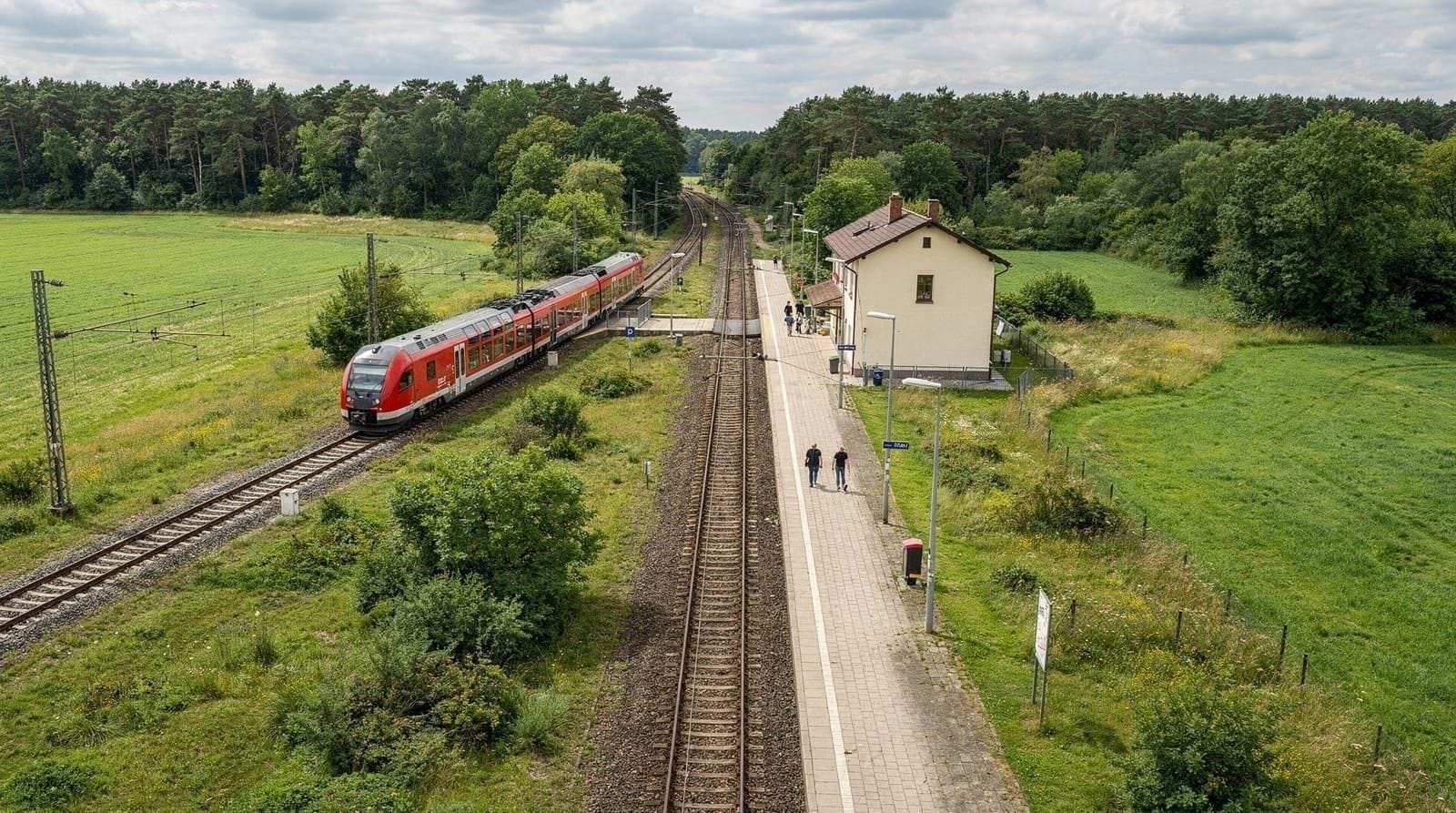
Take the RE5 from Berlin Hauptbahnhof to Fürstenberg (Havel) — approximately 1 hour 20 minutes. The Gedenkstätte Ravensbrück is then 3 km from the station, reachable by bus or on foot. Entry is free.
Quick answer: RE5 from Berlin Hauptbahnhof to Fürstenberg (Havel) — about 1 hour 20 minutes, covered by the Deutschlandticket. The Gedenkstätte Ravensbrück is 3 km from the station; local bus or 35-minute walk. Free entry. Allow 3–4 hours for the site.
Ravensbrück was the largest Nazi concentration camp built specifically for women. It operated from May 1939 until the Soviet liberation in April 1945. The memorial on its original site near Fürstenberg/Havel in Brandenburg documents what happened there — to more than 130,000 women and girls from over 40 countries, and to the men and youths held in a separate sub-camp. The estimated death toll is between 30,000 and 90,000; precise figures are impossible because the SS destroyed records as Soviet forces approached.
This guide covers how to reach the memorial from Berlin, what the site contains, and how to approach the visit.
| Where | Fürstenberg (Havel), Brandenburg, about 90km north of Berlin |
| Getting there | RE5 from Berlin Hauptbahnhof, around 1h20, then 3km bus or on foot |
| Cost | Free entry; audio guides and tours also free |
| Time needed | At least 3–4 hours |
| Note | Serious historical content; not a casual sightseeing stop |
Getting to Ravensbrück from Berlin
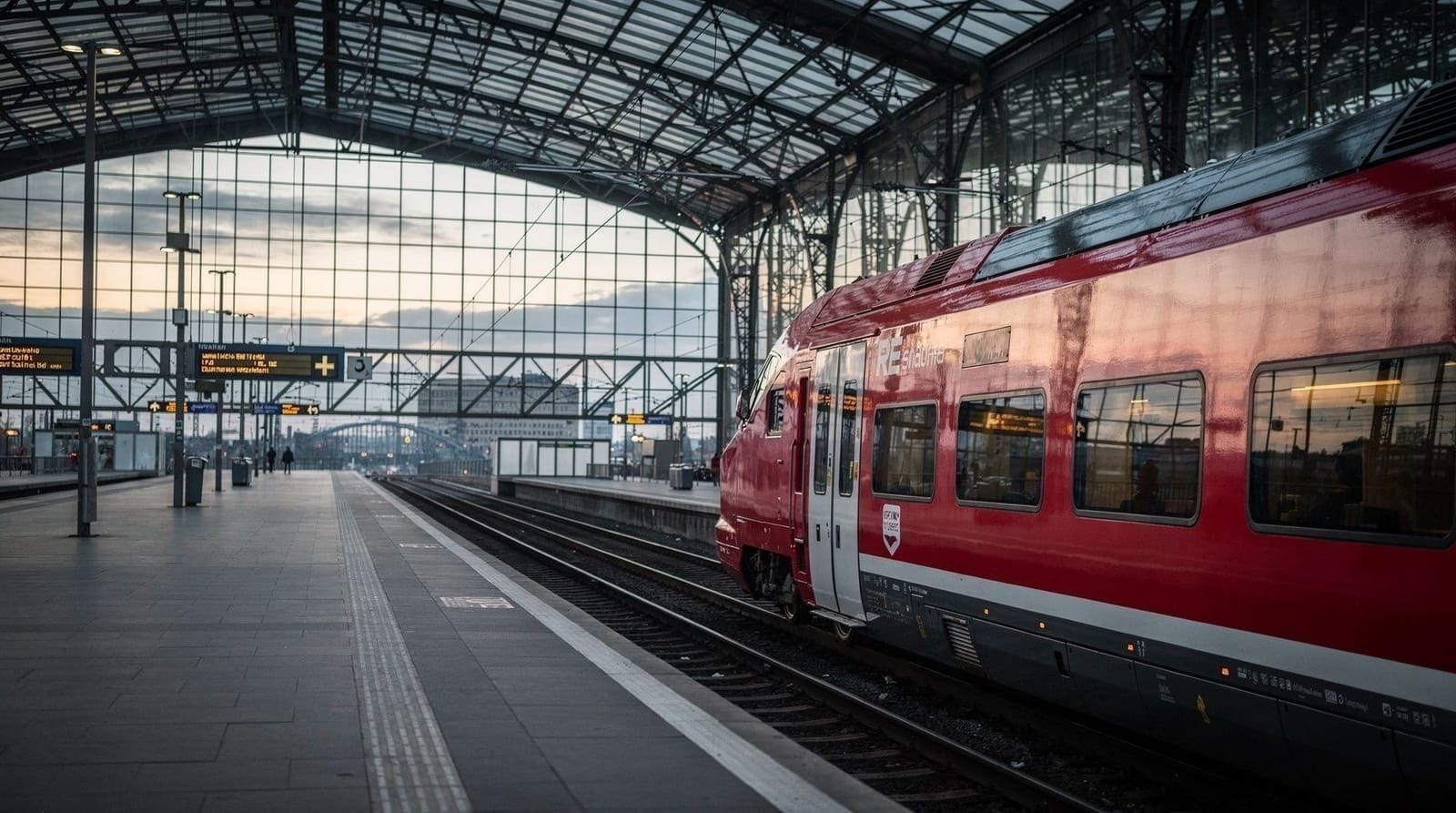
Train: The RE5 regional express departs from Berlin Hauptbahnhof (lower level platforms) in the direction of Rostock or Stralsund. Exit at Fürstenberg (Havel) — not to be confused with Fürstenwalde (Spree), which is in the opposite direction toward Frankfurt (Oder). Journey time: approximately 1 hour 15 to 1 hour 25 minutes from Hauptbahnhof. The RE5 also stops at Berlin Gesundbrunnen (a few minutes after Hauptbahnhof), which is useful if you’re coming from north or east Berlin.
Ticket: The RE5 is a regional train. The Deutschlandticket covers the full journey. A Brandenburg-Berlin-Ticket (regional day ticket) also covers the route and may be economical for groups of two or more travelling together. See the Brandenburg ticket guide for details.
Frequency: RE5 trains run approximately every 60 minutes. Check the DB Navigator app for exact times, particularly for the connection on the return journey.
From Fürstenberg station to the memorial:
The Gedenkstätte Ravensbrück is approximately 3 km from Fürstenberg (Havel) station, located on the southern edge of the town near the Schwedtsee lake.
- By bus: A local bus service runs from Fürstenberg station to the memorial at certain times. Check the schedule in advance at ravensbrueck.de or with the regional Prignitzbus network — services can be infrequent.
- On foot: The walk from the station to the memorial takes approximately 35–40 minutes on flat terrain through the town and along a signposted path. It is walkable, but note the return walk after several hours at the site. In warm weather, bring water.
- By bicycle: Bicycle rental may be available in Fürstenberg — check locally on arrival. The ride to the memorial takes about 10 minutes.
- By taxi: Taxis from Fürstenberg station can be arranged by phone; the tourist information or memorial office can advise. Cost: approximately €8–12 one way.
The history of Ravensbrück
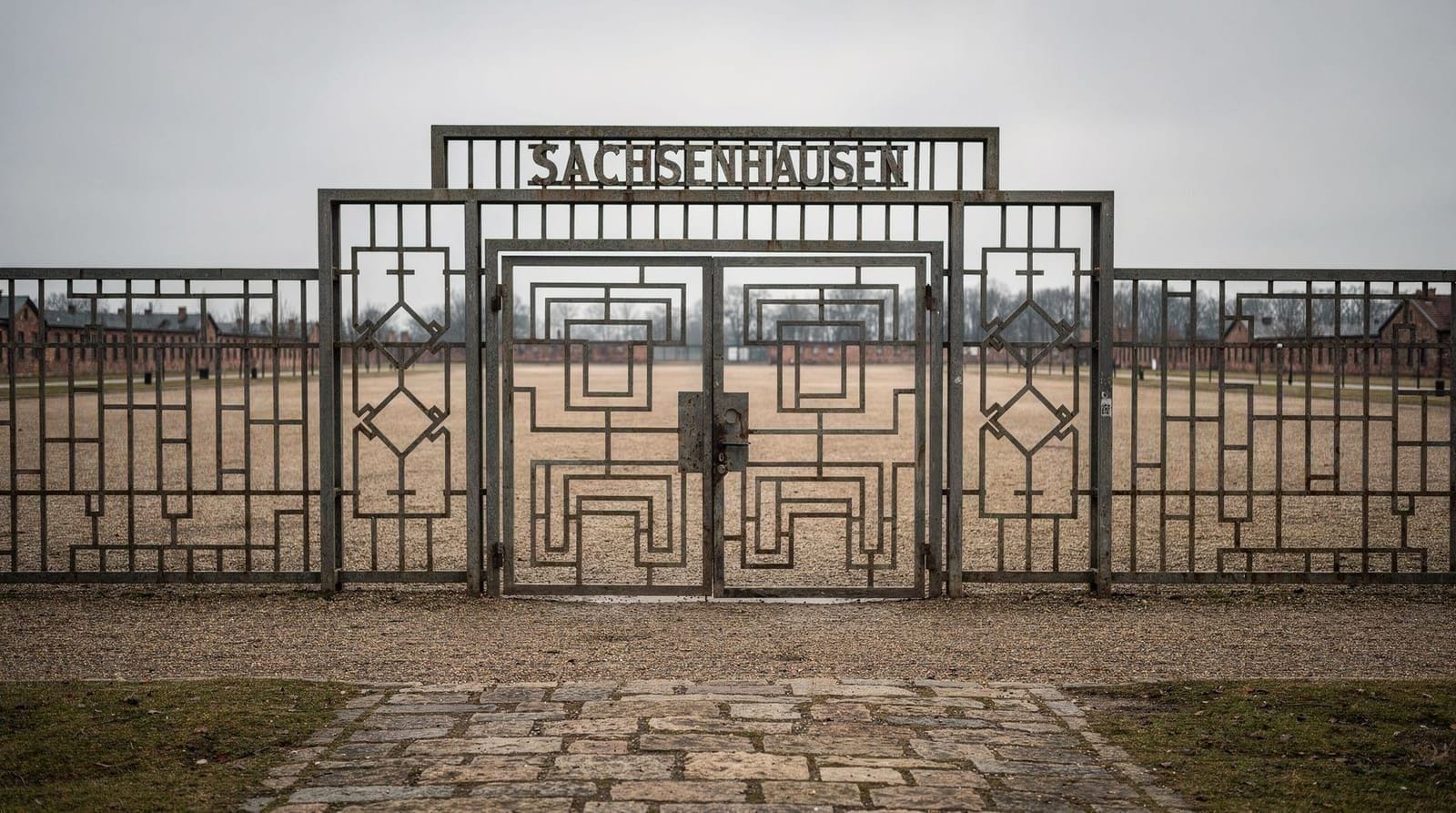
Ravensbrück was constructed by SS prisoners transferred from Sachsenhausen concentration camp beginning in late 1938. It opened in May 1939, purpose-built as a camp for women. Its location was chosen deliberately — 90 km north of Berlin, near an existing SS training camp, and on a lake shore that provided some geographic isolation.
Who was imprisoned there: Women from across occupied Europe — Polish women formed the largest national group, followed by Soviet, Jewish, and German political prisoners. The prisoner population also included women categorised by the Nazis as “asocial” (a category encompassing Sinti and Roma women, sex workers, homeless women, and others targeted outside the regime’s racial hierarchy), Jehovah’s Witnesses who refused to sign loyalty oaths, and women from resistance movements in occupied Western Europe. A men’s sub-camp was added in 1941; a youth camp for girls was established separately.
What happened there: In the early years, prisoners were used for forced labour — sewing SS uniforms, weaving, construction. From 1942, prisoners were assigned to armaments factories and other war production. Forced labour under brutal conditions, starvation, and disease were responsible for most deaths in the first years.
From 1942 to 1943, Dr. Karl Gebhardt and other SS physicians conducted medical experiments on Polish prisoners — so-called “Sulfonamide experiments” involving deliberate infection of wounds to test antibiotic treatments, and bone transplantation operations without consent. The women subjected to these experiments were known among prisoners as “Kaninchen” (rabbits). Testimony from surviving “rabbits” was crucial evidence at the Nuremberg Doctors’ Trial.
In late 1944 and early 1945, as the military situation worsened, a small gas chamber was constructed and used. Estimates of how many people were killed in the gas chamber range widely due to the destruction of records.
In April 1945, the Swedish Red Cross, through Count Folke Bernadotte, negotiated the transfer of Scandinavian prisoners to Sweden — around 7,500 people were transported to safety in Swedish Red Cross buses before liberation. Soviet forces liberated the camp on 30 April 1945; by then most prisoners had been forced on death marches westward.
What the Gedenkstätte Ravensbrück contains
The memorial site occupies the original camp grounds. It is administered by the Brandenburgische Gedenkstätten Foundation, the same organisation that oversees the Sachsenhausen Memorial.
Documentation centre (Dokumentationszentrum): The permanent exhibition covers the history of the camp in chronological and thematic sequence — from the establishment of the camp through the expansion of prisoner categories, the introduction of forced labour and medical experiments, the escalation to mass killing in 1944–45, and the postwar history of the site. The exhibition is in German with English translations available; audio guides in English are available.
The exhibition uses documents, survivor testimony (in recorded and transcribed form), photographs, and objects from the camp and its administration. The presentation is factual, careful, and attentive to the individuality of victims — a quality of historical documentation that distinguishes the better German memorial exhibitions.
The outdoor site: The original camp terrain is walkable. Key features include:
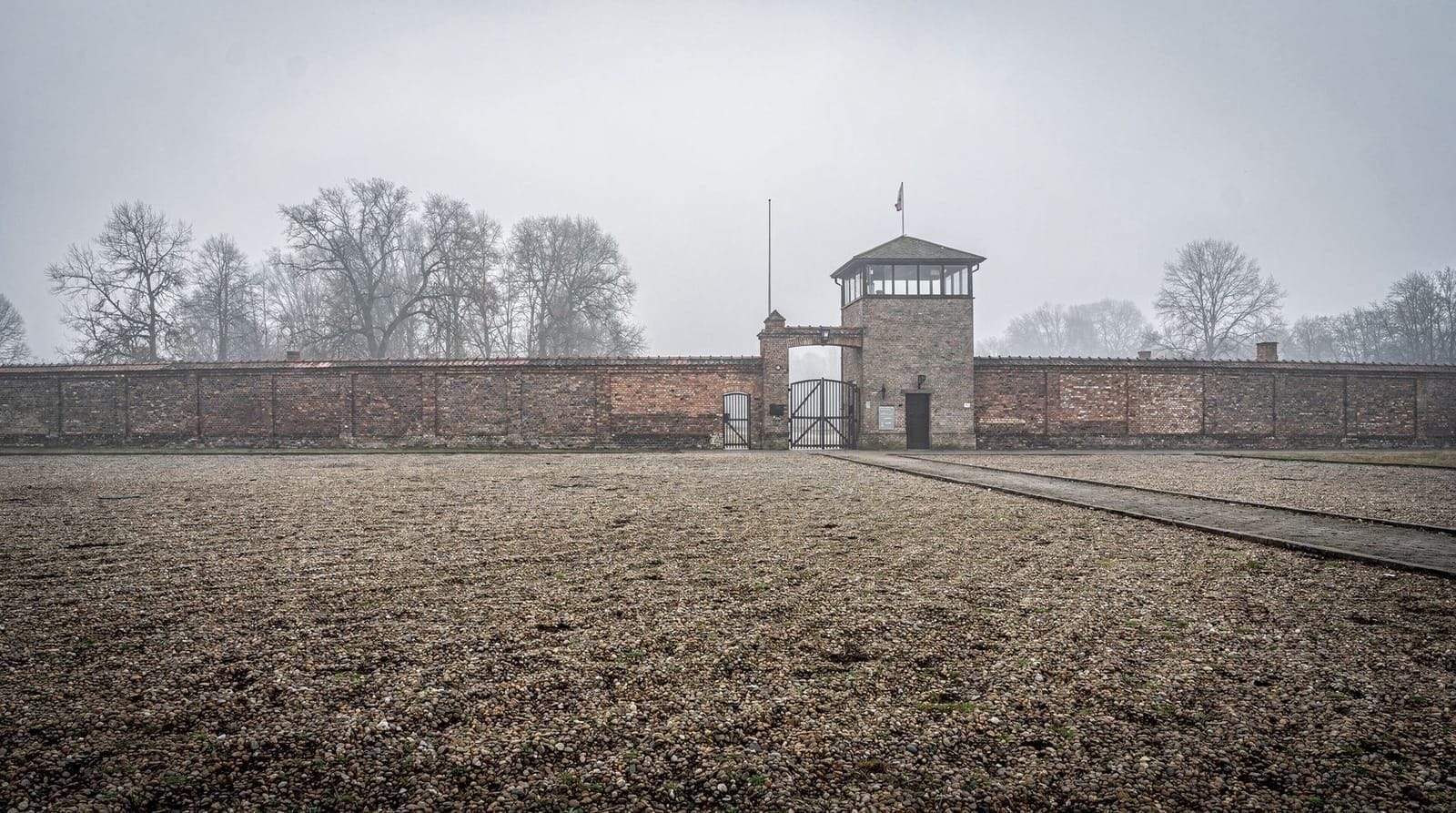
- The Lagerstrasse (main camp road): the central axis around which the prisoner barracks were arranged. Foundations and markers indicate the positions of barracks that were demolished or destroyed.
- The Küchengebäude (kitchen building): one of the more intact surviving structures from the camp period.
- The SS administrative buildings: located at the camp perimeter, some now used as the memorial’s administrative offices.
- The Crematorium: the original crematorium building survives. It is one of the most difficult parts of the site to encounter.
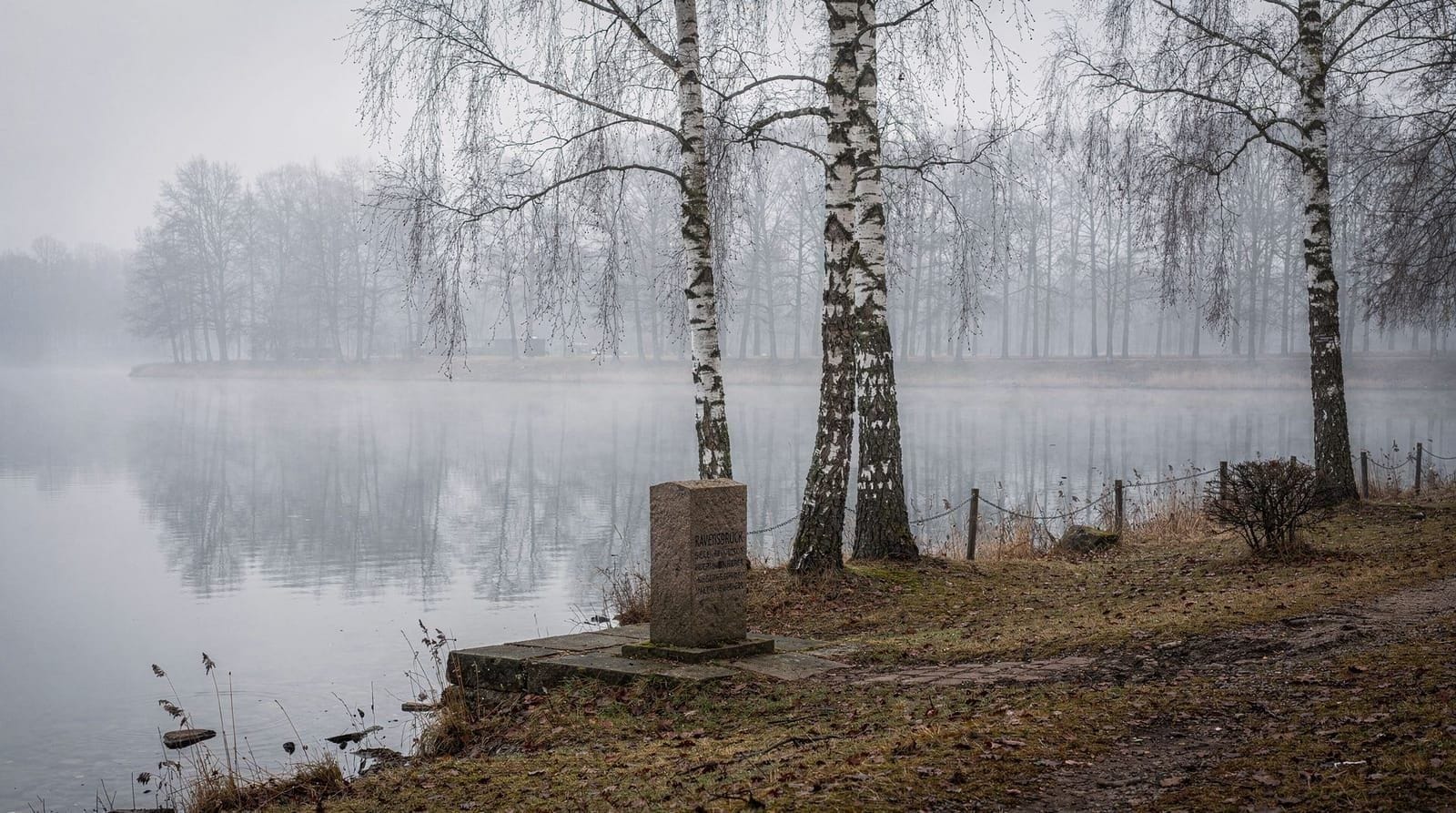
- The Schwedtsee memorial shore: The lake adjacent to the camp was used to dispose of prisoner remains — ashes were dumped in the lake. A memorial on the shore, including Wilfried Fitzenreiter’s bronze sculpture “The Mother” (Die Mutter), marks the site. This outdoor memorial has become the symbolic centre of the site.
National memorials: Multiple countries erected national memorial markers on the site — France, Poland, and others. These reflect the international character of the prisoner community and the long history of engagement with the memorial by survivor communities and their governments.
The Siemens camp: A short distance from the main site, a sub-camp ran forced labour for the Siemens company, which manufactured electrical components using prisoner labour. This is documented in the exhibition.
Approaching the visit
A visit to the Ravensbrück memorial is not recreational in any usual sense. It is an encounter with historical evidence of state-organised violence, and the appropriate frame for the visit is one of attention and seriousness.
Practical preparation:
- Read the basic history before you go. Even a brief background on the camp’s history (the documentation on ravensbrueck.de is a good starting point) makes the exhibition more comprehensible and the visit more meaningful.
- Bring water and wear comfortable walking shoes — the outdoor site involves significant walking on uneven ground.
- Photography is permitted in most areas; in some spaces near the crematorium and the documentation of experiments, restraint is appropriate.
- Allow 3–4 hours minimum. Rushing a visit to a site of this kind does both the history and yourself a disservice.
Guided tours: The memorial offers scheduled guided tours in German and English. If you can arrange your visit around a guided tour departure, the context provided by a trained guide adds substantially to understanding. Group tours can also be booked in advance for schools, organisations, and private groups.
The emotional character of the visit: Accounts from previous visitors note that the site — particularly the lake shore memorial and the crematorium — can be unexpectedly affecting even for those who approach it as a historical exercise. This is normal and appropriate.
Practical logistics for the day: There is a small cafe near the visitor entrance, but food options in Fürstenberg itself are limited, so bringing something to eat is sensible if you plan to spend the full afternoon on site. Public toilets are available at the documentation centre. If travelling in winter, note that the outdoor site has minimal shelter and the walk from the station is exposed, so dress for the weather accordingly.
The Ravensbrück memorial in context
Ravensbrück is less visited than Sachsenhausen, which is closer to Berlin (reachable in 30 minutes from Gesundbrunnen). The relative distance from Berlin has historically meant fewer school trips and casual visitors. This has some benefits: the site is quieter and the visit more reflective. It also means that Ravensbrück remains less known than it should be given its significance as a site of deliberate gendered violence at scale.
The memorial connects to other sites in the broader Brandenburg-Berlin landscape of Nazi-era documentation:
- Sachsenhausen Memorial in Oranienburg — the main SS concentration camp north of Berlin, 30 minutes by train
- Topography of Terror in Berlin — the former Gestapo and SS headquarters, central Berlin
- Wannsee Conference Memorial — the site of the 1942 conference at which the final solution was formalised
For a comparative sense of how Ravensbrück relates to other day trips from Berlin, see the day trips by train from Berlin guide.
Deciding whether to visit Sachsenhausen or Ravensbrück first
If you have time for only one Nazi-era memorial site outside Berlin on this trip, Sachsenhausen is the more commonly visited choice — closer to Berlin, larger in scale, and the site most Berlin guidebooks lead with. Ravensbrück is the better choice if you specifically want to engage with the history of gendered persecution and the experience of women prisoners, a dimension of Nazi history that receives less general attention. Visiting both on the same trip, as separate days, is entirely reasonable if your schedule allows it; attempting both in a single day is not recommended given the seriousness each site deserves.
Frequently asked questions about Ravensbrück memorial from Berlin
How long is the train from Berlin to Ravensbrück?
The RE5 regional express from Berlin Hauptbahnhof takes approximately 1 hour 15 to 1 hour 25 minutes to Fürstenberg (Havel). From Fürstenberg station, the Gedenkstätte Ravensbrück is approximately 3 km — accessible by local bus or on a 35-40 minute walk.Is the Ravensbrück memorial free to enter?
Yes. Entry to the Gedenkstätte Ravensbrück is free. Audio guides, guided tours, and the documentation centre all have no admission charge. Donations are accepted and supported by the memorial foundation.What was Ravensbrück?
Ravensbrück was the largest Nazi concentration camp specifically for women, operational from 1939 to 1945. At its peak, it held over 45,000 prisoners from more than 40 countries. The camp was used for forced labour, medical experiments, and systematic murder. A gas chamber was constructed in late 1944. An estimated 30,000–90,000 people died there; exact figures remain contested due to destroyed documentation.What is at the Ravensbrück memorial today?
The Gedenkstätte Ravensbrück occupies the original camp site on the shore of the Schwedtsee lake near Fürstenberg/Havel. It includes a documentation centre with permanent exhibitions, the surviving Lagerstrasse (main camp road), reconstructed and original buildings, the crematorium, the Schwedtsee memorial site where ashes were scattered, and national memorials erected by multiple countries whose citizens were imprisoned there.How much time should I allow for the Ravensbrück memorial?
Allow at least 3–4 hours for a thorough visit covering the documentation centre exhibitions and the outdoor site. A shorter 1.5–2 hour visit is possible but does not do justice to the material. The documentation centre's permanent exhibition alone warrants 90 minutes.Are there guided tours of Ravensbrück available?
Guided tours in German and English are offered at set times — check the current schedule at ravensbrueck.de before visiting. Guided tours typically last 90 minutes to 2 hours and cover both the documentation centre and the outdoor site. Group tours can be arranged in advance; individual visitor tours depart at scheduled times and are included in the free entry.Is the Ravensbrück memorial suitable for children?
The site addresses extreme historical violence, medical experiments on prisoners, and mass death. The exhibition presents this material seriously and without sensationalism. Parents should make informed decisions based on their child's age and maturity. The memorial documentation centre provides age-appropriate materials for school groups who visit; many German secondary school classes attend as part of history curriculum.What is the connection between Ravensbrück and Berlin?
Ravensbrück was one of several major Nazi concentration camps within the territory that later became the German Democratic Republic. Many of its prisoners were sent from Berlin — Jewish women, political prisoners, Sinti and Roma women, and others. The camp was administered from central Nazi authority structures based in Berlin. The site is part of the broader landscape of memorial sites in Brandenburg connected to the Nazi period.