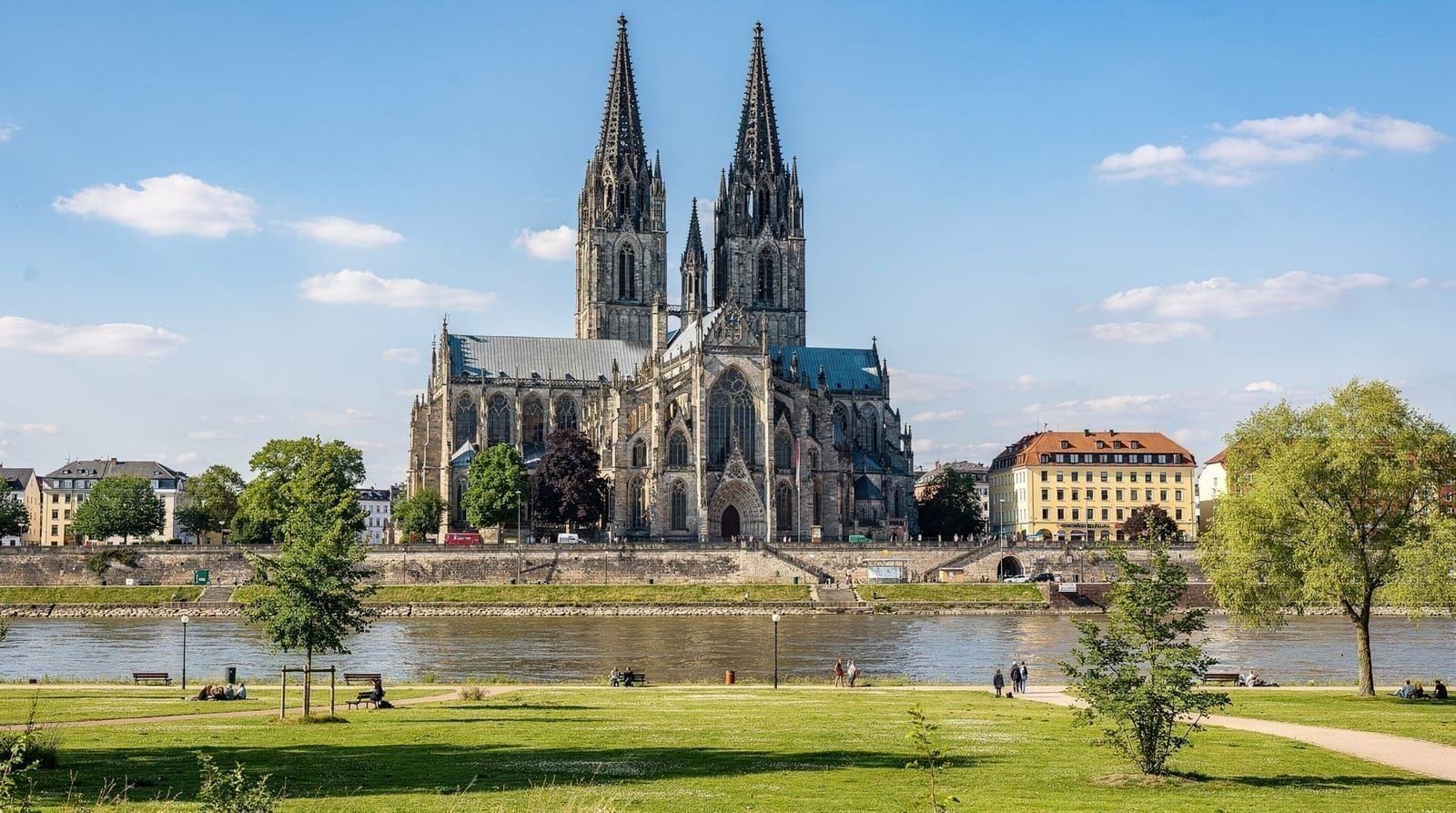
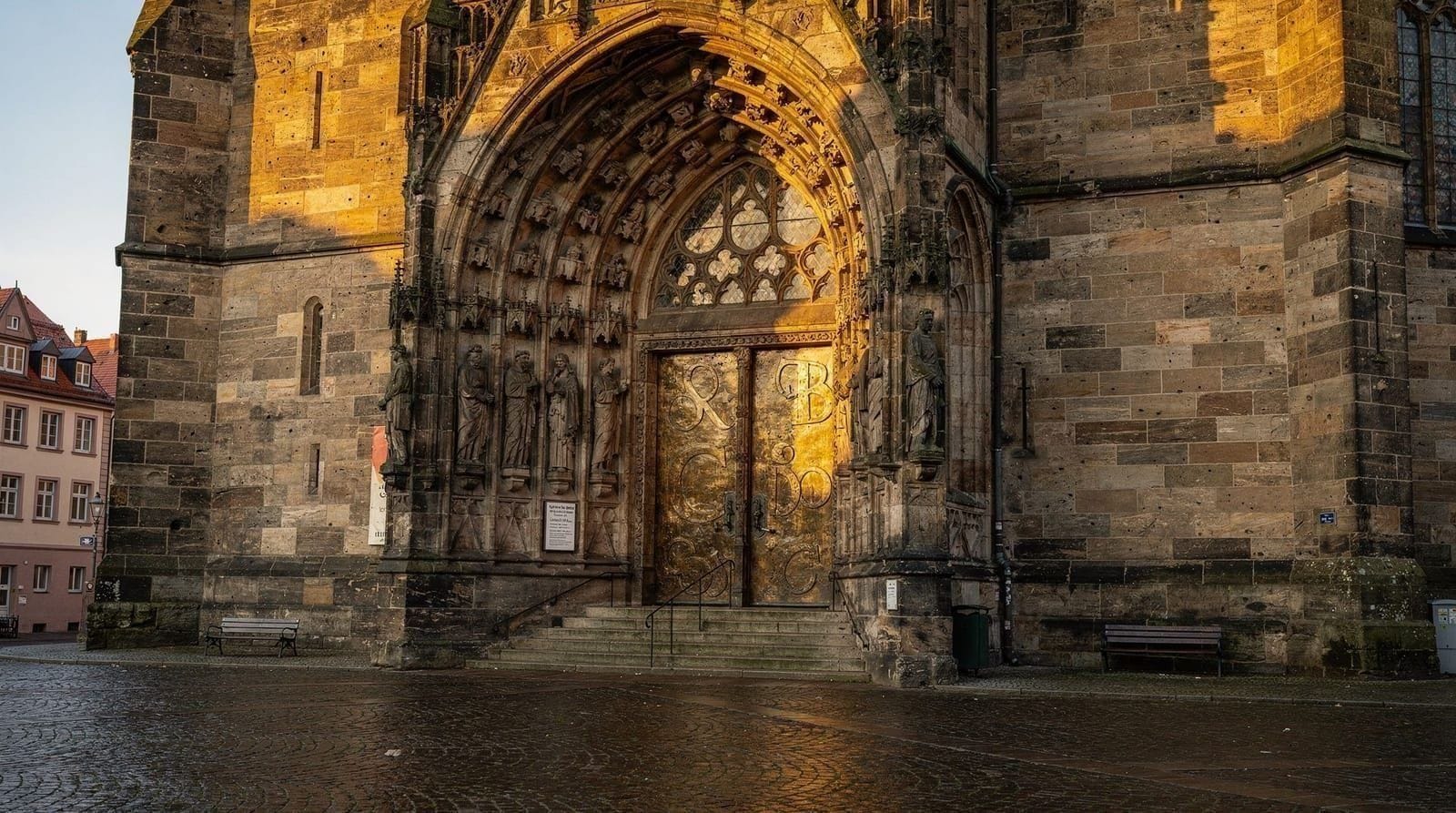
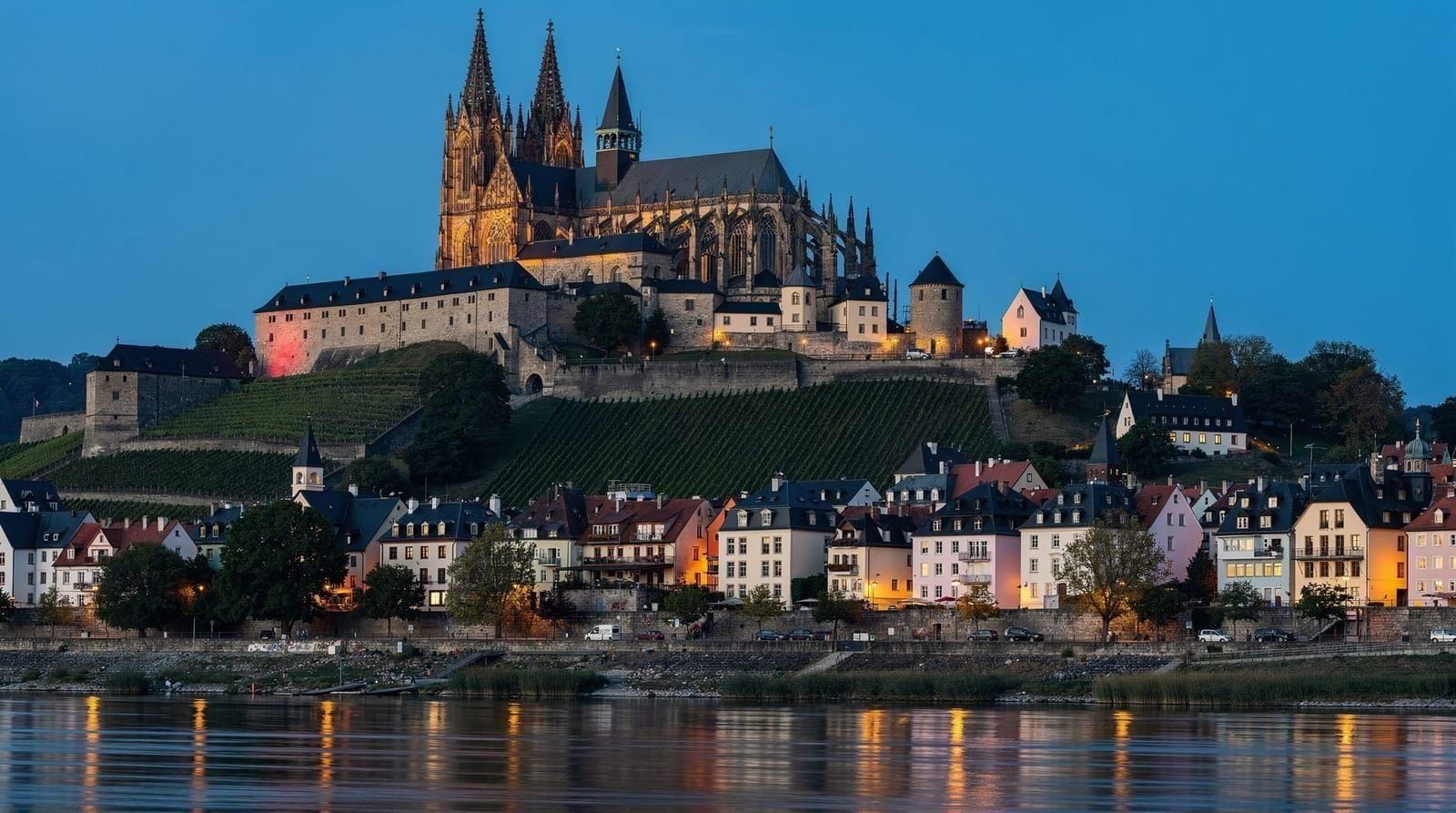
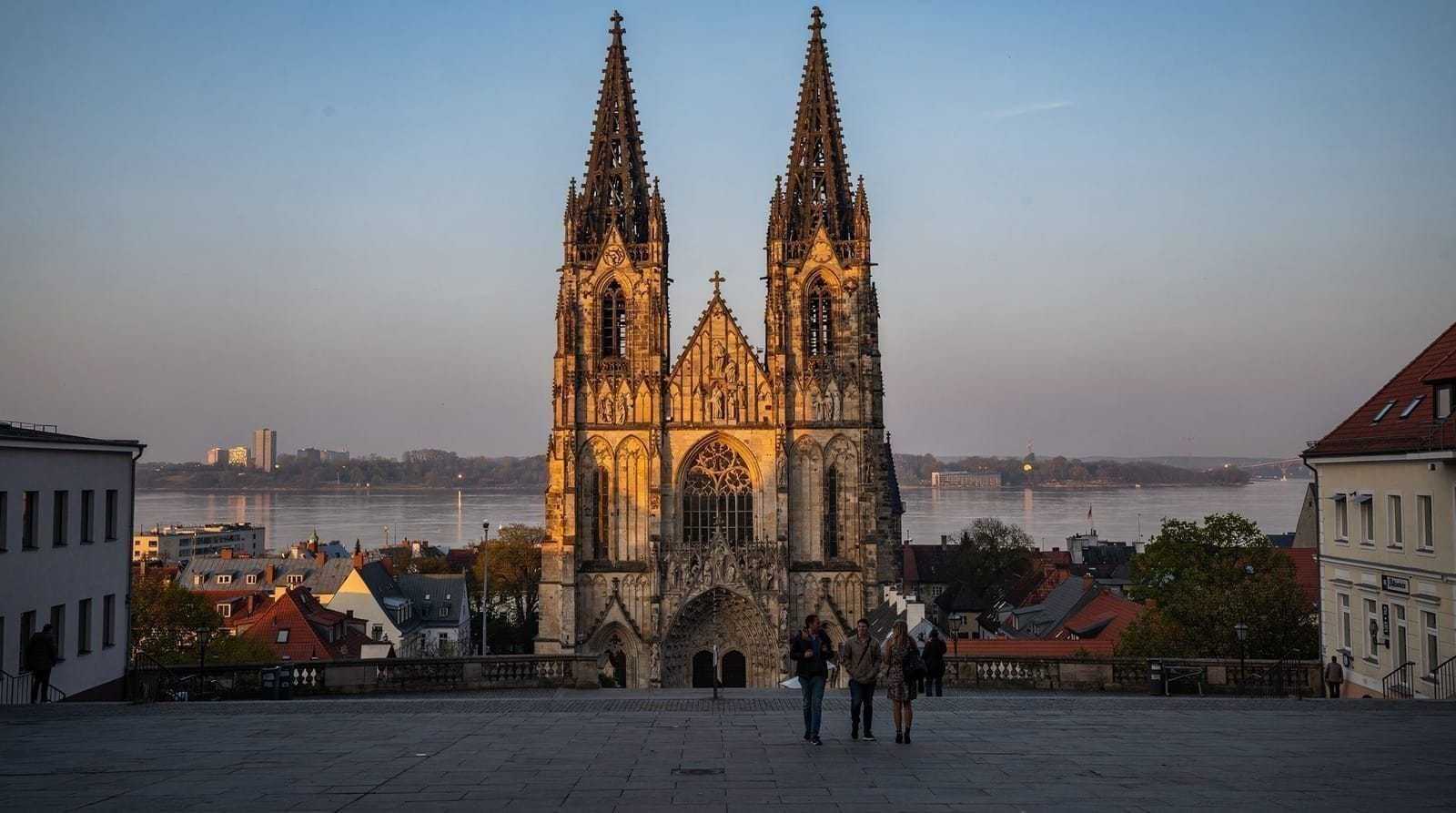
Quedlinburg — Germany's finest medieval town
Over 1,300 half-timbered houses, an 11th-century Romanesque cathedral, and the cradle of German royal history — Quedlinburg repays every hour of the journey.
Quick facts
- Distance from Berlin
- ~180 km south-west of Berlin
- Train
- ICE to Halberstadt or Magdeburg, then regional train (~2.5h total, €35–55 return)
- Admission
- Collegiate Church & crypt €5; Castle Hill grounds free
- Season
- Year-round — Christmas market especially atmospheric
- Highlights
- UNESCO Collegiate Church, 1,300+ half-timbered houses, Ottonian history
There are towns in Germany that have been described as “well-preserved,” and then there is Quedlinburg — a place that stops that description dead in its tracks and replaces it with something closer to astonishment. Walking into the old town from the station, you are met within five minutes by street after street of half-timbered houses spanning seven centuries, leaning gently toward each other across cobblestones that have never been straightened or sanitised for effect. UNESCO recognised all of this in 1994. The German government had recognised it as a national monument long before that. And yet Quedlinburg, tucked into the northern edge of the Harz mountains in Saxony-Anhalt, remains genuinely off the radar for most international visitors — which is, depending on your temperament, either a puzzle or a gift.
| Where | Saxony-Anhalt, ~180 km south-west of Berlin, northern edge of the Harz |
| Getting there | ICE to Magdeburg/Halberstadt + regional train, ~2.5h total |
| Cost | Collegiate Church & crypt €5; Feininger Gallery €7; old town free |
| Time needed | 1 day; overnight worthwhile to see the town at dusk |
| Best time | April–October for light and hours; December for the Christmas market |
A town that shaped a nation
The story begins in the 10th century, when the Ottonian dynasty — the first royal house to rule a unified German kingdom — chose the hill above the River Bode as the seat of their power. Heinrich I, first king of the East Franks and considered the founding figure of medieval Germany, established a royal estate here around 919 CE. When he died in 936, he was buried in a church on the hill. His wife, Queen Mathilde, founded the Collegiate Church of St Servatius above his tomb — one of the most important acts of ecclesiastical patronage in early German history.
What stands on Castle Hill (Schlossberg) today is largely the church Mathilde and her successors built and rebuilt over the following two centuries. The present Stiftskirche dates primarily from the 11th century: a pure, austere Romanesque basilica with twin towers, a nave of severe beauty, and a crypt that contains the stone sarcophagi of Heinrich I and Mathilde themselves. Standing in that crypt — cool, dimly lit, entirely quiet — in front of tombs that are over a thousand years old is a genuinely different order of experience from most historical tourism. These are not replicas. This is the original stone.
The church complex also holds a treasury (Domschatz) of extraordinary medieval objects: reliquaries, gospel covers in ivory, embroidered vestments, and the famous Servatius portable altar, all displayed in simple vitrines that let the objects speak without theatrical presentation. Entry to the church and crypt costs around €5; the treasury is included. Allow at least ninety minutes to do it properly.
The half-timbered town below
The hill is one half of Quedlinburg. The other half is the town that spreads across the valley floor, and it is here that the UNESCO designation earns its keep. Quedlinburg has more than 1,300 half-timbered buildings in an almost unbroken state of preservation, spanning examples from the 14th century through to the 18th. The styles shift as you walk: late medieval frames with close-set vertical timbers give way to Renaissance examples with carved corner posts, then to the more decorative Baroque half-timbering of the 17th and 18th centuries.
The Wordgasse, Kornmarkt, Schuhof, and Finkenherd are among the most photographed lanes, but the pleasure of Quedlinburg is precisely that you do not need a map to find beautiful architecture — it is everywhere, including in the back streets that no walking tour visits. The town escaped significant bombing in World War II, and unlike many East German towns, it avoided the post-war demolition campaigns that flattened swaths of other historic centres. What you see is not a reconstruction. It is the thing itself.
A word of caution: the cobblestones are uneven and the lanes are hilly in places. Comfortable walking shoes matter here.
The Lyonel Feininger Gallery
This is the surprise that wrong-foots visitors who expected only medieval history. The Lyonel Feininger Gallery (Lyonel-Feininger-Galerie) houses one of the most important collections of work by the American-German Bauhaus master anywhere in the world. Feininger, who was born in New York in 1871 and became a central figure at the Weimar Bauhaus, had a deep personal connection to Quedlinburg — his grandparents were from the town, and he visited repeatedly throughout his life. The collection comprises paintings, watercolours, and graphic works spanning his career from Expressionist beginnings to the crystalline geometric compositions for which he is best known.
The gallery occupies a handsome 19th-century building near the market square. Admission is around €7. It is rarely crowded, which means you can stand in front of major works for as long as you want — a luxury that the great German art museums rarely afford. If you have any interest in 20th-century painting, this is reason enough to make the trip.
The Klopstock Museum and literary heritage
Quedlinburg was also the birthplace of Friedrich Gottlieb Klopstock (1724–1803), whose epic poem Der Messias (The Messiah) was the first great work of German literary classicism and influenced Goethe, Schiller, and virtually every German poet who came after him. The Klopstock Museum in his birth house on the Schlossberg approach is small and scholarly — more interesting if you read German, but the building itself, and the story of a small-town boy becoming the most celebrated German poet of his age, carries weight even without language.
Münzenberg: the quieter second hill
Castle Hill draws the crowds, but Quedlinburg has a second hill worth the climb. Münzenberg, on the western edge of the old town, was the site of a Benedictine convent founded in 986 — older than the Stiftskirche itself — of which only ruins remain today: fragments of the convent church walls rising from a hillside now covered in small, densely packed half-timbered houses built directly into and around the medieval ruins from the 17th century onward. The effect is unusual — a settlement literally growing out of monastic rubble — and the streets here (Münzenbergstraße, Bockstraße) are steep, narrow, and almost entirely free of other visitors even at midday in summer.
The Münzenberg convent’s history is itself notable: it was one of several religious houses connected to the ruling Ottonian dynasty and, unusually for the period, aligned politically against the Stiftskirche’s abbess during disputes in the medieval period — a rare recorded instance of institutional rivalry between two religious houses in the same small town. The hilltop viewpoint at the top gives one of the best photographs of the Stiftskirche’s twin towers across the rooftops, and it is a natural counterpoint to the more visited Schlossberg. Allow 30–45 minutes.
The Selketalbahn: steam trains into the Harz
Quedlinburg is also a gateway to one of Germany’s most celebrated narrow-gauge railway networks. The Selketalbahn, part of the Harzer Schmalspurbahnen network, is a historic steam railway running from Quedlinburg’s own dedicated narrow-gauge station south into the Harz mountains, through forested valleys to towns including Gernrode and Alexisbad. Trains are genuine working steam locomotives, some dating from the early 20th century, and the line remains in daily service rather than functioning as a museum piece.
For visitors with a full day or an overnight stay, a return trip on the Selketalbahn to Gernrode — home to another important Ottonian-era church, the Stiftskirche St. Cyriakus, one of the best-preserved Romanesque buildings in Germany — makes an excellent half-day extension. Fares run approximately €15–20 return depending on distance; timetables are seasonal and less frequent in winter, so check harzer-schmalspurbahnen.de before planning around it. This is not practical to combine with a single-day trip from Berlin given the already substantial travel time, but it is one of the strongest reasons to consider the overnight version of a Quedlinburg visit.
Getting there from Berlin
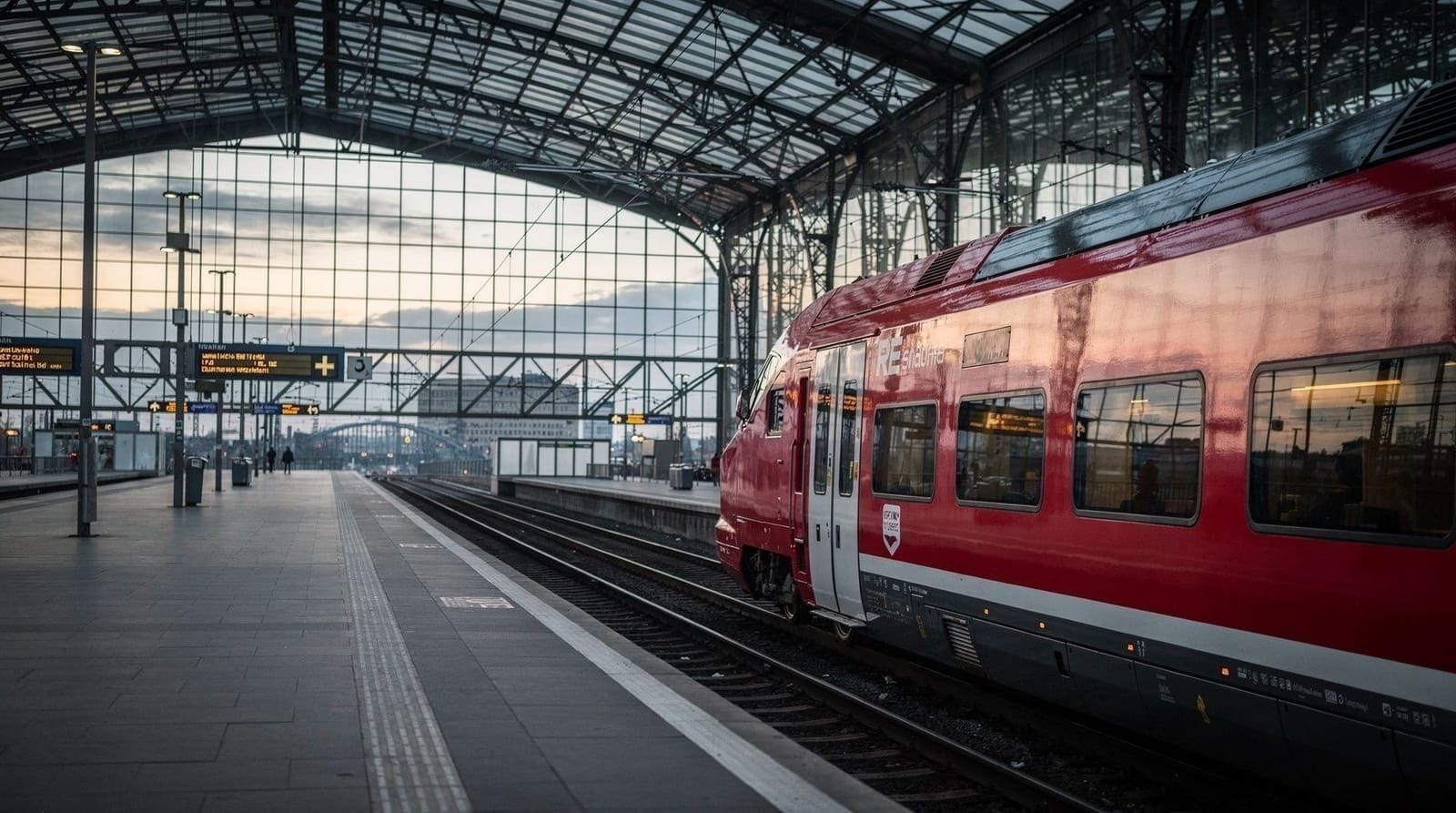
The logistics require a little patience but nothing complicated. From Berlin Hauptbahnhof or Berlin Südkreuz, take an ICE or IC toward Magdeburg or Halle. From Magdeburg, change to a regional train toward Halberstadt (around 40 minutes), then a final short hop to Quedlinburg (around 15 minutes). Total journey time from central Berlin is approximately 2.5 hours, sometimes slightly less with good connections.
The return fare runs €35–55 depending on when you book and what offer prices are available on the DB Navigator app. The Saxony-Anhalt Day Ticket (Sachsen-Anhalt-Ticket) covers unlimited regional travel within the state for €25–29 and is valid from 09:00 on weekdays; if you are travelling from the Brandenburg border, you will still need a separate ticket for the Berlin-Magdeburg leg or a broader Deutschland ticket (€49/month as a subscription).
A direct ICE Berlin–Halberstadt occasionally appears in the timetable; check DB Navigator, as it shortens the trip considerably.
For context on train-based day trips generally, the day trips by train from Berlin guide covers ticketing options in detail, and the Brandenburg ticket guide explains when a regional ticket saves money.
Combining Quedlinburg with Magdeburg
Because Quedlinburg lies on the route between Berlin and Halberstadt, it pairs naturally with Magdeburg — a city with its own formidable Romanesque and Ottonian heritage, including Germany’s first Gothic cathedral. The Berlin to Magdeburg day trip guide outlines how to structure a combined itinerary. Stopping in Magdeburg on the outward journey and continuing to Quedlinburg after lunch is a practical arrangement that requires only one change rather than backtracking.
Lutherstadt Wittenberg — the town of Martin Luther, also on the Berlin–Halle axis — is another possibility if you want a themed day covering different chapters of German history, though combining all three in a single day is ambitious.
What to eat and drink
Quedlinburg is not a culinary destination in the way that Leipzig or Dresden are, but it feeds visitors honestly. The Marktplatz has several traditional Gaststätten serving Harz-region food: roast venison, wild boar, trout from mountain streams, and the local speciality of Harzer Käse — a pungent, low-fat curd cheese eaten with caraway and onion that polarises opinion. It is an acquired taste worth acquiring.
The Café am Markt and several bakeries around the Kornmarkt serve good coffee and regional pastries. Quedlinburg has a small but quality producer of locally brewed beer; ask in any Gaststätte for the regional draught. For a more leisurely lunch, the restaurant inside the Hotel am Brühl offers a reliable menu in a courtyard setting that catches the afternoon sun.
Practical planning tips
- Start with the Schlossberg: visit the Collegiate Church and crypt first, in the morning, when light comes through the nave windows horizontally. The crowds — such as they are — arrive later.
- Allow time to get lost: the half-timbered streets reward aimless wandering more than any structured tour. Give yourself at least two hours with no agenda.
- Photography: overcast light works beautifully here — the timber framing shows up crisply without harsh shadows. Midday sun in summer bleaches the detail.
- Christmas market: Quedlinburg’s Advent market, held on the Marktplatz in late November and early December, is one of the least commercialised in central Germany. It is worth the trip specifically.
- Luggage storage: there is no left-luggage facility at Quedlinburg station. Travel light, or use a locker at Magdeburg Hauptbahnhof if combining with that city.
- Accommodation: if staying overnight, book early in summer. The town has a limited number of guesthouses and small hotels, most in historic buildings, from around €70–90/night.
Day trip vs overnight
As a day trip from Berlin, the 2.5-hour journey each way means you want to leave early — first trains from Berlin allow arrival in Quedlinburg by around 10:00. A focused day (Collegiate Church, Feininger Gallery, lunch, half-timbered lanes, late afternoon train) is genuinely satisfying and not rushed.
An overnight stay, however, transforms the experience. Quedlinburg after the day-trippers have gone — typically by 17:00 — becomes something approaching a medieval film set. The lamp-lit streets, the near-silence, and the chance to return to the crypt when the church reopens for early morning services the next day are genuine rewards. If your trip to Berlin allows a free evening, this is one of the more unusual places to spend it within a 3-hour radius.
For broader planning context, the best day trips from Berlin guide places Quedlinburg in the full landscape of options, and the Berlin trip planning guide covers how to structure longer stays with regional excursions built in.
Frequently asked questions about Quedlinburg
How far is Quedlinburg from Berlin, and how long does the train take?
Quedlinburg is approximately 180 km south-west of Berlin. The train journey — typically involving an ICE or IC to Magdeburg or Halberstadt, then a regional connection — takes around 2.5 hours. Check DB Navigator for the fastest current routing, as connections vary.
Is Quedlinburg worth the journey from Berlin?
For anyone interested in medieval history, Romanesque architecture, or simply one of the best-preserved historic town centres in Germany, yes — unambiguously. The UNESCO designation is deserved. The Feininger Gallery adds a second, completely different dimension that makes the trip valuable even for visitors without a specific interest in the Middle Ages.
What is the Collegiate Church of St Servatius and why is it significant?
The Stiftskirche is an 11th-century Romanesque collegiate church built on the orders of the Ottonian royal family on Castle Hill. Its crypt contains the original tombs of Heinrich I (first king of the Germans) and his wife Queen Mathilde. The church treasury holds exceptional medieval objects. It is one of the most important Romanesque buildings in Germany and a UNESCO World Heritage site since 1994.
How much does it cost to visit Quedlinburg?
Entry to the Collegiate Church including the crypt and treasury is around €5. The Feininger Gallery charges approximately €7. The half-timbered streets and Castle Hill grounds are free. A full day including admission, lunch, and coffee is comfortably managed for €30–40 per person excluding transport.
Can I combine Quedlinburg with Magdeburg in one day?
Yes, with an early start. Leave Berlin by 07:30, stop in Magdeburg for 2–3 hours (the cathedral and riverside), then continue to Quedlinburg for the afternoon, returning to Berlin in the early evening. It makes for a long day but is logistically straightforward. The Berlin to Magdeburg day trip guide covers the Magdeburg portion in detail.
Is Quedlinburg accessible for visitors with reduced mobility?
Partially. The Collegiate Church on Castle Hill involves a steep approach — there is a path but it is cobbled. The lower town streets are also cobbled and uneven in places. The Feininger Gallery and most indoor attractions are accessible once you are inside. Contact Quedlinburg tourist information in advance if specific access needs apply.
When is the best time to visit Quedlinburg?
Late spring (May–June) and early autumn (September–October) offer the best light for photography and comfortable walking temperatures. The Christmas Advent market in late November and early December is a highlight. July and August are busier but still far less crowded than comparable medieval towns in Bavaria or the Rhine valley.
Is there a Brandenburg or Saxony-Anhalt regional ticket that covers the journey?
The Sachsen-Anhalt-Ticket (€25–29 for one person) covers regional trains within Saxony-Anhalt, which includes the Magdeburg–Halberstadt–Quedlinburg leg. You will need a separate ticket for the Berlin–Magdeburg portion unless you hold a Deutschland-Ticket (€49/month subscription). The Brandenburg ticket guide explains Brandenburg-specific options; note it does not extend into Saxony-Anhalt.
What is the Münzenberg and is it worth visiting alongside Castle Hill?
The Münzenberg is Quedlinburg’s quieter second hill, home to the ruins of a 10th-century Benedictine convent now surrounded by half-timbered houses built into the medieval remains. It’s a 30–45 minute add-on that most day-trippers skip in favour of Castle Hill, and it offers the best photograph of the Stiftskirche’s twin towers across the rooftops.
Can I ride a steam train from Quedlinburg?
Yes — the Selketalbahn, part of the historic Harzer Schmalspurbahnen narrow-gauge network, runs from Quedlinburg’s own station into the Harz mountains, including to Gernrode and its notable Romanesque church. It’s a worthwhile half-day extension for an overnight visit, though not practical to add to a single-day trip from Berlin given the travel time already involved.