Cottbus — Sorbian culture, Pückler's park, and the new Lusatian lakes
An hour from Berlin: Cottbus pairs a masterpiece landscape garden and living Sorbian culture with a coal region becoming a new lakeland.
Quick facts
- Distance from Berlin
- ~120 km south-east of Berlin
- Train
- RE2 from Berlin Ostbahnhof — direct, ~1h10, €15–25 return
- Admission
- Branitz Park gardens free; palace museum €8; State Museum €5
- Weekend ticket
- Brandenburg Ticket or Schönes-Wochenende valid
- Highlights
- Branitz Park pyramid tomb, Sorbian culture, Lausitzer Seenland
Most visitors who board the RE2 at Berlin Ostbahnhof are heading for the Spreewald. A smaller number stay on to the end of the line at Cottbus — and those who do find a city that repays the extra thirty minutes in ways that are not easy to predict. Cottbus is a place of genuine cultural layers: a Slavic minority with its own language and traditions that pre-dates the German state; a landscape garden created by one of the most eccentric and visionary figures of 19th-century European horticulture; and, spreading across the peat-brown countryside south and east of the city, the most ambitious post-industrial landscape transformation in modern German history. This is not a polished tourist destination. It is a real city with a complicated past that is doing something interesting with its future.
| Where | ~120 km south-east of Berlin, on the RE2 line |
| Cost | Branitz Park grounds free; palace museum around €8; State Museum around €5 |
| Time needed | 1 day; overnight if adding the Lausitzer Seenland |
| Getting there | RE2 direct from Berlin Ostbahnhof, around 1h10 |
| Best time | May–September for Branitz Park; spring for Sorbian Easter traditions |
The Sorbs: Germany’s oldest minority and Cottbus’s living culture
Before anything else, it is worth understanding who the Sorbs are, because their presence gives Cottbus a character that no other Brandenburg city shares.
The Sorbs (also called Wends or Lusatians) are a West Slavic people who have inhabited the region of Lusatia — straddling what is now eastern Brandenburg and western Saxony — for over fourteen centuries. At the time of Charlemagne, Slavic tribes occupied much of what is today eastern Germany; the Sorbs are their direct cultural descendants. They were never expelled or assimilated into oblivion, though German-speaking settlers and centuries of political pressure reduced their numbers significantly. Today roughly 20,000 Lower Sorbs live in the area around Cottbus, and the city is the cultural and administrative capital of Lower Lusatia.
What this means in practice: bilingual street signs in German and Lower Sorbian are common across the city and surrounding villages. The Sorbian (Wendish) Museum (Wendisches Museum) on Mühlenstraße explains the history, crafts, and language of the community with considerable depth — it is one of the better ethnographic museums in eastern Germany, and admission is modest (around €4). The Domowina, the umbrella organisation of Sorbian cultural associations, is headquartered here. In the weeks before Easter, villages around Cottbus host the Sorbian Easter Ride (Osterreiten), in which mounted riders in traditional costume carry the news of the Resurrection between parishes — it is a remarkable sight, and one without equivalent anywhere else in Germany.
The Lower Sorbian language is still taught in schools and used in local radio broadcasts. You will not need it, but hearing it on the street — closer to Polish or Czech than to German — is a small reminder that European cultural geography is more complex than most maps suggest.
Branitz Park: Pückler’s masterpiece
If the Sorbian heritage is Cottbus’s cultural soul, Fürst-Pückler-Park Branitz is its greatest single attraction — and one of the most unusual landscape gardens in Europe.
Hermann Ludwig Heinrich von Pückler-Muskau (1785–1871) was a Prussian prince, travel writer, and landscape designer of extravagant imagination and almost equally extravagant debt. He had already created the renowned park at Muskau (now a UNESCO World Heritage site on the Polish border) when financial ruin forced him to sell that estate and retire to his smaller property at Branitz, just east of Cottbus, in 1845. He was sixty years old. Over the following decades, he transformed a flat, sandy Brandenburg plain into a landscape garden of 90 hectares that is widely considered his finest achievement.
The genius of Branitz is in the manipulation of flat terrain. Pückler — nicknamed “Prince Pückler” as if he were a flavour of ice cream, which he became, sort of, since Fürchterliche is named after him — was a master of the English landscape tradition, but he pushed it toward something stranger and more personal. He constructed artificial hills from nothing, dug lakes by hand, planted hundreds of thousands of trees in arrangements designed to mature over generations, and — most remarkably — built two earth pyramids in the style of ancient Egypt. One stands on land. The other rises from the centre of the main lake, its reflection doubling it in still water. Prince Pückler himself is buried inside the lake pyramid; so is his long-time companion, Princess Lucie. The effect is unlike anything else in German garden history: monumental, melancholy, and oddly moving.
The garden is open year-round and the grounds are free to enter. The palace (Schloss Branitz) houses a museum covering Pückler’s life, his travels through North Africa and the Near East, his relationship with Goethe and the cultural world of his time, and his obsessive approach to landscape design — admission around €8. Allow at least two hours for the park and another hour for the museum if you want to understand what you are looking at.
Branitz is a 20-minute walk from Cottbus city centre, or a short bus ride (line 21 or 22 from the Stadtpromenade). The tourist information office at the station provides a free map showing the route.
Getting there from Berlin
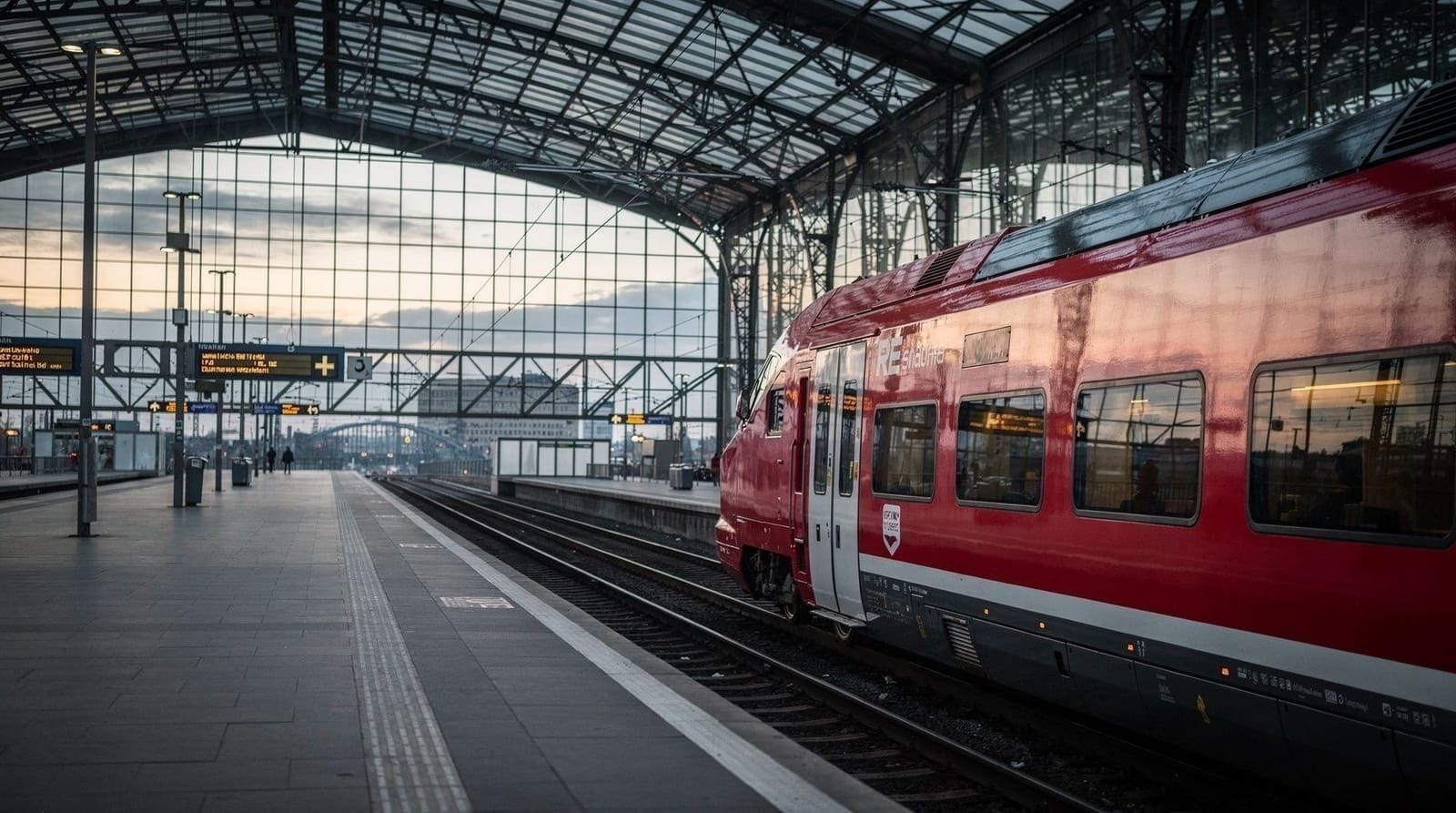
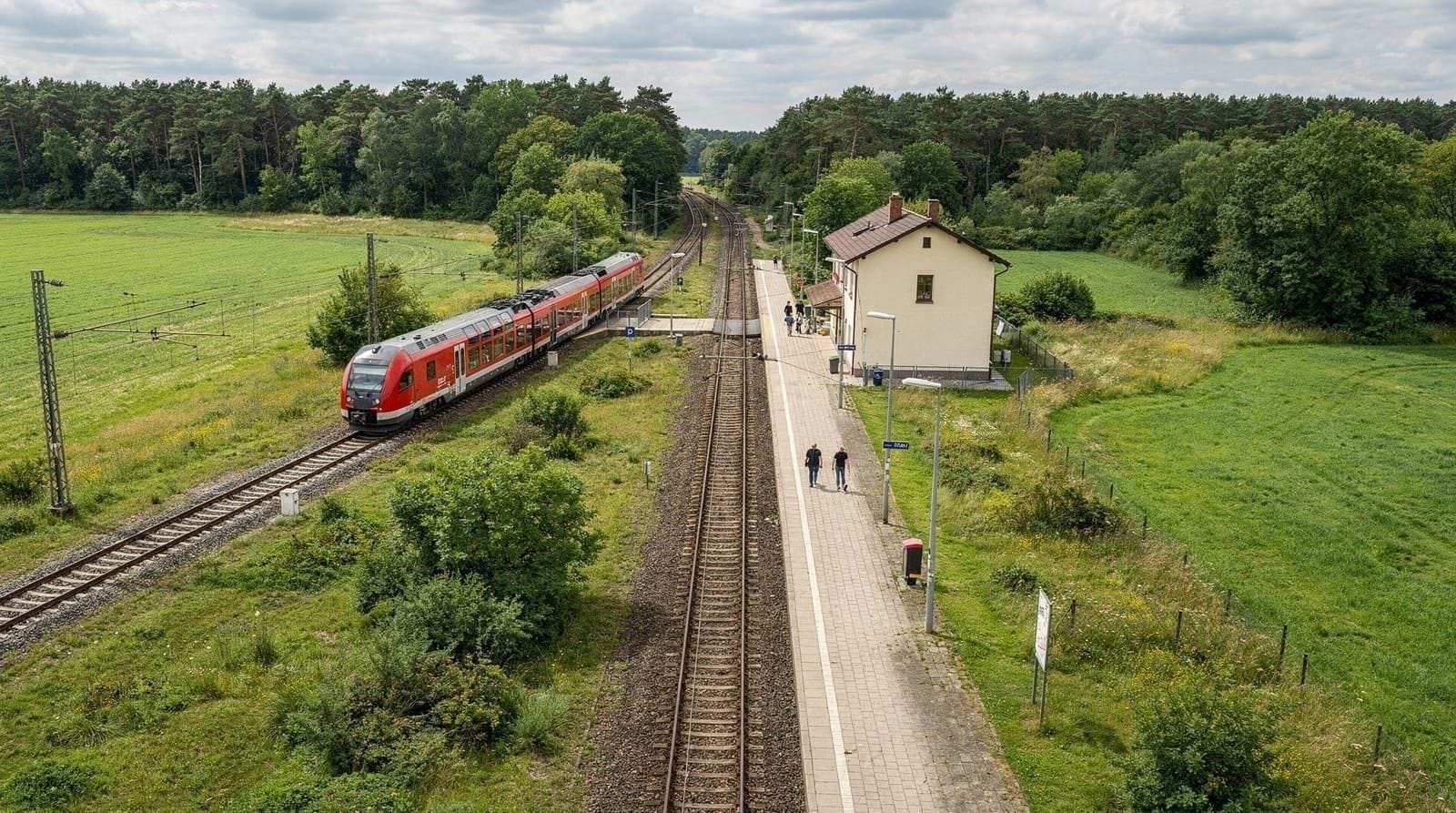
This is one of the most straightforward day trips from Berlin in terms of logistics. The RE2 regional express runs direct from Berlin Ostbahnhof to Cottbus Hauptbahnhof approximately every hour, with a journey time of around 1 hour 10 minutes. There are no changes required.
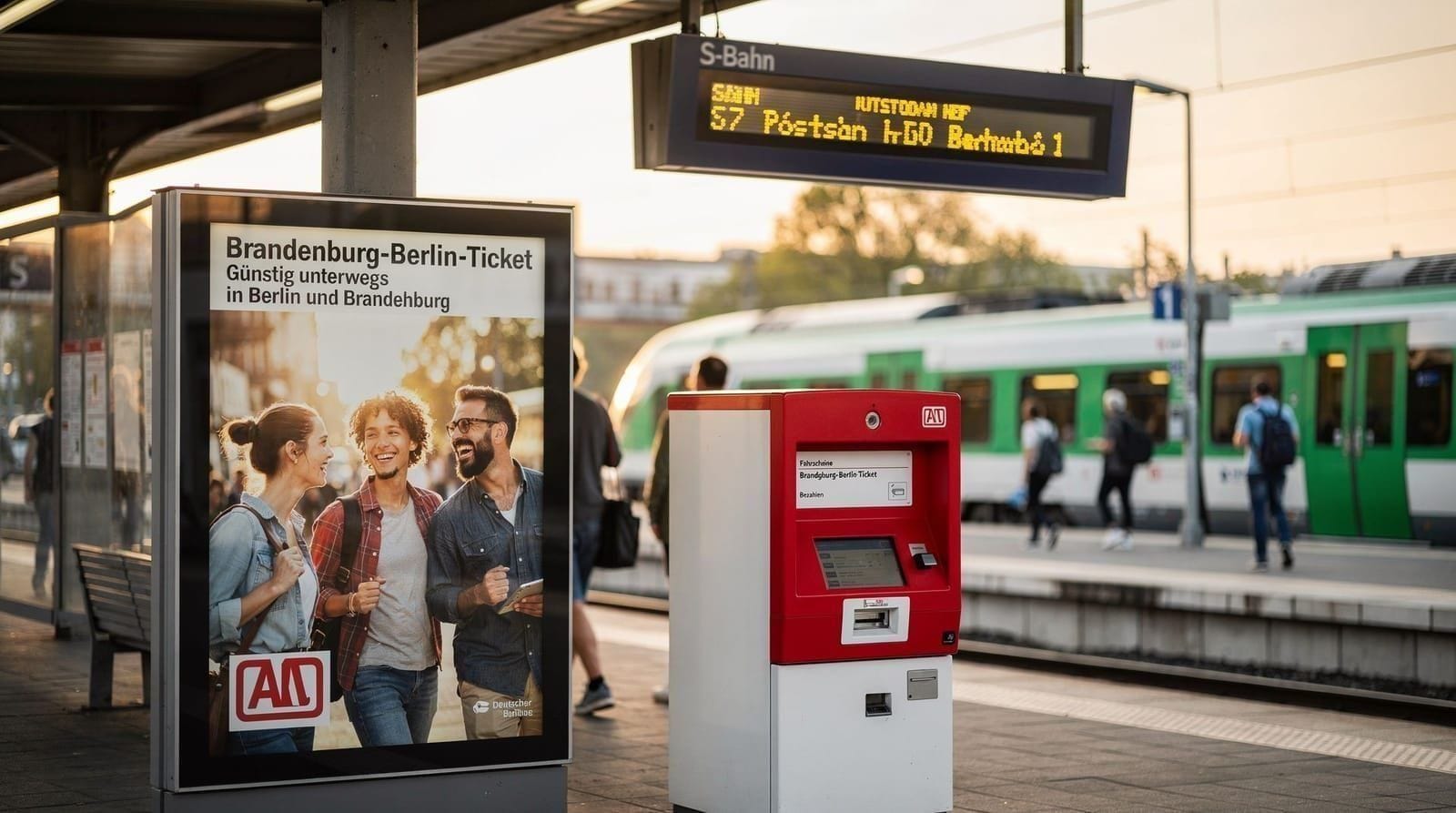
The return fare runs €15–25 depending on ticket type. At weekends and on public holidays, the Brandenburg Ticket (from €29 for up to 5 people, unlimited regional travel in Brandenburg for one day) covers the entire journey and is excellent value for groups of two or more. The Brandenburg ticket guide explains how to buy it and what it covers. The old Schönes-Wochenende-Ticket is no longer sold, but the Brandenburg Ticket fills its role for Brandenburg-specific travel.
A Deutschland-Ticket (€49/month subscription) also covers the full journey on the RE2 at any time. If you already hold one, Cottbus is one of the cheapest day trips possible from Berlin.
The day trips by train from Berlin guide compares Cottbus with other train-accessible destinations and explains how to build a schedule around RE2 departure times.
The State Museum and city centre
Back in the city centre, the State Museum Cottbus (Kunstmuseum Dieselkraftwerk), housed in a converted 1920s power station on the Spree riverbank, is the most architecturally interesting gallery in Brandenburg outside Potsdam. The industrial shell — turbine hall, overhead cranes, red-brick facade — has been converted with considerable skill into a sequence of exhibition spaces. The permanent collection focuses on 20th-century graphics and photography, with rotating temporary exhibitions that are often genuinely ambitious. Admission is around €5.
The Jugendstil theatre on the central Schillerplatz is one of the finest Art Nouveau theatre buildings in Germany, completed in 1908 to a design by Bernhard Sehring. The exterior’s sinuous stonework and gilded ironwork are extraordinary; interior tours run on certain days (check the Stadttheater Cottbus website for dates). Even from the outside, it is worth the ten-minute walk from the station.
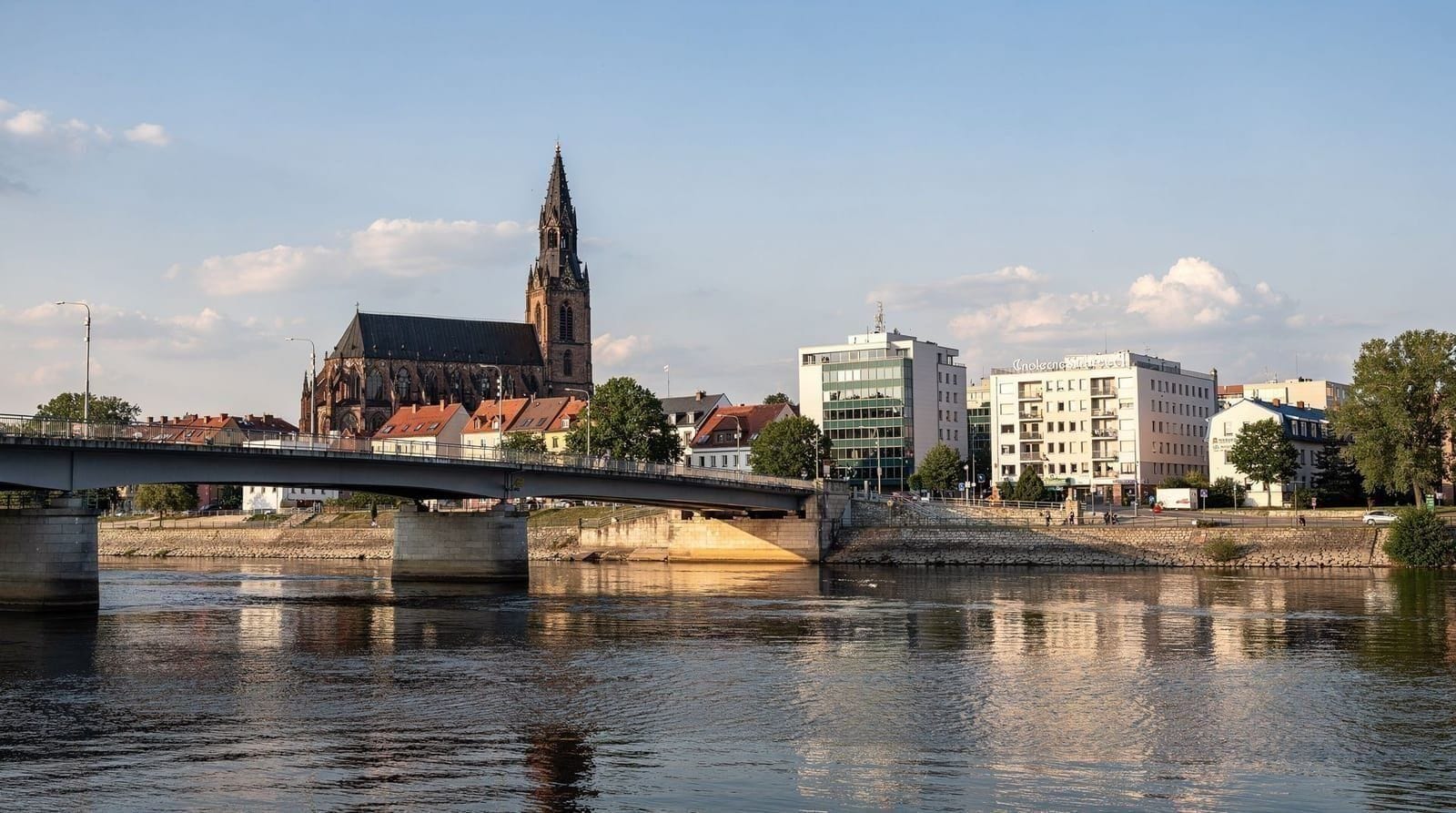
The Altmarkt and the grid of streets around it preserve a reasonable stock of late-19th and early-20th-century bourgeois architecture — not as concentrated as in a Wilhelmine showpiece city, but enough to give a sense of what Cottbus looked like at its industrial peak. The city suffered considerable post-war construction of the GDR variety, and the contrast between the Gründerzeit streets and the socialist blocks behind them is part of the texture of the place.
The Lausitzer Seenland: coal country becomes a lake district
South and east of Cottbus, something unprecedented is happening. The Lausitzer Seenland — Lusatian Lake District — is a network of lakes being created from the flooded open-pit lignite (brown coal) mines that defined this region for over a century. Dozens of pits are in various stages of flooding; when complete, the project will have created the largest artificial lake district in Europe, with individual lakes up to 19 km in length.
Some lakes are already open for recreation. Cottbuser Ostsee, the largest of the new lakes, is being created directly adjacent to the city — a 19 km² body of water that will eventually have beaches, marinas, and cycling paths along its shores. Parts of the western bank are already accessible and the transformation from pit to water is ongoing and visible; the eastern shore still shows raw geology. It is an industrial-to-natural transition at a scale and speed that has no equivalent in Europe.
Further south, lakes like Senftenberger See and Geierswalder See are already fully formed and have been popular for swimming, sailing, and cycling for years. From Cottbus, these are reachable by bus or car; a rented bicycle allows you to follow the Seenland-Route cycling path that connects the lakes. The full loop is around 250 km, but short sections are easily cycled in a day.
For visitors interested in industrial heritage, the Welzow-Süd opencast mine (active, with tours available in summer) gives a vertiginous sense of the scale of lignite extraction: pits 80 metres deep, excavators the size of apartment buildings, and a landscape that looks less like Germany and more like a science fiction set. Tours must be booked in advance through the Lausitzer Seenland tourist association.
Combining with the Spreewald
Cottbus and the Spreewald share the RE2 line from Berlin, and combining both in a single day is possible with careful planning — though it makes for a long and logistically tight itinerary. The better approach is to spend the morning in Lübbenau in the Spreewald (punt tour, lunch), then board the train toward Cottbus in early afternoon for Branitz Park in the golden hour light. Return trains from Cottbus to Berlin run into the evening.
Alternatively, both destinations reward an overnight stay. Cottbus hotels are significantly cheaper than Berlin equivalents — good guesthouses from €55–70/night — and waking up to a dawn walk in Branitz Park before the day visitors arrive is a different experience from an afternoon visit.
For context on how Cottbus fits into the broader landscape of Berlin day trips, the best day trips from Berlin guide places it alongside comparable destinations, and the Berlin trip planning guide covers how to build regional excursions into longer Berlin stays.
What to eat and drink
Cottbus has a modest but honest food scene. The Altmarkt area and the streets around the theatre have several traditional German restaurants and cafés. For Sorbian-influenced food, look for establishments in the city or in surrounding villages that serve Slepjanski rak (Sorbian crayfish, a regional specialty when in season) or Quark mit Leinöl, the same curd cheese with linseed oil encountered across Lusatia.
The restaurant in the Branitz Park Kavaliershaus — a secondary building in the park estate — serves lunch and coffee in a garden setting; it is the obvious choice after a morning in the park. In the city, the beer hall culture is present but not dominant; Brandenburg lager is the standard, and local craft brewing has made modest inroads in recent years.
Practical planning tips
- RE2 timing: trains run approximately hourly from Berlin Ostbahnhof; the journey is consistent at around 1h10. First trains allow arrival before 08:00 if you want Branitz Park to yourself in the morning.
- Branitz on foot: the park is a 20-minute walk from the centre; it is flat and easy. The outer walking circuit of the park takes around 45 minutes; allow more if you want to stop at the lake pyramid viewpoints.
- Cycling: Cottbus has a bike-hire station near the Hauptbahnhof. A bicycle makes it easy to combine the city centre, Branitz Park, and the early shoreline of the Cottbuser Ostsee in a single day.
- Sorbian museum: the Wendisches Museum closes on Mondays. Check opening hours before visiting, particularly outside summer.
- Theatre tours: the Jugendstil theatre interior is only accessible on specific tour dates. Check the Stadttheater website in advance if this is a priority.
- Language: Lower Sorbian signage is everywhere, but German is the working language. English is understood in hotels and tourist sites; less so in smaller cafés and shops.
Cottbus vs. the Spreewald: which one first?
Both sit on the RE2 line and share a region, but they offer quite different days out, and first-time visitors to eastern Brandenburg often ask which to prioritise.
| Cottbus | Spreewald | |
|---|---|---|
| Signature experience | Branitz Park pyramids, Sorbian culture | Canal punting through forest villages |
| Pace | Walking city + park, some cycling | Slow, boat-based |
| Distinctiveness | Post-industrial lake district transformation | Unique wetland landscape, nowhere else in Germany |
| Best for | Design and culture lovers, longer stays | Families, a classic half-day boat trip |
| Travel time from Berlin | ~1h10 direct | ~1h to Lübbenau |
If choosing one for a single Berlin trip, the Spreewald is the more universally appealing half-day; Cottbus rewards a full day and suits travellers who want landscape design, minority culture, or industrial transformation rather than a punting trip. Combining both is realistic with an early start, since they share the same train line.
Frequently asked questions about Cottbus
How long does the train journey from Berlin to Cottbus take?
The RE2 direct service from Berlin Ostbahnhof takes approximately 1 hour 10 minutes to Cottbus Hauptbahnhof. No changes are required. Trains run roughly hourly throughout the day.
What is Branitz Park and why is it significant?
Branitz Park is a 90-hectare landscape garden created by Prince Pückler-Muskau between 1845 and 1871 on a flat Brandenburg estate. It is considered one of the masterpieces of European landscape garden design. Its most distinctive feature is a pair of earth pyramids — one on land, one rising from the centre of an artificial lake — in which Prince Pückler himself is buried. The grounds are free to enter; the palace museum costs around €8.
Who are the Sorbs and what makes Cottbus significant for their culture?
The Sorbs (also called Wends) are a West Slavic people who have lived in Lusatia — the region around Cottbus — for over 1,400 years. They are Germany’s oldest indigenous minority, with their own language, traditions, and cultural institutions. Cottbus is the capital of Lower Lusatia and hosts the main Sorbian cultural organisations, a bilingual education system, and the Wendisches Museum covering Sorbian history.
Is the Brandenburg Ticket valid for the Berlin–Cottbus train?
Yes. The Brandenburg Ticket, valid on regional trains throughout Brandenburg, covers the RE2 from Berlin to Cottbus. It costs from €29 for one person (additional passengers can be added for a small fee) and is valid all day from 09:00 on weekdays, or from midnight at weekends. The Brandenburg ticket guide has full details on buying and using it.
What is the Lausitzer Seenland?
The Lausitzer Seenland (Lusatian Lake District) is a network of lakes being created by flooding former open-pit lignite mines across the region south and east of Cottbus. When complete, it will be the largest artificial lake district in Europe. Several lakes are already open for recreation; the massive Cottbuser Ostsee adjacent to the city is still forming. It is one of the most significant post-industrial landscape transformations in Europe.
Can I combine Cottbus with the Spreewald in one day?
Yes, though it requires an early start and a bit of schedule discipline. Spend the morning in Lübbenau (the Spreewald’s main hub), take a punt tour and lunch, then board an early-afternoon train toward Cottbus for Branitz Park. Return trains to Berlin run from Cottbus into the evening. The Spreewald entry covers morning logistics for that destination.
What is there to do in Cottbus beyond Branitz Park?
The Kunstmuseum Dieselkraftwerk (contemporary art in a converted power station), the Wendisches Museum (Sorbian cultural history), the Jugendstil theatre exterior and occasional interior tours, and the early shoreline of the emerging Cottbuser Ostsee all offer substance beyond the park. The city centre has enough Gründerzeit architecture to make a 30-minute walk worthwhile before or after Branitz.
Is Cottbus suitable as an overnight destination?
Yes, particularly if you want to explore the Lausitzer Seenland or cycle the Seenland-Route connecting the existing lakes. Cottbus accommodation is significantly cheaper than Berlin equivalents — guesthouses from €55–70/night. An overnight also allows an early morning visit to Branitz Park, which is at its most atmospheric before day visitors arrive.
Should I visit Cottbus or the Spreewald if I only have time for one?
For a single half-day trip, the Spreewald’s canal punting is the more universally appealing experience and easier to plan. For a full day or a return visit, Cottbus offers more depth — Branitz Park, Sorbian culture, and the Lausitzer Seenland — for travellers with a specific interest in landscape design, minority culture, or post-industrial transformation.