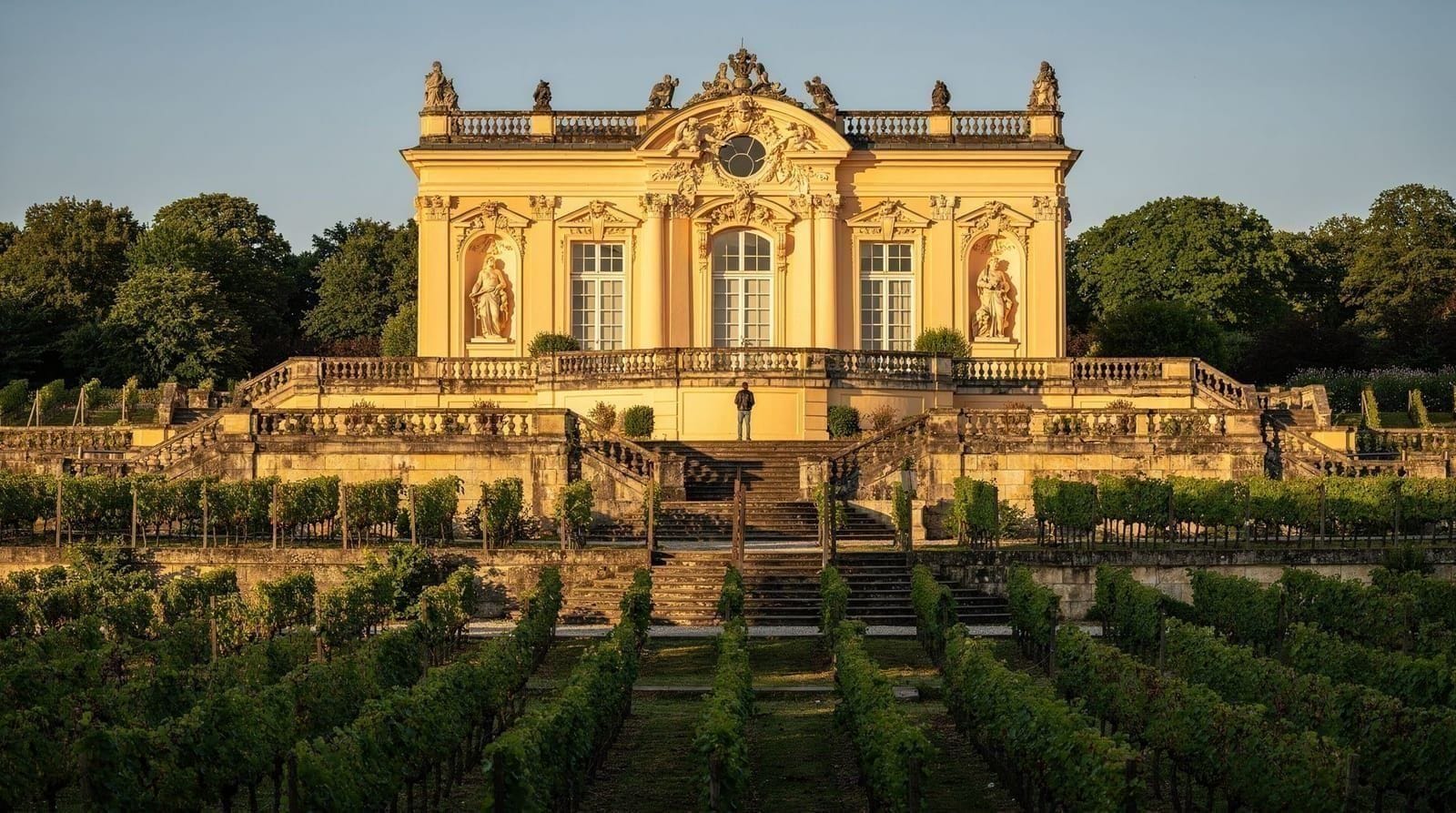
Babelsberg — gothic palace, English park, and the world's oldest film studio
Babelsberg pairs a romantic gothic palace on the Havel with an English landscape park and the legendary Babelsberg Film Studio, founded in 1912.
Potsdam: A Journey Through History and Palaces (Small Group)
Quick facts
- Best for
- Romantic architecture, English park, film history, cycling
- Entry
- Park €4 (Apr–Oct); palace exterior free; Filmpark from €22
- Getting there
- S7 to Babelsberg station (10 min from Potsdam Hbf) or tram 96/99
- Time needed
- 2–4 hours for park and palace; half day including Filmpark
- Season
- Park open April–October; Filmpark from April; palace exterior year-round
Babelsberg: two attractions, one neighbourhood
Most visitors to Potsdam know about Sanssouci. Far fewer make it to Babelsberg — which means they miss two things: a genuinely beautiful English romantic park with a gothic palace on the Havel, and the Babelsberg Film Studio, the oldest large-scale film studio in the world, still in active production.
Babelsberg sits in the eastern part of the Potsdam UNESCO park landscape, across the Havel from the main Potsdam palaces. It’s reached in 10 minutes by S-Bahn from Potsdam Hauptbahnhof — close enough to combine with Sanssouci in a single day if you’re efficient with time.
| Where | Eastern Potsdam, across the Havel from Sanssouci |
| Cost | Park around €4 (Apr–Oct, free Nov–Mar); Filmpark from around €22 |
| Time needed | 2–4 hours for park and palace; half day with the Filmpark |
| Getting there | S7 from Potsdam Hbf (around 5 min) or from central Berlin (around 45–50 min) |
| Best time | May–September for the full park; Filmpark runs April–early November |
Babelsberg Palace and Park
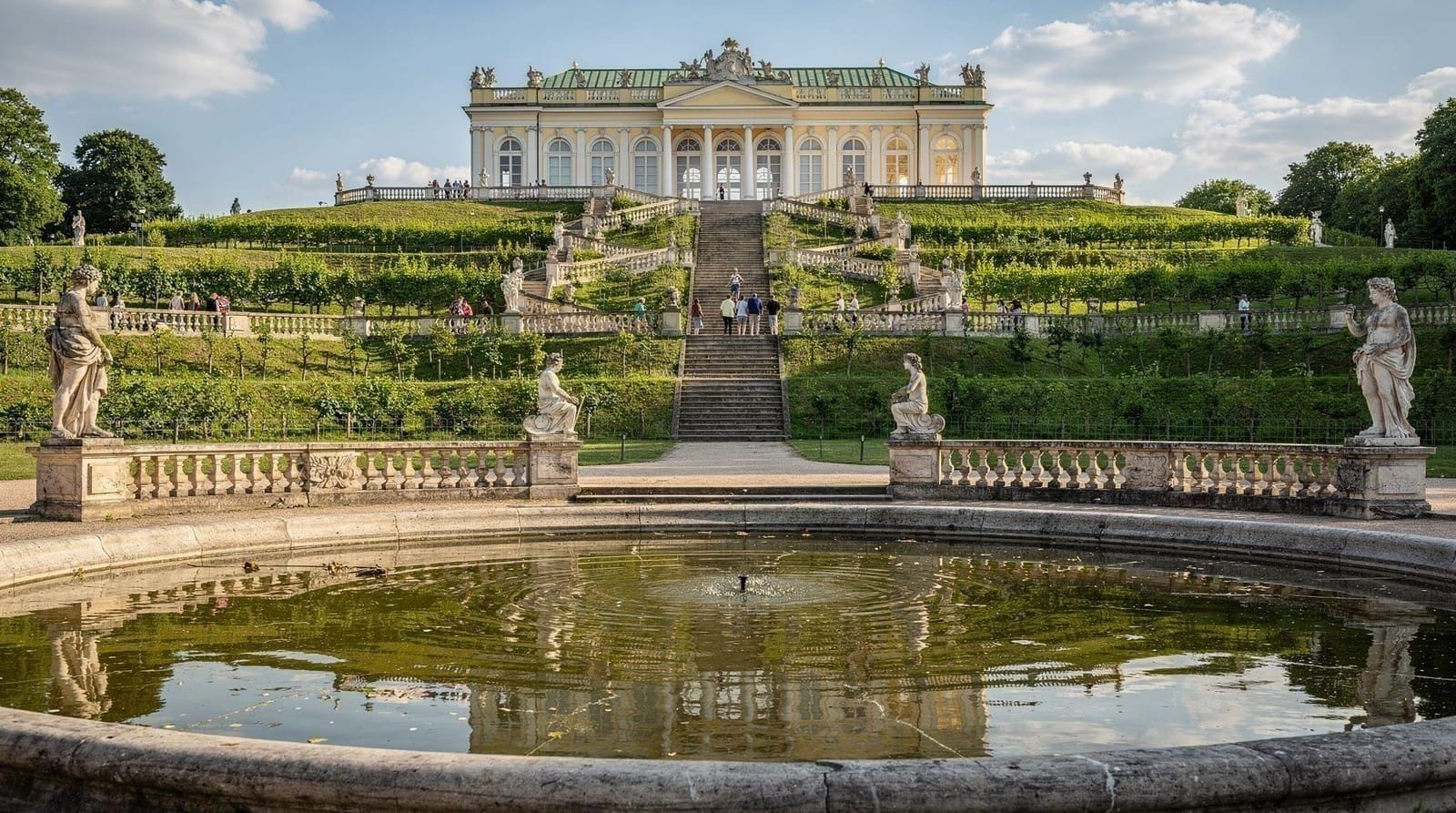
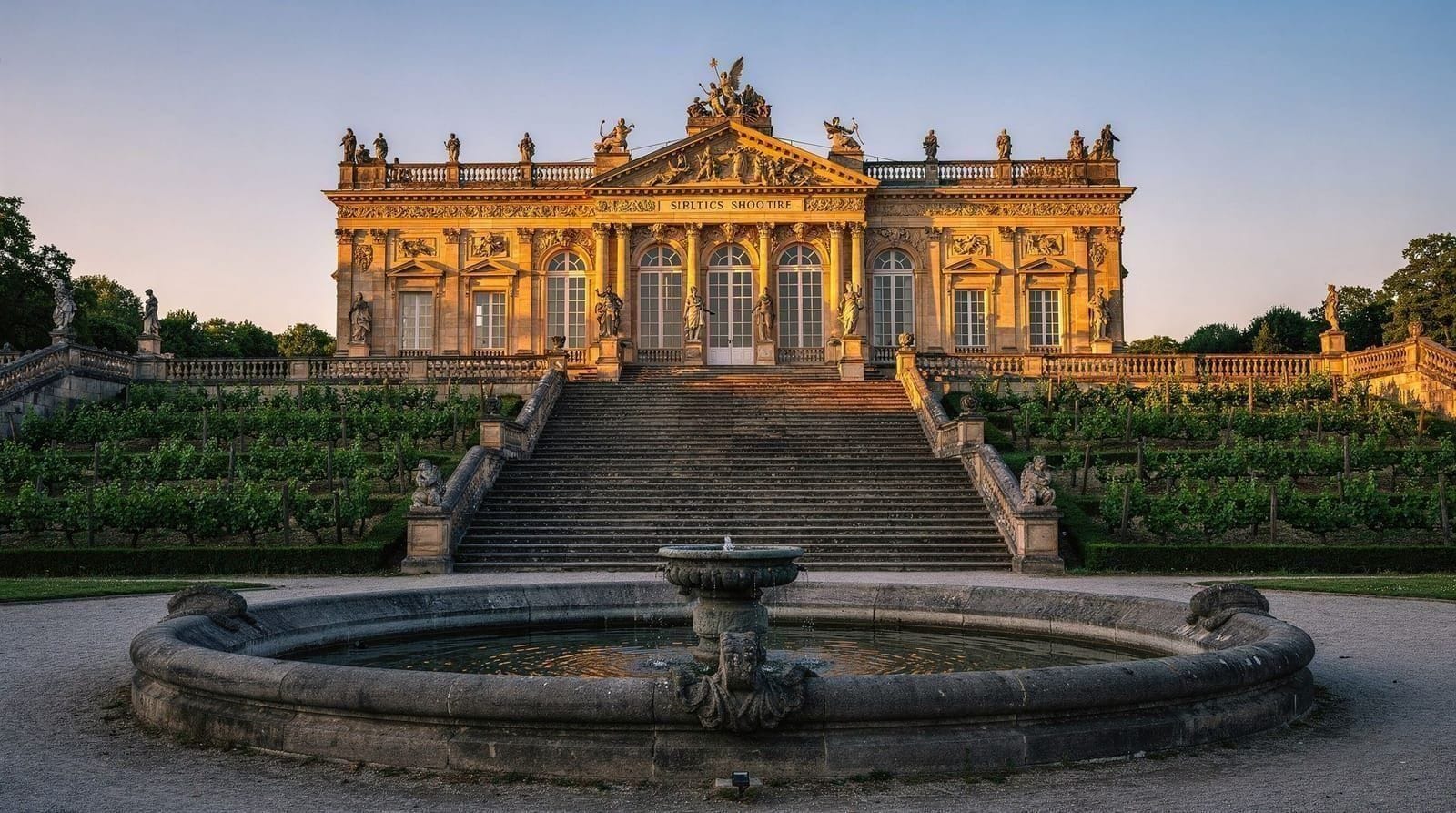
Schloss Babelsberg is a Victorian-era gothic palace commissioned by Prince William (later Kaiser Wilhelm I) in 1833 and designed by Karl Friedrich Schinkel and Ludwig Persius. It’s a deliberate contrast to the French-influenced rococo of Sanssouci — smaller, more romantic in the English sense, with towers and battlements inspired by Windsor Castle.
The palace interior is currently closed for restoration (2025–2026 status; check spsg.de before visiting). The exterior and surrounding terraces are always accessible.
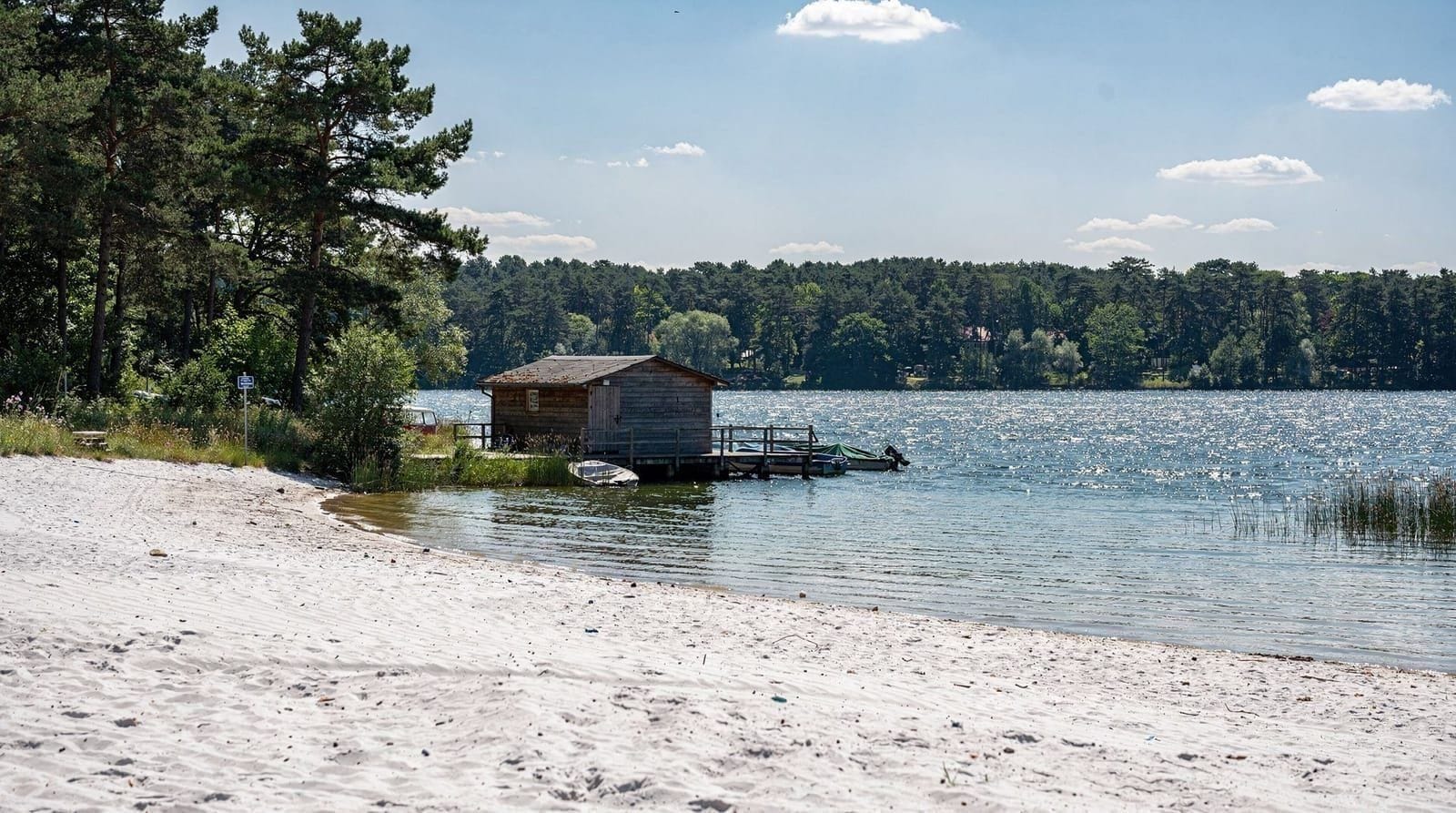
Park Babelsberg is a 114-hectare English landscape park designed by Peter Joseph Lenné and Prince Hermann von Pückler-Muskau — Germany’s leading landscape garden designers of the 19th century. The park’s strength is its naturalness: rolling slopes, mature trees, and long views across the Havel river toward Wannsee. Several small architectural features dot the grounds: the Flatow Tower (a lookout tower worth climbing), the Gerichtslaube (a medieval portico transplanted from Berlin), and the pump house.
Entry to the park: €4 adults (April–October). Free November–March.
Babelsberg Film Studio (Filmpark Babelsberg)
The Babelsberg Film Studio was founded in 1912, making it one of the world’s oldest large-scale film studios. The Expressionist classic “Metropolis” (Fritz Lang, 1927) was filmed here; so were “The Blue Angel” with Marlene Dietrich, sections of “Schindler’s List,” “The Pianist,” “The Grand Budapest Hotel,” Roman Polanski’s “The Ghost Writer,” and numerous recent European productions.
The studio remains fully operational. Filmpark Babelsberg — the visitor attraction adjacent to the working studio — offers tours, interactive film-making exhibits, stunt shows, and costume departments. It’s primarily aimed at families and film enthusiasts.
Tickets: Adult from €22; child (4–14) from €18. Open April to early November, typically 10 am–6 pm. Check filmpark.de for the current season schedule and specific show times, as the stunt shows have fixed hours.
The Flatow Tower and the quiet corners
Most day-trippers who make it to Babelsberg stick to the palace terrace and the lawns closest to the S-Bahn station, which means the park’s best view often goes unseen. The Flatow Tower, a 46-metre neo-Gothic lookout modelled loosely on a medieval keep, sits on a rise above the Havel and is open to climb on weekends and holidays in season — the panorama over the river toward Wannsee is one of the better free views in the whole Potsdam area. Nearby, the Gerichtslaube is a genuine medieval stone portico moved here from Berlin’s old town hall in the 1870s, and the small Kleines Schloss (little palace) now houses a café with terrace seating overlooking the water.
Because Park Babelsberg gets a fraction of the footfall of Sanssouci, it rewards slow walking rather than a checklist approach. Lenné and Pückler-Muskau designed the sightlines so that new views open up gradually as you follow the paths along the Havel — there’s no single “best photo spot,” which is part of the point. If you only have an hour, walk from the palace terrace down to the river and along to the Flatow Tower and back; that loop covers the park’s strongest scenery without needing the full circuit.
Practical tips for visiting Babelsberg
Combine Babelsberg with a broader look at the region rather than treating it as a stand-alone trip — on its own it’s a pleasant half-day, but paired with Potsdam it becomes one of the best day trips from Berlin. The Berlin to Potsdam day trip guide covers train timing and ticket options for the wider area, and the Potsdam day trip tips post has practical advice on avoiding the worst crowds at the main palaces before you head to Babelsberg’s quieter grounds. Cyclists should note that bikes can be rented at Potsdam Hauptbahnhof and taken on the S-Bahn outside rush hour, which makes the riverside route to Babelsberg genuinely one of the nicer short rides covered in the Berlin cycling guide. For a wider view of how Babelsberg stacks up against the region’s other day trips, see the best day trips from Berlin overview.
| Option | Time from Berlin | Best for |
|---|---|---|
| Babelsberg only | ~50 min direct S7 | Quiet park walk, Flatow Tower view, 2–3 hours |
| Babelsberg + Sanssouci | Full day | Contrast of English park vs. formal French garden |
| Babelsberg + Filmpark | Half day | Families, film history, stunt shows (seasonal) |
Getting to Babelsberg
From Potsdam Hauptbahnhof: S7 or S1 to Babelsberg station (2 stops, about 5 minutes). The park entrance is a 10-minute walk from the station.
From Berlin: S7 direct from central Berlin to Babelsberg station — approximately 45–50 minutes without changing.
From Sanssouci: Bus 694 connects Babelsberg to the Potsdam city centre (20 minutes); or cycle along the Havel riverside (approximately 30 minutes for a scenic 5 km route).
Join a small-group Potsdam palace tour covering the key UNESCO sitesCombining Babelsberg with other Potsdam attractions
A practical one-day circuit: take the RE1 to Potsdam, visit Sanssouci in the morning (arrive by 8:30 am), take the S7 to Babelsberg mid-afternoon, walk through the park, and return to Berlin on the S7 direct.
Alternatively, Wannsee is on the S7 line between Berlin and Babelsberg — you can stop there for the Wannsee Conference memorial on the way back.
For a longer Potsdam itinerary, the Berlin–Potsdam weekend guide includes Babelsberg in a structured 2-day plan.
Frequently asked questions about Babelsberg
Is Babelsberg worth visiting if I’m already going to Sanssouci?
Yes, if you have a full day. The English park at Babelsberg is stylistically completely different from the French formal garden at Sanssouci — green, naturalistic, and quiet. The Flatow Tower view across the Havel is excellent. It adds 2–3 hours to a Potsdam day without significant extra cost.
Is the Babelsberg Film Studio worth visiting?
For families with children or genuine film history enthusiasts: yes. For casual visitors: it’s a decent attraction but not essential in a region with multiple world-class palace sites. The stunt show is the most entertaining element; the studio tour sections vary in quality depending on what’s currently in production.
Can I cycle from Sanssouci to Babelsberg?
Yes — the Havel riverside cycle path connects the two areas in about 30–35 minutes across flat terrain. Bike rental is available at Potsdam Hauptbahnhof. The route passes through pleasant waterside scenery and is one of the nicest ways to see the Potsdam area.
Is the Babelsberg Palace open to visitors?
The palace interior was closed for restoration at time of writing (2025–2026). Check spsg.de for current status. The palace exterior, terrace, and surrounding park are always accessible.
Is Babelsberg worth it if I only have one day in Potsdam?
Only if Sanssouci is already covered efficiently. With a single day, most first-time visitors are better off spending it entirely at Sanssouci and the historic centre — see the Berlin to Potsdam day trip guide for a realistic one-day plan. Babelsberg is the better add-on for a second visit or a two-day Potsdam trip, such as the one in the Berlin–Potsdam weekend itinerary.
How do I climb the Flatow Tower?
The tower is open on weekends and public holidays during the park season (roughly April to October); check the current schedule locally, as hours are limited outside of that window. There is a small entry charge and a steep spiral staircase, so it’s not ideal for very young children or anyone with mobility limits. The view over the Havel toward Wannsee is the main reward.
Top experiences
Bookable activities with verified prices and instant confirmation on GetYourGuide.