Sanssouci — Frederick the Great's rococo summer palace
Prussia's most elegant royal retreat — a rococo gem crowning terraced vineyards in a UNESCO park of fountains, orangeries and a Chinese teahouse.
From Berlin: Potsdam and Sanssouci Palace Tour with Entry
Quick facts
- Best for
- Rococo architecture, Prussian royal history, garden walks
- Entry
- Park free; palace interior €14 adults, timed-entry booking required
- Getting there
- RE1/S7 to Potsdam Hbf, then bus 695 (10 min) or 25-min walk
- Time needed
- 2–3 hours for palace + central park; half day for full park
- Closed
- Mondays (park open daily)
- Season
- Palace open year-round; gardens at peak May–September
What is Sanssouci?
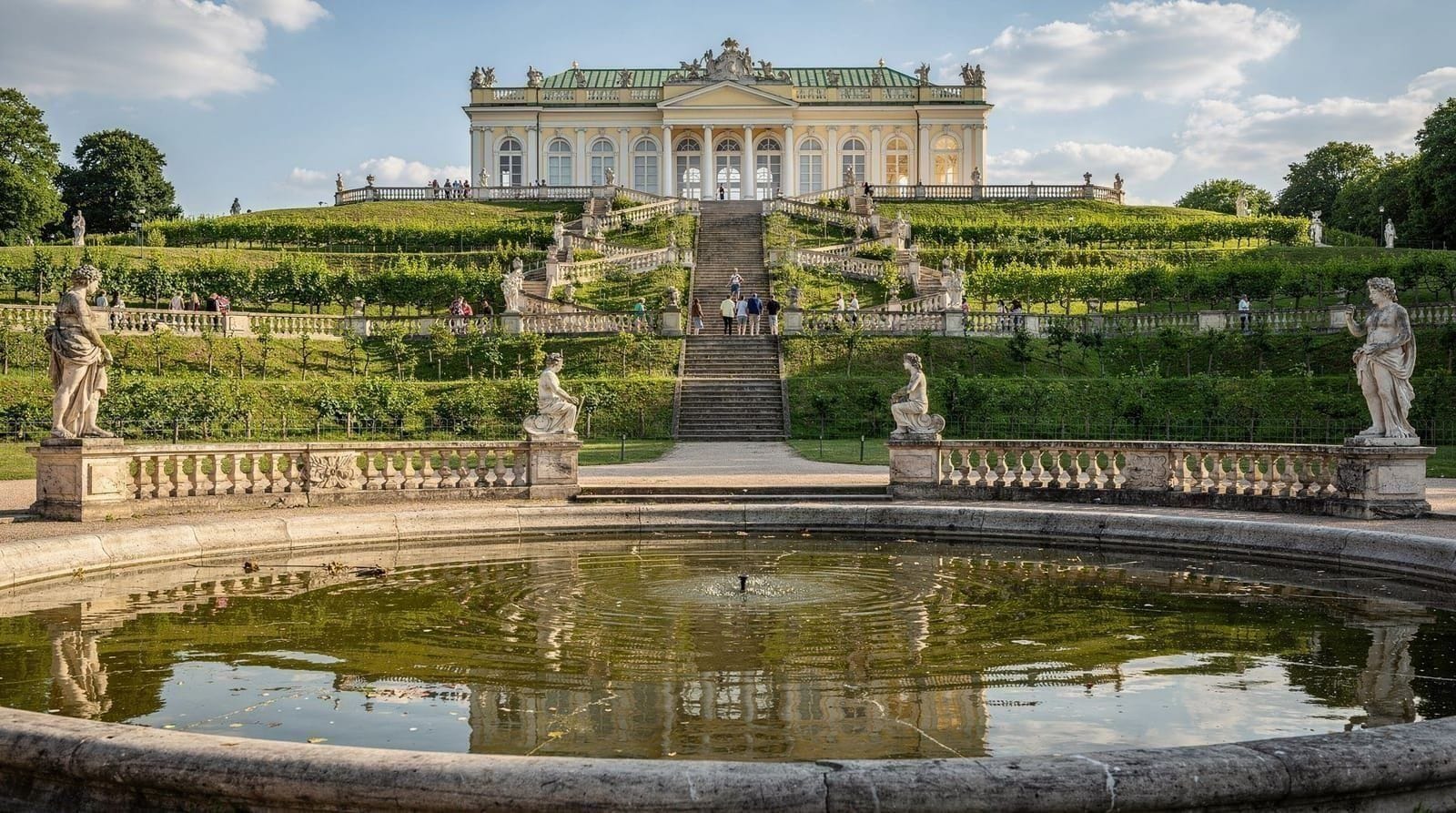
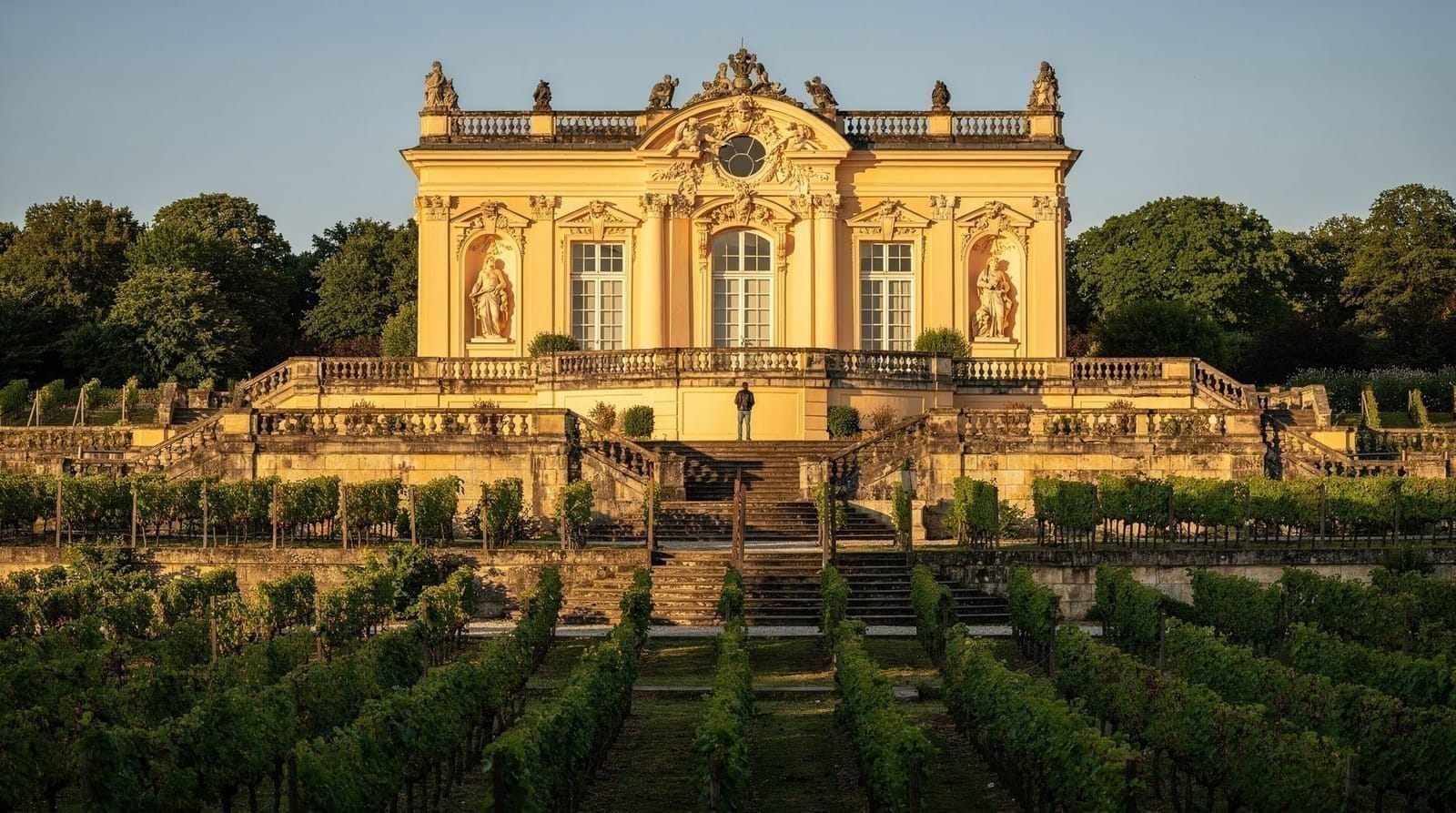
Sanssouci is the defining monument of Frederician Prussia — a single-storey rococo palace built in 1747 atop six terraced vineyard terraces with a view south over the formal garden and park. Frederick the Great used it as a private summer retreat, filling it with French philosophers, court musicians, and his beloved greyhounds. When he died in 1786, he was buried — per his own instruction — beside the palace on the terrace near his dogs, not in the cathedral in Berlin.
The palace is small by royal standards: 12 rooms, none of them vast. Its power is in proportion and detail — gilded rococo interiors, Frederick’s personal library, a concert hall where he played flute with C.P.E. Bach, and the legendary Voltaire Room decorated with carved fruit, vegetables, and birds in tribute to the French philosopher who spent three years here.
The surrounding Sanssouci Park stretches 290 hectares and contains a collection of buildings the Prussian kings added over 150 years: the New Palace, the Orangery, a Chinese Teahouse, Roman Baths, and the Charlottenhof Palace. The park is UNESCO-listed and free to enter at all times.
| Where | Potsdam, 30–45 min from central Berlin |
| Park | Free, open dawn to dusk year-round |
| Palace interior | Timed entry only, €14 adults, book in advance |
| Time needed | 2–3 hours for palace + central park; half day for the full park |
| Closed | Mondays (park stays open) |
Planning your visit — the essentials
Timed-entry tickets are mandatory
Entry to the palace interior is by timed-entry ticket only. Daily visitor numbers are strictly capped. In summer (June–August), weekend slots sell out by 8 am — sometimes the day before. Book online at spsg.de as far in advance as possible: 1 week minimum in peak season, 2–3 days in shoulder season.
Adult tickets: €14 (reduced €10). For free admission and concessions, see spsg.de.
If you arrive without a ticket and slots are sold out, you can only visit the park (which is still worthwhile but different from the interior). Don’t rely on buying at the door in summer.
Book a guided tour with guaranteed Sanssouci palace entry from BerlinGetting there from Berlin
The simplest route: RE1 regional train from Berlin Hauptbahnhof or Ostbahnhof to Potsdam Hauptbahnhof (30 minutes), then bus 695 to the park’s eastern entrance (10 minutes). S7 also works but takes 45 minutes.
Ticket: You need an ABC zone Berlin day ticket (€12.90) or a WelcomeCard ABC to cover the Potsdam zone. A standard AB ticket does not include Potsdam — this is the most common transport mistake.
Alternatively, bus X15 runs directly from Berlin Wannsee S-Bahn station to Sanssouci at weekends and holidays.
What to see — a walking route
The terraced vineyards and main palace
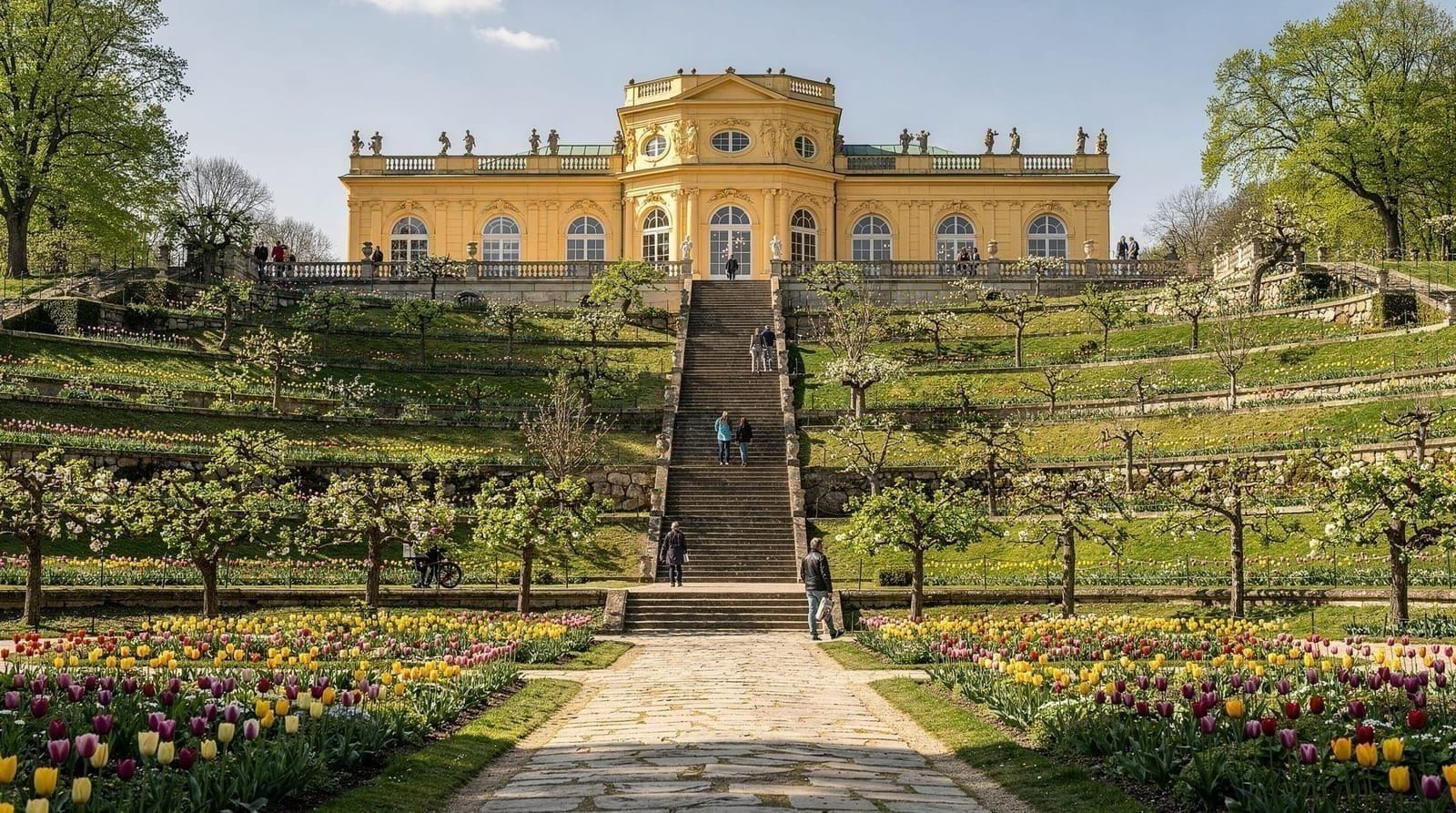
From the eastern park entrance, walk up through the formal parterre garden toward the vineyard terraces. The six tiers of vines — which still produce grapes harvested each autumn — frame the palace perfectly. The Great Fountain (Grosse Fontäne) below the palace is one of the park’s focal points and takes around 20 minutes to reach from the entrance.
The palace itself sits at the top of the steps. Even if you don’t enter, the south-facing terrace offers excellent views.
The New Palace (Neues Palais)
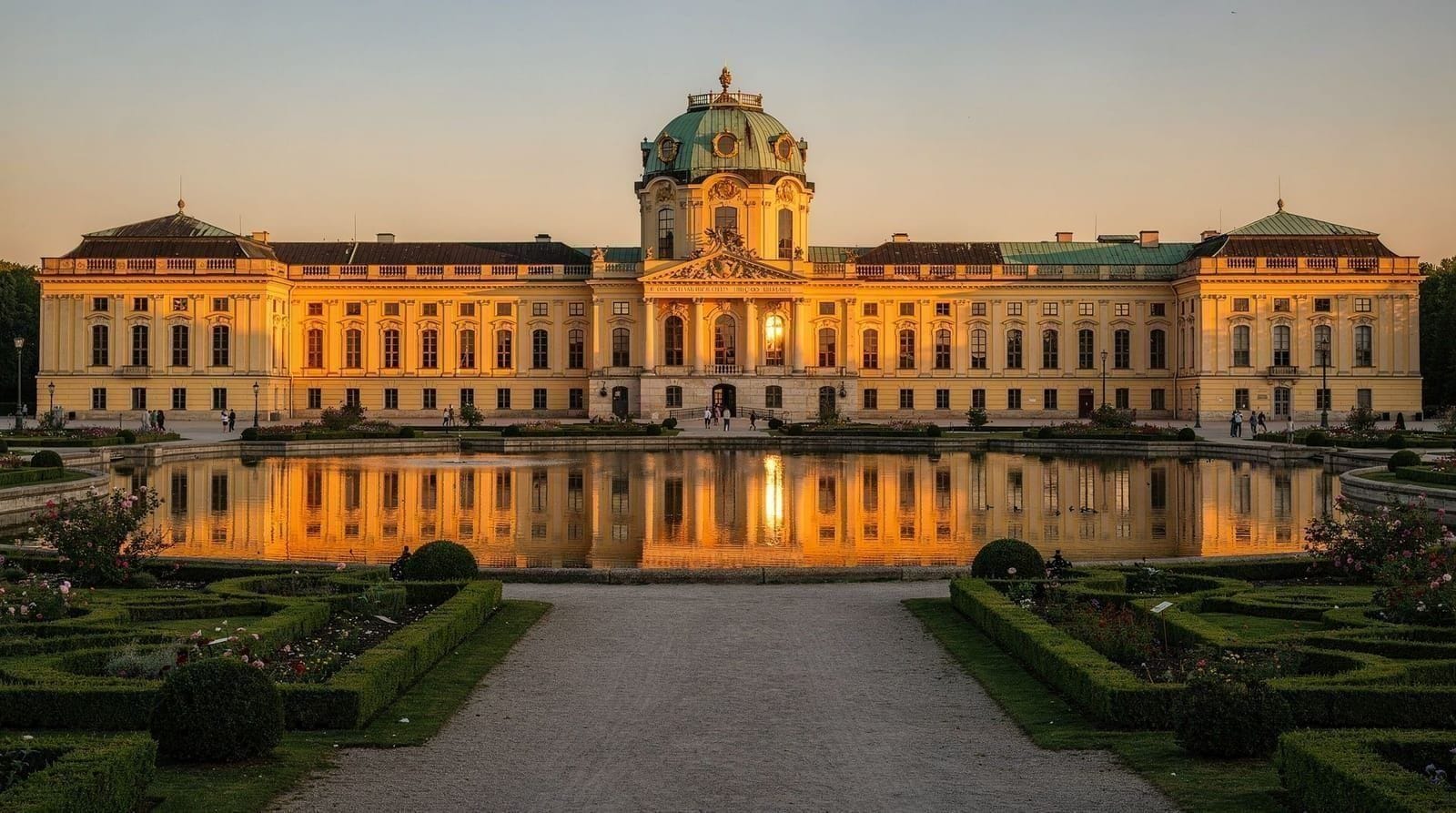
At the western end of the park (1.5 km from the main palace), the Neues Palais is Frederick’s largest and most imposing building — built after the Seven Years’ War as a statement of Prussian wealth and power. Far grander in scale than Sanssouci, with 200+ rooms, though only a portion are shown on the tour. Entry: €14 (Grand Tour). Closed Tuesdays from April to December and Mondays from January to March.
The Orangery Palace (Orangerieschloss)
Modelled on Italian Renaissance villas, the Orangery was built for Frederick William IV between 1851–1860 and designed to overwinter the park’s exotic plants. The viewing tower offers the best panorama of the entire park. Currently closed for restoration (check spsg.de).
The Chinese Teahouse
A gilded rococo pavilion (1754–1764) in the shape of a palm tree, with life-size gilded figures of musicians around its base. One of the park’s most photographed details. Entry: €5.
Frederick’s Grave
Per his will, Frederick the Great is buried on the northern terrace of the Sanssouci palace, near his greyhounds. The grave is simple — a rectangular stone slab with fresh potatoes placed on it by visitors (a tradition marking his role in spreading potato cultivation in Prussia). Free to visit, always accessible.
Which buildings are worth the entry fee?
Sanssouci Park has five separate paid interiors, and few visitors have time (or appetite) for all of them in one day. This comparison should help prioritise:
| Building | Entry | Best for | Skip if |
|---|---|---|---|
| Sanssouci Palace | €14 | First-time visitors, Frederick’s personal rooms | You only have an hour — the park views work without going in |
| New Palace | €14 | Grand-scale Prussian state architecture | You already saw a large baroque palace elsewhere in Germany |
| Orangery | Closed for restoration | The panoramic viewing tower | You’re short on time and prioritising the main palace |
| Chinese Teahouse | €5 | A quick, highly photogenic stop | Rain — it’s a small pavilion, not worth queuing in poor weather |
If you can only pay for one, make it the main Sanssouci Palace — it’s the most personal and historically important of the five.
How to pace the day inside the park
The park rewards a slow, loosely planned visit more than a checklist. Start with the main palace while your timed slot is fresh in your mind, then let the rest of the day follow the weather and your energy. On a clear day, linger on the terraces and the formal garden; on a grey one, the interiors and the Orangery tower make better use of your time. Build in a long break somewhere between the New Palace and the Chinese Teahouse, because the distances between buildings are easy to underestimate and the paths are mostly open and exposed.
Visitors who try to cover everything usually end up seeing the later buildings through a haze of fatigue. It is far better to leave something unseen and have a reason to come back than to rush the final stop. If you are travelling with children or older relatives, the central stretch around the main palace is the gentlest option, and the cycling advice below helps with the longer legs.
Why Sanssouci is worth the trip from Berlin
Berlin has plenty of royal heritage, but most of it was damaged, rebuilt or reinterpreted over the twentieth century. Sanssouci gives you something different: a place that still feels like the private world of one monarch, with the vineyard terraces, the garden and the palace working together as a single composition. It also makes a calm counterpoint to the city’s heavier historical sites — if your itinerary includes Sachsenhausen or the sombre sites in the Berlin Wall complete guide, a day among terraces and fountains is a welcome change of register.
The visit also fits naturally into a wider plan. Two or three days in the capital is enough to include it, and the Berlin Potsdam weekend itinerary shows how to give Potsdam more than a rushed few hours. If you are still deciding how long to stay overall, the how many days in Berlin guide helps you weigh a palace day against the city’s museums and neighbourhoods.
Choosing between a guided tour and going independently
Going independently suits travellers who like to set their own pace, are comfortable with regional trains, and are happy to book the timed ticket themselves. You can linger where you like, skip what bores you and stay in the park as long as the light is good.
A guided option makes sense if you would rather not handle the logistics. A tour with entry arranged removes the main risk of the visit — missing out on a slot — and adds context that the audio guide only touches on. If you want to focus on the palace, a half-day walking tour from Berlin is a compact way to see the highlights and still be back in the city for the evening. Those who prefer a fuller picture of the town and its palaces can look at the options in the Berlin private tours guide as well.
Combining Sanssouci with other royal sites
Sanssouci pairs well with other palaces if you enjoy the subject. Back in Berlin, Charlottenburg Palace shows an earlier, more baroque side of Prussian court life, and the wider Charlottenburg district guide suggests what to do around it. In the Potsdam area, Babelsberg offers a very different, Gothic-revival atmosphere and a quieter park. Together they let you trace how Prussian taste changed from one generation to the next.
For a broader sense of what lies beyond the capital, the best day trips from Berlin page compares Potsdam with the other options, and the practical Potsdam day trip tips article collects lessons from people who have already done it.
Practical tips
Cycling: The park is excellent by bicycle — flat, well-signed, and the 2–3 km from Sanssouci to the New Palace is much more comfortable on wheels than on foot. Bike rental is available at Potsdam Hauptbahnhof.
Monday closures: The main Sanssouci palace is closed on Mondays. The New Palace is closed on Tuesdays from April to December and on Mondays from January to March. The park is always open.
Photography: The palace interior does not allow photography. The park and exteriors have no restrictions.
Food: The park has a cafe near the Chinese Teahouse. The Dutch Quarter in Potsdam city (15 minutes by bus) has far better and cheaper options.
Crowds: July–August peak is genuinely busy. For the best experience, arrive at the park by 8:30 am and head to the palace first before the coach tours arrive at 10 am.
Pairing with the town: Potsdam’s own old town — the Dutch Quarter, the Nikolaikirche, and the Brandenburg Gate (Potsdam’s own, not Berlin’s) — is a short bus or tram ride from the park and makes a natural addition if you want more than palaces. See the Potsdam destination guide and the Berlin to Potsdam day trip guide for a fuller itinerary. Small-group tour covering Sanssouci and the wider Potsdam palace landscape
Frequently asked questions about Sanssouci
Is Sanssouci park free?
Yes, the park is free to enter and open from dawn to dusk, 365 days a year. Entry to the palace buildings (Sanssouci, New Palace, Orangery, etc.) requires separate paid tickets with timed entry.
How far is Sanssouci from Berlin?
From central Berlin (Hauptbahnhof), the journey is about 40–45 minutes door to park entrance: 30 minutes by RE1 regional train to Potsdam Hauptbahnhof, then 10 minutes on bus 695. Allow one hour to be comfortable.
What is the difference between Sanssouci and the New Palace?
Sanssouci is Frederick the Great’s intimate personal retreat — 12 rooms, rococo, built for private pleasure. The New Palace (Neues Palais) was built after the Seven Years’ War as a state palace for formal occasions — much larger, more baroque, more imposing. Most visitors prefer Sanssouci for its character and scale; the New Palace is best for those wanting to explore a grander royal building.
Can I combine Sanssouci with Babelsberg in one day?
Yes, with planning. Both are in the Potsdam area. Babelsberg Palace and park (see Babelsberg destination page) is a 20-minute bus or 30-minute cycle ride from Sanssouci. Prioritise Sanssouci in the morning (arrive early), then visit Babelsberg in the afternoon. It makes for a full but rewarding day.
Are there guided tours of Sanssouci in English?
The palace’s free multimedia app (bring your own headphones) is available in English and good quality. Guided group tours in English operate from Berlin via tour operators and typically include transport, guaranteed entry, and commentary across Sanssouci and one or two other Potsdam palaces.
Is Sanssouci better than Charlottenburg Palace in Berlin?
They’re different in character rather than one being “better.” Sanssouci is Frederick the Great’s intimate rococo retreat set in a sprawling UNESCO park; Charlottenburg Palace sits inside Berlin itself, is baroque rather than rococo, and doesn’t require a Potsdam trip. If you have time for only one and want the fuller royal-Prussia experience with gardens, choose Sanssouci; if you want a palace without leaving Berlin, Charlottenburg is the practical choice.
Can I do Sanssouci as a half-day trip and still see the town?
Yes, with an early start. Arrive at the park by 8:30–9 am, see the main palace and terraces for around 90 minutes, then head into Potsdam’s old town for lunch and a wander through the Dutch Quarter — you can be back in central Berlin by early afternoon. The Berlin to Potsdam day trip guide has a suggested timeline for exactly this pace.
Top experiences
Bookable activities with verified prices and instant confirmation on GetYourGuide.