Rainy day in Berlin — what to actually do
Berlin in the rain is not Berlin ruined. This is a city that functions indoors at a high level — with museums, markets, coffee houses, cultural institutions, and covered food halls that repay a full day of exploration. The trick is not trying to force an outdoor itinerary into bad weather, but having a set of genuinely interesting indoor options ready.
This post covers rainy-day options for adults. If you’re travelling with children, the dedicated rainy day Berlin with kids guide has options calibrated to different ages.
| Best free option | Topography of Terror (indoor exhibition) |
| Best paid option | Museum Island day pass, around €29 |
| Time needed | 3–6 hours easily fills a wet day |
| Getting there | S-Bahn Hackescher Markt for Museum Island area |
| Best time | any time — indoor options work regardless of hour |
First: the honest assessment of Berlin weather
Berlin has a continental climate. Summers can be hot and dry (recent years have seen prolonged heat), but rain can arrive suddenly in July or August via afternoon thunderstorms. Spring and autumn are the most reliably mixed seasons. October and November are the greyest months.
The good news: Berlin is not Amsterdam or Edinburgh in terms of chronic drizzle. Rainy days tend to be intermittent — you can often get an outdoor hour in the morning and retreat indoors in the afternoon. The more extreme strategy of staying entirely indoors all day is rarely necessary.
The bad news: when it does rain hard, it rains hard. Pack a proper rain jacket, not just a light windbreaker. Umbrellas are sold everywhere but are a nuisance on the S-Bahn.
Museum Island — the obvious but correct answer
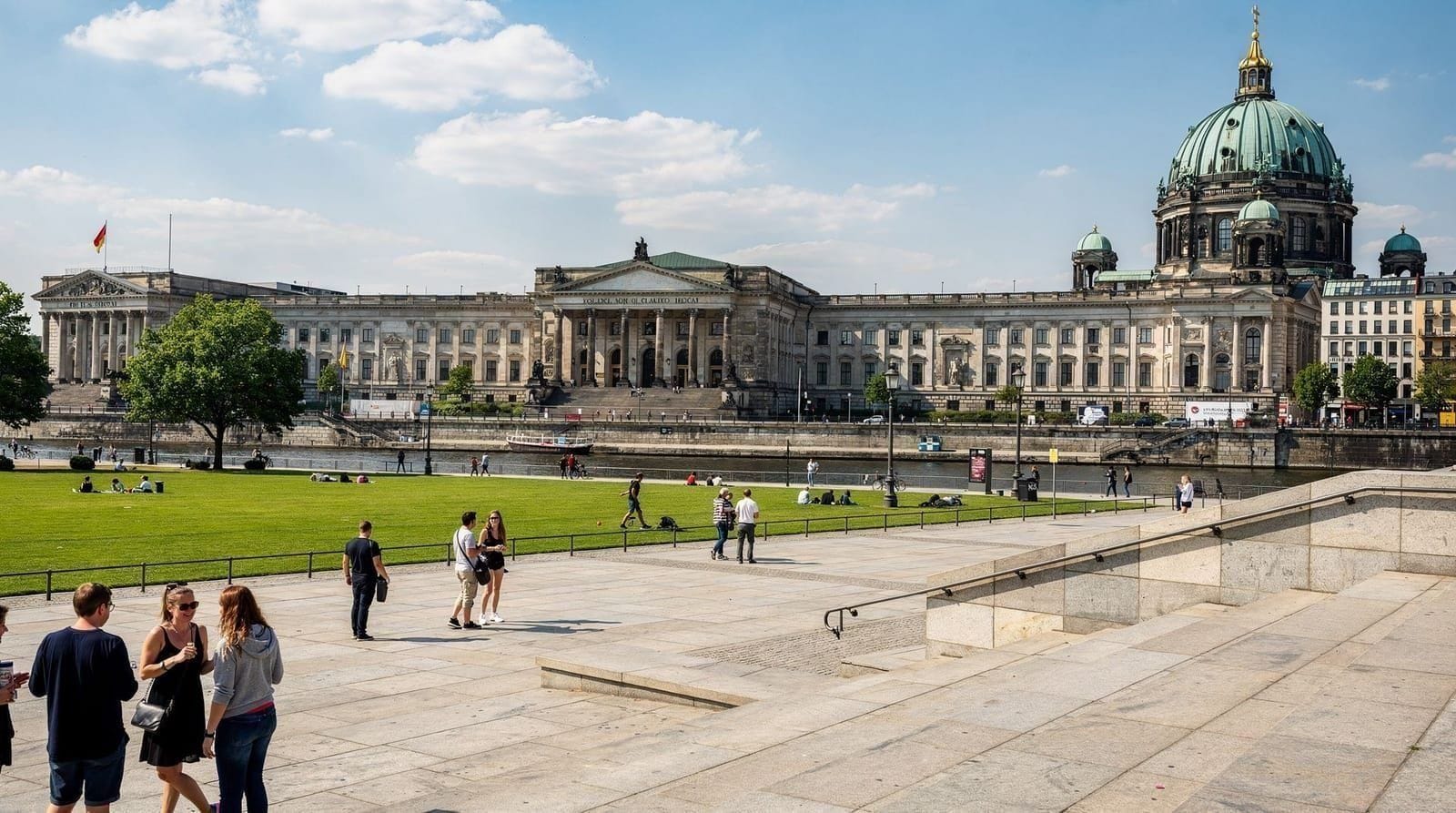
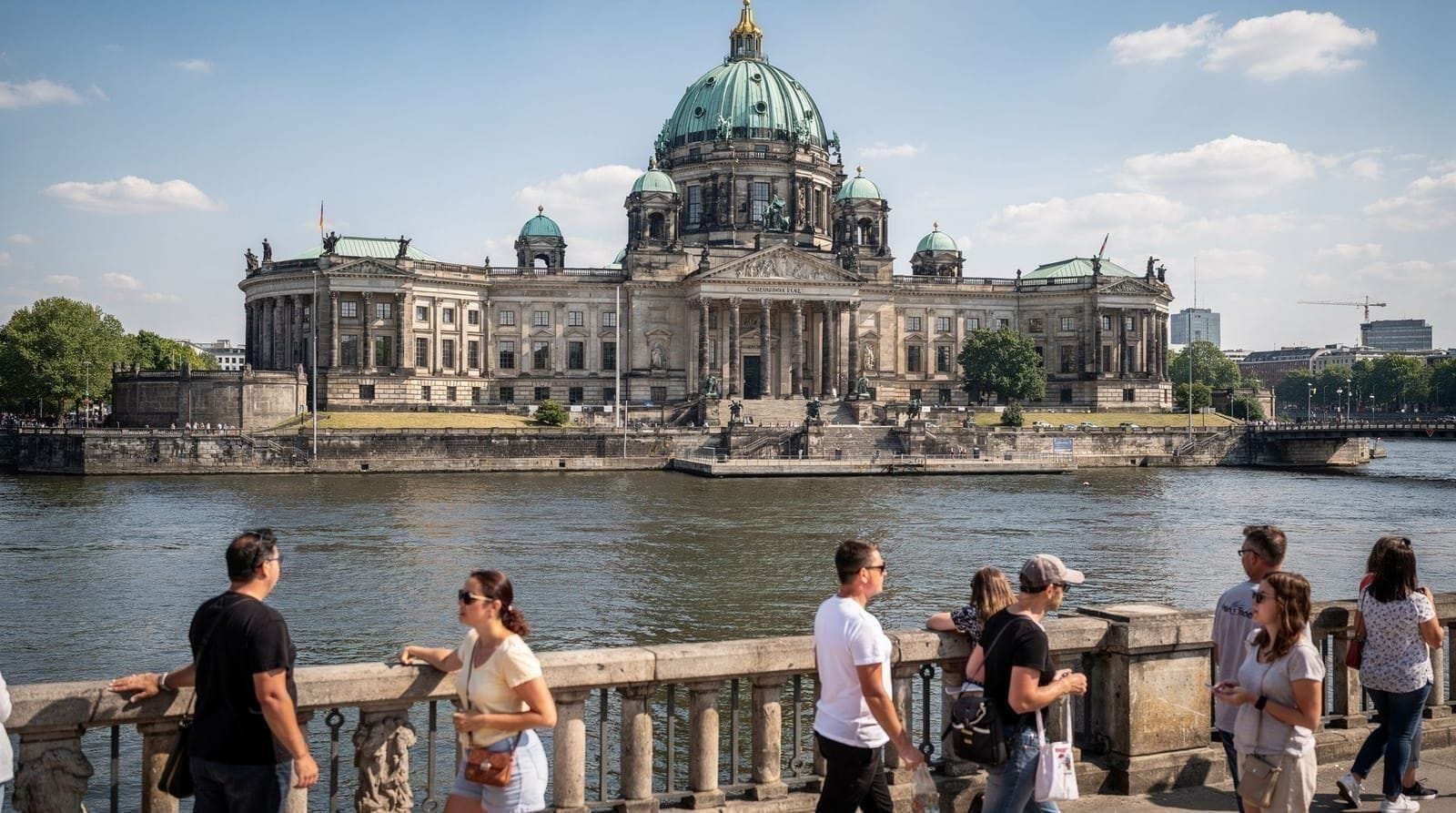
Museum Island (Museumsinsel) in the middle of the Spree is a UNESCO World Heritage Site containing five of Berlin’s most significant museums clustered within walking distance of each other. On a rainy day, it absorbs three to six hours easily.
Neues Museum: Nefertiti’s bust lives here, but the building itself — reconstructed by David Chipperfield after wartime damage left it a ruin — is worth the ticket on its own. The Egyptian collection is excellent.
Alte Nationalgalerie: German and European painting and sculpture from the 19th century. Less visited than the Egyptian collection, which means less crowding. The Caspar David Friedrich paintings are a highlight.
Altes Museum: Classical antiquities. The rotunda is architecturally magnificent.
Bode Museum: Byzantine art, sculpture collection, and a coin cabinet. The position on the Spree tip is dramatic.
Pergamonmuseum: The main hall remains closed until June 2027. However, the Pergamon Panorama (Asisi) — a 360-degree painted panorama by artist Yadegar Asisi depicting ancient Pergamon — remains open and is worth seeing as a standalone. The Pergamon Altar and Market Gate of Miletus are the most famous pieces and are housed in the section under restoration, so check current access before buying tickets.
A Museum Island day pass covers entry to all five museums, currently approximately €29 per adult, and is worthwhile if you plan to visit multiple.
Museum Island multiple entry ticketThe Museum Island guide has the detailed layout and recommendations on what to spend most time on.
DDR Museum — the interactive approach
The DDR Museum on the Spree bank near Berlin Cathedral offers an interactive experience of everyday life in East Germany. It’s compact — two to three hours maximum — and deliberately tactile: drawers to open, cars to sit in, living rooms to walk through.
The tone is neither nostalgic nor wholly condemnatory, which makes it more useful than a simple propaganda counter-exhibit. It tells you what people actually ate, watched on television, wore, and aspired to.
Entry approximately €14.50 per adult. Book online to skip queues.
The DDR Museum guide has a section-by-section walkthrough.
The Natural History Museum (Museum für Naturkunde)
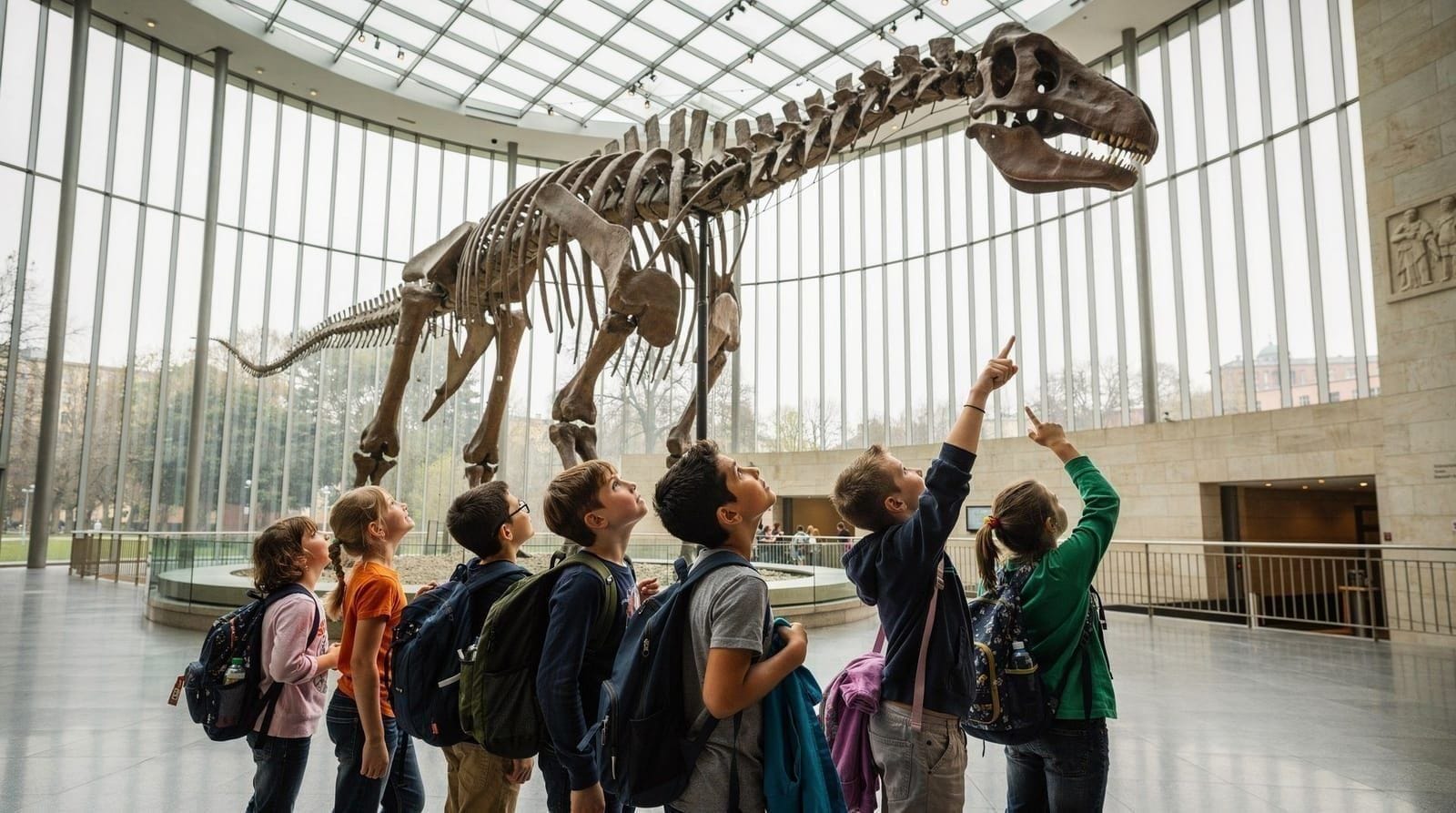
The Natural History Museum in Mitte is one of the best in Europe and consistently underrated. The main hall’s Brachiosaurus is extraordinary — 13.27 metres tall, the largest mounted dinosaur skeleton in the world. Beyond the dinosaurs, there are meteorites, a large taxidermy collection (the Wet Collections — specimens in fluid — are genuinely fascinating), and geological exhibits.
Plan two to three hours. Entry approximately €11 per adult. Free for children under 6.
Hamburger Bahnhof — contemporary art in a former station
The Hamburger Bahnhof in Tiergarten is Berlin’s contemporary art museum, housed in a converted 19th-century railway station. The main hall is spectacular even if you’re not primarily interested in art, and the current collection (as of 2026, post-reopening following significant renovation) includes major works from the Marx Collection including Beuys, Warhol, and Twombly.
Check what’s showing before you visit — temporary exhibitions vary significantly in quality and interest. Entry approximately €16 per adult.
Indoor markets: Markthalle Neun and Marheineke
Markthalle Neun in Kreuzberg is a covered market hall from the 19th century that now combines a permanent market (cheese, bread, produce, meat) with regular event markets. The most famous is Thursday Street Food Thursday (18:00-22:00), which gets very crowded but has excellent and varied food. On regular market days it’s quieter and more pleasant.
Marheineke Markthalle in Bergmannstrasse, Kreuzberg: smaller, more neighbourhood-focused, excellent produce and deli section. A good stop for lunch provisions.
Neither is a dedicated rainy-day tourist attraction, but both are genuinely used by locals and offer a more honest slice of Berlin than most tourist experiences.
The Spy Museum
The German Spy Museum (Deutsches Spionagemuseum) near Potsdamer Platz is better than its location in a tourist-heavy area would suggest. The collection covers espionage history from the Second World War through the Cold War to the present day, with a particular focus on Berlin’s role as a spy capital during the division.
Interactive elements — including a laser maze inspired by spy films — make it work for older children and adults who want an active museum experience. Entry approximately €17 per adult.
The Berlin Spy Museum guide has a full review.
Coffee and working in Berlin
Berlin has a well-developed café culture with many places designed for extended sitting. Unlike some cities where staff discourage long stays, Berlin cafés generally tolerate customers who nurse a coffee for two hours while reading or working.
Good options across the city:
- Bonanza Coffee (Prenzlauer Berg and Kreuzberg): Third-wave specialty coffee, good food, pleasant spaces
- The Barn (multiple locations): Probably the most-discussed Berlin specialty roaster; the Mitte café is the biggest
- Café Einstein Stammhaus (Schöneberg): Old Viennese-style coffeehouse in a 19th-century villa; order the Wiener Melange and a slice of Sachertorte; expensive but atmospheric
- Distrikt Coffee (Mitte): Good for breakfast or brunch, strong natural light through large windows
The Story Bunker (Berliner Unterwelten)
The organisation Berliner Unterwelten runs guided tours of Berlin’s underground infrastructure — Second World War bunkers, Cold War shelters, and subway construction history. The tours (conducted in German and English) go into actual bunkers beneath the city.
This is not suitable if you’re claustrophobic. For everyone else, it’s a genuinely unusual perspective on Berlin’s history. Tours must be booked in advance and leave from Gesundbrunnen station.
Berlin Story Bunker entryThe Topography of Terror
The Topography of Terror documentation centre stands on the site of the former SS and Gestapo headquarters in Berlin-Mitte. The outdoor exhibition covers the ruins and is exposed to weather, but the large indoor exhibition — documenting the SS, Gestapo, and SD from 1933 to 1945 — is fully covered.
Entry is free. The indoor exhibition takes two to three hours to read properly. It is thorough, well-sourced, and does not flinch from the perpetrators’ agency and ideology.
The Topography of Terror guide is worth reading before the visit to get the most from it.
Quick reference: cost and time by option
| Option | Entry | Time needed |
|---|---|---|
| Museum Island (day pass) | around €29 | 3–6 hours |
| DDR Museum | around €14.50 | 2–3 hours |
| Natural History Museum | around €11 | 2–3 hours |
| Hamburger Bahnhof | around €16 | 1.5–2.5 hours |
| Topography of Terror | free | 2–3 hours |
| Story Bunker tour | booked in advance | 1.5–2 hours |
If the weather looks unsettled for your whole trip rather than just one afternoon, the Berlin in winter guide covers the broader seasonal picture — what to expect month by month and how to plan around it, beyond just a single rainy day.
Planning a rainy day across the city
A practical rainy-day combination for adults:
- Morning: Museum Island (Neues Museum + one other)
- Lunch: Café in the museum or nearby in Nikolaiviertel
- Afternoon: DDR Museum or a gallery walk through Mitte
- Evening: Markthalle Neun or a Kreuzberg bar
Or, focused on the west:
- Morning: Natural History Museum
- Lunch: The Barn or a Mitte café
- Afternoon: Hamburger Bahnhof
- Evening: Charlottenburg area bar or restaurant
Neither itinerary requires going outside for more than a few minutes between stops.
FAQ
Q: Are Berlin museums open on Mondays? Many are not. Museum Island museums are generally closed Monday. The DDR Museum, Natural History Museum, and Hamburger Bahnhof have varying closure days. Always check before planning around a specific museum on a Monday.
Q: Is the Museum Island day pass worth it? If you’re visiting two or more museums, yes. It works out cheaper than individual tickets. It’s a timed entry at peak times, so book online.
Q: What’s the best museum for someone with limited interest in art history? The DDR Museum or the Natural History Museum. Both are accessible to visitors without specialist background and have strong interactive elements.
Q: Are indoor markets worth visiting in the rain? Yes — that’s actually when they’re at their best. Markthalle Neun has a proper roof and is busy with locals rather than tourists on rainy weekday mornings.
Q: Is the Pergamonmuseum fully open? No. The main hall remains closed until June 2027. The Pergamon Panorama (Asisi) and some sections are accessible. Check current status before buying tickets. See the Pergamon Museum 2026 status guide for a detailed update.
Q: What’s open in Berlin late at night on a rainy evening? Bars and clubs. Also some late-opening restaurants and night Imbiss. The U-Bahn and S-Bahn run through the night on weekends. Central Berlin stays active late.
Q: Are Berlin’s shopping arcades a good rainy-day option? Yes, as a secondary stop. The Bikini Berlin concept mall near Zoo station and the various Mitte shopping streets are fully covered and pair well with a coffee stop, though they’re a fallback rather than a destination in their own right compared to the museums above.
Q: Is it worth switching your whole day around for rain, or just adapting an hour or two? Depends on the forecast. If rain is forecast for a single afternoon, adapt rather than replan entirely — do outdoor sightseeing in the morning and switch to one of the indoor options above once the rain sets in. If the whole day is wet, commit to one full indoor anchor like Museum Island rather than hopping between short stops in the rain.