Best things to do in Kreuzberg
Berlin: Private Kreuzberg Food and Street Art Tour
Kreuzberg without the mythology
Every Berlin travel piece invokes Kreuzberg as shorthand for the city’s alternative spirit. That reputation is partially earned and partially outdated. The neighbourhood has been gentrifying steadily since reunification, with rents rising and some of the original counterculture infrastructure priced out. What remains is a quarter that is genuinely diverse, interesting, and food-rich — but not the anarchist frontier it was in 1989.
This matters for managing expectations. Kreuzberg in 2026 is not a preserved time capsule of West Berlin underground culture. It is a living neighbourhood where Turkish families who arrived in the 1960s, artists who arrived in the 1990s, and technology workers who arrived in the 2010s all coexist, sometimes uneasily. That mix is exactly what makes it worth a half-day.
| Where | South-central Berlin, U1/U8 |
| Cost | Free to walk; €4.50–5 for a döner, €30–45 for a food tour |
| Time needed | Half-day minimum |
| Getting there | U1 Görlitzer Bahnhof or U8 Hermannplatz |
| Best time | Tuesday/Friday for the market, Thu–Sun evenings for bars |
For the full neighbourhood context beyond this page, see the Kreuzberg neighbourhood guide.
The food scene: what’s actually good
Kreuzberg’s Turkish-German culinary heritage is the most distinctive thing about the neighbourhood’s food. The concentration of Turkish and Middle Eastern food runs roughly from Mehringdamm in the west to Görlitzer Bahnhof in the east along Oranienstrasse.
Mustafa’s Gemüse Kebap at Mehringdamm 32 has achieved international fame for its vegetable döner (€4.50–5). The queue on weekends regularly stretches to 45–90 minutes — this is not an exaggeration. The product is excellent, the theatre is genuine. For anyone prepared to wait, go. For anyone not, Rüyam Gemüse Kebap on Urbanstrasse 70 is a slightly less chaotic alternative producing food of comparable quality.
The Turkish Market (Türkenmarkt) on the Maybachufer canal bank runs Tuesday and Friday 11am–6pm. This is the best food market in Berlin by a comfortable margin — properly agricultural rather than artisanal, with prices that reflect local purchasing rather than tourist premium. The olive selection alone is worth the trip. Fresh Turkish bread, sheep’s milk cheese, pomegranates in season, and sampler plates of mezze-style prepared foods.

The Markthalle Neun (Eisenbahnstrasse 42/43, just over the Friedrichshain border) runs a Thursday street food market that has become genuinely outstanding — diverse food from around 40 stalls, with a strong representation of Kreuzberg’s Vietnamese community. Meatless, gluten-free, and allergy-aware options are well-covered. Arrive between 5pm and 7pm for the best selection.
Street art: what to look for and where
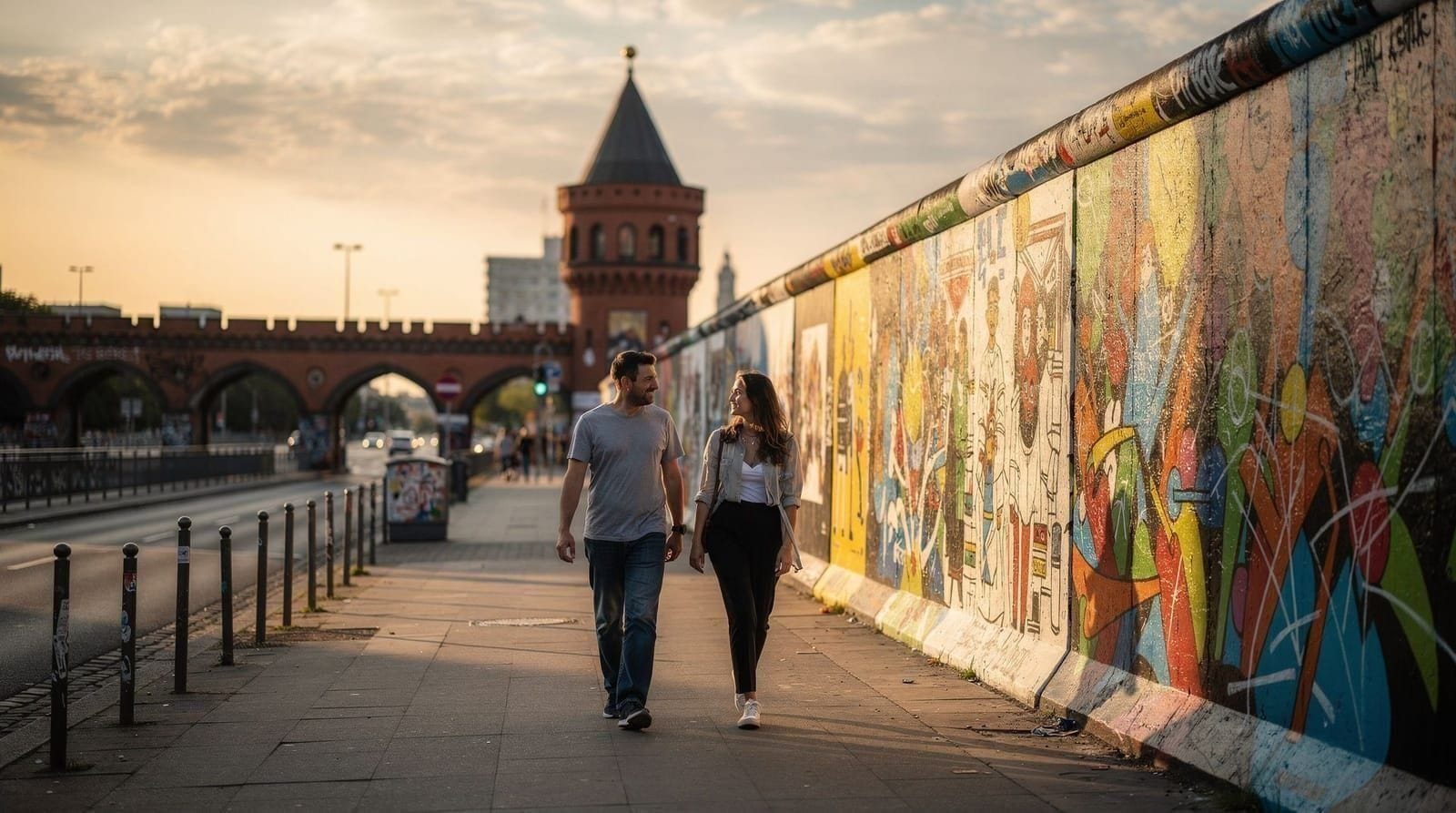
Kreuzberg’s street art sits in a different register from the East Side Gallery murals (those are in Friedrichshain across the river). Kreuzberg’s art is more fluid, more actively changing, and more genuinely embedded in the neighbourhood.
The Cuvrystrasse Meadow (near Cuvrystrasse and Schlesische Strasse) is a designated legal graffiti wall — large-scale murals that get painted over and replaced continuously. Coming here twice over the course of a Berlin trip, you’ll often see different work. The adjacent derelict warehouse structures have legal painting permission and carry some of the most ambitious large-scale work in the city.
Oranienstrasse itself functions as a street gallery — independent shops, record stores, and cafés all maintain their facades with commissioned work. The density of quality work increases toward the Heinrichplatz end.
Admiralbrücke (the footbridge over the Landwehrkanal) is a gathering point rather than specifically a street art location — Berliners and visitors bring guitars and beer and sit on the bridge in summer evenings. The surrounding streets are worth exploring for smaller-scale stencil and paste-up work.
The guided private street art tour takes in specific pieces with explanations of the artists, their approaches, and which works have protected status versus which are likely to be covered over within months.

The Landwehrkanal
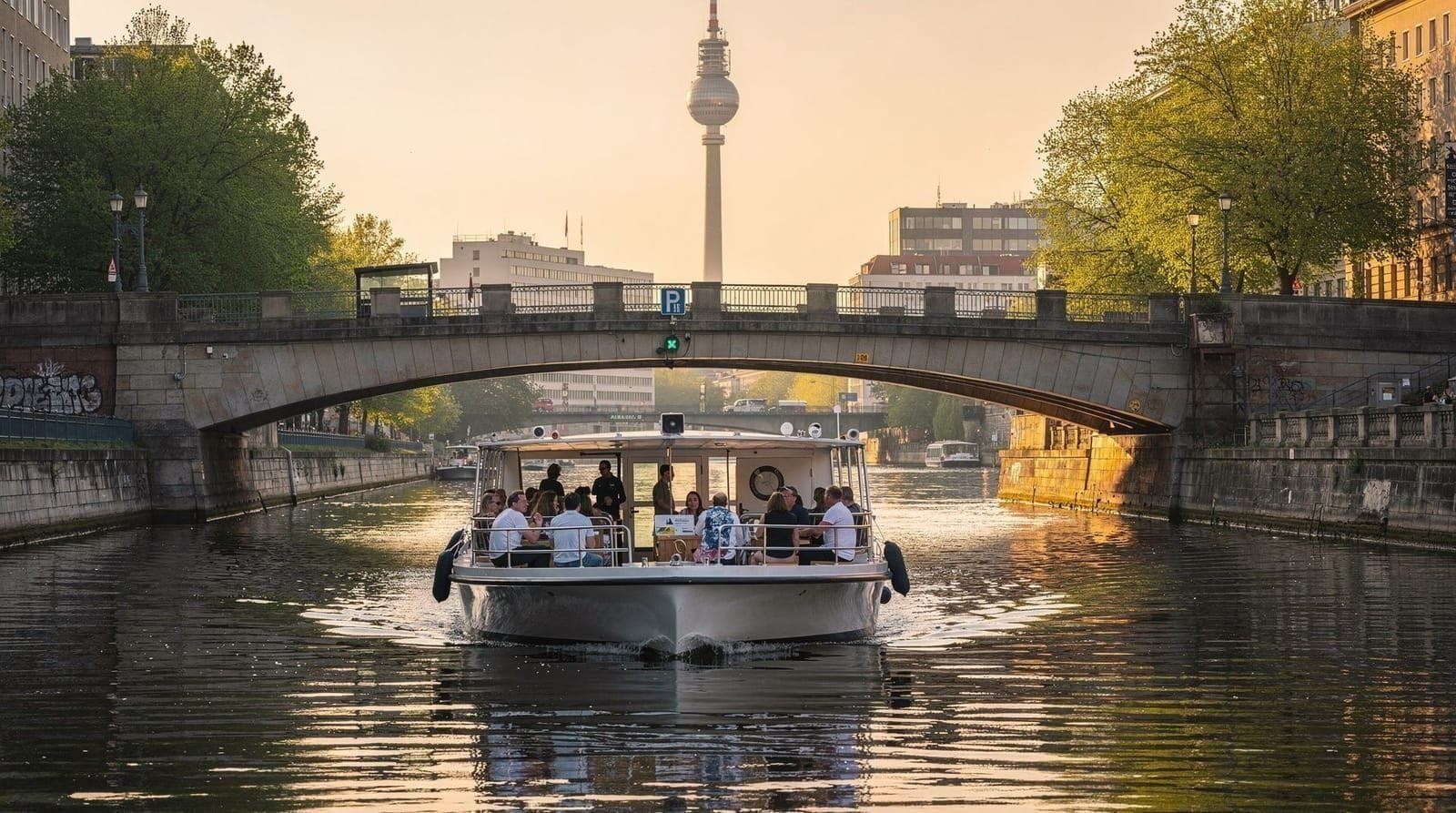
The canal running east–west through Kreuzberg functions as the neighbourhood’s outdoor living room from April through September. The embankments have bars and cafés with outdoor seating, the bridges are social gathering points, and locals cycle the full length for exercise. The northern bank (Paul-Lincke-Ufer) is the most consistently pleasant — the cafés here have better food and fewer tourist-oriented pricing structures than the equivalent spots in Mitte.
Rosa-Luxemburg-Platz (technically Mitte but bordering Kreuzberg mentally) has no obvious food market connection, but the Volksbühne theatre building facing the square hosts events year-round and defines the meeting point between Kreuzberg’s arts community and the city’s broader theatrical scene.
If you’re staying nearby, it’s worth reading the where to stay in Berlin guide before booking — Kreuzberg itself makes an interesting but noisier base than Mitte or Prenzlauer Berg, and the canal-facing streets in particular can be loud on weekend nights when the outdoor bars are at full capacity.
The bike tour option
Cycling through Kreuzberg and into Friedrichshain gives you the best spatial sense of how these neighbourhoods relate to each other and to the rest of the city. The guided bike tour covering both districts (Kreuzberg-Friedrichshain route) takes around 3.5 hours and covers street art, canal routes, the East Side Gallery, and the contrasting pre- and post-reunification built environment.

This is the most time-efficient way to cover the territory if you have a single afternoon — you move faster than on foot, the guide points out things you’d cycle past, and the route finishes near Ostbahnhof with good public transport connections.
Bars and nightlife
Kreuzberg’s bar culture is concentrated on a few specific streets.
Oranienstrasse runs from Moritzplatz to Görlitzer Bahnhof and has Berlin’s highest density of bars per block outside of Friedrichshain. The bars here open late (9pm–10pm) and stay open until 4am or later on weekends. Wild at Heart (Wiener Str. 20) does live music. Monarch Bar (above the Kaiser’s supermarket) is genuinely excellent — dark, loud, and reliably good music.
Bergmannstrasse area is the quieter, more café and wine-bar alternative to Oranienstrasse’s clubs. The clientele tends to be older and the closing times earlier. Excellent for a pre-dinner drink or a late afternoon glass of wine.
Watergate on the Spree at Falckensteinstrasse is the neighbourhood’s top techno club, with a second terrace overlooking the river. Queue culture applies here (arrive before midnight for best odds). See the full Berlin nightlife guide for Berghain and Kreuzberg club strategies, and the dedicated Kreuzberg bars guide for a fuller list.
Comparing Kreuzberg’s two main bar streets:
| Street | Vibe | Closing time | Best for |
|---|---|---|---|
| Oranienstrasse | Loud, dense, club-adjacent | 4am+ weekends | A late night out |
| Bergmannstrasse | Café and wine-bar, quieter | Earlier, more relaxed | A pre-dinner drink |
What to skip
Görlitzer Bahnhof park: The park itself is fine to walk through and has a decent children’s playground. The area around the northern entrance has persistent drug dealing — not dangerous but uncomfortable. Avoid sitting here after dark.
Watergate on a budget: The club charges €12–18 entry on top of drinks. The pre-club bar crawl options on Oranienstrasse are free to enter and can match the atmosphere at a fraction of the cost until midnight.
Generic “Berlin street food” tours that barely enter Kreuzberg: Some city-wide food tours use Kreuzberg as a single stop (the Turkish Market) within a broader circuit. These cover less ground with less depth than a dedicated Kreuzberg-focused tour.
Practical tips
- Best combination: Morning in Kreuzberg (Turkish Market Tuesday or Friday, then Bergmannstrasse cafés), afternoon at Museum Island or Topography of Terror, evening back in Kreuzberg for dinner and bars.
- Transport: U-Bahn U1 and U8 are the main lines. U8 Hermannplatz is the southern anchor; U1 Görlitzer Bahnhof is the eastern anchor. BVG bike-sharing docks are well-distributed across the neighbourhood.
- Cash: More places in Kreuzberg are cash-only than in Mitte. Bring €40–60 in cash for a half-day of eating and drinking.
- Language: Turkish is widely spoken along Oranienstrasse and at the market. English works universally.
- Combine with Friedrichshain: the two districts share a border at the East Side Gallery, and the bike tour route above is the most efficient way to see both without doubling back on transport.
For the complete Berlin 4-day itinerary that properly builds Kreuzberg into the schedule, see the Berlin 4-day itinerary.
Kreuzberg’s street art in context
Kreuzberg’s murals and stencil work sit within a wider Berlin tradition covered in the Berlin street art guide, and the Kreuzberg urban art page goes deeper on specific artists and legal-wall etiquette. If graffiti and murals are your main reason for visiting, pair Kreuzberg with a look across the river at Friedrichshain’s graffiti scene — the two neighbourhoods’ street art scenes developed together and are easiest to understand side by side.
Compare alternative tours
| Tour | Duration | Rating | Price | Highlights | |
|---|---|---|---|---|---|
| Berlin: Private Kreuzberg Street Art Walking Tour | — | — | — | — | Check availability |
| Berlin: Alternative Bike Tour of Kreuzberg & Friedrichshain | — | — | — | — | Check availability |
| Berlin: Guided Street Food & Cultural Walking Tour | — | — | — | — | Check availability |
| Berlin: Alternative & Street Art Tour | — | — | — | — | Check availability |
Frequently asked questions about Berlin
Is Kreuzberg safe for tourists?
Yes. Kreuzberg has a reputation that outpaces the reality for most visitors. The neighbourhood is genuinely diverse and lively. Görlitzer Park has a visible drug trade, particularly around the northern entrances, but remains safe to walk through in daylight. At night, common urban sense applies — stay aware of your surroundings on the quieter side streets. The busier commercial streets around Bergmannstrasse and Oranienstrasse are relaxed and welcoming at all hours.What is the Turkish Market in Kreuzberg and when does it run?
The Türkenmarkt (Turkish Market) runs along the Maybachufer canal bank on Tuesdays and Fridays, roughly 11am to 6pm. It is one of the best food markets in Berlin — olives, spices, fresh vegetables, cheese, and an extraordinary selection of Turkish breads and pastries. It draws a genuine local crowd rather than a tourist one. Arrive by noon for the best selection.What food should I try in Kreuzberg?
Kreuzberg is home to several of Berlin's most celebrated doner kebab shops — Mustafa's Gemüse Kebap on Mehringdamm is world-famous (expect queues of 45–90 minutes on weekends). For a less crowded excellent alternative, Rüyam on Urbanstrasse is consistently good. The neighbourhood's Turkish, Middle Eastern, and Vietnamese food scene is concentrated around Oranienstrasse and Wrangelstrasse.Can I do a self-guided street art tour in Kreuzberg?
Yes, but context is significantly better with a guide. The main street art areas — the East Side Gallery (technically Friedrichshain), the backstreets around Oranienstrasse, Admiralbrücke, and Cuvrystrasse — are walkable without a map if you know the area. A self-guided audio tour or a guided walk adds the backstory behind specific pieces, which artists are local versus international, and which walls are protected versus regularly repainted.When is the best time to visit Kreuzberg?
The neighbourhood is liveliest in the late afternoon and evening from Thursday through Sunday. Tuesday and Friday mornings are best for the Turkish Market. The Myfest street festival in May (around May 1st) transforms the neighbourhood into a vast street party — exciting but extremely crowded. Summer evenings along the canal banks (Landwehrkanal) are the quintessential Kreuzberg experience.Is it worth doing a guided food tour in Kreuzberg?
Yes, particularly for a first visit. The neighbourhood's food scene is concentrated but spread across different streets, and guides take you to places that aren't immediately visible from the main tourist paths. The Kreuzberg food and street art combo tour (€30–45) covers 8–10 tastings and typically visits the Turkish Market, a Neukölln crossing, and at least one independent café or juice bar that has genuinely local credentials.