Best things to do in Charlottenburg
Berlin: Charlottenburg Palace Entry Ticket with New Pavilion
Charlottenburg: Berlin’s westward-looking baroque counterpoint
Charlottenburg sits in the western half of Berlin, physically and culturally separate from the Mitte-centric tourist circuit that most first-timers follow. The quarter takes its name from Queen Sophie Charlotte, wife of Elector Frederick III who became King Frederick I of Prussia — the palace he built for her in the 1690s now dominates the neighbourhood’s northern edge. Understanding that context matters: Charlottenburg represents the origin point of Prussian royal ambition, predating Potsdam’s Sanssouci by several decades.
Most visitors underallocate time here. They treat the palace as a quick stop between the KuDamm and Zoologischer Garten. The palace alone warrants three hours; the neighbourhood, with its restaurants, independent galleries, and genuine West Berlin character, warrants a half-day at minimum.
| Where | Western Berlin, U2/U7 from Mitte (~25–35 min) |
| Cost | €12 State Apartments, €19 full combined ticket |
| Time needed | Half-day (palace + gardens + quarter) |
| Getting there | U7 Richard-Wagner-Platz or U2 Sophie-Charlotte-Platz |
| Best time | Weekday mornings before 11am |
Charlottenburg Palace: the state apartments
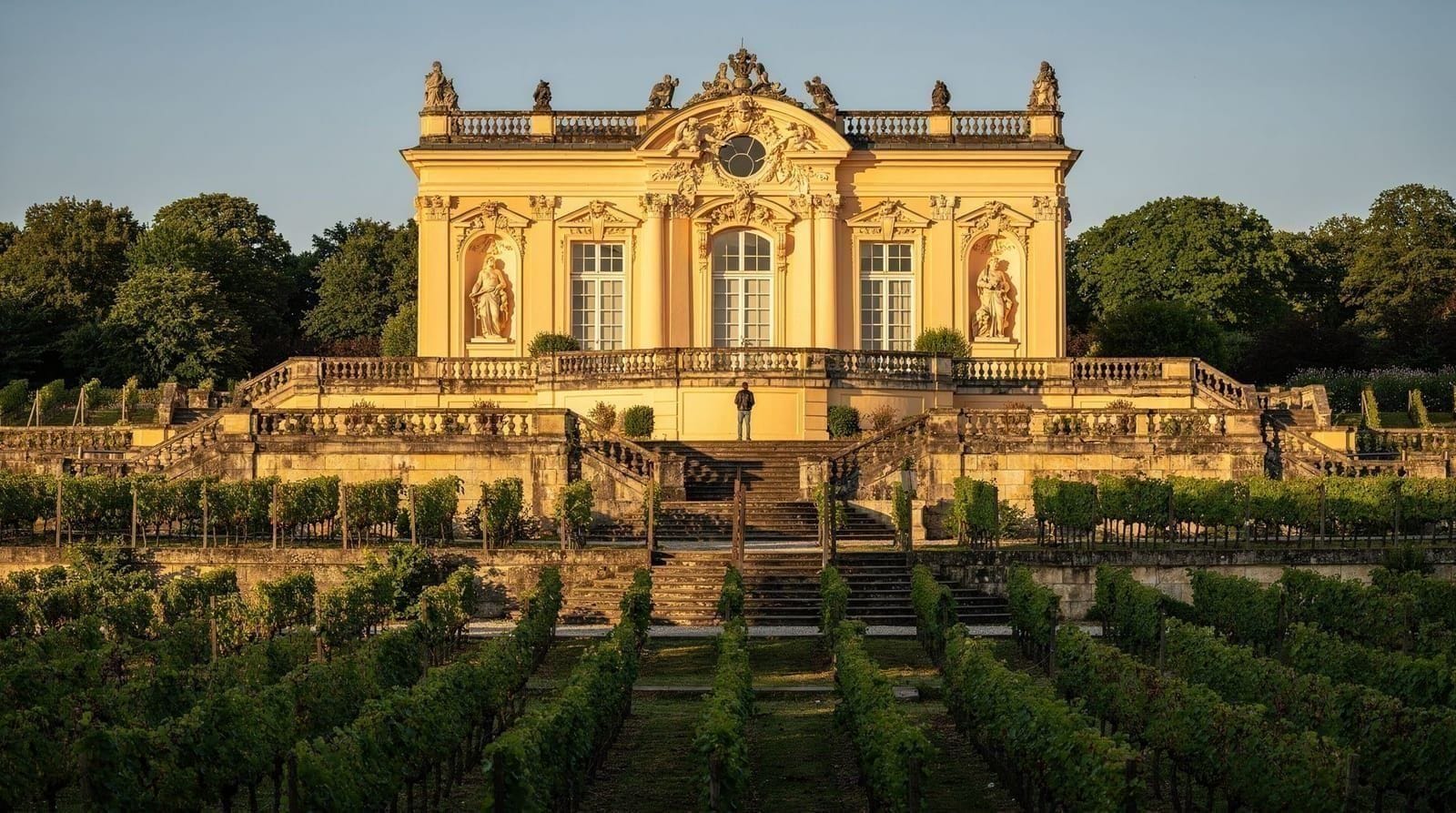
The palace’s main draw is the State Apartments in the central Altes Schloss (Old Palace). These rooms were reconstructed after severe World War II bomb damage and the quality of the restoration is remarkable given how completely the original was destroyed.
The Porcelain Cabinet is the single most astonishing room: floor-to-ceiling blue-and-white Delft and Chinese porcelain in a gold-framed ensemble that took three decades to assemble. The baroque chapel (Schlosskapelle) with its painted ceiling is genuinely affecting. The private apartments of Frederick I and Sophie Charlotte show the human scale of royal life against the ceremonial excess.

The audio guide (€4 extra) is practically mandatory — the rooms are not heavily labelled and context is lost without narration. The GYG audio tour ticket packages this more cleanly than the ticketing desk’s upsell process.

What’s NOT included in the base State Apartments ticket:
- The New Wing (Neuer Flügel) — where Frederick the Great’s private apartments are. This costs extra (€8) and includes the Gallery of Romantic Art.
- The Belvedere tea house, now a porcelain museum (€4)
- The Mausoleum in the gardens where Queen Louise is buried (€3)
- The Orangery / Schinkel Pavilion
The full combined ticket (€19 adult) covers everything and is worth it for anyone genuinely interested in the history.
Which ticket to buy:
| Ticket | Covers | Cost | Worth it if |
|---|---|---|---|
| State Apartments only | Altes Schloss main rooms, Porcelain Cabinet | €12 | You have under 2 hours |
| + New Wing | Adds Frederick the Great’s apartments, Gallery of Romantic Art | +€8 | You care about the Prussian art collection |
| Full combined | Everything, incl. Belvedere and Mausoleum | €19 | You’re spending 3+ hours here |
For a deeper dive into the palace’s history and room-by-room layout, see the full Charlottenburg Palace guide.
The palace gardens
The gardens behind the palace are free and open daily. They divide into two distinct styles: a formal French Baroque parterre immediately behind the palace (geometric beds, fountains) and an English-style landscape garden stretching to the Spree to the north. The carp pond with its resident white herons is a highlight few people seek out.
In May and June, the rose gardens at the eastern side of the French parterre are in full bloom and worth the walk. The garden café operates seasonally (April–October) and is a genuine good spot for coffee and cake — one of the few palace venue cafés in Berlin that doesn’t exploit the location too aggressively on price.
A self-guided garden walk takes 45–60 minutes if you explore fully. A guided palace and garden combination tour is the most time-efficient approach.

The Charlottenburg neighbourhood: beyond the palace
The streets around the palace and extending south toward the Kurfürstendamm make up one of Berlin’s most coherent residential bourgeois quarters. Here’s what’s genuinely worth your time:
Savignyplatz and surroundings: The square and its radiating streets (Grolmanstrasse, Knesebeckstrasse) are lined with restaurants, wine bars, and good independent bookshops. This is where west Berliners ate well before reunification redirected restaurant energy to Mitte. Schwarzes Café on Kantstrasse has been open 24 hours a day since 1978 and serves proper German-style café food without any tourist-trap pricing.
Kurfürstendamm (KuDamm): The great western boulevard, historically Berlin’s answer to the Champs-Élysées. Today it’s mainly high-street chains and international luxury brands. The commercial stretch between Wittenbergplatz and Rathenauplatz is interesting historically but not as distinctive as its reputation suggests. The Kaiser Wilhelm Memorial Church at the eastern end (deliberately kept as a bombed ruin alongside a modern cylindrical replacement) is a genuinely powerful monument — and free to enter.
Fasanenstrasse: Parallel to the KuDamm, this quieter street has galleries, the Berlin branch of the Käthe Kollwitz Museum (€10, housed in a villa), and the Literaturhaus Berlin café in a period villa garden — excellent for afternoon coffee with a literary crowd.
Charlottenburg Old Town (Altstadt Charlottenburg): Immediately south of the palace along Otto-Suhr-Allee, this is the historic village centre that predates the palace and the incorporation into Berlin. The Town Hall and market square area gives the neighbourhood a distinct city-within-the-city feel.
Combining Charlottenburg with Potsdam
The logical full-day extension from Charlottenburg is the day trip to Potsdam. The thematic connection is clear: both destinations trace the arc of Prussian royal ambition, from Sophie Charlotte’s 1690s baroque palace to Frederick the Great’s 1740s rococo summer retreat at Sanssouci. Seeing them in the same day makes each more intelligible.
The guided Charlottenburg–Potsdam excursion tour handles transport, entry tickets, and the connecting narrative between both sites.

From Charlottenburg, the S5 or S7 S-Bahn from Westend station runs to Potsdam Hauptbahnhof in 35–40 minutes on a Zone ABC ticket (€4.40 single). The Berlin Potsdam weekend itinerary has the full logistics.
What to eat in Charlottenburg
Borchardt is technically in Mitte, but the Charlottenburg restaurant culture runs on a different rhythm. The neighbourhood’s best food is found in mid-range restaurants that have been cooking for the same local clientele for 20+ years.
Restaurant am Steinplatz (Uhlandstrasse) is a solid choice for proper German cuisine without tourist-trap pricing. XII APOSTEL on Bleibtreustrasse does very good pizza and late-night dining. For a quick lunch near the palace, the market stalls on Otto-Suhr-Allee on Thursday mornings sell better food than any of the tourist-facing café options near the palace gates.
The KuDamm eating corridor (Ku’damm Karree, the Bikini Berlin concept mall) is convenient but generic — if you’re eating near Zoologischer Garten, Hardenbergstrasse has several independent options that are meaningfully better than the chain restaurants dominating the boulevard.
For a broader survey of where Charlottenburg fits into Berlin’s food scene — including which neighbourhoods do street food, fine dining and everything between — see the Berlin food tour guide. If you’re comparing this quarter’s calmer restaurant culture against Kreuzberg’s louder, cheaper Turkish-German scene, the Kreuzberg food guide is the natural companion read.
Getting around Charlottenburg
The quarter is large but well-served by public transport.
- Palace to KuDamm: Bus M45 or a 15-minute walk south on Schloßstraße
- KuDamm to Zoologischer Garten: U2 (one stop) or a pleasant 10-minute walk
- Charlottenburg to Mitte: U2 from Zoologischer Garten to Alexanderplatz (14 minutes)
The area is also good for cycling — the streets are wide and relatively low-traffic compared to Mitte. The Berlin highlights guided bike tour loops through Charlottenburg before continuing to the government district and East Berlin, giving a useful east–west contrast in one circuit.
What to skip in Charlottenburg
Story of Berlin on KuDamm: A commercial history exhibition charging €14 for content you can get for free at the Topography of Terror or DDR Museum. Skip it.
The Kurfürstendamm luxury hotel lobby bars: Extremely expensive drinks, no atmosphere beyond ostentatious display. The Savignyplatz wine bars are far more interesting at a fraction of the price.
Palace souvenir shop: Overpriced royal memorabilia you won’t use. The Staatliche Museen shop near Museumsinsel has better-quality reproductions.
For a full five-day Berlin itinerary that properly integrates Charlottenburg, see the Berlin 5-day itinerary.
Where to stay if you’re basing yourself here
Charlottenburg makes a reasonable, if slightly quieter, alternative base to Mitte — hotels tend to be a little cheaper and the neighbourhood feels genuinely residential. It suits travellers who want easy west-Berlin access and don’t mind a 15–20 minute U-Bahn ride into the historic centre each day. See the where to stay in Berlin guide for how it compares with Mitte, Kreuzberg and Prenzlauer Berg.
Compare alternative tours
| Tour | Duration | Rating | Price | Highlights | |
|---|---|---|---|---|---|
| Berlin: Charlottenburg Palace Ticket & Audio Tour | — | — | — | — | Check availability |
| Berlin: Charlottenburg 2-Hour City Walking Tour | — | — | — | — | Check availability |
| Charlottenburg Palace with an Excursion to Potsdam | — | — | — | — | Check availability |
| Berlin: Guided Bike Tour to Explore the Highlights | — | — | — | — | Check availability |
Frequently asked questions about Berlin
Is Charlottenburg Palace worth visiting?
Yes, for anyone interested in Prussian history, Baroque architecture, or royal interiors. The State Apartments are extraordinary — the Porcelain Cabinet alone justifies the ticket price. Allow 2–3 hours for the palace and gardens combined. Audio guide tours (€4 extra) are strongly recommended as context is thin without them.How do I get to Charlottenburg Palace from central Berlin?
Take U-Bahn line U7 to Richard-Wagner-Platz or U2 to Sophie-Charlotte-Platz (both a 10-minute walk from the palace). Alternatively, bus M45 runs from Zoologischer Garten station directly to the palace gates. Journey time from Mitte is around 25–35 minutes. The palace is not walkable from the Brandenburg Gate area.How much does Charlottenburg Palace cost?
Entry to the State Apartments costs €12 adult, €8 reduced (2026 prices). The separate Orangery, Belvedere Porcelain Museum, and Mausoleum each cost extra (€4–6 each). A full combined ticket for all buildings costs around €19. The palace gardens are free. Audio guide hire is €4.What is the Charlottenburg neighbourhood like?
Charlottenburg is one of Berlin's wealthiest and most traditionally bourgeois quarters — upscale shopping on the Kurfürstendamm, good restaurants around Savignyplatz, and a quieter, more west-Berlin feel compared to Mitte or Kreuzberg. It's a strongly residential area that shows a different side of the city from the standard tourist circuit.Can I combine Charlottenburg with a Potsdam day trip?
Yes — this is a popular combination. Charlottenburg Palace in the morning (2–3 hours), then take the S5 or S7 train from Westend station to Potsdam (about 45 minutes). The palaces share thematic connections through Prussian royal history. A guided excursion covering both in one day is also available.What is the best time to visit Charlottenburg Palace?
Weekday mornings before 11am are consistently the least crowded. Summer weekend afternoons can see significant queue build-up at the State Apartments entrance. The palace gardens are at their best in May–June (roses blooming) and September–October (autumn colours around the carp pond).