Museum für Naturkunde Berlin with kids — dinosaurs, free entry & honest tips
Berlin: Sightseeing Boat Tour on the Spree for Families
Is Museum für Naturkunde Berlin worth visiting with children?
Yes — it's one of Berlin's best free family attractions. The permanent collection (free for all visitors) includes the world's tallest mounted dinosaur skeleton (Giraffatitan, 13.27 metres), a large fossil hall, minerals, meteorites, and a wet specimen collection. Children aged 4–14 are consistently engaged for 2 hours. The museum is compact, well-organised, and entirely free for the permanent collection. Special exhibitions require a ticket (€7–12).
Is Museum für Naturkunde Berlin worth it with children? It’s one of Berlin’s most reliable free family attractions. The permanent collection — dinosaur hall, minerals, wet specimens, evolution exhibits — is free for all ages. The Giraffatitan skeleton (13.27 metres, world’s tallest mounted dinosaur) delivers the kind of visual impact that sticks in children’s memory. Allow 2 hours; arrive Tuesday–Friday morning to avoid weekend queues.
| Where | Invalidenstrasse 43, Mitte/Wedding |
| Cost | Free (permanent collection); temporary exhibitions €7–12 |
| Time needed | 1.5–2.5 hours with children |
| Getting there | U6 Zinnowitzer Straße or Naturkundemuseum |
| Best time | Tuesday–Friday mornings, before weekend crowds |
Why this museum works so well for children
Most natural history museums require reading to engage. Museum für Naturkunde mostly just requires looking up. The dinosaur hall (Dinosaurierhalle) puts visitors inside a large, double-height gallery with multiple large skeletons mounted at ground level — you can walk around them, see them from different angles, and judge their actual scale against your own body. There are no barriers keeping you 10 metres back.
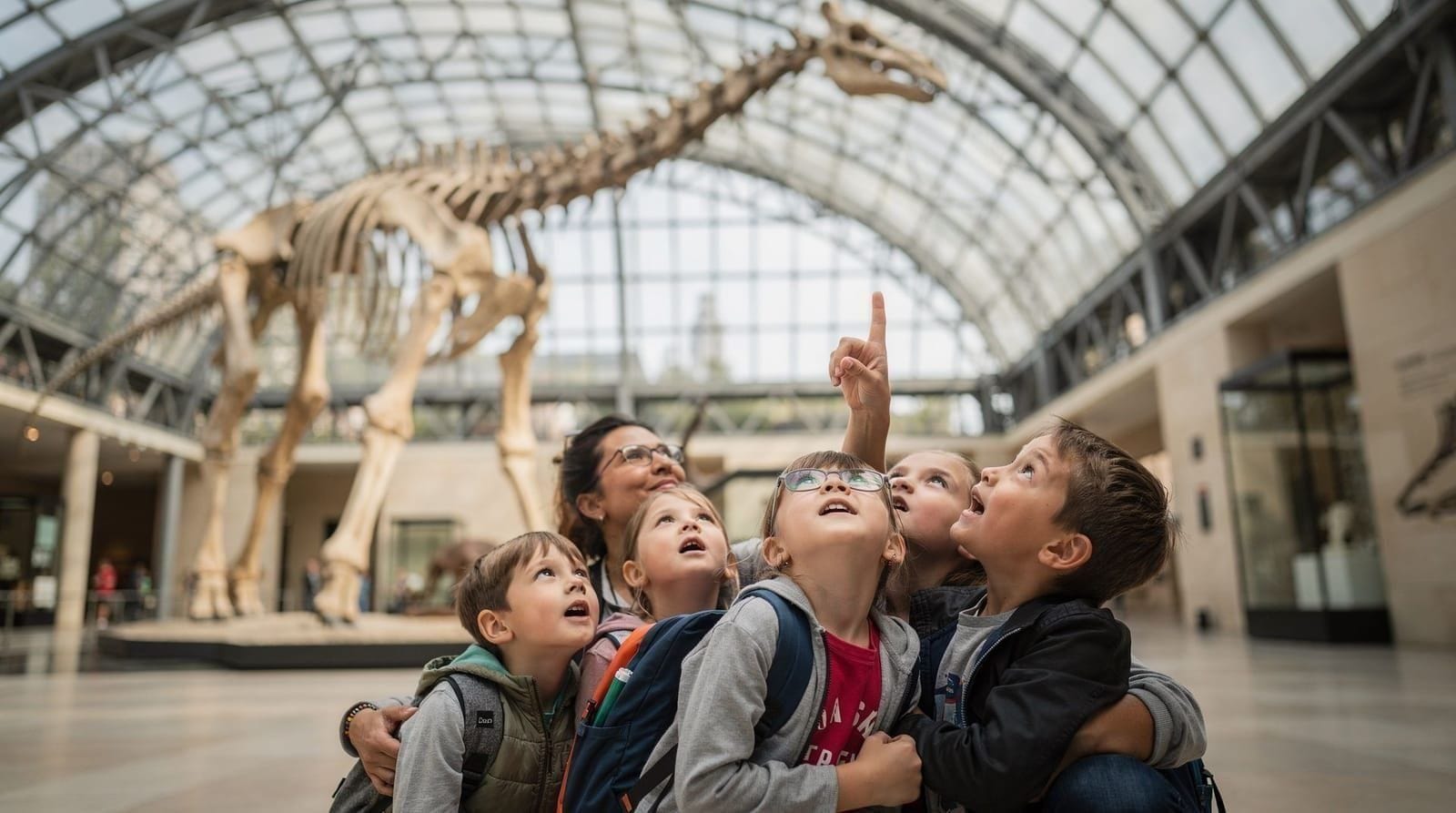
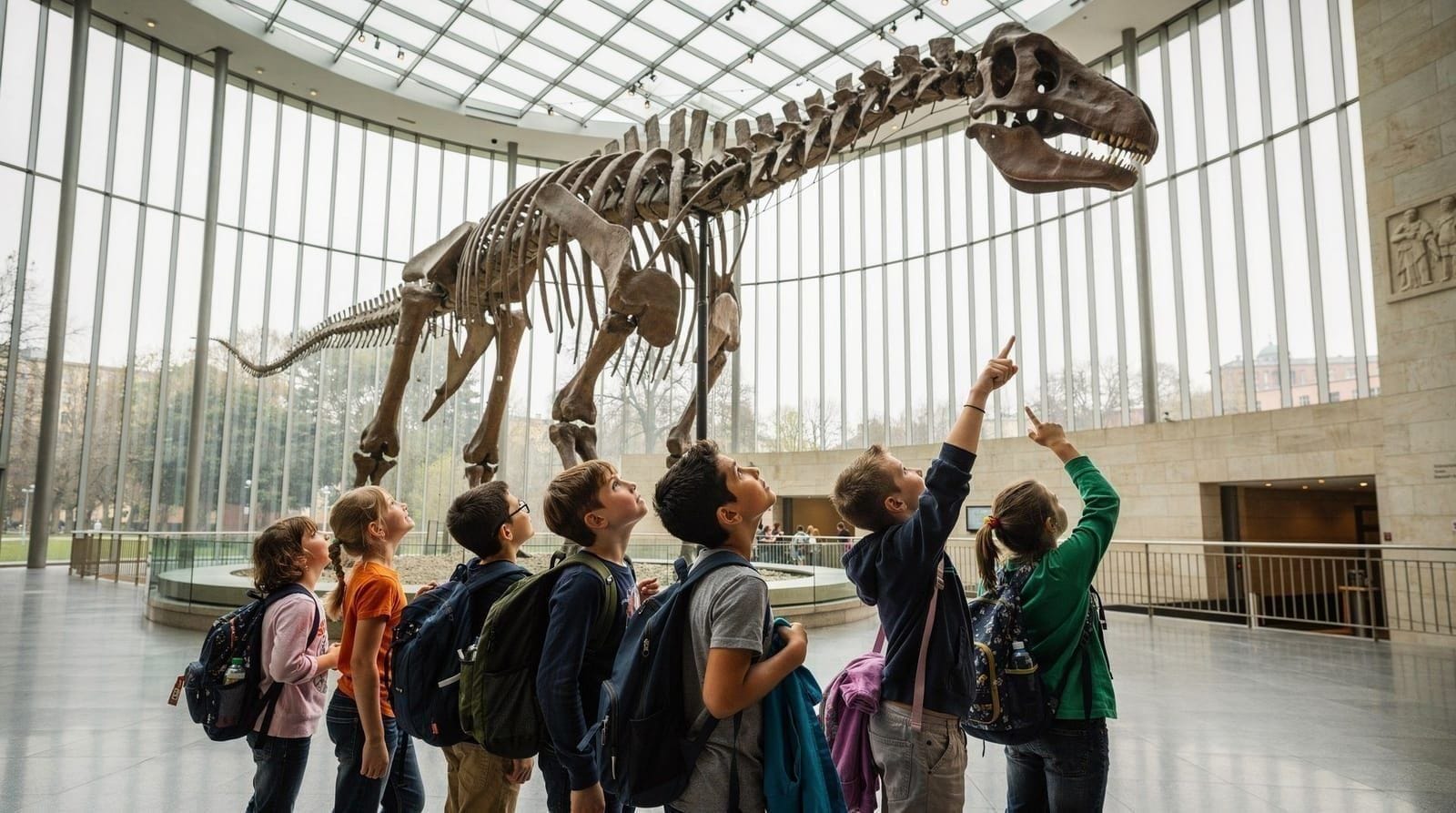
The Giraffatitan brancai skeleton — formally reclassified from Brachiosaurus brancai in 2009 — stands 13.27 metres high and 22 metres long. It was the world’s tallest mounted dinosaur skeleton, a record it has held since 1937. The size is difficult to prepare children for. Most children’s books show dinosaurs at illustrated scale; the actual object, in a room you’re also standing in, is categorically different.
For adults: the exhibition notes in the dinosaur hall are thorough and available in German and English. The geological and evolutionary context is well-explained. This is not a superficial “ooh big bones” museum — it’s a serious scientific institution with one of the best dinosaur collections in the world.
What’s in the museum: hall by hall
Dinosaurierhalle (Dinosaur Hall)
The central hall and the reason most families visit. Primary exhibits:
Giraffatitan brancai: The centrepiece — 13.27 metres high, excavated from the Tendaguru formation in Tanzania (1909–1913). The size relative to the ceiling of the hall is striking. The bones are original fossils mounted in an anatomically reconstructed pose.
Kentrosaurus aethiopicus: Also from Tendaguru, a complete skeleton of the East African stegosaurid relative — rows of plates and spines along its back. Smaller than Giraffatitan but more dramatic in shape.
Diplodocus longus: Another large sauropod in the main hall for scale comparison.
Allosaurus fragilis: A large theropod (Jurassic predator, North American) displayed with an attack posture.
Tyrannosaurus rex: A mounted cast of a T-rex skeleton in the secondary hall — note this is a cast, not original fossil material, unlike most of the Tendaguru specimens.
The hall also has a life-reconstruction of a Giraffatitan using the “Oskar” computer model — digital screens showing what the live animal might have looked like in motion. This is a relatively recent addition aimed at children.
Mineral und Gesteine (Minerals and Rocks Hall)
An enormous display of minerals, crystals, gemstones, and meteorites. The hall has floor-to-ceiling cabinets organised by mineral family. For children interested in rocks and crystals, this section is a 30-minute distraction. The meteorite collection includes a large iron meteorite you can touch (tactile exhibit).
Wet Specimens Gallery (Sammlung Nass)
This is one of the museum’s most distinctive and debated spaces: a long corridor lined floor-to-ceiling with glass jars of preserved animals in alcohol solution — fish, amphibians, reptiles, invertebrates. Approximately 200,000 specimens are stored here; a portion is on public display. The collection was damaged in World War II (many jars lost their fluid) and has been preserved in its original 19th-century cabinetry.
For children: Fascinating or disturbing, depending on the child. Most children aged 6+ find it compelling — a wall of preserved creatures at eye level is genuinely strange. Under-5s may be unsettled. It’s dark and smells distinctly of preservative. Worth a 10-minute look with children old enough to handle it. If your child is unsettled by the specimens, the DDR Museum nearby is a gentler, hands-on alternative for the rest of the day.
Evolution and Biodiversity
The main floor beyond the dinosaur hall covers evolution, biodiversity, and the tree of life. Dioramas of habitat ecosystems, mounted animals in naturalistic poses (birds, large mammals), and exhibits on species extinction. The extinction panels include material on species lost in the 20th and 21st centuries — environmentally engaged teenagers find this genuinely moving.
Temporary exhibitions (ticketed)
Temporary exhibitions on themes such as climate change, deep-sea life, or specific evolutionary periods are typically held in the north wing. Entry is ticketed separately (€7–12). These vary in child-suitability — check descriptions before paying.
Practical family tips
When to go
The museum is significantly quieter on weekdays (Tuesday–Friday) compared to weekends. The dinosaur hall on a Saturday afternoon in summer can be genuinely crowded, with children having to queue to view the Giraffatitan from close range. Arrive at opening (09:30 on weekdays) for the most comfortable experience.
The museum is closed on Mondays.
Age-by-age guide
- Under 3: The big dinosaurs work visually, but toddlers can’t sustain 2 hours of observation-based exhibits. 60–90 minutes maximum. Useful for a focused “see the dinosaurs” trip without other goals.
- Ages 4–7: The dinosaur hall and mineral collection are ideal. Most children this age are in a dinosaur-interest phase; the Giraffatitan delivers. Don’t push through all galleries if energy flags after the dinosaur hall.
- Ages 8–12: All sections work. This age group can engage with the wet specimens, the evolution exhibits, and the geological timeline. Allow a full 2 hours.
- Ages 12–16: The collection is genuinely scientifically serious. Teenagers interested in biology, evolution, or palaeontology can spend 2.5–3 hours. The mineral collection is also popular with geology-interested teenagers.
Pushchair access
The museum is fully pushchair-accessible on the ground floor. The mineral hall and wet specimen gallery are on the same level as the dinosaur hall. There are lifts to upper floors. Pram parking is available at the main entrance — you can leave a large pushchair at the door and carry a young child on a sling or front carrier for the main hall viewing.
Photography
Personal photography is permitted throughout the permanent collection without flash. The Giraffatitan is an obvious priority — position yourself at the far end of the hall for full-length shots, or get close to the feet for scale perspective.
Combining Museum für Naturkunde with other attractions
Museum für Naturkunde + Tiergarten: After 2 hours in the museum, the Tiergarten is a 20-minute walk south (or take the M10 tram to Potsdamer Platz and walk in from the east side). Children can decompress in the park after the museum. See Tiergarten family guide.
Museum für Naturkunde + Berlin Zoo: The Berlin Zoo is about 25 minutes by bus M29 or U6 southwest. A morning museum visit followed by an afternoon Zoo visit makes a full and coherent family day themed around nature and animals.
Museum für Naturkunde + DDR Museum: Both on the same tram line (M5 connects Alexanderplatz/Spree to Invalidenstrasse). Possible for older children, but typically too much for under-8s in a single day.
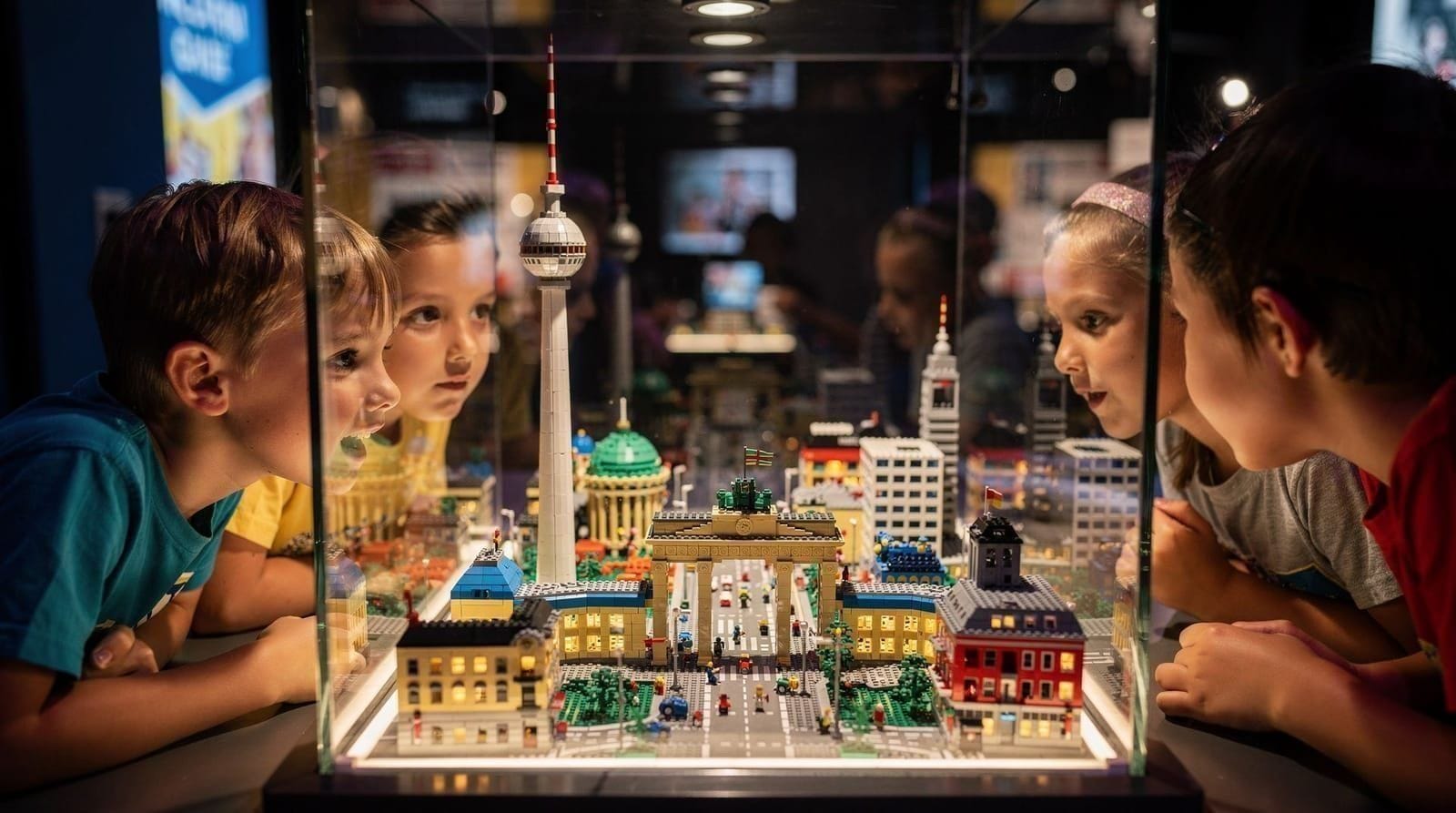
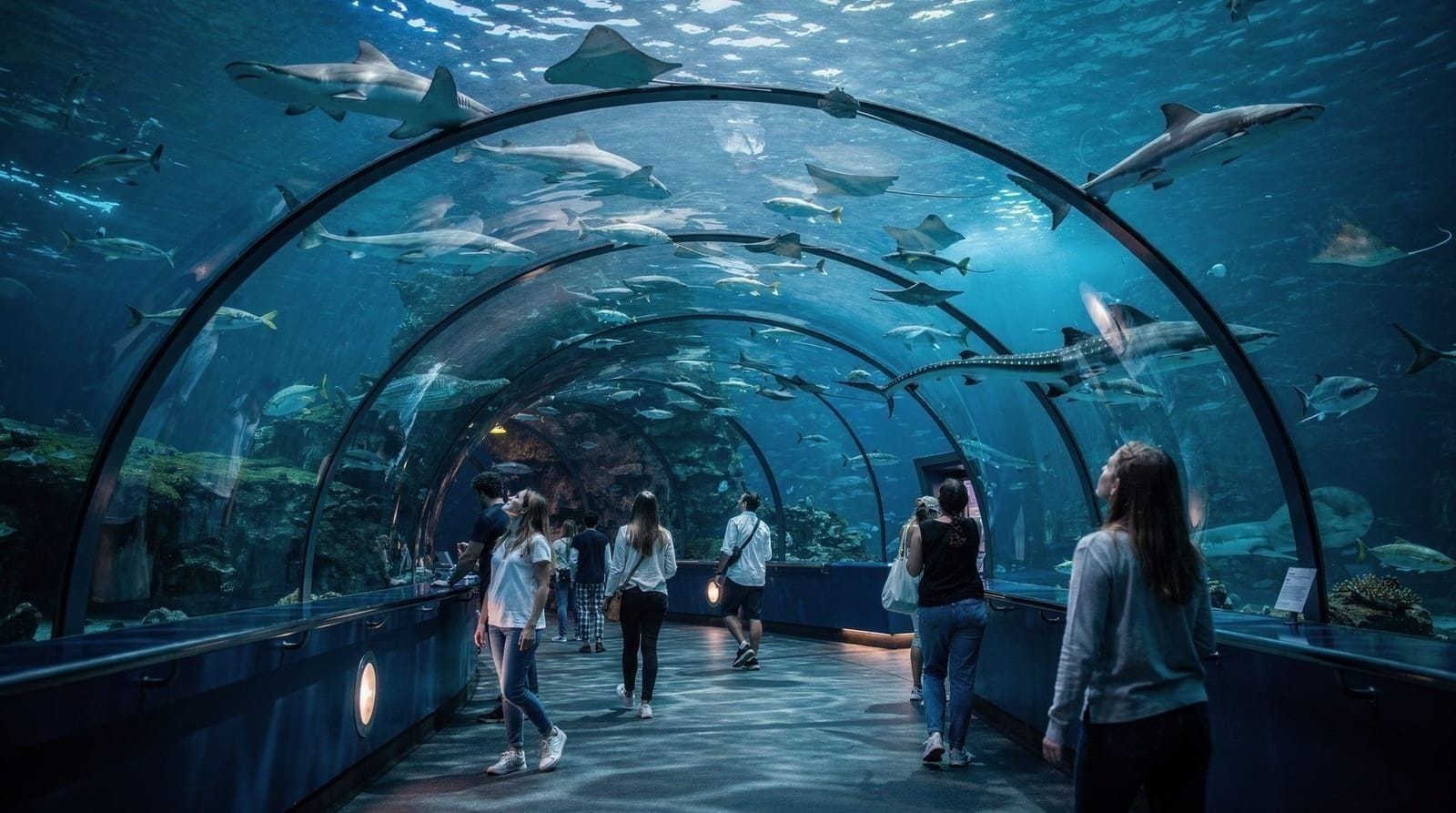
Museum für Naturkunde + Legoland Discovery or SEA LIFE: For families wanting a second, more interactive stop, the Legoland Discovery Centre and SEA LIFE Berlin are both near Alexanderplatz — a short ride away — and offer the tactile play this museum lacks.
If it’s raining, or the museum feels like too much
On a wet day, Museum für Naturkunde is one of the most reliable free indoor options in the city, alongside the ideas in the Berlin rainy-day guide for kids. If your child tires of observation-based exhibits partway through, the museum’s compact layout means you can leave from almost any hall in under 5 minutes — there is no need to complete a fixed circuit. For a longer family stay in Berlin, the 4-day Berlin with kids itinerary slots this museum in as a half-day alongside the Tiergarten or the Zoo rather than as a standalone full day, and the general Berlin with kids guide has the fuller list of age-appropriate attractions across the city.
Frequently asked questions about Museum für Naturkunde Berlin with kids
Is Museum für Naturkunde Berlin free for children?
The permanent collection is free for all visitors — adults and children. You do not need to book or pay for the dinosaur hall, the mineral collection, the wet specimen gallery, or the evolution exhibits. Temporary special exhibitions have a separate ticket (typically €7–12 for adults, €3–6 for children). Check the museum website before visiting to see if any ticketed temporary exhibitions are running.How big is the Giraffatitan dinosaur skeleton at Museum für Naturkunde?
The Giraffatitan brancai skeleton (formerly classified as Brachiosaurus brancai) is the world's tallest mounted dinosaur skeleton at 13.27 metres. It was excavated from the Tendaguru site in present-day Tanzania in 1909–1913 by a German expedition and is displayed in the Dinosaurierhalle alongside other large sauropods and the complete Kentrosaurus skeleton. The sheer scale of the Giraffatitan in the main hall is reliably impressive for children and adults alike.How long does Museum für Naturkunde take with children?
Most families spend 1.5–2.5 hours. The dinosaur hall typically takes 30–40 minutes for children aged 5–12. The mineral collection, wet specimen gallery, and evolution exhibits add another 60–90 minutes for engaged children. Under-5s tire faster — 60–90 minutes is more realistic for toddlers. Allow 2 hours as a comfortable planning estimate.Where is Museum für Naturkunde Berlin?
Invalidenstrasse 43, 10115 Berlin, in the Mitte/Wedding district north of Hauptbahnhof. U-Bahn: U6 to Zinnowitzer Strasse (3 min walk) or Naturkundemuseum (5 min walk). Tram M5, M8, M10 stop on Invalidenstrasse directly outside. S-Bahn: S1, S2, S25 to Nordbahnhof (10 min walk).Is Museum für Naturkunde suitable for very young children (under 3)?
The museum has no dedicated toddler zone or interactive play area. Under-3s who can be carried or sit in a pushchair (the museum is pushchair-accessible) do fine in the main hall — the sheer visual spectacle of the dinosaur skeletons works for all ages. However, the museum doesn't have the tactile or interactive elements of Legoland or Sea Life; it's better for children who can absorb observation-based exhibits.Is there a café or restaurant at Museum für Naturkunde Berlin?
A small museum café operates inside on weekends (weekend only, not open Monday–Friday). On weekdays, the museum has no on-site food service. Bring snacks. The surrounding Invalidenstrasse area has several cafés and bakeries within 5 minutes' walk.Does Museum für Naturkunde require booking?
The permanent collection is walk-in (no booking required). Special exhibitions may require booking online, particularly on weekends. The museum closes on Mondays. Opening hours are Tuesday–Friday 09:30–18:00, Saturday–Sunday 10:00–18:00. Check the official website (naturkundemuseum.berlin) for any timed-entry requirements that may have been introduced.What else can we do near Museum für Naturkunde with kids?
The Tiergarten is a 20-minute walk south and makes a good decompression stop after the museum. Berlin Zoo is about 25 minutes away by bus M29 or U6, and the DDR Museum sits on the same M5 tram line for a more hands-on afternoon. For families wanting interactive play rather than observation, Legoland Discovery Centre and SEA LIFE Berlin near Alexanderplatz are a short ride away.
Top experiences
Bookable activities with verified prices and instant confirmation on GetYourGuide.