Berlin Zoo guide — Germany's oldest zoo, tickets, pandas & practical tips
Berlin: Sightseeing Boat Tour on the Spree for Families
How much does Berlin Zoo cost and is it worth it?
Adult tickets are €20, children (4–15) cost €10, and under-3s enter free. A combo ticket covering both the Zoo and the separate Berlin Aquarium costs €28 for adults and €14 for children — significant value if you plan to visit both. The Zoo houses 19,500 animals across 1,380 species on 35 hectares. It is Germany's oldest zoo (founded 1844) and consistently ranks among Europe's top three zoos for species diversity. For families, it is a full-day attraction.
How much does Berlin Zoo cost and is it worth it? Adult tickets are €20, children €10, under-3s free. The Zoo + Aquarium combo is €28/€14 — worth it if you plan both. With 19,500 animals across 1,380 species on 35 hectares, this is Germany’s oldest and most species-dense zoo. Allow a full day; it is not a 2-hour attraction.
| Where | Charlottenburg, bordering the Tiergarten |
| Cost | Around €20 adult / €10 child; combo with Aquarium around €28 / €14 |
| Time needed | 4–5 hours for a proper visit, 6–7 for every section |
| Getting there | S-Bahn/U2 Zoologischer Garten, or Budapester Strasse gate near Kurfürstendamm |
| Best time | Opening (09:00) to 10:30, weekday mornings |
Berlin Zoo: why it stands out
Founded in 1844 on land donated by King Friedrich Wilhelm IV, the Zoologischer Garten Berlin is Germany’s oldest zoo. It survived near-total destruction in World War II — only 91 animals survived the bombing of 1944–1945 — and was rebuilt from scratch. Today it houses more species than any other zoo in the world, a record it has held continuously.
The Zoo is located adjacent to the Tiergarten in Charlottenburg, making it easy to combine a morning in the Zoo with an afternoon in the park. It is not the most progressive zoo by modern standards — the animal enclosures vary considerably in size and quality — but the sheer variety of species, the quality of the panda and elephant facilities, and the scale of the bird house make it genuinely world-class.
What to prioritise
Giant Panda Garden (Pandahaus)
The Zoo’s most famous attraction. The current residents — Meng Meng, Jiao Qing, and their offspring — are visible in the Panda Garden facility opened in 2017. On busy days, a separate timed entry slot may be required (no additional charge; just join the queue with your Zoo ticket). Pandas are most active in morning and late afternoon; they sleep during midday heat in summer.
Elephant House
A historic building from 1873 (rebuilt post-war) housing Asian and African elephants. The indoor area is architecturally interesting. The outdoor paddock is large by central European zoo standards. Bulls and cows are sometimes separated — the keeper board outside indicates which animals are visible on any given day.
Hippopotamus House
Berlin Zoo’s hippo pool is one of the more successful hippo enclosures in Europe — the animals have both indoor and outdoor access to water, and the underwater viewing panels are well-positioned for children. The Zoo also keeps pygmy hippos (Choeropsis liberiensis) in a separate section.
Aquarium (separate building)
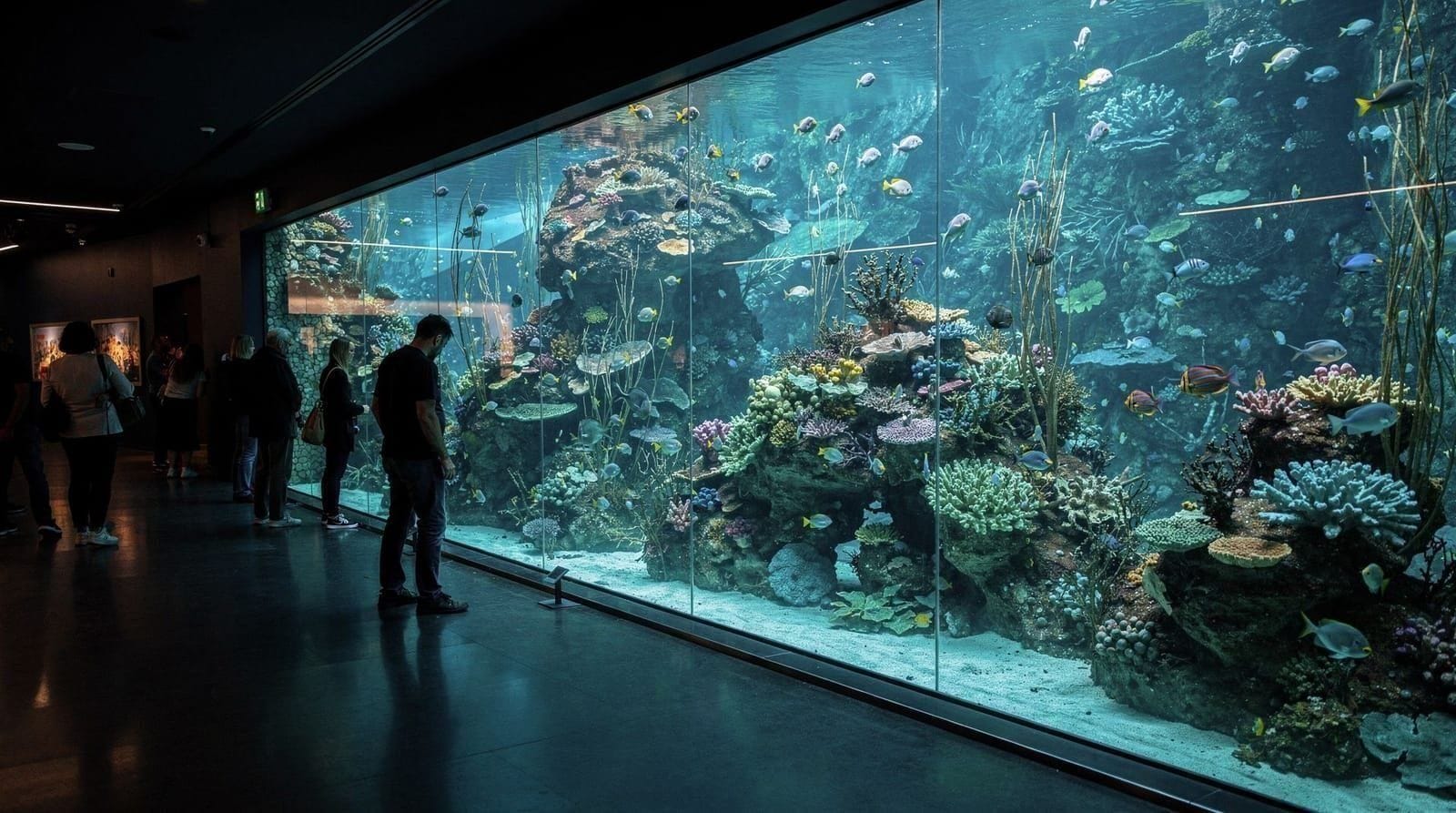
The Berlin Aquarium (Zoo-Aquarium) at Budapester Strasse 30 is a separate building within the wider Zoo complex, included in the combo ticket. It covers freshwater and marine species across three floors — fish (ground floor), amphibians and reptiles (first floor), insects and invertebrates (second floor). The diversity and depth of the reptile collection is exceptional. See the separate Berlin Aquarium guide.
Bird House (Vogelhaus)
One of the largest and oldest bird houses in Europe, housing hundreds of species in walk-through and cage environments. The free-flight section is loud and chaotic in the best way for children. Several species roam freely at ground level.
Children’s Zoo (Kinderzoo)
The dedicated children’s area covers goats, sheep, pigs, rabbits, and various domestic animals that can be fed and touched. Staff run animal contact sessions at set times. For children aged 2–8, this is often the most memorable part of the day. Access included with Zoo entry.
Nocturnal animals house
Worth visiting if you have time: a darkened building housing creatures reversed to wake during the day (their “day” is artificially simulated as night). Children who have never seen an aardvark, a tarsier, or a naked mole rat at close range are usually impressively excited.
Tickets and prices (2026)
| Ticket type | Zoo only | Zoo + Aquarium |
|---|---|---|
| Adult (16–64) | €20 | €28 |
| Child (4–15) | €10 | €14 |
| Under 4 | Free | Free |
| Senior (65+) | €17 | €25 |
| Family (2A+2C) | €52 | €74 |
| Annual pass (adult) | €65 | €88 |
Tickets are available at the gate and online. During peak seasons (Berlin school holidays, Easter), queues at the Hardenbergplatz gate can be long — arrive before 10:00 or use the Budapester Strasse entrance which is less crowded.
Getting there
Main entrance (Hardenbergplatz): Next to the S-Bahn station Zoologischer Garten (S3, S5, S7, S9) and U2 Zoologischer Garten. The station is directly in front of the gate.
Aquarium entrance (Budapester Strasse): A second entrance to the Zoo grounds via the Aquarium building at Budapester Strasse 30. Served by bus M29, M45, and X9. A 10-minute walk from Kurfürstendamm.
Bus connections: Lines M45, X9, 200 all stop at Zoologischer Garten. The Zoo is one of the best-connected destinations in western Berlin.
By car: Not recommended. Parking in Charlottenburg is expensive (€3–4/hour at nearby car parks). The train is faster from central Berlin.
Planning your visit
Arrive early
The Zoo opens at 09:00 daily. The first 90 minutes (09:00–10:30) are significantly calmer than the middle of the day, especially in summer. Animals are also more active in the morning before heat settles in.
Feeding times
Keeper feeding sessions are listed on the Zoo’s website and on boards at each enclosure. The sea lion feeding (Seelöwen) and penguin feeding (Humboldt-Pinguine) sessions are the most consistently scheduled and well-attended. Arrive 10–15 minutes before listed times.
Food inside the Zoo
Multiple kiosks and a main restaurant (Zooschänke, near the elephant house) are inside the Zoo grounds. Quality is standard venue food — sausages, sandwiches, chips, ice cream. Prices are high by Berlin standards (€7–12 per main). Packing lunch and using the many picnic tables is a genuinely better option. The Zoo’s rules allow outside food.
Rainy day strategy
Many of the Zoo’s major animal houses are enclosed: Elephant House, Hippo House, Aquarium, Bird House, Nocturnal animals house, and the Panda Garden all have indoor viewing. A rainy day at the Zoo is still viable — plan a route around indoor sections and accept that outdoor paddocks will be emptier.
Combining Berlin Zoo with nearby attractions
Tiergarten park: The Zoo borders the Tiergarten. After the Zoo, children can burn energy in the Tiergarten playgrounds without leaving the same general area. See Tiergarten family guide.
Charlottenburg Palace: 15 minutes by bus or S-Bahn west from the Zoo station. Worth combining for older children interested in royal history, less relevant for under-8s.
KaDeWe food hall: The legendary department store 10 minutes on foot from the Zoo entrance has a spectacular food hall on the 6th floor — interesting for a lunch detour with older children or teenagers.
Berlin Aquarium building vs Sea Life: Visitors regularly confuse these two. The Berlin Aquarium (Zoo-Aquarium) at Budapester Strasse is part of the Zoo complex and covered by the combo ticket. Sea Life Berlin at Alexanderplatz is a separate commercial attraction with no connection to the Zoo. If you’ve already bought the Zoo + Aquarium combo, Sea Life adds little beyond what you’ve already seen — see the Sea Life Berlin guide for what it does differently.
Berlin Zoo for families with very young or very active children
If you’re travelling with a mix of ages, the Zoo’s layout genuinely accommodates it. Toddlers exhaust quickly on the 35-hectare site, so plan a route rather than wandering — enter at Hardenbergplatz, do the elephant and hippo houses first (indoor, high engagement, minimal walking between them), then let older children range further toward the bird house. Stroller rental at the entrance (€8/day) is worth it even for families who normally manage without one; the distances add up. See the Berlin with kids guide for how the Zoo fits into a wider family itinerary, and Tiergarten family guide for extending the day into the adjacent park.
For a first day in the city that pairs the Zoo with a broader introduction to Berlin’s landmarks, a hop-on-hop-off route or river cruise both work well as a lower-energy afternoon after a morning at the Zoo.
Spree family sightseeing boat cruise — child-friendly, 1 hourFrequently asked questions about Berlin Zoo guide
How much does Berlin Zoo cost in 2026?
Zoo only: adults €20, children (4–15) €10, under-3 free, senior (65+) €17. Zoo + Aquarium combo: adults €28, children (4–15) €14. Family ticket (2 adults + 2 children): Zoo only €52, Zoo + Aquarium combo €74. Annual passes are available from €65 per adult for Zoo only.How long should I plan for Berlin Zoo?
A typical family visit is 4–5 hours. With the attached Berlin Aquarium (separate building on Budapester Strasse, included in the combo ticket), add another 1.5 hours. If you want to see every section of the Zoo at leisure, allow a full 6–7 hours. Prioritise the panda enclosure, elephant house, bird house, and children's zoo (Kinderzoo) if time is short.Does Berlin Zoo have giant pandas?
Yes. Berlin Zoo has housed giant pandas since 1980. The current residents are Meng Meng (female) and Jiao Qing (male), on long-term loan from China. In 2019, Meng Meng gave birth to twins Paule and Pit — the first panda twins born in Germany. As of 2026, the adult pandas and young adults are housed in the Panda Garden (Pandahaus), which sometimes has a separate timed entry slot on busy days.What is the difference between Berlin Zoo and Tierpark Berlin?
Berlin has two major zoological institutions. The Zoo (Zoologischer Garten) in Charlottenburg is the original, founded 1844, with the highest species density in Germany on 35 hectares. The Tierpark in Friedrichsfelde (East Berlin) is the larger of the two by land area (160 hectares) but with fewer species per hectare — more of an open landscape park. Most visitors prioritise the Zoo for a single-day visit; the Tierpark works for a second day or for families who want more space.Is the Berlin Zoo stroller-friendly?
Yes. The Zoo's main paths are paved and suitable for pushchairs and wheelchairs. Some older animal houses have steps inside, but ground-floor viewing is available for all major enclosures. Stroller rental is available at the Zoo entrance (Löwentor and Hardenbergplatz gates) for €8 per day with €10 deposit.What is the children's zoo (Kinderzoo) at Berlin Zoo?
The Kinderzoo is a designated children's area where children can feed farm animals (goats, sheep, pigs), touch smaller animals, and interact with keepers. Open daily within the Zoo grounds at no additional charge beyond Zoo entry. Best for ages 2–8.How do I get to Berlin Zoo?
Two stations serve the Zoo: Zoologischer Garten (the main Berlin Zoo station) is served by S-Bahn S3, S5, S7, S9 and U2 U-Bahn, and numerous buses. This entrance leads to the Hardenbergplatz gate. Alternatively, the Budapester Strasse gate is a short walk from Kurfürstendamm station on U15. The Zoo is in the heart of Charlottenburg, very accessible from central Berlin.
Top experiences
Bookable activities with verified prices and instant confirmation on GetYourGuide.