Chorin — Gothic brick abbey and summer concerts in the Barnim forest
Kloster Chorin is a 13th-century Cistercian brick abbey 60 km north-east of Berlin, famous for summer concerts and forest walks. Grounds from €5.
Quick facts
- Address
- Amt Chorin 11, 16230 Chorin (Barnim district, Brandenburg)
- From Berlin
- RE3 from Berlin Hauptbahnhof to Chorin station (~55 min), then 2 km walk through forest
- Admission
- Abbey ruins and grounds €5 adults, €3 concessions, under 12 free; concerts €25–55
- Opening hours
- April to October 09:00–18:00; November to March 10:00–16:00; ruins accessible year-round
- Concert season
- Choriner Musiksommer — late May to late August; programme at choriner-musiksommer.de
- Time needed
- 2–4 hours for abbey and forest walk; half-day for a concert evening
Kloster Chorin is not widely known outside Germany, which is precisely what makes it worth knowing. Sixty kilometres north-east of Berlin, this 13th-century Cistercian monastery rises from the birch and pine forest of the Barnim like an unfinished red-brick cathedral — which, in a sense, it is. Building began in 1273 under the Brandenburg margraves; the Reformation dissolved the monastery in the 16th century, expelled the monks, and left the buildings to centuries of gradual absorption by the surrounding woodland.
What survived is remarkable: one of the finest examples of North German Brick Gothic (Backsteingotik) architecture in existence, set in a landscape of exceptional tranquillity. Since 1991, the ruins have also served as the stage for the Choriner Musiksommer — a summer concert series that brings chamber orchestras, choirs, and soloists into the old nave from late May through late August. As a day-trip from Berlin, Kloster Chorin offers something genuinely different: medieval architecture, a functioning forest ecosystem, and, if you time it right, some of the most atmospheric live music in the region.
| Where | Barnim forest, ~60 km north-east of Berlin |
| Cost | Abbey around €5; concerts around €25–55 |
| Time needed | 2–4 hours for abbey and forest walk; half day with a concert |
| Getting there | RE3 from Berlin Hbf to Chorin station (~55 min), then a 2 km forest walk |
| Best time | Late May–August for concerts; April–October for the abbey; September for autumn colour |
The architecture: Backsteingotik at its most refined
Cistercian monasteries across medieval Europe followed a deliberate aesthetic philosophy of simplicity — no stone sculpture, no gilded altars, no coloured glass. Cistercian architecture was meant to produce contemplative calm, not visual spectacle. At Chorin, this ideology found expression in the manipulation of red brick rather than cut stone — which is scarce in the North German plain — achieving Gothic forms of considerable sophistication through geometry and surface texture rather than ornament.
The west facade is the most celebrated element. A composition of blind arcading, lancet windows, stepped gables, and decorative brickwork patterns, it demonstrates how much the Cistercian builders of Brandenburg could extract from a single material. The east end of the church, where the monks’ choir would have been, retains its apse, with surviving windows and the characteristic rhythm of the Cistercian arcade. Most of the nave roof is gone — the roofless space is one of the architectural facts that makes the Choriner Musiksommer work so well acoustically and visually — but the walls stand to something close to their original height.
The monastery was founded by the Ascanian margraves of Brandenburg as a dynastic mausoleum. Several members of the ruling family were buried here. Building continued through the late 13th and early 14th centuries, and the complex that emerged included the main church, a full cloister with chapter house, refectory, lay brothers’ wing, and the gatehouse on the eastern approach. This is not a fragment of a monastery — it is a largely complete footprint, with the walls of the main church the most dramatically surviving element.
The Reformation ended monastic life here in 1542 under Elector Joachim II of Brandenburg. Subsequent centuries brought gradual deterioration: local communities stripped useful building materials, the roofs collapsed, and the forest began to reclaim the ruins. The Romantic rediscovery of the site in the early 19th century changed its trajectory. Karl Friedrich Schinkel, the architect responsible for much of Berlin’s neo-classical civic architecture and for the rebuilding of major Prussian monuments, visited Chorin in 1817 and issued a formal recommendation that the ruins be preserved as a “picturesque monument” rather than restored to function or allowed to collapse further. This intervention — preservation rather than reconstruction — shaped how the ruins look today.
Visiting the abbey
Admission: Adults €5, concessions (students, seniors, disabled) €3, children under 12 free. Entry covers the ruins and the permanent small exhibition on the abbey’s history in the former chapter house wing. A family ticket for two adults and up to three children is approximately €12.
Guided tours: German-language guided tours are available on weekends and public holidays during season (April to October), typically at 11:00 and 14:00. They run for approximately 45–60 minutes and cover the architecture, the monastic community, and the site’s 19th-century preservation history. Groups can arrange English-language tours in advance through the Klosteramt Chorin — contact details on kloster-chorin.de. For independent English-speaking visitors, a printed English guide sheet is available at the entrance; an audio guide (€2, German and English) covers the main elements.
The cloister walk: The east wing of the cloister is the best-preserved section of the subsidiary buildings. The rhythmic arcade of brick arches creates the characteristic Cistercian enclosure; the garden courtyard within is maintained simply, without elaborate planting. In quieter periods — weekday mornings in spring or autumn — you may have this space largely to yourself, and the combination of brick, shadow, and stillness produces the contemplative atmosphere the builders intended.
The church nave: The roofless nave is the most dramatic space on the site. The remaining walls stand to their original height on the south and west sides; the west rose window opening frames the sky and the surrounding tree canopy. In summer, the Choriner Musiksommer stages concerts in this space, with the audience seated on the nave floor and the performers at the eastern end where the monks’ choir would have been. The acoustic is unlike any purpose-built concert hall — neither dry nor reverberant, with an outdoor quality modified by the enclosing walls.
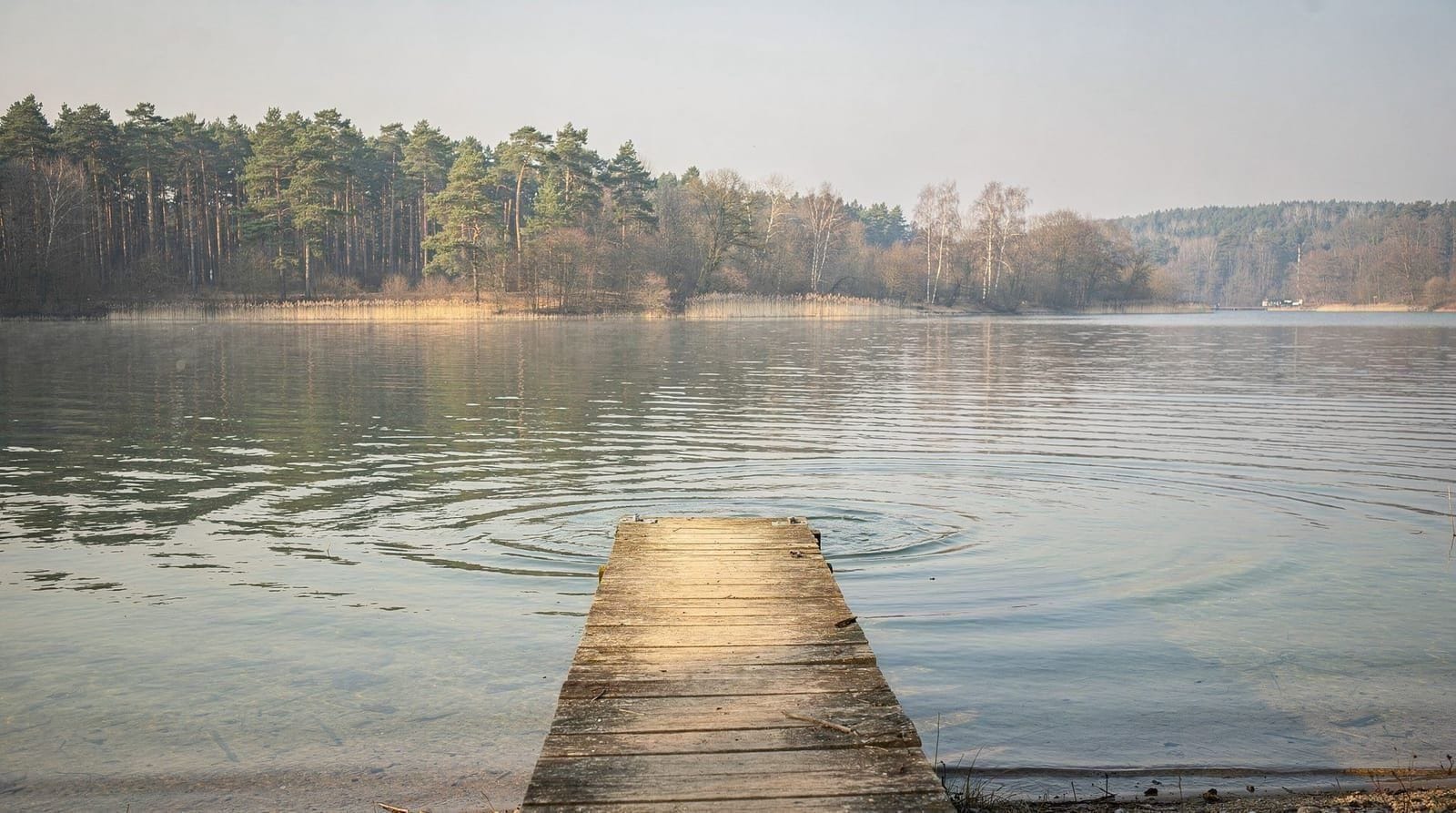
The outer grounds and lake: Kloster Chorin sits beside the Amtssee lake, and the grounds between the abbey and the lake edge include mown lawns and mature lime trees. The view from the grass toward the west facade of the church, with the water behind you, is the classic compositional view of the site. Picnicking is permitted on the outer grounds. A short path leads to the lake edge, where a wooden landing stage gives views back toward the ruins — one of the better lakeside perspectives in Brandenburg.
Choriner Musiksommer: Germany’s most atmospheric open-air concert series
Since 1991, the Klosterruine Chorin has hosted the Choriner Musiksommer — a summer concert series running from late May to late August that has become one of the most distinctive classical music events in the Berlin region. Approximately 35 concerts are staged each season, typically on Friday and Saturday evenings with occasional Sunday afternoon matinees.
The programme covers chamber music, orchestral concerts, choral works, and occasional crossover programming. Past performers include the Deutsches Symphonie-Orchester Berlin, the Rundfunkchor Berlin, the NDR Radiophilharmonie, the Akademie für Alte Musik Berlin, and a wide range of soloists at various career stages. The programming leans toward the central European canon — Bach, Beethoven, Brahms, Schubert — but is not exclusively traditional.
The acoustic of the open nave — brick walls on three sides, open sky above — produces an unusual sonic character. The sound is direct and clear for music that suits chamber-scale performance; large orchestral forces work somewhat less well in the space, though the visual setting compensates. The experience of watching musicians in period instruments perform Bach in a roofless 13th-century monastery, with the sky changing above and the walls darkening as evening falls, is genuinely unlike any urban concert experience.
Tickets: Prices range from approximately €25 to €55 depending on the programme and seat category. The most popular Saturday-night concerts — particularly those with well-known soloists or headline ensembles — sell out several weeks in advance. Book early via choriner-musiksommer.de. Reserved seating is assigned; different price categories correspond to different sections of the nave (closer to the front being higher-priced). Some concerts offer standing or rear-area tickets at lower prices.
Getting there for concerts: RE3 trains operate an extended evening schedule on concert days, with late-night return departures timed to concert endings. This is confirmed each season — check the Choriner Musiksommer website for the current-year transport information before booking. Alternatively, shuttle buses sometimes operate from Eberswalde (10 km north-east) on major concert dates. Driving and parking on site (€3) is the most reliable option if you have a car and want to attend a late evening performance.
Practical notes for concerts: Bring warm layers even in mid-summer — the open nave loses heat after sunset, and Brandenburg evenings can turn cool quickly. Seating is on chairs (not grass or benches), and seat cushions are sometimes available for rent at the venue. Arriving an hour early allows you to explore the abbey in the long evening light before the concert infrastructure fully crowds the nave. There is a bar and light food available on concert evenings.
Walking and cycling in the Schorfheide-Chorin Biosphere Reserve
Kloster Chorin sits within the UNESCO Biosphere Reserve Schorfheide-Chorin — a large protected landscape of mixed forest, kettle lakes, wetland, and meadow stretching north toward the Uckermark. The reserve is one of the most biodiverse lowland forest landscapes in central Europe, with documented populations of wolves, otters, white-tailed eagles, and a wide range of wetland birds.
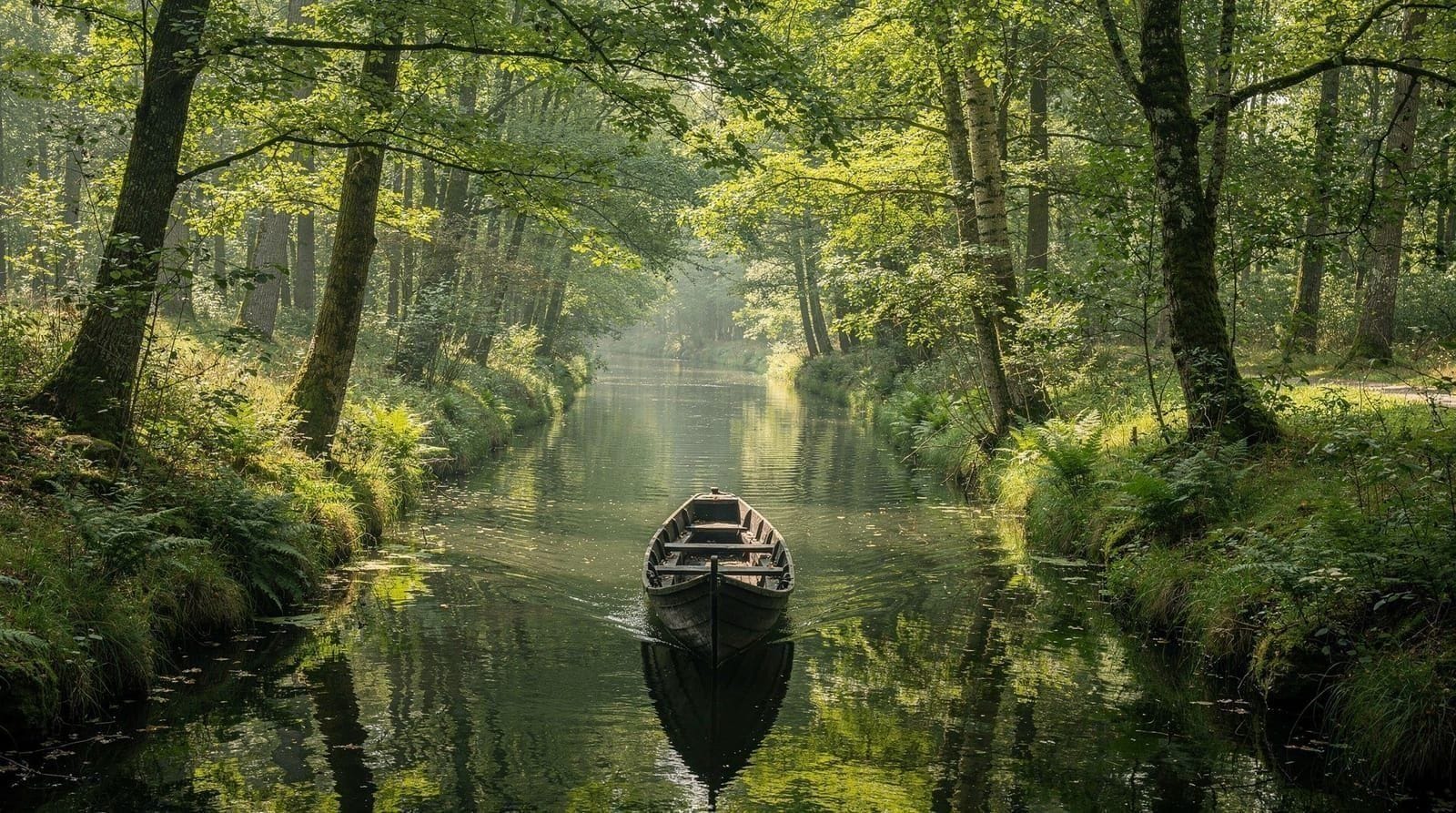
From Chorin station to the abbey: A well-marked walking path runs approximately 2 km west from the station through the Barnim forest. The path crosses a wooden bridge over the Amtssee outlet, and the abbey emerges through the trees on the final approach — one of the better-staged arrivals among Brandenburg’s heritage sites, with the west facade appearing gradually rather than all at once. The surface is compacted gravel and earth, generally manageable in ordinary walking shoes; it can be muddy after heavy rain.
Cycling routes: The area is well-served by marked cycling infrastructure. A circuit of approximately 15–20 km connects Chorin with the Oder-Havel Canal (Oder-Havel-Kanal) towpath, the village of Niederfinow (home to the Niederfinow boat lift), and several forest lakes. Longer routes connect south toward the Barnimer Dörferweg cycling trail and east toward the Oder river. Bicycles can be taken on the RE3 train with a supplement ticket (approximately €1.90 on BVG/VBB; check current pricing before travel).
Niederfinow boat lift (Schiffshebewerk Niederfinow): Nine kilometres east of Chorin, the Niederfinow boat lift is a hydraulic marvel from 1934 — a vertical lift for inland waterway barges that raises vessels 36 metres between the Oder-Havel Canal and the Hohensaaten-Friedrichsthaler Wasserstraße. A larger modern lift alongside the original opened in 2022. Both are free to observe from the public viewing area. It is not a primary destination in itself, but it makes an interesting and visually striking addition to a cycling loop from Chorin, especially for anyone interested in 1930s hydraulic engineering.
Brodowin: Four kilometres south-west of Chorin, the village of Brodowin is a cooperative organic farm and one of the most visible agricultural ventures of that kind in Brandenburg. The farm shop sells seasonal produce and dairy; it makes a practical stop on a cycling route. The village itself has a small 13th-century church worth a brief visit.
Getting there from Berlin
By train: Take the RE3 regional train from Berlin Hauptbahnhof (also Ostbahnhof) toward Angermünde or Schwedt (Oder). Alight at Chorin station — the journey takes approximately 55 minutes. Trains run every two hours; check bahn.de carefully and time your departure to allow adequate time at the abbey. The Brandenburg Ticket (€29 single person, €39 for groups of up to five, valid from 9 am weekdays and all day at weekends) covers the full journey and is the most economical option for day-trippers.
From Chorin station to the abbey: the signed forest path is 2 km west, taking approximately 25 minutes on foot. No road walking involved — the path goes directly through the forest. The walk is level and pleasant; ordinary shoes are sufficient except in wet weather, when light boots are more comfortable.
By car: Take the A11 (Berliner Ring) north-east toward Szczecin/Stettin. Exit at Chorin/Joachimsthal and follow signs south to the abbey. Approximately 60 km from central Berlin, 45–50 minutes. Parking at the abbey is €3 per car, paid on site.
Combining Chorin with other Brandenburg destinations
Rheinsberg: Approximately 50 km west of Chorin by car, Rheinsberg is a small palace town on the Rheinsberger See associated with Frederick the Great’s youth. The combination of a Gothic monastery and a Baroque palace in a single day’s drive is logistically feasible and thematically varied.
Bad Saarow: South of Berlin, Bad Saarow offers a completely different register — lakeside spa resort rather than forest monastery. The contrast makes it an interesting pair visit on separate days within a Berlin stay.
Eberswalde: The district capital 10 km north-east of Chorin is a working town with a botanic garden, a forest research institute, and the Eberswalde town church — none of which are compelling destinations in themselves, but which provide facilities (restaurants, supermarkets) if you need them between Chorin and a return journey.
Planning around the wider region
Chorin sits within reach of a broader cluster of Brandenburg day trips, and it’s worth knowing where it fits before committing a full day. The best day trips from Berlin overview and the day trips by train guide both cover the RE3 route alongside other regional connections. For visitors weighing a concert evening, the Berlin autumn guide has useful context on shoulder-season travel timing if you’re planning a September trip around the last weeks of the Musiksommer season, and the wider Berlin destination guide covers how to fit a single Brandenburg day trip into a longer Berlin stay.
Frequently asked questions about Kloster Chorin
Can I visit Kloster Chorin without attending a concert?
Yes, and for most visitors this is the standard approach. The abbey is open year-round (outdoor ruins always accessible, interior by admission during opening hours April–October). Weekday visits in spring and autumn are particularly quiet. The abbey is genuinely worth visiting in its own right, independent of the music programme.
What is Backsteingotik and why does it matter at Chorin?
Backsteingotik — North German Brick Gothic — is the regional medieval architectural tradition that used fired brick in place of cut stone, which is scarce in the North German plain, to achieve Gothic forms. The major buildings of the Hanseatic cities — Lübeck’s Marienkirche, Stralsund’s town hall, Rostock’s cathedral — are the most famous expressions of this tradition. Kloster Chorin is one of the earliest and most purely Cistercian manifestations: no urban context, no civic programme, just the Cistercian austerity programme executed in red brick in a forest setting.
How difficult is the walk from Chorin station to the abbey?
The path is approximately 2 km on a flat, wide forest track with a compacted gravel and earth surface. Ordinary walking shoes are adequate in dry conditions. After heavy rain the path can be muddy in sections. Pushchairs and mobility aids are difficult on the unsurfaced track. No road crossing is involved. The walk is signed from the station exit.
Are dogs allowed at Kloster Chorin?
Dogs on a lead are permitted in the outer grounds and on the approach footpaths. The interior of the abbey ruins (the cloister and nave) requests that dogs be kept outside. At concerts, dogs are generally not permitted — confirm the specific event’s conditions when booking.
Is the Choriner Musiksommer worth a trip from Berlin?
For those who enjoy classical music in unusual settings: emphatically yes. The experience of hearing a chamber orchestra or choir perform in a roofless 13th-century brick nave on a summer evening, in a Brandenburg forest, is genuinely distinctive and cannot be replicated in any Berlin concert venue. For visitors not primarily interested in classical music, the abbey is worth visiting on a non-concert weekday when you can explore the space without the concert infrastructure in place.
What accommodation is near Chorin?
The abbey has no on-site accommodation. The nearest practical options are in Eberswalde (10 km north-east — multiple hotels and guesthouses, RE3 connection) and in the village of Chorin itself and nearby Brodowin (holiday apartments and guesthouses, suited to multi-day nature visits). Most Berlin-based visitors come as a day trip rather than staying overnight.
Can I combine Chorin with the Niederfinow boat lift in one day?
Yes, easily by bicycle (9 km east of Chorin on flat terrain) or by car (15 minutes). On foot and by public transport the combination is less practical — there is no direct bus between Chorin and Niederfinow, and the taxi logistics from a small station are awkward. By bike it works well as a half-day circuit; the two sites are thematically unrelated but share a landscape logic — forest, canal, and lake.
Is Chorin a good pick for a first-time visitor to Berlin?
Not usually as a priority — first-timers with only 3–4 days are generally better served spending that time in central Berlin itself; see the Berlin destination guide for how to prioritise a short stay. Chorin is a better fit for a return visit, a nature-focused itinerary, or a trip of 5+ days where a slower, less iconic day trip has genuine appeal.