Berlin VW bus and vintage van tours — Combi, GDR vans, and Samba Bus experiences
Berlin: 2-Hour Discovery Tour in a Volkswagen T2 Van
Can you tour Berlin in a vintage VW bus or Combi van?
Yes. Several operators run guided sightseeing tours in restored VW T2 Combis, GDR-era vans (Barkas B1000), and classic Samba Buses. Tours typically cover central Berlin highlights in 2–3 hours and cost €45–90 per person depending on group size and duration. Private bookings are also available.
Can you tour Berlin in a vintage VW bus? Yes — several operators run guided sightseeing circuits in restored VW T2 Combis, GDR-era Barkas vans, and rare Samba Buses. Tours cover central Berlin highlights in 2–3 hours and cost €45–90 per person for group departures, or €200–280 for a private vehicle.
| Where | Departs near Brandenburg Gate or Alexanderplatz |
| Cost | Around €45-90pp group; around €200-320 private vehicle |
| Time needed | 2-3 hours for the standard circuit |
| Group size | Usually 6-8 passengers max |
| Best time | Spring/autumn for comfort; book 3-5 days ahead in summer |
What riding a vintage van through Berlin actually feels like
There is a specific pleasure in arriving at the Brandenburg Gate in a 1972 VW T2 that no modern minibus can replicate. The engine note, the slow cornering, the panoramic view from high bench seats — it is a different relationship to the city than walking or cycling. Operators have capitalised on this, and the VW bus tour market in Berlin has grown from a novelty into a genuine segment of the guided tour industry.
The appeal has two layers. First, the vehicles themselves are objects of design and transport history — the T2 Combi was produced from 1967 to 1979 and has become one of the most recognisable vehicles in 20th-century popular culture. Second, touring Berlin by van feels appropriately unhurried. The city’s broad boulevards — Unter den Linden, Straße des 17. Juni, Karl-Marx-Allee — were built at a scale that rewards slow-rolling observation rather than rushing past on foot.
The honest caveat: these tours are premium-priced tourist products. The mark-up for the vehicle is real, the group sizes are small (6–8 passengers), and the quality of English-language narration varies significantly between operators. This guide covers what to look for and what the market actually offers in 2026.
The vehicles — what is what
VW T2 Combi (1967–1979)
The T2 is the most common vintage van used in Berlin tours. Recognisable by its split bumper, D-shaped rear windows, and flat nose. Engine displacement is typically 1.6L air-cooled — slow by modern standards, which suits city touring. Good operators keep their T2 fleets in original condition with period-correct interiors. Watch out for operators using replicas or heavily modified vehicles presented as “vintage.”
VW T1 Samba Bus (1950–1967)
The Samba is significantly rarer and more expensive to maintain. It features 23 windows (including eight panoramic skylights), a folding canvas sunroof, and a two-tone paint finish. Operators who actually have an original Samba Bus charge a premium for good reason — these vehicles command €80,000–150,000 on the collector market. A tour in one is a genuine experience. Be skeptical of any operator advertising a “Samba Bus” without photos of the actual vehicle.
Berlin sightseeing tour in a classic VW Samba Bus — panoramic views, English guideGDR vans — Barkas B1000 and IFA W50
The East German angle on vintage van tours uses vehicles produced in the GDR’s own automotive industry. The Barkas B1000 was produced in Karl-Marx-Stadt (now Chemnitz) from 1961 to 1991 and was the GDR’s equivalent of the VW Transporter — a utilitarian delivery van and people-mover that became ubiquitous in East German daily life. Tours in a Barkas or IFA vehicle add a specific Cold War historical dimension that a West German VW cannot replicate.
GDR van sightseeing tour — East Berlin historical circuit in a period-correct vehicleThe standard tour circuit — what you will see
Most vintage van tours cover a similar core route through central Berlin, typically lasting 2–2.5 hours. The standard stops or slow-roll points include:
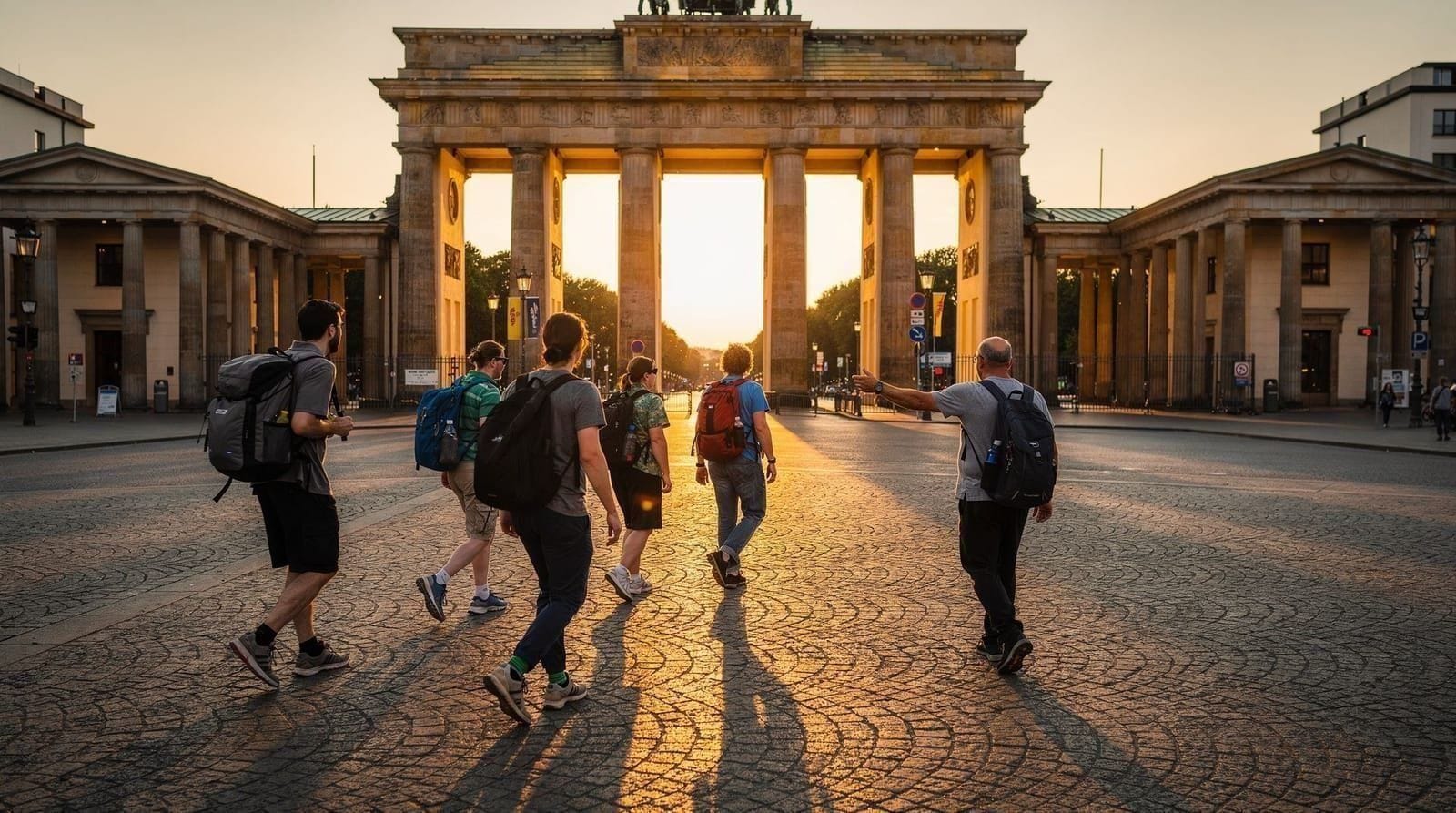
Brandenburg Gate (Brandenburger Tor): The starting point for most tours. The Gate was in the exclusion zone along the Wall from 1961 to 1989 — accessible from neither side. The van provides a raised vantage point over the tourist crowds.
Reichstag and government district: Slow roll past the Reichstag building, the Chancellery, and the Federal President’s office. A guide who knows the architectural history can explain the Norman Foster glass dome renovation (1999) and why the rooftop dome has a specific political symbolism.
Unter den Linden: The 1.4 km avenue from the Brandenburg Gate to Museum Island was East Berlin’s ceremonial boulevard. Driving it in a GDR van adds a historical echo — the Trabants and Barkas vans that carried delegates to party parades used this same road.
Bebelplatz and Museum Island: The square where Nazi students burned books in 1933, and the Spree island containing five of the most significant museums in Germany. The van typically stops here for a short walk.
East Side Gallery and Karl-Marx-Allee: The 2.3 km boulevard of Stalinist architecture in Friedrichshain is one of the most impressive — and undervisited — streets in Berlin. A van tour that includes Karl-Marx-Allee is worth more than one that skips it.
Checkpoint Charlie and Kreuzberg crossing: The former US-Soviet border crossing on Friedrichstrasse. Most tours slow down here rather than stopping, which is appropriate — the site is overcrowded on foot.
VW T2 van tour — what’s on offer
Berlin discovery tour in a VW T2 Combi van — 2.5 hours, central highlights, small groupThe VW T2 van tours run in small groups (maximum 6–8 passengers) on fixed departure schedules from central meeting points near the Brandenburg Gate or Alexanderplatz. Guides typically work in English and German simultaneously. The best tours include a genuine Q&A with the guide rather than a pre-recorded commentary loop.
Pricing (2026 going rates):
- Standard 2-hour group tour: €48–58 per person
- 3-hour extended tour: €65–80 per person
- Private hire (4–6 passengers): €200–320 per vehicle
Prices on GetYourGuide reflect standard group rates with free cancellation up to 24 hours prior. Private tours require advance booking of at least 48 hours and are often negotiated directly with the operator after initial booking.
Trabant tours — a different product
Trabant tours are frequently confused with VW bus tours, but they are structurally different. In a Trabant convoy tour, participants drive their own Trabant (after a brief lesson) in a guided convoy, with a lead guide and sweep vehicle. The Trabant’s 2-cylinder 2-stroke engine is notoriously underpowered and loud — the driving experience is a significant part of the appeal.
Trabant tours are not passive sightseeing: participants are actively driving. This means they cover more ground but observe less. They are better suited to visitors who want the GDR automotive experience rather than historical narration. Minimum age requirements (usually 18 with a driving licence) apply. Trabant tours in Berlin are run by several independent operators; search directly rather than through aggregators for the best prices (€20–35 per person for a 1-hour convoy).
Which vehicle suits which visitor:
| Vehicle | Best for | Price range | Note |
|---|---|---|---|
| VW T2 Combi | First-timers wanting the classic “hippie van” ride | around €48-80pp | Most widely available |
| Samba Bus | Photography, panoramic views, special occasions | Premium over T2 | Rarer, fewer operators |
| GDR Barkas/IFA van | Cold War history focus | Similar to T2 | Adds East German narrative |
| Trabant convoy | Hands-on drivers wanting an active experience | around €20-35pp | You drive, less narration |
Booking tips and what to watch for
Check the actual vehicle photos. Some operators list “vintage VW tour” but use 1990s-era vans that are merely old, not classic. The defining feature of a genuine T2 Combi is the split bumper and round headlights. A Samba Bus has the distinctive panoramic top windows.
Ask about guide language. Many Berlin vintage tour operators run primarily German-language tours with English available on request. Confirm the guide speaks English at your departure time.
Departure times matter. Morning tours (9:00–11:00) navigate quieter streets and arrive at the Brandenburg Gate before the peak tourist wave. Afternoon tours (14:00–17:00) can be slower due to traffic near Museum Island and Kreuzberg.
Read the itinerary, not just the marketing photos. Some listings show the Samba Bus in the hero image but the actual departure is in a standard T2. Check the vehicle description text, not just the photo gallery, and message the operator directly if it’s unclear which vehicle is confirmed for your slot.
Private tours are worth calculating. At €200–280 for a vehicle holding 4–6 people, a private tour costs roughly the same per person as a group tour — but you control the pace, stops, and narrative focus.
How vintage van tours compare to other tour formats
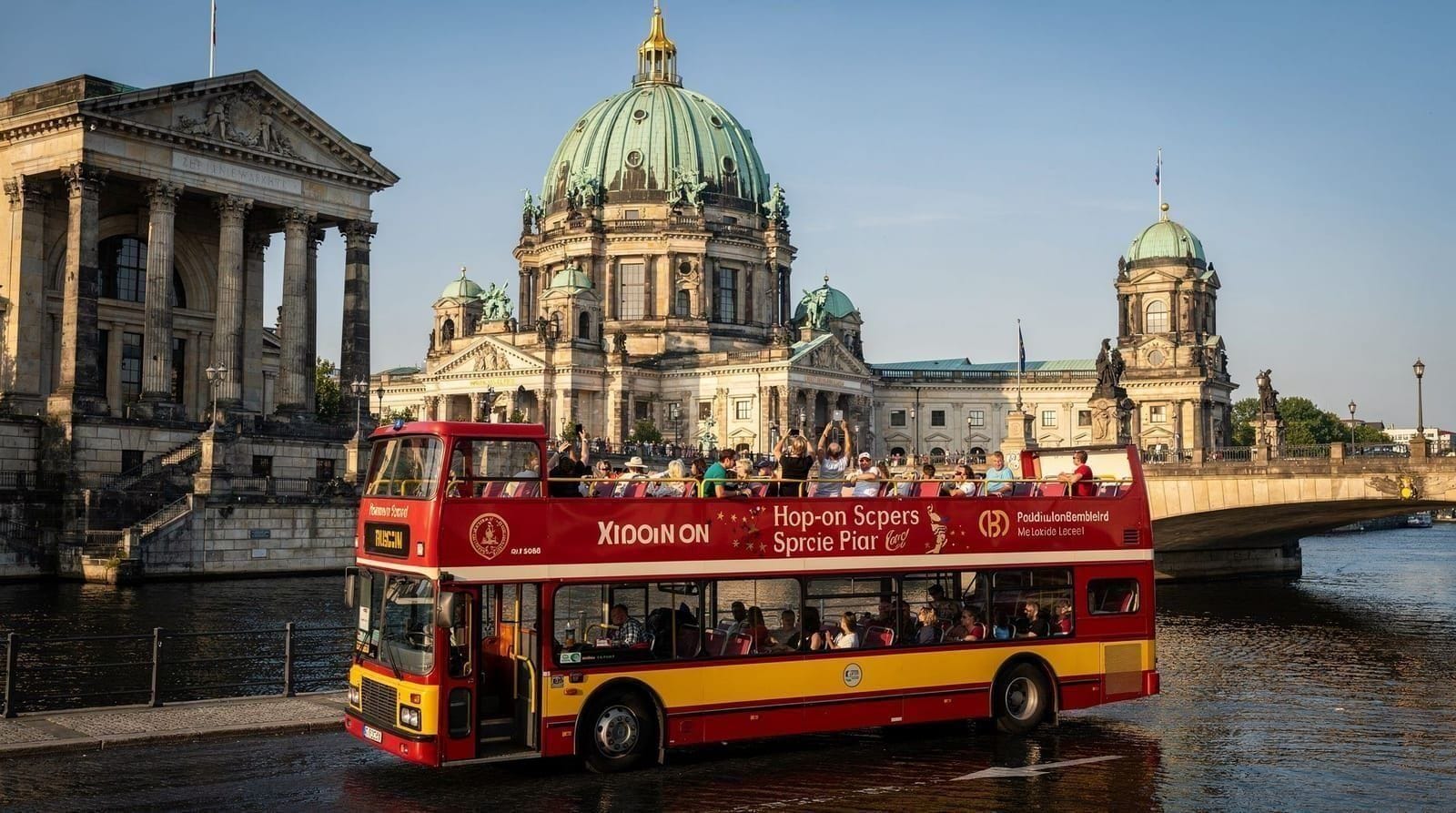
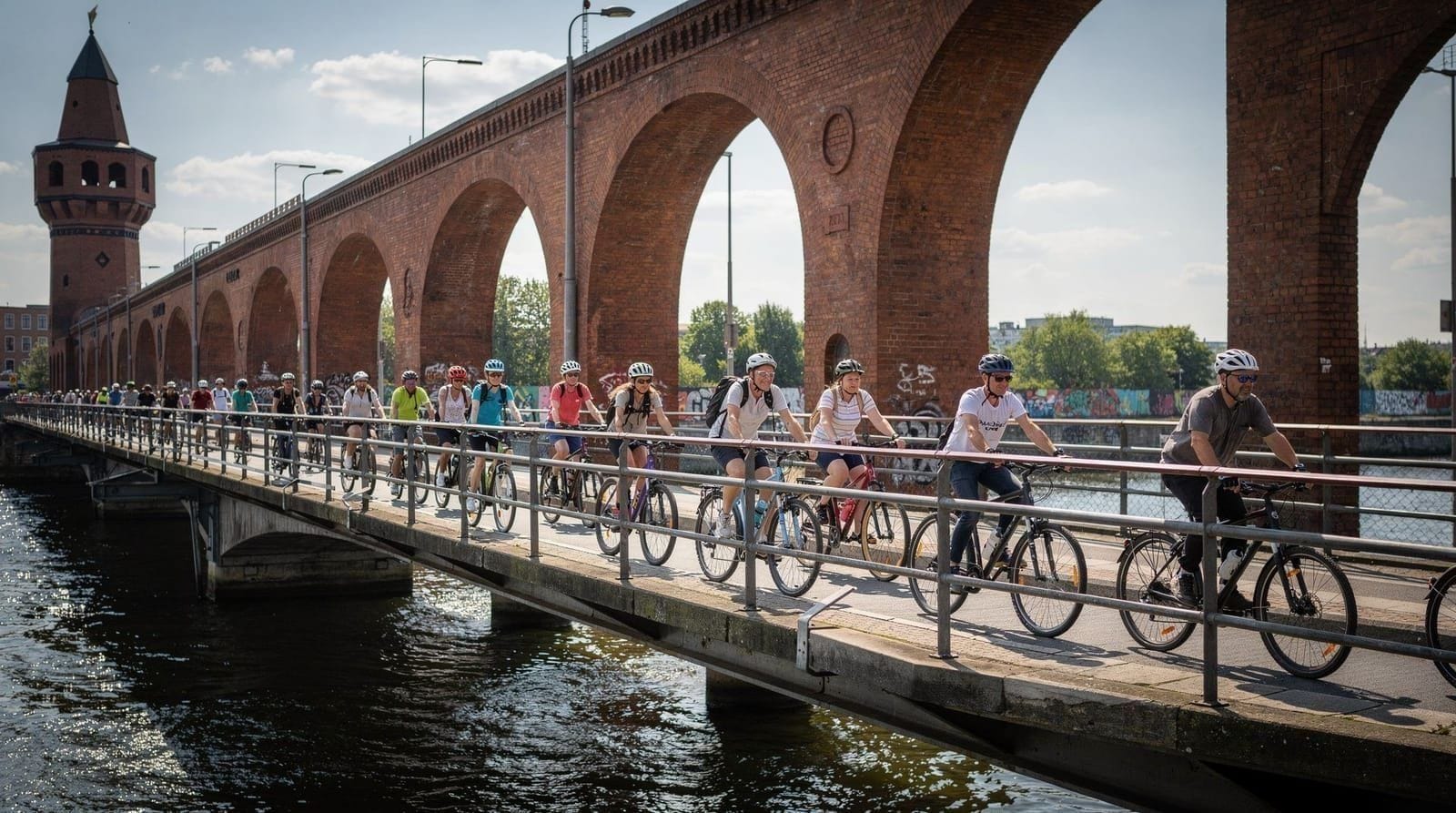
The Berlin hop-on hop-off guide covers the bus tour alternative: more coverage, less atmosphere, lower price. A Berlin walking tour covers fewer sites but with better ground-level engagement and usually a more knowledgeable guide. Berlin bike tours cover similar distances to van tours at roughly half the price but require physical fitness.
Vintage van tours occupy the premium leisure bracket — they are not the most efficient way to see Berlin, but the vehicle itself is part of the experience. If you are travelling with older family members who cannot manage extended walking or cycling, a van tour is a practical alternative to hop-on-hop-off buses with genuine character.
For a first visit planning a full range of tour options, see the Berlin best tours for first-time visitors guide.
Seasonal advice — best time to book
Summer (June–August): Peak season. More departure times, longer daylight, and the warm-weather benefit of the Samba Bus canvas roof. Book 3–5 days ahead for weekend slots. Expect slower road speeds through central Mitte due to tourist foot traffic at crossings.
Spring (April–May) and autumn (September–October): The most pleasant months for a van tour. Lighter crowds, moderate temperatures, and the golden light of Berlin’s autumn makes the Karl-Marx-Allee particularly photogenic in October. Book 1–2 days ahead.
Winter (November–March): Fewer departure times (some operators pause Samba Bus tours below 5°C). GDR van and VW T2 tours continue year-round. Berlin’s winter light at 15:00 gives a specific quality to the illuminated Brandenburg Gate section of the circuit. The Christmas market season (late November to December) adds optional stops near Gendarmenmarkt.
Practical details
Meeting points: Most operators meet at the Brandenburg Gate forecourt or a nearby marked spot. Arrive 10 minutes early — vintage vans run on schedules and late arrivals may be left behind.
Payment: Operators accept card on booking platforms. Cash tips (€5–10 per person) are welcomed by guides but never expected.
Accessibility: The VW T2 has a high step into the vehicle — it is not wheelchair accessible. GDR vans vary; check with the operator.
Luggage: No space for large suitcases. Day bags and small backpacks fit in the footwell. Do not book a vintage van tour on arrival or departure day with full luggage.
Weather: All vehicles are enclosed and heated. The Samba Bus’s canvas roof section is closed in rain or cold temperatures below 10°C.
Who this is genuinely worth it for
Vintage van tours are not the most efficient way to see Berlin, and it’s worth being upfront about who benefits most. First-time visitors with limited mobility who still want to cover the central sights — Brandenburg Gate, Reichstag, Unter den Linden, Museum Island exterior, East Side Gallery — get real value: a raised vantage point, no walking fatigue, and a genuinely memorable vehicle. Photographers and design enthusiasts drawn specifically to the Samba Bus or period-correct GDR vans get an experience that’s hard to replicate any other way.
Visitors on a tight budget, or those who already plan to walk extensively through Kreuzberg or Prenzlauer Berg, will likely get more depth per euro from a walking tour or from public transport paired with a good guidebook. The van tour’s core value is the vehicle experience itself, not comprehensive sightseeing — go in with that expectation and it delivers.
Frequently asked questions about Berlin VW bus and vintage van tours
How much do VW bus tours in Berlin cost?
Group tours in a VW T2 or Samba Bus run €45–65 per person for a 2-hour circuit. Private tours of the same duration start at around €200–280 for the whole vehicle (typically 4–6 passengers). GDR van tours with a guide are priced similarly.What is the difference between a VW T2 Combi and a Samba Bus?
The Samba Bus (officially the VW T1 Sondermodell) was a deluxe 1950s variant of the original Transporter with panoramic windows and a folding canvas roof. The T2 Combi is the second generation (1967–1979), the most iconic "hippie van" silhouette. Operators in Berlin use both terms loosely — check the vehicle photos before booking.Are GDR van tours related to Trabant tours?
They are different products. Trabant tours let you drive a Trabant yourself (or ride as passenger) on a guided convoy. GDR van tours use larger Barkas B1000 or Robur vans — vehicles that served as East German delivery vans and minibuses — with a guide narrating GDR history while you ride. Both exist in Berlin but are operated by different companies.Are these tours touristy or worth it?
They sit squarely in the tourist category, and pricing reflects that. The genuine value is the vehicle itself — a 50-year-old Combi or original Samba Bus is a legitimate piece of automotive and cultural history. The guided narration quality varies. Look for operators with English-speaking guides who have genuine knowledge of Berlin's Cold War era, not just a script read from a phone.How far in advance should I book?
VW bus tours run with limited capacity (usually 6–8 passengers max). In July and August, popular departure slots fill up 3–5 days ahead. Booking via GetYourGuide gives instant confirmation and free cancellation up to 24 hours before.Do tours run in rain?
Yes. The VW T2 and GDR vans are enclosed vehicles, so rain is not an issue. The Samba Bus has a fold-back canvas roof section — operators close it in heavy rain. Cold weather affects open-roof Samba tours more than standard Combi tours.Are these tours suitable for families with children?
The vehicles have bench seating without seatbelts in some configurations. Check with the operator before booking with young children. Private tours offer more flexibility on pace and stops.
Top experiences
Bookable activities with verified prices and instant confirmation on GetYourGuide.