Berlin to Rheinsberg day trip — palace, lakes, and Tucholsky's town
How do I get from Berlin to Rheinsberg by train?
Take the RE6 from Berlin Gesundbrunnen (or Hauptbahnhof) toward Wittstock/Dosse and exit at Rheinsberg (Mark). Journey time is approximately 1 hour 30 minutes. The Deutschlandticket is valid on this regional service.
Quick answer: RE6 from Berlin Gesundbrunnen to Rheinsberg (Mark) — about 90 minutes, covered by the Deutschlandticket. The baroque palace sits directly on the lake and is walkable from the station in 15 minutes.
Rheinsberg is less known than Potsdam and less visited, which is part of its appeal. It offers a genuine baroque palace in a lake setting, a literary connection that turns the visit into something more than sightseeing, and access to the Ruppiner Seenland — one of Brandenburg’s largest lake districts. The town feels like provincial northern Germany rather than a day trip product, and that contrast with Berlin is precisely the point.
This guide covers the train route, the palace and its history, the Tucholsky connection, lake activities, and how to plan the day.
| Where | Rheinsberg, Ruppiner Seenland, Brandenburg |
| Getting there | RE6 from Berlin Gesundbrunnen, around 1h25–1h40 |
| Cost | Palace entry around €8–10; lake cruise around €12–16 |
| Time needed | Full day, comfortably |
| Best time | April–October for boating; palace open year-round |
Getting to Rheinsberg from Berlin by RE6
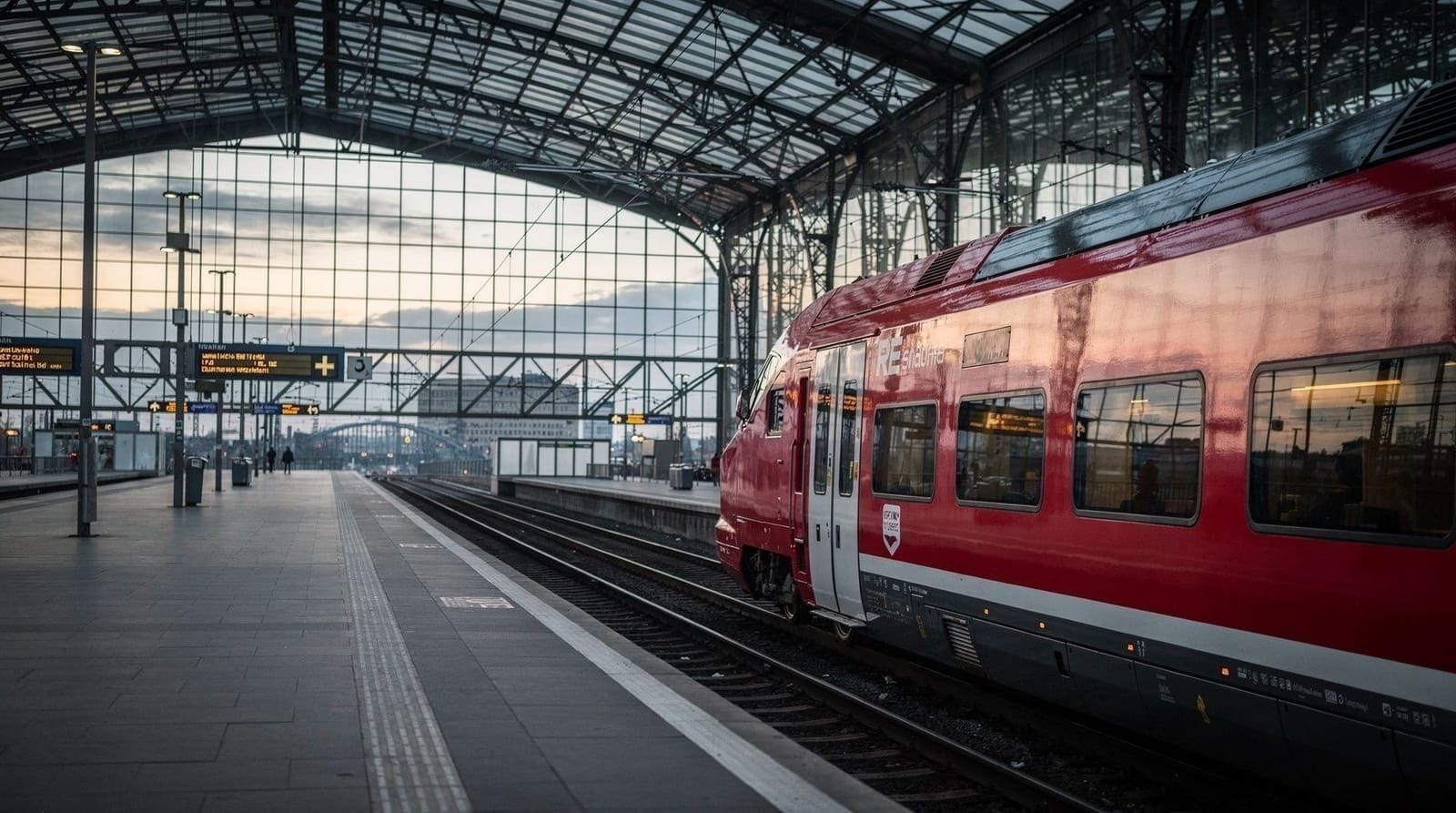
The RE6 route: The RE6 regional express runs from Berlin Gesundbrunnen (a major northern Berlin station with U8 and S-Bahn connections) through Hennigsdorf and Neuruppin to Wittstock/Dosse. Rheinsberg (Mark) is served by a branch line from Neuruppin West — some RE6 services run directly through, others require a change at Neuruppin West; check the specific train on DB Navigator.
Departure points in Berlin: The RE6 calls at Gesundbrunnen (most useful for those in Mitte, Prenzlauer Berg, or Wedding) and sometimes at Berlin Hauptbahnhof. From Charlottenburg or central west Berlin, take the S-Bahn to Gesundbrunnen first.
Journey time: Approximately 1 hour 25 minutes to 1 hour 40 minutes depending on the service and whether a change is required at Neuruppin West. Direct services to Rheinsberg (Mark) are faster.
Frequency: Roughly every 60 minutes. This is less frequent than trains to Potsdam — a missed connection at Neuruppin means waiting an hour. Plan carefully and check the return train times before you get off at Rheinsberg.
Deutschlandticket: The RE6 and any connecting RB service are regional trains fully covered by the Deutschlandticket. No additional ticket purchase needed for pass holders.
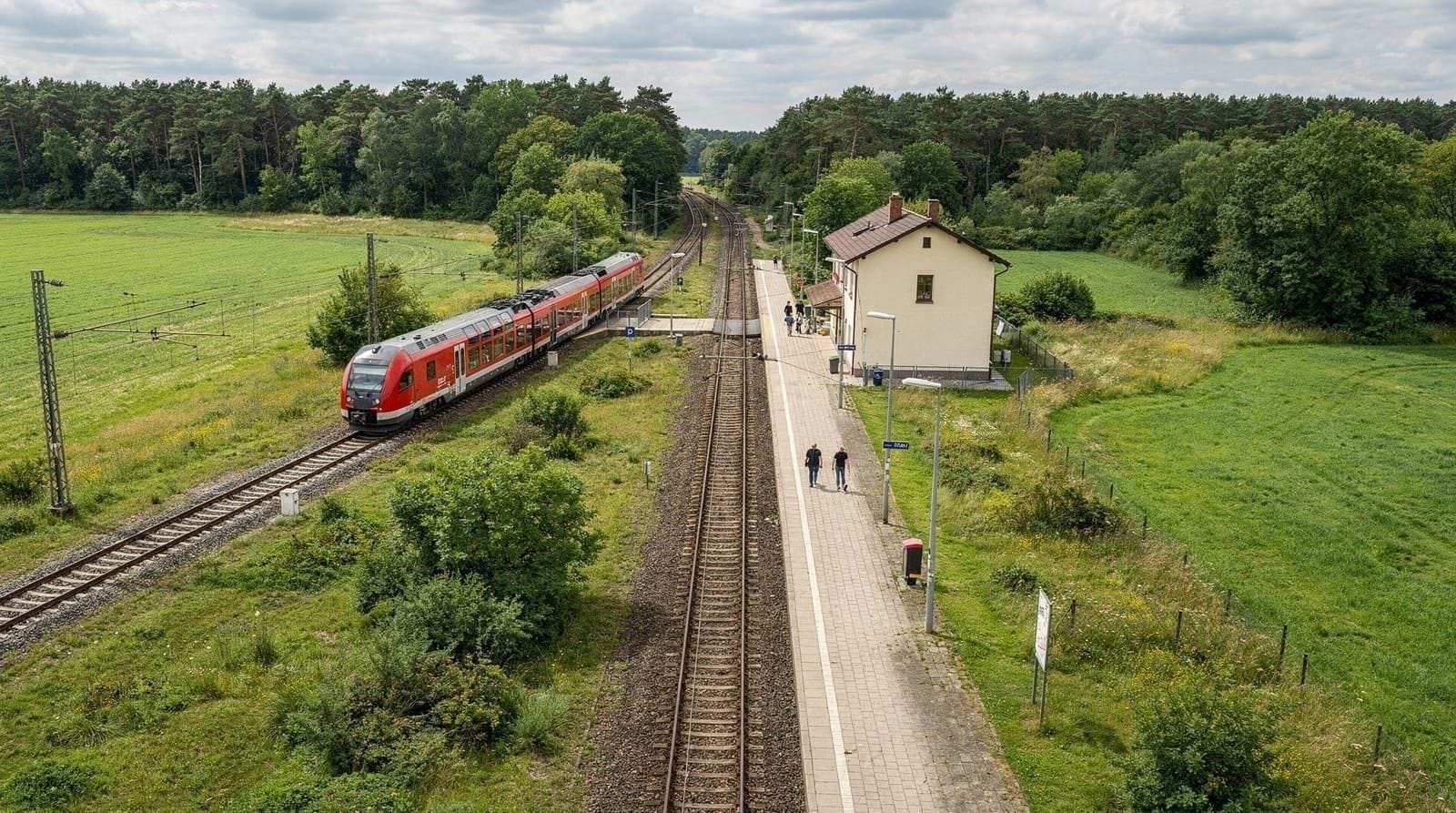
Rheinsberg station: The Rheinsberg (Mark) station is a small rural stop on the edge of the town. The palace (Schloss Rheinsberg) is about 1.2 km from the station on foot — a 15-minute walk through the town centre toward the lake. There are no taxis at the station by default; the walk is flat and straightforward.
Combining with Neuruppin: If your RE6 service requires a change at Neuruppin West, consider allowing time to see Neuruppin itself, a larger town with its own baroque-influenced rebuilt centre (it burned down almost entirely in 1787 and was rebuilt in a coherent late-baroque style) and a lakeside promenade on the Ruppiner See. It’s not essential to a Rheinsberg day, but worth knowing about if a connection leaves you with an unplanned hour to fill.
Schloss Rheinsberg — history and what to see
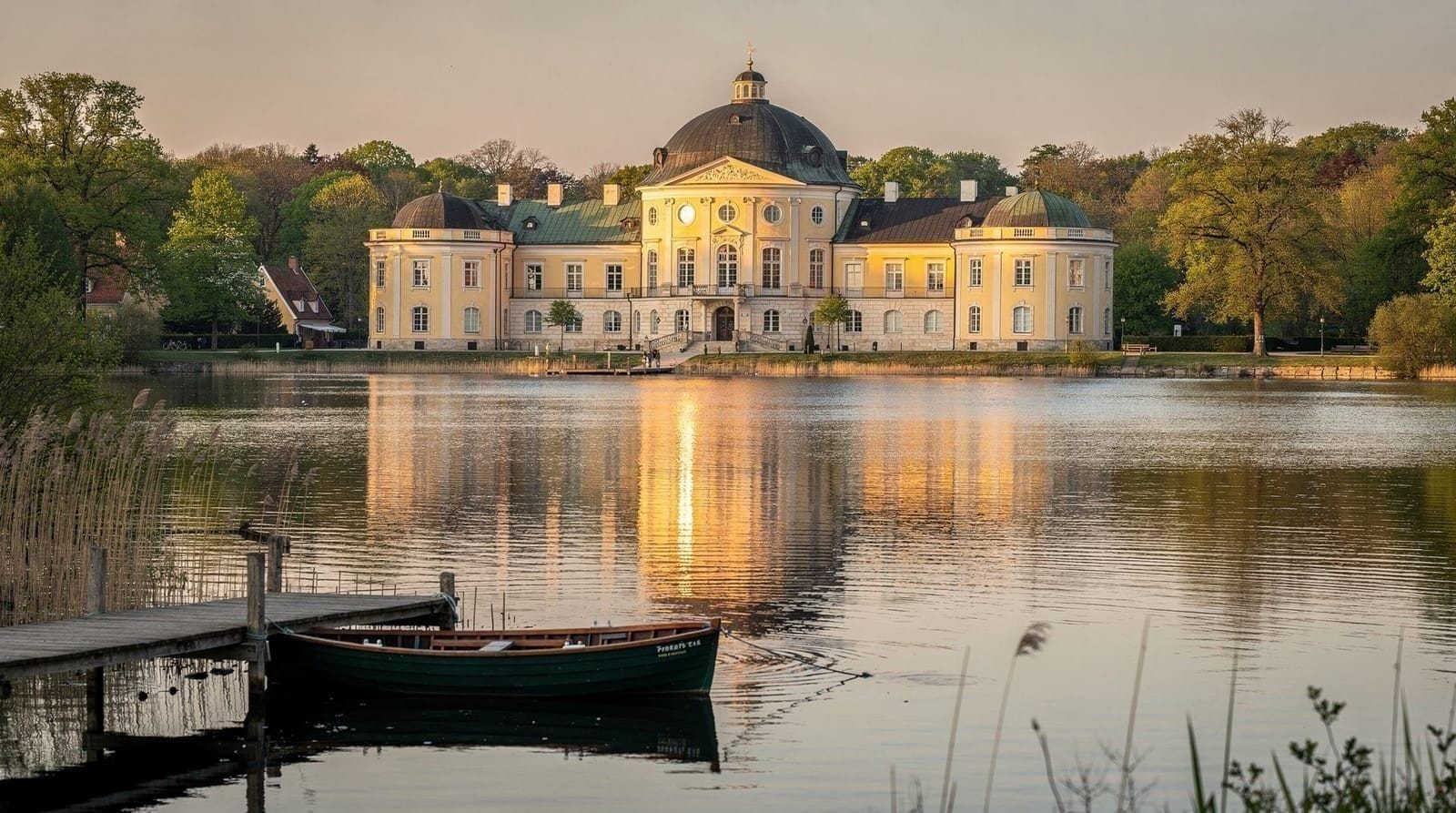
Schloss Rheinsberg is a modest baroque palace by Prussian standards — it doesn’t have the scale of Sanssouci or the New Palace in Potsdam — but it has a specific biographical and historical character that makes it interesting beyond the architecture.
The Frederick the Great years (1736–1740): Crown Prince Friedrich received Rheinsberg from his father Friedrich Wilhelm I as a semi-independent residence in 1736, four years before becoming King of Prussia as Frederick II. These four years were, by his own later account, the happiest of his life. He filled the palace with artists, philosophers, and musicians, learned to play the flute to a near-professional level (he eventually composed flute sonatas of real quality), corresponded extensively with Voltaire, and governed his small court according to Enlightenment principles — in notable contrast to his father’s militaristic household.
The years in Rheinsberg were the preparation years of the Enlightenment monarch he later became. After 1740, the Seven Years War, the demands of statecraft, and the growing distance between his ideals and political reality transformed him into a more complicated figure. Rheinsberg remained the earlier, freer self.
The palace interior: The permanent exhibition covers Frederick’s Rheinsberg years, the palace’s architectural history (designed in part by Georg Wenzeslaus von Knobelsdorff, who later worked on Sanssouci), and the building’s later history — including its use as a diabetics’ clinic in the GDR period and its gradual post-1990 restoration. Several rooms have been partially restored to their 18th-century appearance; others display historical documentation. Entry approximately €8–10 for adults.
The Schlossinsel: The palace sits on a small island connected to the town by a narrow bridge. The surrounding Schlosspark runs down to the Rheinsberger See lake shore on both sides. Walking the island perimeter takes about 20 minutes and gives excellent views of both the palace facade and the lake. The park is free to enter and accessible at all times.
The Kurt Tucholsky memorial museum
The Kurt Tucholsky Literaturmuseum occupies a section of the palace and is one of the more thought-provoking cultural assets in Brandenburg, given how little Tucholsky is known outside Germany.
Tucholsky’s significance: From 1913 to 1933, Kurt Tucholsky was among the most prolific and politically sharp writers in the German language — contributing to the Weltbühne magazine and other publications under multiple pseudonyms, satirising German militarism, political corruption, and the bourgeoisie with a precision that made him hated by the right and celebrated on the left. His 1912 novella “Rheinsberg — ein Bilderbuch für Verliebte” (Rheinsberg — a picture book for lovers) is a romantic comedy set in the town; its success brought him and the town permanent literary connection.
What the museum covers: The exhibition documents Tucholsky’s life and work — the Berlin journalism years, the Weimar literary world, the escalating political tension of the late Republic period, and his exile in Paris and then Sweden. The Nazi book burnings of 10 May 1933 targeted his work; the museum displays material from both the creative achievement and its destruction.
Why it matters in this context: Visiting the Tucholsky museum in Rheinsberg puts you in the specific building that gave him his first literary subject, and the town around you has changed far less than Berlin has. The combination of the place and the history of what was done to him gives the visit more weight than a standard author-museum experience.
Museum entry is included in the palace ticket or available separately; check at the ticket desk.
Boating on the Rheinsberger See
The Rheinsberger See — the lake directly in front of the palace — is the most visually central feature of the town. In the warmer months (roughly April to October), several boat-related activities are available.
Lake cruises: Passenger boat trips on the Rheinsberger See run from the landing stage near the palace (Schlossinsel side). A typical tour lasts 60–90 minutes and circuits the lake, with commentary on the palace and surrounding landscape. Cost approximately €12–16 per adult. Schedules vary by season; check with the local boat operator (Reederei Halbeck is one operator that has run routes here) or at the Rheinsberg tourist information office on arrival.
Canoe and kayak rental: Several operators in Rheinsberg and the surrounding Ruppiner Seenland rent canoes and kayaks — ideal for paddling the channels and connected lakes around the town. The network of waterways in this area extends for many kilometres; a 2–3 hour canoe route can take you through forest lakes and along reed-lined channels without retracing water.
Rowboat rental: Simple rowboat hire is often available from the town landing stage for independent lake exploration without a tour.
What the lake looks like: The Rheinsberger See is a natural Brandenburg lake — relatively shallow, clear water, forested banks, with occasional reed beds along the margins. The palace reflecting in the water from the eastern shore is one of the better composed views you can find within 90 minutes of Berlin.
Rheinsberg town — what else to see
The town itself is compact. Beyond the palace complex and the lake, a short exploration covers most of it.
Marktplatz: The small market square has a few cafes, a bakery, and a traditional German inn (Gasthaus). Standard provincial northern German market town — not polished for tourists, which some visitors find refreshing. A coffee here after arriving and before heading to the palace gives you a sense of the town’s pace.
Ägidienkirche (St. Giles Church): The town church, dating from the 14th century with later baroque modifications, stands near the market square. Worth a brief look inside; usually open during daytime.
The town streets around the palace: The streets between the market and the Schlossinsel (Seestrasse, Schlossstrasse) have a mix of restored Prussian-era townhouses, some GDR-era buildings, and the occasional craft shop or gallery catering to the modest visitor flow. A walk from the market to the palace takes about 10 minutes and passes most of the town’s built character.
How to structure a Rheinsberg day
Arriving on the 9:17am RE6 from Berlin Gesundbrunnen (check current timetable):
~10:45am — Arrive Rheinsberg (Mark). Walk 15 minutes to the Marktplatz; coffee at one of the cafes on the square.
11:15am–1:00pm — Schloss Rheinsberg and Tucholsky Museum. The palace exhibitions take 60–90 minutes at a comfortable pace. Allow time in the Schlosspark and on the island perimeter.
1:00–2:00pm — Lunch. Return to the Marktplatz for lunch at one of the restaurants (Gaststätte Rheinsberger Hof or similar traditional options). The selection is limited but adequate.
2:00–4:00pm — Lake activities. Take the lake cruise (check departure times at the landing stage on arrival) or rent a canoe. If neither appeals, the Schlosspark walk and the lakeshore path are good alternatives.
4:30–5:00pm — Return to station. The walk back to Rheinsberg (Mark) takes 15 minutes. Check your RE6 departure time; connections back to Berlin run roughly hourly.
For other Brandenburg day trips with lake character, see the Chorin destination page, or the day trips by train from Berlin guide for a broader overview.
Rheinsberg versus Potsdam and other palace day trips
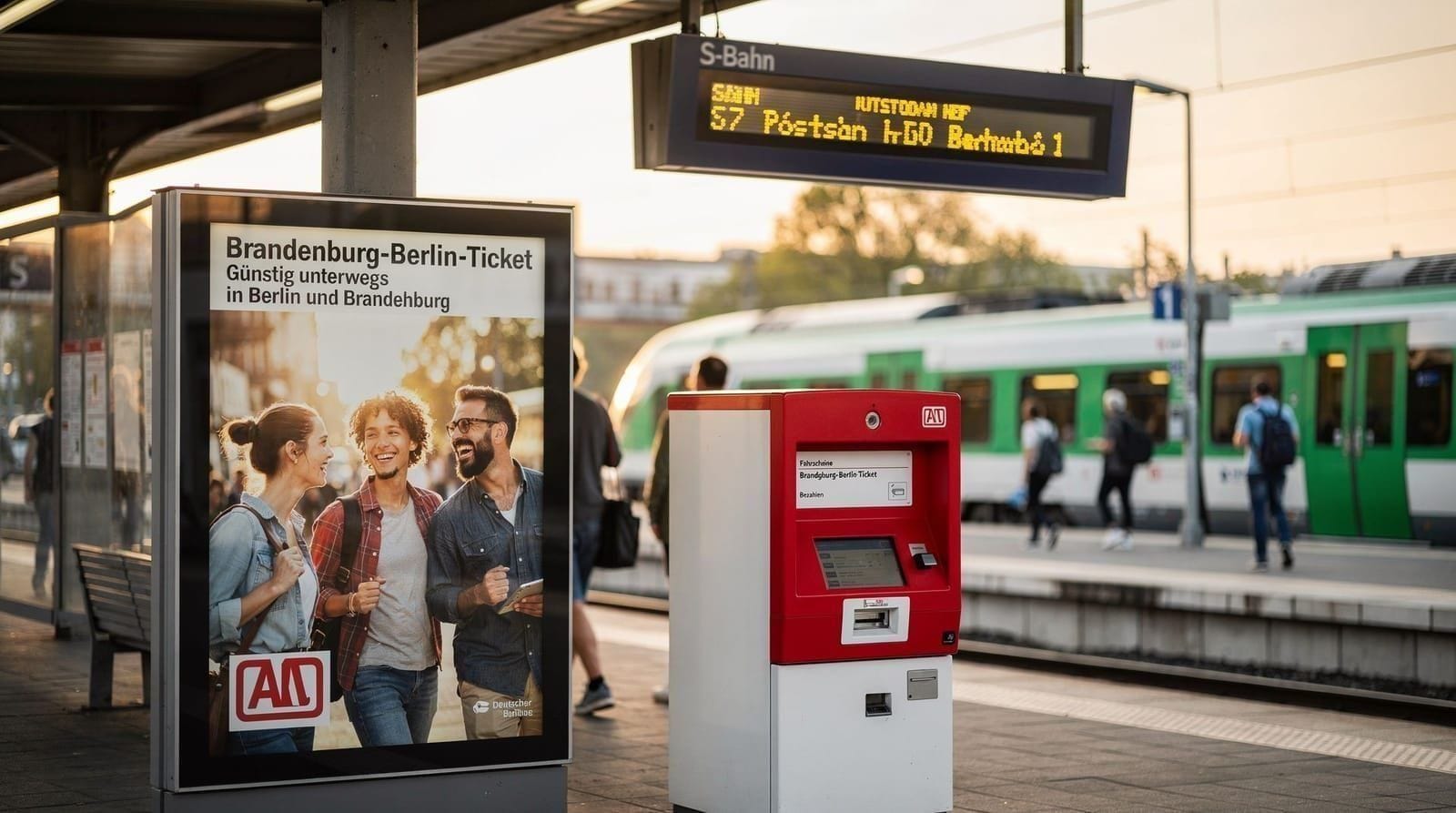
If you’ve already done Potsdam and want a second, quieter palace day, Rheinsberg is the natural next step — smaller in scale, far less crowded, and adding a genuine literary dimension that Sanssouci doesn’t offer. It doesn’t replace Potsdam for sheer architectural weight, but it rewards visitors who want the palace-and-lake formula without the queues. For ticketing, the Brandenburg-Ticket guide explains the regional day-pass option, useful if you’re travelling as a group of two or more and want an alternative to individual Deutschlandticket subscriptions. See the ranked best day trips from Berlin for how Rheinsberg compares against Berlin’s other regional options overall.
Frequently asked questions about Berlin to Rheinsberg day trip
Which train goes from Berlin to Rheinsberg?
The RE6 regional express runs from Berlin Gesundbrunnen and Berlin Hauptbahnhof toward Neuruppin and continues to Rheinsberg (Mark). Journey time from Gesundbrunnen is approximately 85–95 minutes. The RE6 runs roughly every 60 minutes; check the timetable as there are gaps. The Deutschlandticket covers this route.What is Schloss Rheinsberg?
Schloss Rheinsberg is a baroque palace on the Rheinsberger See lake, built in the early 18th century. It was the residence of Crown Prince Friedrich (the future Frederick the Great of Prussia) from 1736 to 1740 — the years he later described as the happiest of his life. The palace today houses a museum and the Kurt Tucholsky Memorial Museum.How much does it cost to enter Schloss Rheinsberg?
Palace entry with the permanent exhibitions costs approximately €8–10 for adults, €6–7 for concessions. A combined ticket for the full palace and grounds is available. The Schlossinsel (palace island) and surrounding park are freely accessible without purchasing an interior ticket.Who was Kurt Tucholsky and what is his connection to Rheinsberg?
Kurt Tucholsky (1890–1935) was one of the sharpest satirists of the Weimar Republic — journalist, cabaret author, and political commentator. In 1912 he published "Rheinsberg — a picture book for lovers," a short novel set in the town that brought it literary fame. He was Jewish; the Nazis burned his books in 1933 and stripped him of citizenship. He died in exile in Sweden in 1935. The Tucholsky Museum in the palace commemorates his work.What is the Ruppiner Seenland?
The Ruppiner Seenland (Ruppin Lake District) is a region of interconnected lakes north of Berlin in Brandenburg. It encompasses dozens of lakes including the Rheinsberger See, Ruppin See near Neuruppin, and smaller forest lakes throughout the district. The area is used for sailing, canoeing, cycling, and walking, and is a popular destination for Berliners wanting quiet countryside.Can I take a boat trip from Rheinsberg?
Yes. Boat trips on the Rheinsberger See run in season (roughly April–October) from the landing stage near the palace. A typical round-trip lake cruise lasts about 60–90 minutes and costs approximately €12–16. Canoe and kayak rental is also available from operators in the town.What is Rheinsberg town like?
Rheinsberg is a small market town of about 8,000 inhabitants — quiet, compact, and oriented around the palace and lake. The Marktplatz has a few cafes and restaurants; the streets between the market and the palace are pleasant to walk. It is a provincial town, not a tourist-oriented resort, which gives it an authentic character compared to more heavily visited destinations.Is Rheinsberg worth visiting in winter?
The palace and Tucholsky Museum are open year-round. The lake in winter is atmospheric but boat trips do not operate. The town is quiet to the point of feeling deserted in the depths of winter — some cafes reduce hours. Spring and summer are the most rewarding seasons for the combination of palace and lake activities.