Szczecin — Poland's Baltic Port City with World-Class Architecture
Two hours from Berlin, Szczecin offers a world-class concert hall, a ducal castle, a sweeping river embankment and prices that undercut Berlin.
Quick facts
- Distance from Berlin
- ~140 km north-west of Berlin
- Train
- Direct IC or regional train from Berlin Hbf (~2 hours); Interrail/Eurail valid
- Currency
- Polish zloty (PLN) — approx. 4.2 PLN/€ in 2026
- Border formalities
- None — Poland is in the Schengen Area
- Highlights
- Philharmonic Hall (Mies Award 2015), Pomeranian Dukes' Castle, Wały Chrobrego embankment
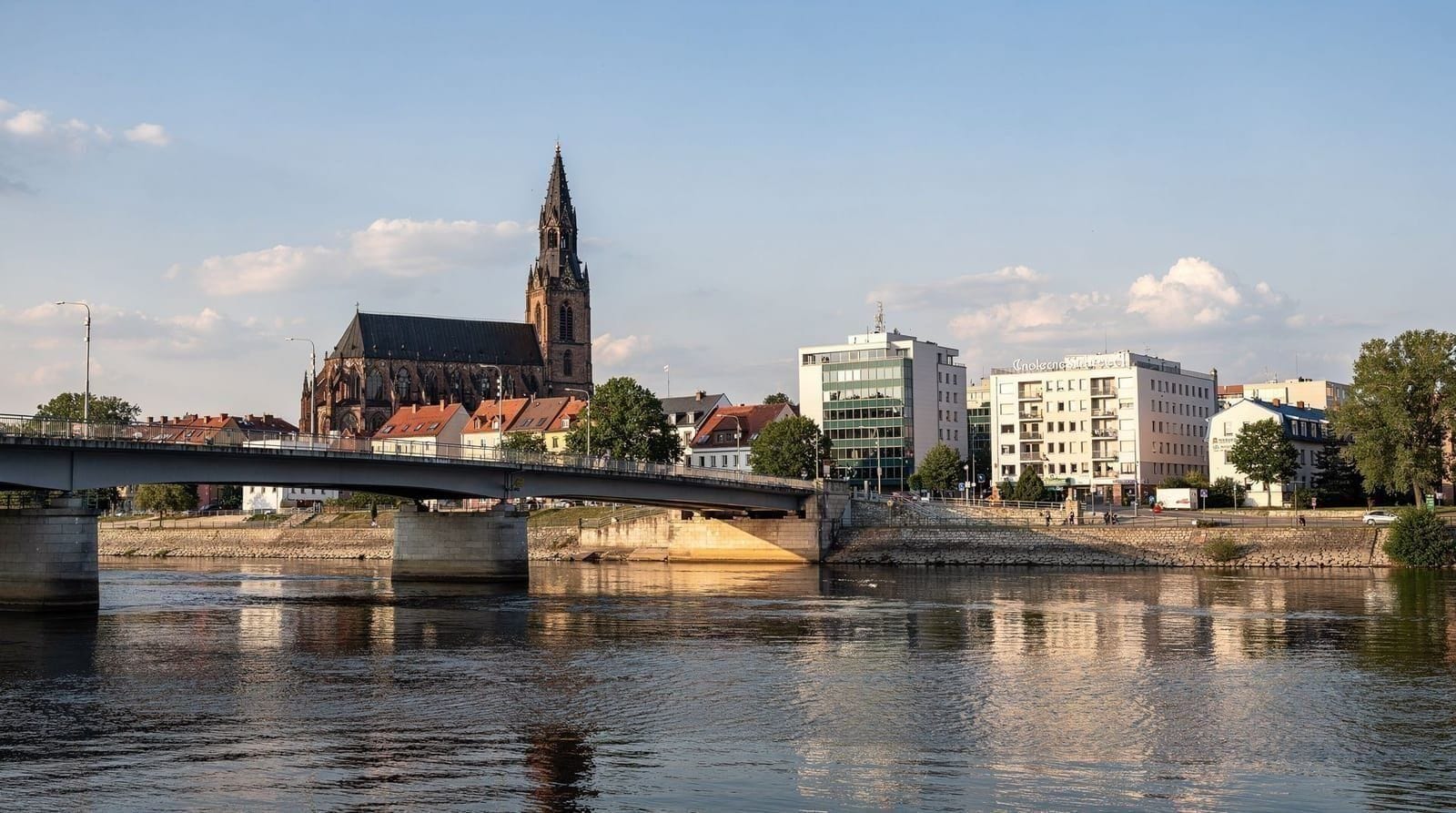
Szczecin is a city that surprises. Most Berliners who have never been assume it will be post-industrial and forgettable — a Polish port town not quite worth two hours on a train. Those who go come back changed in their views. Here is a city of 400,000 on the lower Oder, with a spectacular riverside embankment, a 14th-century ducal castle that anchors the hilltop skyline, a cathedral whose reconstruction after wartime destruction tells one of Central Europe’s more remarkable stories of civic determination — and, most unexpectedly, a concert hall that architectural critics consider one of the finest buildings constructed anywhere in Europe in the 21st century. Add prices roughly half of Berlin’s, direct trains from Hauptbahnhof, and the mild illicit pleasure of realising you’ve left Germany without noticing a single border, and you have one of the most underrated day trips from the German capital.
| Where | Szczecin, Poland — ~140 km / 2hrs north-west of Berlin |
| Cost | Train €20–40 return; day budget €50–70pp |
| Currency | Polish złoty (PLN) — cards widely accepted |
| Border | None — Schengen, no checks |
| Time needed | Full day; overnight if attending a Philharmonic concert |
Getting there: the train is easy, the border is invisible
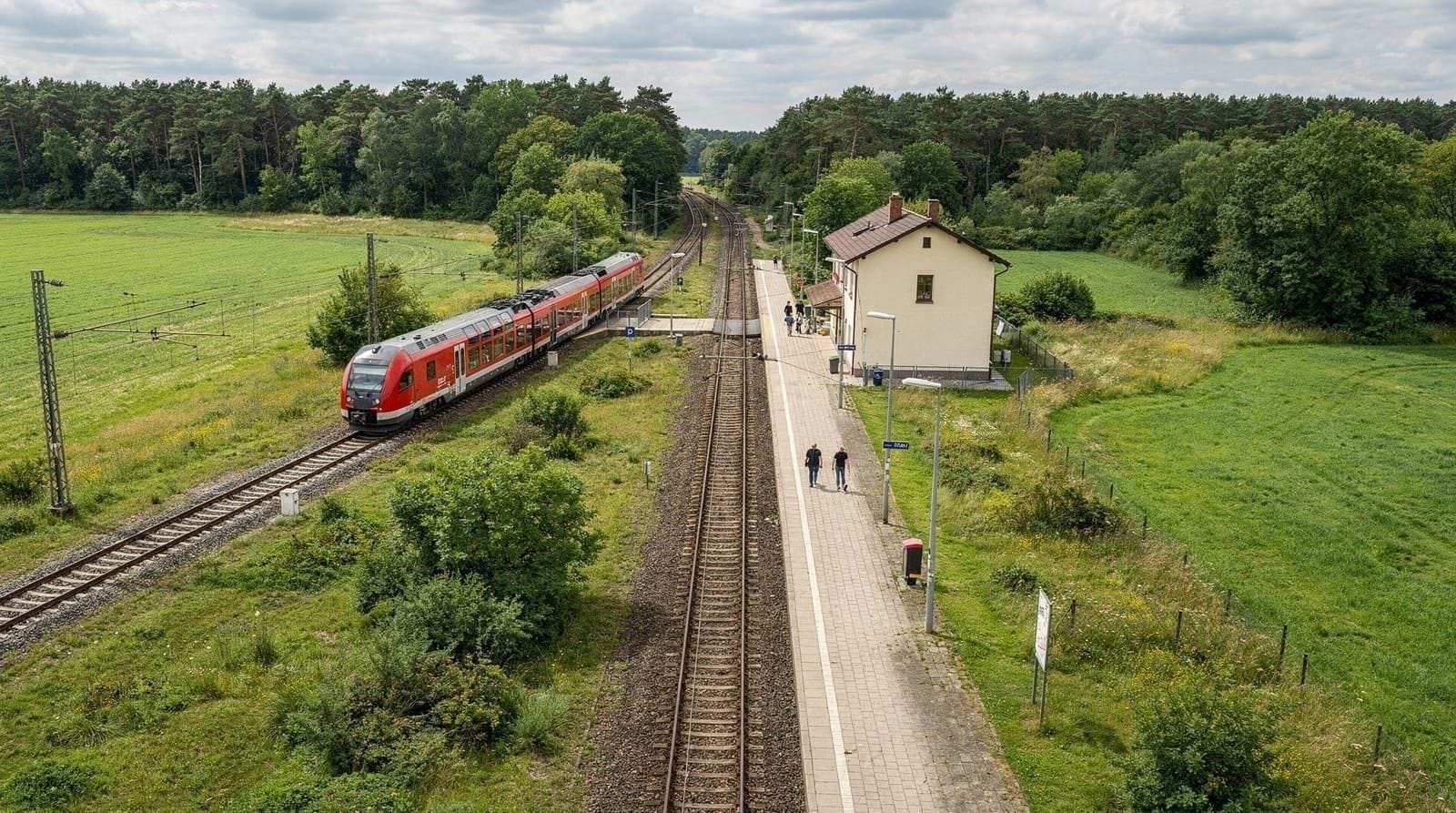
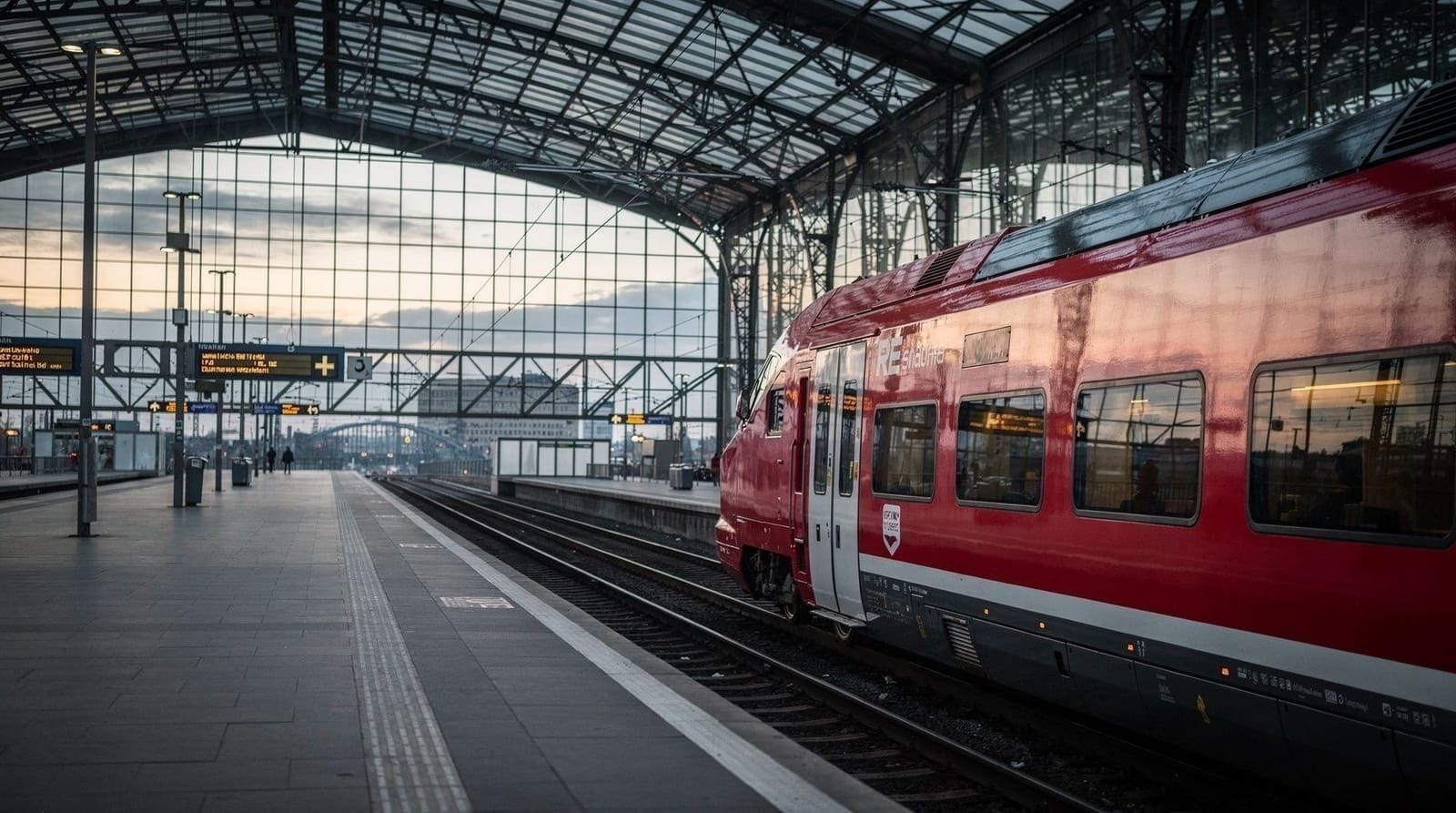
The journey from Berlin Hauptbahnhof to Szczecin Główny takes approximately two hours on direct Intercity or Eurocity services. Deutsche Bahn and PKP Intercity both operate this route; trains run several times daily, departing roughly every two hours. The journey passes through flat north German and Pomeranian countryside — not dramatic, but quietly pleasant, with glimpses of lakes and pine forest.
The border crossing at the Oder is completely seamless. There are no passport checks, no customs, no queue, and no document inspection. Poland has been in the Schengen Area since 2007, so crossing from Germany into Poland by train is no more eventful than crossing from Brandenburg into Mecklenburg. You are, however, in another country: your phone may switch to a Polish carrier (check your roaming situation), and once you step off the train, the currency is Polish zloty.
Tickets cost approximately €20–40 return depending on train type and booking timing. Interrail and Eurail passes are valid. For German travellers, the Interrail Germany pass or European passes cover this route. Booking in advance on the DB Navigator app or at the station typically yields the best prices. There is no Brandenburg ticket coverage for Szczecin — the Brandenburg ticket is valid only within Brandenburg state.
If you drive, the A11/E28 motorway connects Berlin to the Polish border at Kołbaskowo, and Szczecin is a further 15 km. Total driving time is around 1 hour 45 minutes.
The Philharmonic Hall: a masterpiece hiding in plain sight
Nothing prepares most visitors for the Filharmonia im. Mieczysława Karłowicza — the Szczecin Philharmonic. Completed in 2014 and designed by Spanish-Swiss practice Estudio Barozzi Veiga, it won the prestigious EU Prize for Contemporary Architecture — Mies van der Rohe Award in 2015, which is as close to an Oscar as architecture gets in Europe. The award had previously been won by buildings including the Prado extension by Rafael Moneo and the MAXXI in Rome by Zaha Hadid. That Szczecin’s concert hall belongs in that company is not hype; it is simply true.
The building is clad entirely in white glass-fibre reinforced concrete, its façade articulated with abstract peak forms that echo — deliberately or otherwise — the gabled rooftops of the old German Hanseatic buildings that once stood on this site. At dusk, the white mass glows. Inside, the main hall seats 1,000 in an asymmetric arrangement with extraordinary acoustic quality; the chamber hall seats 200. The foyer spaces are dramatic without being theatrical.
If you can attend a concert during your visit, do. Ticket prices for the Philharmonic are astonishingly modest by Berlin standards — between 30 and 80 PLN (roughly €7–19) for most programmes. The season runs October to June. Check the programme at filharmonia.szczecin.pl before your trip; the combination of world-class architecture and affordable live music makes an overnight stay in Szczecin potentially worthwhile.
Even without a concert, the building is open during office hours and free to enter the lobby. Guided architectural tours can sometimes be arranged through the box office for groups.
Pomeranian Dukes’ Castle: the city on the hill
Dominating the hilltop above the Old Town, the Pomeranian Dukes’ Castle (Zamek Książąt Pomorskich) has anchored Szczecin’s skyline since the 14th century. The Griffins — the Pomeranian duke’s dynasty — ruled here from the 12th to the 17th century, and this was their primary seat of power. The castle was expanded and embellished over three centuries, reaching its fullest extent as a Renaissance palace complex in the 16th century under Duke Barnim IX.
What you see today is substantially a post-war reconstruction. The castle was heavily damaged in 1944 bombing raids and gutted by fire. Polish reconstruction teams began work in the 1950s, a controversial decision at the time — rebuilding a castle that had been a German seat of power in a city that had just been transferred to Poland — and completed the main structures over several decades. The result is a thoughtful hybrid: original medieval fabric where it survived, reconstruction where it did not, with honesty about what is old and what is new.
The interiors house a museum (open Tuesday–Sunday, approximately 35 PLN/€8 adults) covering Pomeranian history from the Stone Age through to the 20th century, with a notable section on the Griffin dynasty. The castle courtyard, with its arcaded galleries, is free to enter and is one of the finest Renaissance spaces in Poland north of Warsaw. The bell tower offers sweeping views over the Oder delta and the city roofscape.
The castle is about 15 minutes’ walk from Szczecin Główny station, uphill through the old town.
Wały Chrobrego: the grandest embankment in Pomerania
Szczecin sits on a bluff above the Oder, and the Wały Chrobrego (Chrobry Embankment) — known in German as Hakenterrasse — is how the city presents itself to the river. Built between 1902 and 1921 under German rule to a design by Wilhelm Meyer and Karl Sigmund Lüdecke, it is a terraced sequence of grand Neo-Baroque and Neo-Gothic public buildings set above a riverside promenade. The Maritime Museum, the Regional Museum of the National Museum, and various municipal offices occupy the buildings; the promenade below sees cruise ships berth, fountains play, and Szczecin residents walk with the particular unhurried pace of people who live somewhere with a river view.
The embankment is about 1 km long and best experienced on foot. Below the terrace, the Oder is wide and industrial — this is a working port city — but the juxtaposition of civic grandeur and practical river commerce is itself historically eloquent. On summer evenings, the promenade fills with local families and the light on the water can be spectacular.
Cathedral of St James: rebuilding as determination
The Cathedral of St James the Apostle (Bazylika Archikatedralna św. Jakuba Apostoła) is the largest church in Pomerania, a 14th-century Gothic hall church whose spire reaches 119 metres. It was almost completely destroyed in the Allied bombing of August 1944 — the shell stood, but the interior was gutted and the spire collapsed. Post-war reconstruction, carried out almost entirely by the Polish Catholic community that settled in this formerly German city, took decades. The spire was rebuilt and reconsecrated only in 2008.
The rebuilt interior is sober and clean, stripped of the Victorian-era historicism that had accumulated before the war. The scale is vast and the acoustics — like the Philharmonic, though by accident rather than design — are remarkable. Organ concerts are held here periodically. The church is free to enter and open most days.
Visiting St James alongside the Philharmonic on the same trip creates an unexpected double portrait of how Szczecin rebuilds: one is a civic and cultural statement, the other an act of spiritual and communal stubbornness. Both are impressive.
From Stettin to Szczecin: understanding the city’s 20th century
The city’s history helps explain almost everything a visitor notices — the German architecture, the Polish population, the layered street names. For nearly 700 years the city was German Stettin, part of Pomerania and, from the 19th century, a major Prussian and then German port on the Oder. That history ended abruptly in 1945: under the postwar border agreements, the city was transferred to Poland, and virtually the entire German population was expelled westward over the following two years. In their place, Polish settlers arrived — many themselves displaced from territories in the east that the Soviet Union had annexed from prewar Poland.
The result is a city built by Germans and inhabited, since 1945, almost entirely by Poles with no prior connection to the place — a population transfer echoed across the whole of what Germans called the “Recovered Territories” and Poles call the “Regained Territories.” Street names, church dedications, and civic institutions were systematically re-Polonised in the postwar decades. Walking through Szczecin today, this history is visible everywhere: German-built Wilhelmine apartment blocks now house Polish families with no ancestral tie to the building, and the cathedral’s postwar reconstruction was carried out by a community that had itself only recently arrived. Understanding this context adds real depth to a visit — the Philharmonic and the rebuilt castle are not just handsome buildings, but expressions of a city that has spent 80 years constructing a new identity on top of an inherited one.
Best time to visit: a season guide
| Season | What to expect | Notes |
|---|---|---|
| May–September | Warm, embankment and old town at their best | Peak season for walking and outdoor cafés |
| October–June | Philharmonic concert season | Best combined with cooler-weather sightseeing |
| December | Waterfront Christmas market | Considerably quieter than Berlin’s |
| July–August | Warmest, but Philharmonic season paused | Fine for sightseeing, not for concerts |
What to eat and how much it costs
The most immediately pleasurable aspect of Szczecin for many Berlin day-trippers is the price. A full restaurant lunch — żurek (sour rye soup with egg and sausage), a main course of roast duck or pork knuckle, and dessert — costs 50–80 PLN, which is approximately €12–19 at current exchange rates. A beer is typically 12–18 PLN (€3–4). Coffee at a decent café is 10–15 PLN (€2.50–3.50). By comparison with Berlin’s 2026 restaurant prices, this feels almost absurdly generous.
The Old Town (Stare Miasto) has a good concentration of restaurants and cafés, particularly around plac Hołdu Pruskiego and the streets immediately below the castle. Look for places serving regional Pomeranian cooking: freshwater and Baltic fish dishes, pork preparations, and the characteristic central European soups that form the backbone of Polish lunch culture.
For a quick stop, the indoor market hall near the station has stalls selling Polish bread, cheese, pickles, and prepared foods — good for picking up lunch provisions or something to eat on the train back.
Practical matters for the day trip
Currency: Pay in Polish zloty (PLN). While some tourist-facing businesses in central Szczecin may accept euros, the exchange rate they offer is invariably poor. Either bring zloty exchanged in Berlin (exchange offices in Hauptbahnhof area) or withdraw from ATMs in Szczecin, which are plentiful and dispense PLN directly. Credit and debit cards are widely accepted.
Language: Polish is the official language, and while younger service staff often speak some English, German is also widely understood — Szczecin has deep historical ties to Germany and the city has a significant number of German-speaking visitors and residents. You will manage easily with English; a few words of Polish (dziękuję — thank you — goes a long way) are appreciated.
Getting around: Szczecin’s main sights — castle, cathedral, Philharmonic, embankment — are all within 20 minutes’ walk of each other and 20–25 minutes from the main station. Trams and buses are cheap (4–5 PLN per journey) and useful for reaching the embankment or outlying areas.
Timing: Direct trains mean you can leave Berlin Hauptbahnhof at 08:00 and be in Szczecin by 10:00, giving a full day before a 19:00 or 20:00 return. Check current timetables on bahn.de.
Combining Szczecin with other trips
Szczecin works well as a standalone day trip but also as part of a wider eastern Europe itinerary from Berlin. Travellers using Interrail passes sometimes add Szczecin as a stop en route to Gdańsk or Warsaw. For the purposes of Berlin day-tripping, it pairs logically with Frankfurt (Oder) — another border town on a different river — as part of a comparative theme of post-war division and reintegration, though the two are in opposite directions from Berlin and would require separate days.
The best day trips from Berlin guide covers the full spectrum of options and places Szczecin among the most distinctive international itineraries available. For planning the train logistics, see day trips by train from Berlin. If you’re building a broader trip, the Berlin trip planning guide covers how to structure time efficiently between city and surroundings. Our ranked roundup of the best day trips from Berlin explains exactly where Szczecin sits relative to the closer Brandenburg options if you’re deciding between an international and a domestic day out.
Frequently asked questions about Szczecin
Do I need a passport or visa to visit Szczecin from Berlin?
No passport check occurs at the German-Polish border. However, you should carry your passport or national ID card as you are technically entering another country. EU citizens can use their national ID card; non-EU visitors should carry their passport (the same document used to enter Germany). There are no border formalities, no queues, and no stamps.
How long is the train journey from Berlin to Szczecin?
Direct Intercity or Eurocity trains from Berlin Hauptbahnhof reach Szczecin Główny in approximately 2 hours. Regional train combinations are also possible but take longer. Check current schedules on bahn.de or pkp.pl — services and timing can vary seasonally.
What currency do I need in Szczecin?
Polish zloty (PLN). The 2026 exchange rate is approximately 4.2 PLN per euro. Most restaurants, shops, and attractions accept credit and debit cards, but some smaller vendors and market stalls prefer cash. ATMs are plentiful in the city centre and dispense PLN.
Is the Philharmonic worth visiting even without a concert ticket?
Yes. The building is architecturally significant enough to justify a visit on its own. The lobby and exterior are accessible without a ticket. If a concert happens to be scheduled during your visit, attending is highly recommended — ticket prices are low by Berlin standards and the acoustic and visual experience is exceptional.
How much does a day trip to Szczecin cost?
Train tickets are approximately €20–40 return from Berlin depending on class and advance booking. Once in Szczecin, you will find prices substantially lower than in Germany: lunch €12–19, coffee €2.50–3.50, beer €3–4. A comfortable day trip including transport, museum entrance, lunch, and a coffee could total €50–70 per person.
What language is spoken in Szczecin?
Polish. English is widely understood in tourist-facing contexts, particularly among younger people. German is also commonly spoken, reflecting the city’s history and its many German visitors. A few basic Polish courtesies are always well received.
Is Szczecin worth visiting if I’ve already been to Warsaw or Kraków?
Absolutely. Szczecin has a very different character from Poland’s more visited inland cities — its identity is shaped by the Oder, the Baltic, the Hanseatic tradition, and the specific post-war complexity of a city that changed nationality in 1945. The Philharmonic and the castle are sights of genuine European importance. It is not a replacement for Warsaw or Kraków, but it is not trying to be.
When is the best time to visit Szczecin?
The city is pleasant year-round, but May to September is most comfortable for walking the embankment and the old town. The Philharmonic’s concert season runs October to June, so if attending a performance is your goal, avoid July and August. The Christmas market on the waterfront in December is a well-kept secret compared to Berlin’s overwhelmed equivalents.
Why did Szczecin become Polish after being German for centuries?
Under the postwar border settlement, Szczecin (then Stettin) was transferred from Germany to Poland, and the German population was expelled westward between 1945 and 1947. Polish settlers, many themselves displaced from territories the Soviet Union annexed further east, resettled the city. This population transfer is part of the wider postwar reshaping of Central Europe’s borders, and it shapes almost everything a visitor notices about the city today.
Do I need to plan Szczecin as a standalone day, or can I combine it with Berlin sightseeing the same day?
Standalone is strongly recommended. With roughly 4 hours of round-trip travel plus a full day’s worth of sights, combining Szczecin with substantial Berlin sightseeing the same day leaves neither justice. Treat it as a dedicated day trip, ideally departing Berlin by mid-morning at the latest.