Brandenburg an der Havel — Germany's Island Town and Ancient Cathedral City
Explore one of Germany's oldest towns — three islands, a 12th-century Gothic cathedral, and easy canal cycling, just 40 minutes from Berlin by train.
Quick facts
- Distance from Berlin
- ~80 km west of Berlin
- Train
- RE1 direct from Berlin Zoologischer Garten (~40 min, ~€10–30 Brandenburg ticket)
- Admission
- Cathedral free entry / suggested donation; Old Town and canals free
- Season
- Year-round; cycling and boat trips best April–October
- Highlights
- Dom St. Peter und Paul, three-island Old Town, Havel cycling, boat trips
Brandenburg an der Havel is not the state of Brandenburg — a confusion that catches out even seasoned German travellers. It is something older and considerably more interesting: a city of three river islands, Romanesque doorways, Gothic vaulting, and waterways calm enough to cross by rowboat. Founded as a Slavic settlement and then seized and reshaped by Albert the Bear in the 12th century, Brandenburg an der Havel was the starting point for the entire Brandenburg-Prussia story. Today it sits just 40 minutes from Berlin on the RE1 and sees a fraction of the tourist traffic that Potsdam absorbs daily — which is precisely what makes it worth the journey.
| Where | ~80 km west of Berlin, on the Havel |
| Cost | Cathedral free (donation); boat trips around €12–16; bikes around €12–15/day |
| Time needed | Half day for the islands and cathedral; full day with cycling or boat trip |
| Getting there | RE1 direct from Berlin, around 40 min |
| Best time | April–October for cycling and boats; year-round for the Old Town |
A city built on water: the three-island Old Town
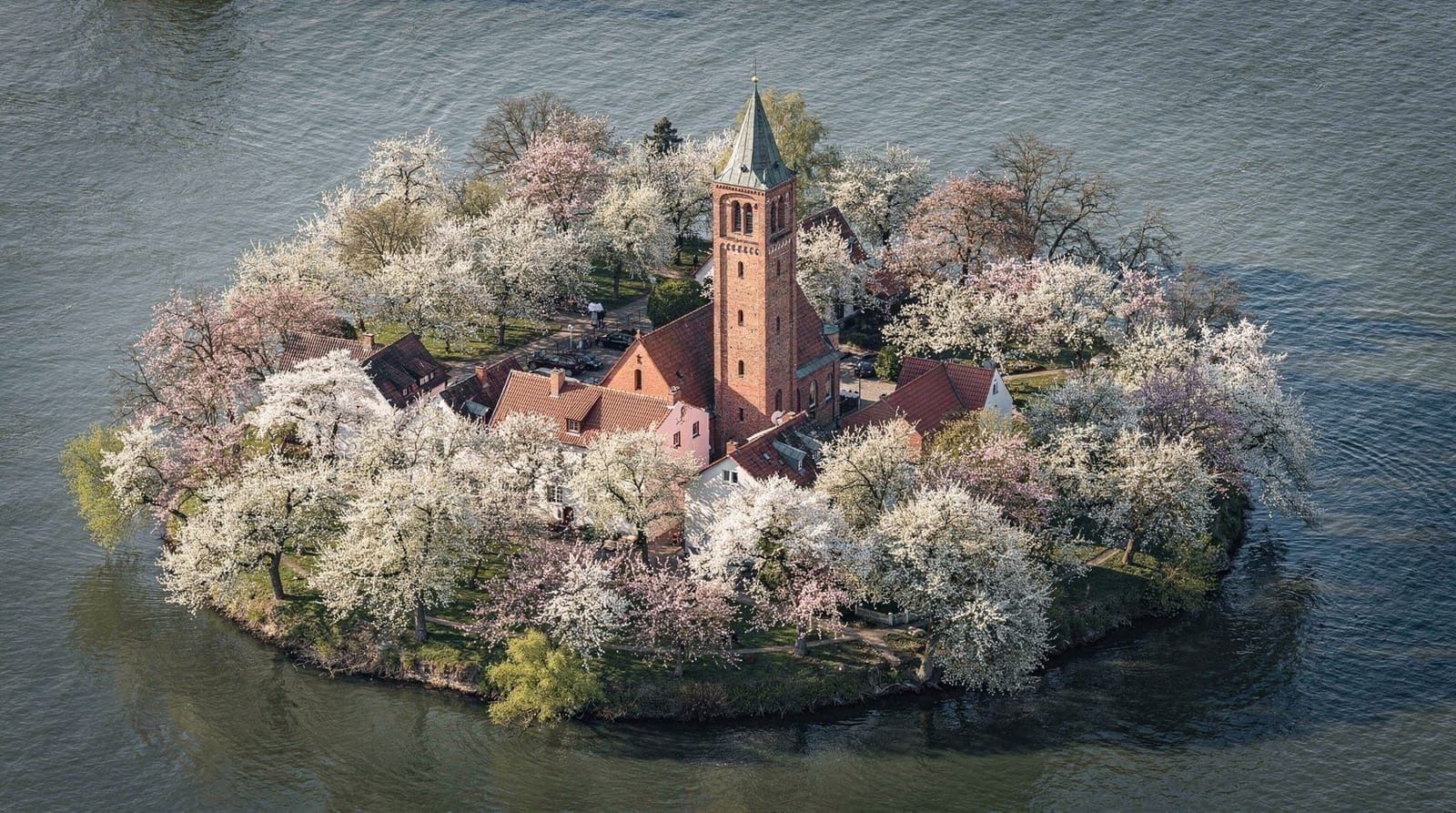
Brandenburg an der Havel sits where several arms of the Havel river meet, and its historic core is distributed across three distinct islands connected by bridges. The Dominsel (Cathedral Island) is the oldest, a strip of land dominated entirely by the cathedral and its surrounding grounds. The Altstadt (Old Town) island hosts the main pedestrian streets, the town hall, and the St. Catherine’s Church. The Neustadt (New Town) island, developed slightly later in the medieval period, completes the triad.
Walking between them takes minutes, but the visual effect of crossing water every few blocks gives the city a quality quite unlike anywhere else in Brandenburg state. Willow trees trail into the Havel between the bridges; rowing boats and small motorboats pass quietly below. On a clear morning, reflections of the cathedral towers ripple in the water — it is, unambiguously, a beautiful place.
The city rewards simply wandering without a fixed agenda. Street markers on the ground guide you along a historic trail, but the pleasure is in finding small things: a carved stone relief above a medieval gateway, a watermill footprint embedded in a cobbled square, the way the light falls on the cathedral’s west facade at midday.
Dom St. Peter und Paul: Germany’s Gothic heritage in stone
The Cathedral of Saints Peter and Paul (Dom St. Peter und Paul) on the Dominsel is Brandenburg an der Havel’s defining monument and one of the most significant medieval buildings in Germany. Construction began in 1165 under the Premonstratensian order — making this one of the oldest Gothic cathedrals in the country, predating most of the famous French Gothic exemplars that are better known internationally.
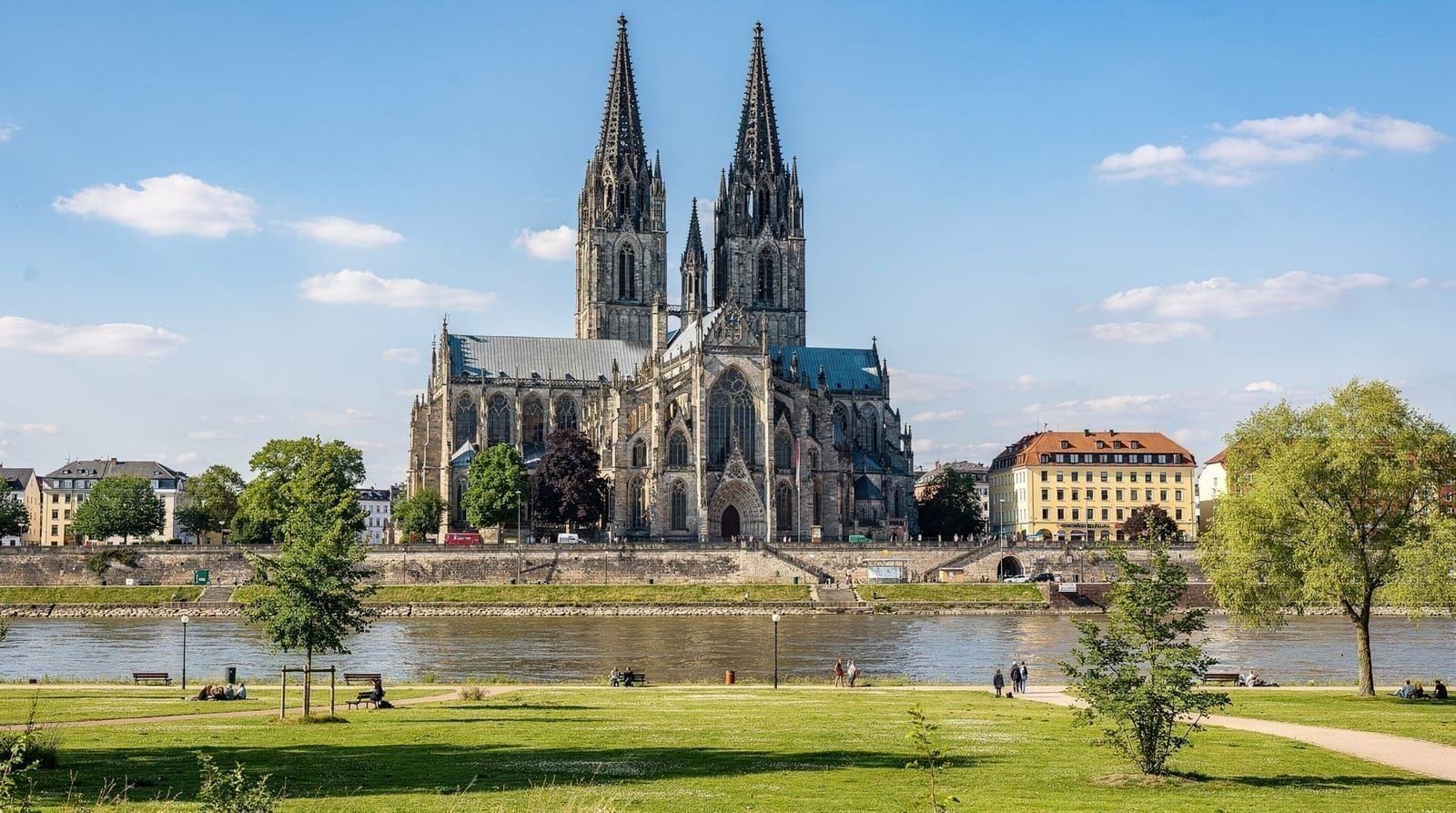
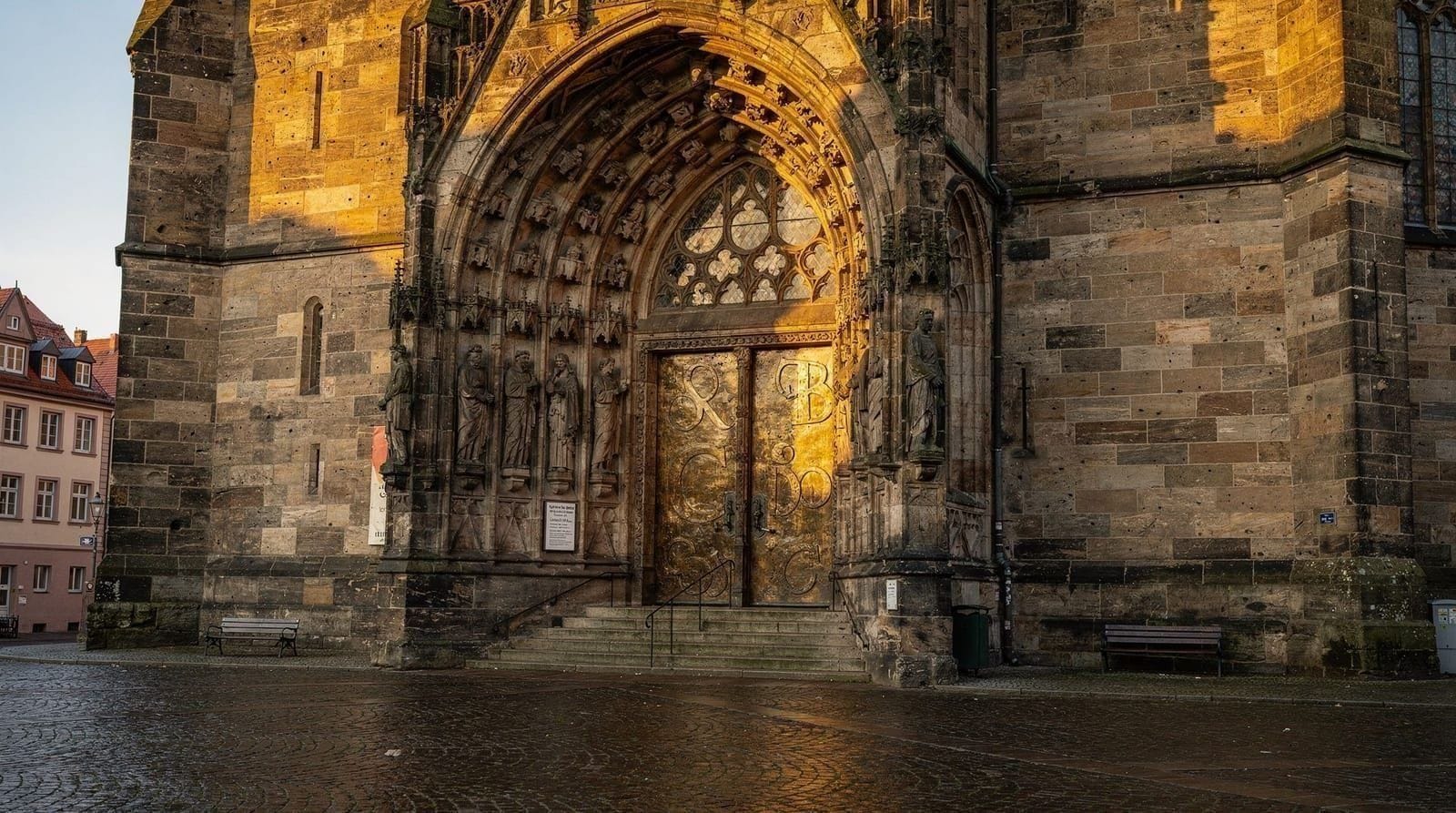
The exterior is austere and powerful: dark brick rising from the riverbank, twin towers framing a sky that always seems to have the right amount of cloud. Inside, the effect changes entirely. The cathedral holds an extraordinary collection of medieval art: the Bohemian Altar from around 1375, a richly painted late-Gothic triptych; 14th-century stained-glass windows in deep blues and reds; carved stone tombs of bishops and local nobles. The Romanesque crypt beneath the nave is the oldest surviving section, with low vaulted ceilings resting on thick columns — a different atmosphere entirely from the soaring Gothic nave above.
Entry is free, though donations are warmly welcomed. The cathedral is an active place of worship; services take place regularly, and the acoustic of the space makes even brief organ practice worth pausing for. If you visit on a Sunday morning, there is a good chance of hearing the pipe organ in use.
A small cathedral museum occupies rooms in the cloister, covering the medieval monastic community, the cathedral’s construction campaigns, and its survival through the Reformation (it became Lutheran in 1540, one of the earliest in the region).
St. Catherine’s Church and the Altstadt
On the Altstadt island, the St. Catherine’s Church (St. Katharinen) is Brandenburg an der Havel’s second great medieval building. Begun in the 14th century and enlarged through the 15th, it is a brick Gothic hall church of impressive scale — the kind that makes you stop in the street and look up. The interior is lighter than the cathedral, with a sense of civic grandeur that reflects its role as the merchant class’s church rather than the ecclesiastical establishment’s.
The streets immediately around St. Catherine’s form the most intact section of the medieval town. The Plauer Straße and the surrounding lanes have maintained their narrow plots and continuous building lines; even where the architecture is 18th or 19th century, the medieval street pattern is legible. The Rathaus (town hall) on the market square was rebuilt after damage but retains its original Gothic proportions.
Look out for the Bottleneck Tower (Plauer Torturm), a surviving medieval gate tower at the western edge of the Altstadt. It stands a little awkwardly between later buildings, as city gate towers invariably do when the walls have gone, but close up the stonework and the corbelled upper section are genuinely impressive. It marks the point where the medieval road from Brandenburg to Plaue passed through the city wall.
Albert the Bear and the real beginning of Brandenburg-Prussia
Brandenburg an der Havel is frequently passed over in accounts of German history in favour of Berlin and Potsdam — but this is where the Brandenburg story actually starts. Albert the Bear (Albrecht der Bär), Margrave of the Northern March, defeated the Slavic Hevelli tribe here in 1157 and established the Margraviate of Brandenburg with this city as its earliest seat. The episcopal see founded on the Dominsel in 948 was one of the first Christian missions into the territory east of the Elbe. Long before there was a Berlin, there was Brandenburg an der Havel.
This deep history is not just an academic point. Walking through the Dominsel and thinking about what was built here in the 12th century — when Paris was completing Notre-Dame and London was still mostly wooden — gives genuine context to the German medieval expansion eastward. A readable panel exhibition inside the cathedral covers this history in English alongside German.
Not to be confused, as noted, with the modern federal state of Brandenburg (whose capital is Potsdam). The city gave its name to the state, not the other way around.
Cycling the Havel: the best way to spend an afternoon
Brandenburg an der Havel excels as a cycling destination. The Havelradweg, one of Germany’s long-distance cycling routes, passes directly through the city, and local stretches are well-signposted, mostly flat, and largely car-free. A typical half-day loop takes you along the southern Havel bank, past the Plauer See (a broad lake formed by the river), and back through the Neustadt across the bridges — around 20–25 km in total, with no significant gradient.
Bike hire is available from shops near the Hauptbahnhof; expect to pay around €12–15 per day including a lock. Several places offer electric bikes for an additional €5–8. The tourist office on Neustädtische Wassertorstraße also has cycling maps of the area.
For a longer excursion, the Havelradweg continues east to Werder an der Havel (about 30 km) — a small island town famous for its fruit orchards and blossom festival in spring. That stretch makes an excellent full-day cycling day trip in its own right, combining two river towns in one ride.
Boat trips on the Havel
The Havel river around Brandenburg an der Havel is navigable and offers a very different perspective on the islands and medieval skyline. From April to October, the Weiße Flotte Brandenburg operates scheduled boat tours around the city’s islands and out across the Breitlingsee lake. Cruises typically run 1–2 hours and cost around €12–16 per adult. The view back toward the cathedral from the water, with its twin towers rising above the riverbank, is one of the better panoramas in Brandenburg state.
Rowing boats and small electric boats can also be hired at the harbour on the Dominsel waterfront — a relaxed option if you prefer to navigate yourself and stop where you like.
Practical information for getting there
The RE1 regional express from Berlin Zoologischer Garten runs direct to Brandenburg an der Havel Hauptbahnhof in around 40 minutes. Services run roughly every 30 minutes during the day. The same train continues from Berlin Ostbahnhof and Hauptbahnhof, adding 5–10 minutes.
The Brandenburg ticket (from around €29 for 1–5 passengers on regional trains and local buses all day) covers the full journey from Berlin and is the cheapest option for groups of two or more. For a solo traveller buying a single ticket, the return fare is approximately €20–25 depending on time of day. Check DB Navigator for current prices.
Brandenburg an der Havel Hauptbahnhof is a 10-minute walk from the Dominsel and cathedral. The city centre is compact and entirely walkable; the Altstadt and Neustadt islands are each around 500m across.
For full planning advice including the Brandenburg ticket rules, see the Brandenburger Ticket Guide and the overview of day trips by train from Berlin.
Where to eat
The city has a modest but functional dining scene. Kartoffelkäfer near the market square serves traditional Brandenburg food — pork, potatoes, thick gravies — at honest prices. Café am Dom by the cathedral is the obvious choice for coffee and cake after visiting the interior. For lunch, the restaurant inside the Sorat Hotel on the Havel waterfront offers a more polished experience with river views.
The town is not a foodie destination in the way Potsdam is, but you will eat well enough. If you are combining the trip with a cycling excursion to Werder an der Havel, that town has better options for an afternoon meal.
Combining Brandenburg an der Havel with other destinations
Brandenburg an der Havel sits naturally alongside Magdeburg in a broader historic-towns itinerary — both are ancient cities with outstanding Gothic cathedrals that predated Berlin’s rise to prominence. They are in opposite directions from Berlin (Brandenburg an der Havel west, Magdeburg south-west), so combining them in a single day requires planning; it is more naturally done as two separate day trips.
A logical pairing within a single day is Brandenburg an der Havel with Werder an der Havel, connected by the Havelradweg cycling route. Alternatively, Potsdam is 30 km east and can be added on the return journey — though Potsdam warrants its own day rather than an afterthought.
For a broader Brandenburg lakes and rivers day, Spreewald and Brandenburg an der Havel are similar in travel time from Berlin but in opposite directions; save each for its own visit.
See the best day trips from Berlin guide for how to fit Brandenburg an der Havel into a wider Berlin itinerary.
Brandenburg an der Havel vs. Potsdam: which historic day trip fits?
Both are Havel-side historic towns within easy reach of Berlin, but they suit different moods and different budgets.
| Brandenburg an der Havel | Potsdam | |
|---|---|---|
| Character | Quiet medieval island town, Gothic cathedral | Grand Prussian palace complex, UNESCO parks |
| Crowds | Genuinely low, even in summer | Busy, especially Sanssouci in peak season |
| Cost | Mostly free (cathedral, walking, islands) | Palace tickets add up quickly |
| Best for | History without the crowds, cycling | Palace architecture, formal gardens |
| Travel time | ~40 min direct RE1 | ~25–40 min depending on station |
Neither replaces the other — Potsdam is the essential Berlin day trip for most first-timers, while Brandenburg an der Havel is the reward for travellers who’ve already done Potsdam and want medieval history without the queues. If choosing just one on a first Berlin visit, Potsdam wins; on a second or third visit, Brandenburg an der Havel is the more distinctive experience.
Frequently asked questions about Brandenburg an der Havel
How long does the train from Berlin take?
The RE1 from Berlin Zoologischer Garten takes approximately 40 minutes direct to Brandenburg an der Havel Hauptbahnhof. Trains from Berlin Hauptbahnhof take around 45–50 minutes. Services run roughly every 30 minutes.
Is Brandenburg an der Havel the same as the state of Brandenburg?
No. The city of Brandenburg an der Havel is an independent city (kreisfreie Stadt) within the federal state of Brandenburg, but the two are entirely separate entities. The state’s capital is Potsdam. The city gave the state its name, not the other way around, because it was the original seat of the medieval Margraviate of Brandenburg.
Is the Brandenburg Cathedral free to visit?
Yes. Entry to Dom St. Peter und Paul is free, with a donation box and suggested contribution inside. The small cathedral museum in the cloister may have a nominal entrance fee of €2–3. Check the cathedral website for current opening hours, which vary by season.
How much time do I need in Brandenburg an der Havel?
A half day (three to four hours) is enough to see the cathedral, walk the Altstadt and Neustadt islands, and have lunch. A full day allows a cycling excursion along the Havelradweg, a boat trip on the Havel, and a more relaxed pace overall. It is not a destination that requires an overnight stay unless you are combining it with a multi-day cycling tour.
Can I hire a bike at the station?
Yes. Several hire shops near Brandenburg an der Havel Hauptbahnhof offer standard and electric bicycles, typically from €12–15 per day. The tourist office also has cycling maps of local routes.
Is the Brandenburg ticket valid for this journey?
Yes. The Brandenburg ticket covers regional trains including the RE1 from Berlin into Brandenburg state, and Brandenburg an der Havel is within the valid zone. At around €29 for up to five passengers, it is the most economical option for groups of two or more travelling from Berlin for the day.
What is Brandenburg an der Havel’s connection to Prussian history?
Brandenburg an der Havel was the first seat of the Margraviate of Brandenburg, established by Albert the Bear (Albrecht der Bär) in 1157 after he took control of the region from the Hevelli Slavs. The episcopal see on the Dominsel dates to 948. This makes it the founding city of the political entity that eventually became Brandenburg-Prussia and, later, the German Empire — predating Berlin’s importance by several centuries.
Are there guided tours available?
The local tourist office (Brandenburg an der Havel Tourismus) on Neustädtische Wassertorstraße organises occasional guided city walks, particularly in summer. Cathedral-specific guided tours in German run regularly on weekend afternoons; English tours can usually be arranged in advance. For self-guided exploration, the numbered waymarkers throughout the city correspond to a free printed walking trail map available at the tourist office and at the cathedral entrance.
Is Brandenburg an der Havel worth it if I’ve already done Potsdam?
Yes, arguably more so than for a first-time visitor. Having already seen Potsdam’s palace grandeur, Brandenburg an der Havel offers a genuinely different register: medieval rather than Baroque, quiet rather than crowded, free rather than ticketed. It’s the better choice for a second or third Berlin trip precisely because it isn’t trying to compete with Sanssouci.